

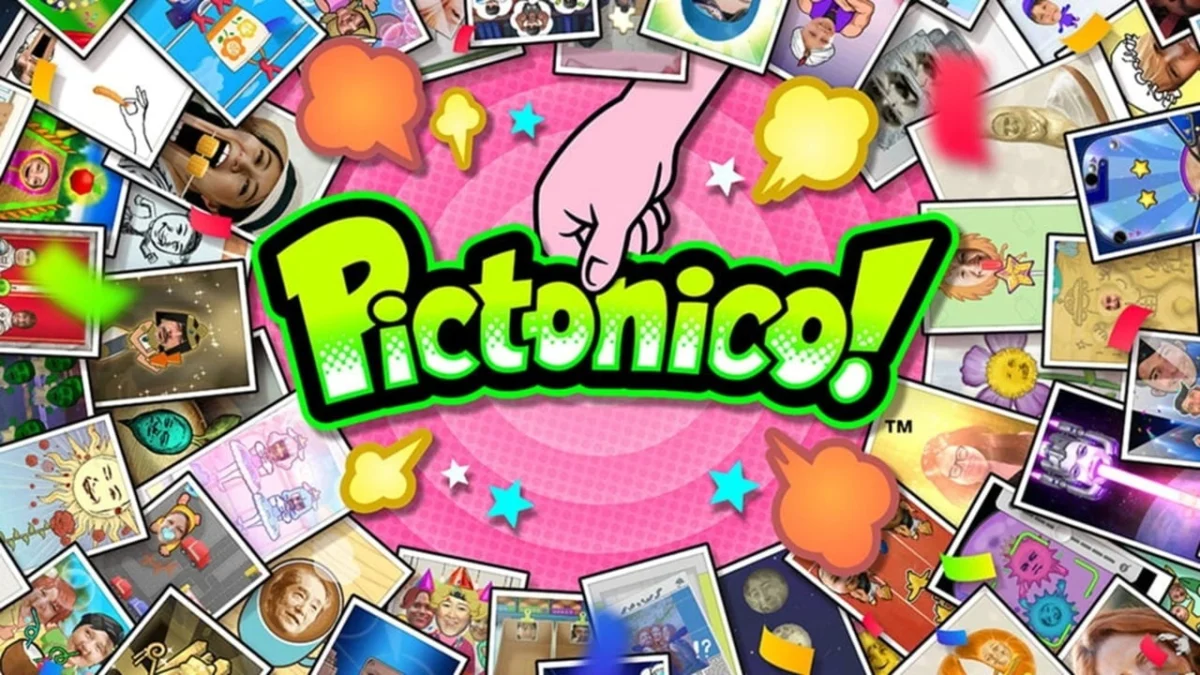
TOKYO, Japan – Nintendo, the venerable Japanese video game giant renowned for its iconic franchises and innovative hardware, has once again captivated the mobile gaming landscape with the surprise launch of "Pictonico!" Developed in collaboration with long-time creative partner Intelligent Systems, this new mobile title introduces a delightfully bizarre concept: transforming personal photos from a user’s gallery into fast-paced, playable minigames. Reminiscent of the beloved "WarioWare" series, "Pictonico!" promises a unique blend of quirky humor, rapid-fire challenges, and unprecedented personalization, inviting players to inject their own lives into a whirlwind of digital chaos.
The game, now available on the Google Play Store, marks another intriguing chapter in Nintendo’s evolving mobile strategy. With its "free-to-start" model and a core gimmick rooted in user-generated content, "Pictonico!" is poised to offer a fresh, accessible, and often hilarious gaming experience that stands apart in a crowded market.
Chronology: Nintendo’s Evolving Mobile Odyssey
A Strategic Pivot: Nintendo’s Entry into the Mobile Market
Nintendo’s journey into the mobile gaming arena has been marked by cautious optimism, strategic partnerships, and a clear learning curve. For decades, the company fiercely guarded its intellectual properties, prioritizing its dedicated console hardware. However, recognizing the immense reach and revenue potential of smartphones, Nintendo embarked on a strategic pivot in the mid-2010s. This shift began in earnest with a landmark partnership with Japanese mobile developer DeNA in 2015, signaling a commitment to bringing Nintendo’s unique brand of entertainment to mobile devices.
The initial foray saw experimental titles like "Miitomo" (a social networking app featuring Mii characters) and the high-profile launch of "Super Mario Run" in 2016. While "Super Mario Run" garnered significant attention, its premium, one-time purchase model and always-online requirement proved contentious for some mobile users accustomed to free-to-play or subscription services. Nintendo learned valuable lessons from this experience, subsequently finding greater success with titles like "Fire Emblem Heroes," which adopted a more traditional gacha-based monetization model popular in Asia, and "Animal Crossing: Pocket Camp," a charming, free-to-play life simulation game.
"Pictonico!" emerges as the latest iteration of this evolving strategy, demonstrating Nintendo’s continued willingness to experiment with diverse genres and monetization approaches on mobile. It eschews the gacha mechanics of "Fire Emblem Heroes" and the single premium purchase of "Super Mario Run," opting instead for a "free-to-start" model with purchasable content packs, potentially striking a more appealing balance for a broader audience. Moreover, the decision to allow offline play, a direct response to "Super Mario Run’s" criticisms, underscores Nintendo’s commitment to refining its mobile user experience.
The Genesis of "Pictonico!": A Partnership Forged in Whimsy
The development of "Pictonico!" is a testament to the enduring creative synergy between Nintendo and Intelligent Systems. This long-standing collaboration has yielded some of Nintendo’s most critically acclaimed and distinct franchises, including the tactical brilliance of "Fire Emblem," the charming RPG adventures of "Paper Mario," and, most pertinently, the wildly imaginative "WarioWare" series. Intelligent Systems’ reputation for crafting innovative gameplay mechanics, coupled with a penchant for offbeat humor and unconventional design, makes them the ideal partner for a concept as audacious as "Pictonico!".
While specific details about the game’s conception remain under wraps, it’s plausible that the idea stemmed from a desire to push the boundaries of user interaction and personalization on mobile. The ubiquity of smartphone cameras and personal photo galleries presented a fertile ground for a game that could literally incorporate a player’s own world. By leveraging Intelligent Systems’ expertise in creating bite-sized, intuitive, and often absurd challenges, the core mechanic of transforming static images into dynamic gameplay opportunities likely took shape. The result is a game that not only entertains but also invites players to see their own lives through a uniquely comical lens, reinforcing Nintendo’s philosophy of making games that foster joy and surprise.
Supporting Data: The Art of the Absurd and the Personal Touch
The WarioWare Legacy: Speed, Silliness, and Surprise
Embracing Microgame Mania: Pictonico!’s Spiritual Ancestry
The moment players dive into "Pictonico!", the unmistakable spirit of the "WarioWare" series immediately comes to the fore. For those unfamiliar, "WarioWare," first launched on the Game Boy Advance in 2003, revolutionized the concept of minigames by condensing them into "microgames"—lightning-fast challenges lasting only a few seconds. Players are thrown from one bizarre scenario to the next, often with minimal instruction, requiring split-second reactions and intuitive understanding. The games are characterized by their simple controls (often just a single button press or D-pad movement), rapid succession, and an overarching sense of anarchic humor.
"Pictonico!" adopts this "blink-and-you’ll-miss-it" gameplay philosophy wholesale. Each challenge is designed to be completed in mere moments, presenting a quick puzzle or action that demands immediate engagement. The genius lies in the simplicity of the controls, making the game accessible to virtually anyone, regardless of their gaming prowess. This design principle ensures that the focus remains on the surprising scenarios and the humorous interaction with the personalized photos rather than complex mechanics. The fast pace keeps players on their toes, fostering an addictive loop of "just one more game" as they strive to master the escalating absurdity.
The connection to "WarioWare" is not merely thematic; it’s deeply rooted in the development team itself. Intelligent Systems, the co-developer of "Pictonico!", is the primary creative force behind the "WarioWare" franchise. Their intimate understanding of what makes microgames engaging, alongside their distinctive brand of surreal humor, is evident in every facet of "Pictonico!". From the quirky art style to the outlandish scenarios, the game serves as a spiritual successor, bringing the beloved microgame formula to a new platform with a truly novel twist.
Scenarios Ripped from Reality (and Twisted into Chaos)
What truly elevates "Pictonico!" beyond a simple "WarioWare" clone is its unparalleled personalization. The game’s core conceit is its ability to pull images from a user’s photo gallery and integrate them directly into the minigames. This means that familiar faces – friends, family, pets, or even mundane objects – suddenly become the unsuspecting stars of wildly improbable situations. The humor is derived from this unexpected juxtaposition, transforming everyday snapshots into the backdrops or central figures of hilarious challenges.
Consider the examples teased by Nintendo:
- "Your school’s sports stars are confidently strutting down a red carpet." Imagine a photo of your high school football team or cheer squad suddenly becoming a stage for a game where you have to perfectly time a spotlight on each individual as they "strut," or perhaps clear obstacles from their path to the imaginary awards ceremony. The irony of athletic prowess being tested in such an unconventional setting is ripe for comedy.
- "Your hungry boss needs assistance." A picture of your stern-faced supervisor could morph into a minigame where you have to quickly feed them pixelated snacks, swipe away imaginary crumbs, or even navigate a tiny maze within their mouth to deliver a crucial item. The subversion of professional decorum into a silly, interactive task is instantly relatable and amusing.
- "Someone is desperately trying to erase embarrassing high-school memories." A cringe-worthy yearbook photo or an awkward teenage snapshot could become the target of a frantic tapping game, where you must "erase" blemishes, bad hairstyles, or outdated fashion choices before a timer runs out. This scenario taps into universal experiences of nostalgia and self-deprecating humor.
- "A noisy son gets his mouth zipped shut." A photo of a child mid-tantrum or exuberant shout could be transformed into a game where you literally have to "zip" their mouth closed with a quick swipe, or silence them by tapping away sound waves emanating from their image. This playful take on parental frustrations adds a layer of whimsical relatability.
- "Other minigames feature old friends reconnecting while skydiving." Picture a group photo of your college buddies. Suddenly, they’re plummeting through the sky, and you might have to connect them with a line, guide them to hold hands, or collect items as they descend. The gravity-defying absurdity with familiar faces amplifies the comedic effect.
- "A grandpa dressed as a ballerina." An otherwise dignified photo of a grandparent could be overlaid with a tiny tutu, and you might have to make them perform pirouettes with precise taps or balance on one toe. The visual gag alone, enhanced by the recognition of a loved one, is guaranteed to elicit laughter.
- "A dad making a suspicious face that might actually be a facial mask." A candid shot of a father figure with an ambiguous expression could become a game where you have to peel off a "facial mask" with swipes, or decipher whether it’s truly a mask or just a particularly odd grimace.
- "You even get a best friend transformed into a final boss." Imagine a photo of your closest confidante, now menacingly pixelated and serving as the ultimate challenge. You might have to tap their weaknesses, dodge their "attacks," or overcome a final absurd obstacle to defeat your newly villainous pal.
These scenarios illustrate how "Pictonico!" expertly blends the mundane with the fantastical, using the familiar as a launchpad for comedic genius. The game isn’t just about playing minigames; it’s about experiencing your own life, relationships, and memories through a distorted, hilarious, and interactive filter.
Your Life, Your Game: The Power of Personalization
Bridging the Digital and the Personal: A Novel Approach
The integration of personal photos is "Pictonico!’s" most innovative and compelling feature. In an era where digital content often feels generic, "Pictonico!" offers a deeply personalized experience that is intrinsically tied to the player’s own life. This isn’t just about custom avatars or user-generated levels; it’s about literally bringing your real-world images into the gameplay itself.
This approach has several significant impacts:
- Enhanced Engagement: Players are inherently more invested when the content features people or things they recognize and care about. The emotional connection to the photos translates directly into increased engagement with the game.
- Unparalleled Humor: The comedic value skyrockets when the subject of an absurd minigame is a familiar face. Seeing a friend’s head bobbing as a platform, a pet’s image needing a quick makeover, or a parent’s photo becoming a target creates a level of personalized humor that generic characters simply cannot replicate. It fosters shared laughter, especially when playing with others or sharing screenshots.
- Endless Variety: As long as players have new photos, the potential for new and surprising minigame scenarios remains fresh. Every new photo offers a fresh canvas for the game’s designers to inject into its various microgame templates.
- Accessibility and Relatability: The game instantly becomes more relatable because it draws from the player’s personal universe. There’s no need to learn about new characters or lore; the characters are already known, making the game immediately accessible and intuitive on a personal level.
By bridging the digital and the personal in such a direct and interactive way, "Pictonico!" creates a truly unique value proposition in the mobile gaming market, moving beyond simple augmented reality (AR) overlays to fully integrate personal imagery into core gameplay mechanics.
User Control and Privacy: A Thoughtful Implementation
Recognizing the sensitive nature of accessing personal photo galleries, Nintendo and Intelligent Systems have implemented robust controls to address potential privacy concerns. Unlike games that might demand broad access to a user’s entire photo library, "Pictonico!" puts the player firmly in control.
The game allows users to select specific photos they wish to use, or even create a separate, curated album specifically for "Pictonico!". This granular control is crucial for several reasons:
- Privacy Assurance: Users can be confident that only the images they explicitly approve will be used in the game, alleviating fears about unsolicited access to private or sensitive photos.
- Content Curation: Players can tailor the game’s humor and experience by choosing photos that are most likely to generate funny or interesting scenarios. This allows for a personalized and intentional comedic experience.
- Trust and Adoption: In an era of increasing data privacy awareness, Nintendo’s thoughtful approach to photo access builds trust with its user base, encouraging wider adoption of the game. It contrasts sharply with applications that might be perceived as overreaching in their data requests.
This careful consideration for user privacy is a smart design choice that not only protects players but also enhances the overall experience by empowering them to shape the game’s content responsibly.
The Monetization Model: Free-to-Start, Pay-to-Play More
Navigating the Mobile Market: A Refined Strategy
"Pictonico!" employs a "free-to-start" monetization model, a strategy Nintendo has explored with varying degrees of success across its mobile portfolio. This approach allows players to download and experience a selection of minigames as a demo, providing a taste of the game’s unique humor and fast-paced action without any initial financial commitment. This low barrier to entry is critical for attracting a wide audience in the competitive mobile market, where many users are hesitant to pay upfront for unknown experiences.
For players who are captivated by the initial demo and wish to unlock the full potential of "Pictonico!", the game offers the option to purchase separate "minigame volumes." These additional content packs expand the available challenges, allowing players to unlock up to 80 unique minigames in total. This tiered purchasing system offers flexibility, enabling players to buy only the content they desire or to gradually expand their collection.
This model represents a refined strategy for Nintendo:
- Advantages: It provides a generous free trial, mitigates the risk for players, and allows for flexible spending. It avoids the potentially exploitative nature of some gacha mechanics while also sidestepping the resistance some players showed to "Super Mario Run’s" single, higher-priced unlock. It also sets up a potential framework for future content updates and sustained revenue.
- Considerations: While more consumer-friendly than some alternatives, it still requires players to make multiple purchases to access the complete experience, which might deter those who prefer a single, upfront payment for an entire game or completely free-to-play models. However, the initial free content is substantial enough to make an informed decision.
This "free-to-start" with purchasable volumes model appears to be a calculated move by Nintendo to balance accessibility with profitability, offering a middle ground that respects player choice while ensuring the financial viability of its mobile ventures.
Offline Playability: A User-Friendly Design Choice
A significant improvement over some of Nintendo’s previous mobile titles is "Pictonico!’s" ability to function without a constant internet connection. This design choice is a direct response to feedback from players regarding "Super Mario Run," which initially required an always-online connection – a decision that limited its playability in areas with poor network coverage or for users mindful of data consumption.
The absence of a constant internet requirement for "Pictonico!" offers several key benefits:
- Enhanced Accessibility: Players can enjoy the game anytime, anywhere, whether they are on a subway, airplane, or in an area with limited Wi-Fi access. This greatly expands the potential play scenarios and convenience.
- Data Saving: For users on limited mobile data plans, the ability to play offline is a significant advantage, as it prevents unexpected data overages.
- Uninterrupted Play: The gameplay experience remains smooth and uninterrupted by network drops or latency issues, contributing to a more enjoyable and frustration-free session.
This thoughtful design decision highlights Nintendo’s responsiveness to player feedback and its commitment to delivering a truly mobile-friendly experience that prioritizes convenience and accessibility.
Official Responses (Inferred) & Market Positioning
Nintendo’s Vision: Innovation and Accessibility in Mobile Gaming
While Nintendo has not released an extensive official statement detailing the precise strategic motivations behind "Pictonico!", the game’s existence and design speak volumes about the company’s evolving vision for mobile gaming. It suggests a commitment to pushing creative boundaries and exploring unique gameplay concepts that leverage the inherent capabilities of smartphones.
- A Nod to Legacy, A Step Towards the Future: "Pictonico!" is clearly a spiritual successor to "WarioWare," demonstrating Nintendo’s willingness to tap into its rich legacy of quirky, experimental IP. However, by integrating personal photos, it simultaneously takes a bold step into the future of personalized, user-driven content. This indicates Nintendo is not content to simply port console experiences but aims to create bespoke mobile titles that feel native to the platform.
- Innovation and Accessibility: The game’s core mechanic is undeniably innovative, offering a fresh take on microgame design. The "free-to-start" model and offline playability underscore a commitment to accessibility, ensuring that a broad audience can easily discover and enjoy the game. This aligns with Nintendo’s broader philosophy of "fun for everyone," transcending traditional gamer demographics.
- Diversification of Portfolio: "Pictonico!" further diversifies Nintendo’s mobile portfolio, which now includes a social app ("Miitomo"), a platformer ("Super Mario Run"), a strategy RPG ("Fire Emblem Heroes"), and a life simulator ("Animal Crossing: Pocket Camp"). This expansion into a unique, humor-driven microgame genre suggests a strategy of casting a wide net to capture different segments of the mobile market.
Intelligent Systems’ Signature: Crafting Engaging Oddities
Intelligent Systems’ involvement in "Pictonico!" is a strong endorsement of the game’s creative integrity. As the primary developer of the "WarioWare" series, their expertise in crafting short, intuitive, and highly amusing challenges is unparalleled. Their reputation for innovative, often unconventional game design extends beyond "WarioWare" to critically acclaimed titles like "Fire Emblem" and "Paper Mario," showcasing a versatility that allows them to infuse depth into strategic RPGs and whimsical charm into papercraft adventures.
"Pictonico!" is a natural extension of Intelligent Systems’ creative output, particularly given their prowess in designing games that are both accessible and surprisingly deep in their replayability. The game stands as a testament to their ability to take a seemingly simple concept – using photos in games – and imbue it with personality, clever mechanics, and an infectious sense of humor. Their design philosophy often revolves around introducing novel twists to established genres, and "Pictonico!" perfectly embodies this spirit by transforming personal memories into a dynamic, interactive comedic experience. The game is poised to be another feather in Intelligent Systems’ cap, further solidifying their position as one of Nintendo’s most inventive development partners.
Implications: The Future of Play and Personal Connection
Pushing the Boundaries of Personalization
"Pictonico!" has the potential to be more than just a quirky new game; it could signify a new direction for mobile gaming and interactive entertainment. By seamlessly integrating personal photos into core gameplay, it pushes the boundaries of personalization in a way few games have attempted.
- A New Form of User-Generated Content: While many games allow for user-generated content (UGC) in the form of levels, characters, or skins, "Pictonico!" elevates UGC by using existing, deeply personal content – photos. This could inspire other developers to explore similar mechanics, blurring the lines between a player’s real life and their digital play space.
- Enhanced Social Interaction: The personalized nature of "Pictonico!" lends itself naturally to social sharing. Players are likely to share screenshots or videos of their friends and family acting out absurd minigame scenarios, fostering organic virality and shared laughter. This could lead to new forms of social competition and collaborative play where players challenge each other with their own photo-based scenarios.
- Emotional Connection and Nostalgia: The game taps into a powerful emotional wellspring: personal memories and nostalgia. By making these memories interactive, "Pictonico!" offers a novel way to engage with one’s past, transforming old photos into new, humorous experiences. This unique blend of entertainment and personal reflection could pave the way for more emotionally resonant game designs.
Nintendo’s Mobile Trajectory: A Diversified Portfolio
The launch of "Pictonico!" reinforces Nintendo’s evolving and increasingly diversified mobile strategy. It demonstrates a willingness to:
- Experiment Beyond Flagship IPs: While Nintendo’s mobile success has often leveraged its most iconic characters (Mario, Link, Animal Crossing villagers), "Pictonico!" stands out by not relying on a major pre-established IP for its core appeal. Instead, its hook is the innovative gameplay and personalization, suggesting Nintendo is comfortable exploring new concepts unique to the mobile platform.
- Prioritize User Experience: The move to offline play and granular photo control indicates a strong focus on player convenience and privacy, showing that Nintendo is learning from past mobile ventures and actively refining its approach to meet user expectations.
- Sustain Innovation: By partnering with Intelligent Systems on a title so creatively distinct, Nintendo signals its continued commitment to bringing fresh, high-quality, and innovative experiences to the mobile market, rather than merely using it as a platform for existing console content.
This trajectory suggests that Nintendo’s mobile division will continue to be a source of surprises, with a portfolio that balances beloved franchises with bold, experimental new IPs designed specifically for the smartphone ecosystem.
The Player Experience: Laughter, Surprise, and Shared Moments
Ultimately, "Pictonico!" offers a gaming experience that is fundamentally about joy and surprise. It’s a game designed to elicit laughter, spark conversations, and create memorable, often absurd, moments. By empowering players to turn their own photos into the stars of fast-paced, hilarious challenges, Nintendo and Intelligent Systems have crafted a title that is both deeply personal and universally appealing in its humor.
Whether you’re looking for a quick burst of entertainment on the go, a unique way to revisit old photos, or simply a good laugh, "Pictonico!" promises a fresh, accessible, and uniquely personal gaming experience. It’s a testament to Nintendo’s enduring creativity and its ability to continually redefine what gaming can be, one bizarre microgame at a time.
Curious to see the madness in action? Check out the official announcement trailer here:
"Pictonico!" is now live and ready to transform your photo gallery into an interactive comedy show on the Google Play Store.
Stay tuned for our next scoop on Melon Sandbox’s New Fishing Event with Off-the-hook Treasure for more gaming news.










No comments yet. Be the first to join the conversation!