

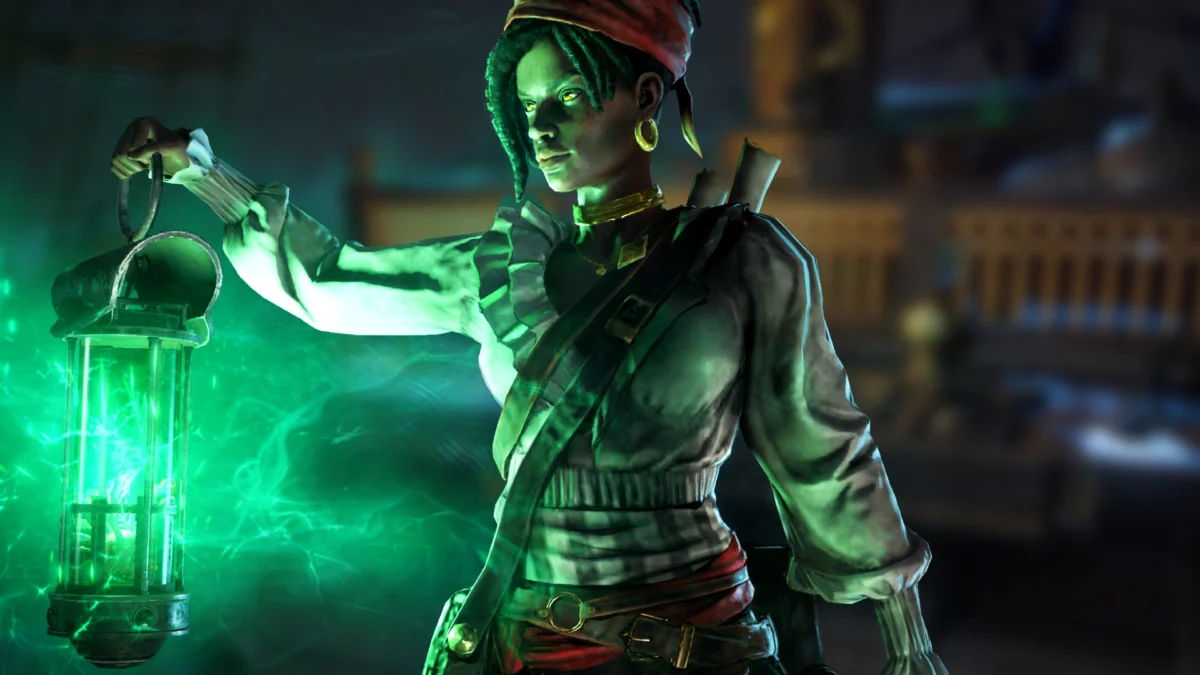
In the long, storied history of Grinding Gear Games’ flagship action RPG, Path of Exile, few moments have sent as profound a shockwave through the community as the recent reveal of version 3.29, Curse of the Allflame. During an exclusive press demonstration, Game Director Mark Roberts unveiled a series of systemic overhauls that challenge the very foundational pillars of the game. Most notably, the rigid color-coding of item sockets—a mechanic that has governed player gearing since the game’s inception—is being fundamentally dismantled.
While the removal of socket colors has dominated the conversation, Curse of the Allflame offers far more than just a quality-of-life revolution. It introduces an ambitious, deep-sea-themed core mechanic, the return of the fan-favorite Mercenary system, a new Ascendancy for the Scion, and a massive rebalancing of spellcasting archetypes. As the community prepares for the launch on Friday, July 24, it is clear that Grinding Gear Games is not merely iterating; they are actively rewriting the rules of Wraeclast.
The Core Mechanic: Diving into the Abyss
The Curse of the Allflame league invites players to join the corsair captain Val on a perilous expedition beneath the surface of the sea. Players board The Sovereign, a repurposed Oriathan vessel that houses Vesper, a tragic, ethereal entity bound to the ship and eternally burning with the Allflame’s curse.

The gameplay loop centers on "Allflame Lanterns." By placing these lanterns on the ocean floor, players generate pockets of breathable air, allowing them to traverse the dark, pressurized depths. The mechanic demands a delicate balance of aggression and resource management; if players venture too far from the safety of their lantern-light, they succumb to the crushing depths. While players can manually place these lanterns, the game offers an automated placement feature through Val, allowing for a faster, more fluid combat experience.
The tension culminates as the lantern’s power wanes. As the light flickers and dies, the surrounding monstrosities become increasingly desperate and aggressive, forcing the player into a high-stakes race back to the safety of the Bathysphere. This process is not merely for survival—it is for cartography. By mapping regions of the ocean floor, players unlock the ability to plan "Voyages."
Chronology of the Voyage: Strategic Exploration
The Voyage system acts as the league’s endgame engine. Players are presented with a 9×9 grid where they arrange the charts gathered from their deep-sea dives. Each chart applies specific modifiers to adjacent tiles or the entire grid, allowing players to "juice" their expeditions.

These modifiers interact with "currents of corruption"—environmental hazards that run along the edges of the Voyage board, simultaneously increasing the difficulty and the potential for rare loot. To secure their findings, players utilize specialized capsules capable of holding massive amounts of treasure, which are retrieved upon the completion of a voyage. The system introduces two vital new currencies: Ducats, which allow for advanced gear manipulation, and Dead Man’s Sulphur, which serves as the fuel for a powerful, new league-specific crafting bench.
Supporting Data: Crafting and Progression
The crafting system in Curse of the Allflame is designed to mitigate the "fear of the roll" that often plagues high-level Path of Exile players. By combining an item, a material, and Dead Man’s Sulphur at Vesper’s forge, players are presented with a selection of potential outcomes, allowing them to choose the result that best fits their build.
Furthermore, Ducats provide high-level utility, such as swapping attribute requirements on items or splitting a gear piece into four "ghostly copies," each retaining one of the original item’s modifiers. These copies serve as specialized crafting bases, offering a new level of granularity for the game’s dedicated theory-crafters.

Official Responses: Breaking Sacred Rules
When asked about the decision to remove socket colors, Mark Roberts was candid about the "shock factor." The team initially feared the community’s reaction to tampering with such a core, legacy mechanic.
"We went through it, we talked about it—how much of a benefit it is to both veterans and new players—and we were like, ‘I guess we’ll just change it,’" Roberts explained. "Every single person at the studio who found out turned into an immediate supporter. It’s a ‘sacred rule’ that simply needed to be broken to allow for better build experimentation."
While the vast majority of sockets will now be colorless, Grinding Gear Games is maintaining a vestigial layer of complexity. Players will still encounter red, blue, and green sockets. These will not restrict gem placement, but they will offer a quality bonus to gems that match the color, providing a strategic incentive for those who wish to optimize their gear further.

Implications: The New Meta and Systemic Changes
The implications of these changes are far-reaching. The removal of color-gating means that any piece of gear can theoretically support any skill combination, provided the player has the correct number of links and sockets. This shift is expected to blow the lid off build variety, as players are no longer restricted by the inherent difficulty of rolling specific colors on gear types that don’t naturally support them.
The Return of the Mercenaries
The Mercenaries of Trarthus are making a permanent return to the core game. Originally introduced in the 3.26 Secrets of the Atlas update, these companions have been overhauled. They no longer function as party members that increase monster health or loot requirements. Instead, they act as temporary, non-intrusive allies. For those who want to commit, the new Scion Ascendancy, the Luminary, allows players to hire up to three mercenaries—one active in the field and two waiting in the hideout—and outfit them with unique, powerful equipment.
Abyss and Legion Refinements
The development team has also targeted Abyss and Legion for significant overhauls. Abyss receives major quality-of-life updates, mirroring the fluidity of the Path of Exile 2 iteration, while maintaining the depth of the original. Legion is being streamlined: the requirement to kill every single monster has been removed, replaced by a "significant majority" threshold, and Incubators are being replaced by "Enshrouding Crystals." These crystals allow players to infuse unique armor with "vestigial" modifiers, creating a new avenue for powerful, bespoke gear.

Spellcaster Overhaul
Perhaps the most welcome news for the player base is the comprehensive balance pass on over 160 skill gems, with a primary focus on spellcasters. By increasing the frequency of caster-friendly modifiers on staves and introducing the "Mana-Charged Staff"—which grants block chance and mana cost reduction while retaliating with Arcane lightning—the developers are aiming to move the meta away from the long-standing dominance of Rolling Magma.
Furthermore, the introduction of "Pact" gems—exceptional skills that trade health or debuffs for raw power—offers a new, high-risk, high-reward scaling path for self-cast builds.
Conclusion: A New Era for Wraeclast
While the Mirage mechanic from the previous league is taking a temporary hiatus to allow for further balance and programming refinement, the sheer volume of content in 3.29 is staggering. From the haunting depths of the Allflame-cursed ocean to the profound structural changes to gear and character progression, Path of Exile 3.29 feels like a celebration of the game’s evolution.

Whether you are a veteran of Wraeclast who has spent thousands of hours mastering the intricacies of socket colors or a newcomer drawn in by the promise of the upcoming sequel, Curse of the Allflame offers a compelling, fresh start. By stripping away the limitations of the past, Grinding Gear Games has opened the door to a future where build diversity is limited only by the player’s imagination. The tide is rising, and the depths of the Allflame await.











