

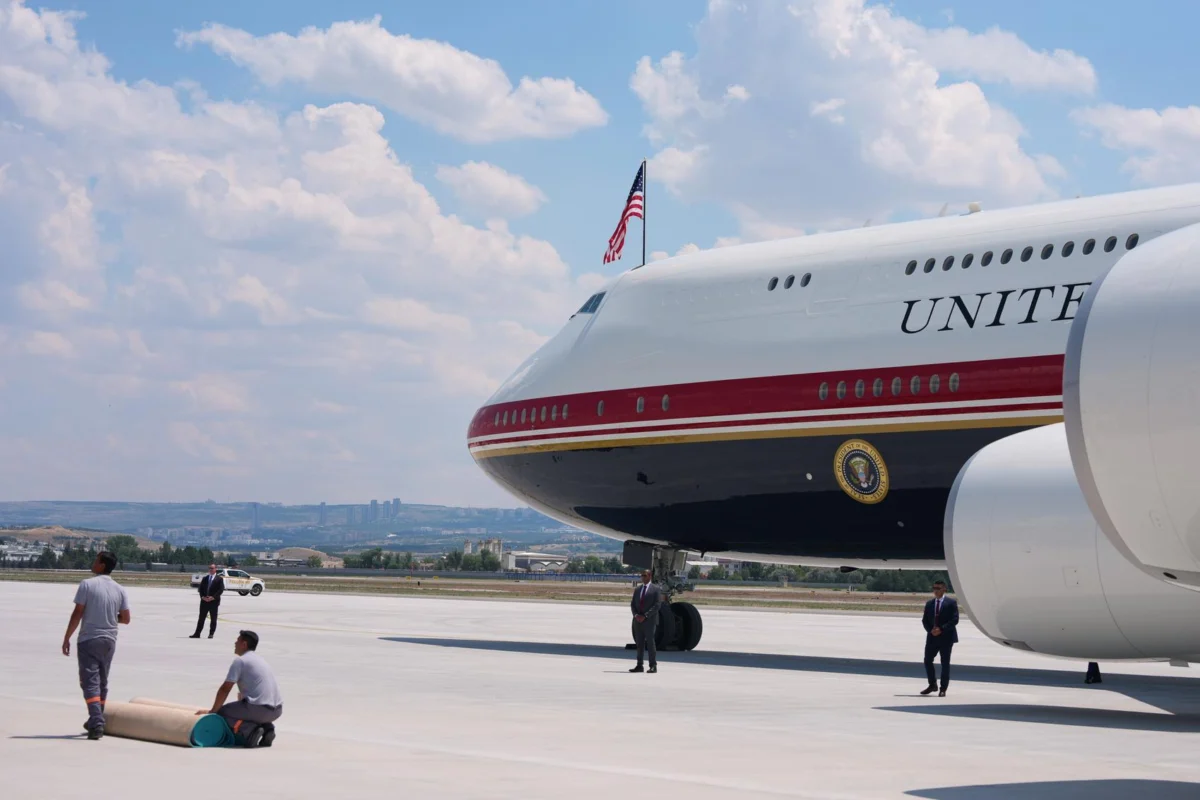
NEW YORK — The delicate, often contentious balance between national security and the First Amendment reached a breaking point this week. The New York Times has formally moved to quash federal subpoenas served upon its journalists, setting the stage for a landmark legal confrontation. The subpoenas, issued by the Justice Department, seek to compel reporters to disclose the identities of confidential sources who provided information regarding security vulnerabilities in the newly commissioned, Qatari-gifted Air Force One.
The filing, submitted under seal in the Southern District of New York, represents a significant escalation in the government’s aggressive pursuit of leakers—a trend that has alarmed civil liberties advocates and press freedom organizations alike.
The Legal Battle: A Challenge to Investigative Journalism
At the heart of the dispute is a series of subpoenas delivered to Times reporters late last Friday, with some documents served directly at the journalists’ private residences. The legal motion filed by the newspaper argues that the government’s actions are not merely a pursuit of classified information but a calculated effort to intimidate the press and punish the publication for its investigative scrutiny of the administration.
David McCraw, senior vice president and deputy general counsel for The New York Times, did not mince words regarding the newspaper’s stance. “As we set out in our motion, these subpoenas are brought in bad faith to punish The Times for its coverage,” McCraw stated. “They violate the constitutional rights of The Times and its journalists. We are going to court to defend our journalists’ rights to report freely on the administration and to provide the public with stories that matter.”
The motion argues that the government has failed to exhaust alternative means of identifying the source of the leak, a prerequisite under internal DOJ guidelines, and that the chilling effect of such subpoenas poses an existential threat to the ability of the press to hold government officials accountable.
Chronology: From Gifted Jet to Federal Grand Jury
The roots of the current standoff can be traced back to the integration of a new presidential aircraft—a gift from the State of Qatar. While the administration invested $400 million to retrofit and upgrade the jet to presidential standards, its entry into service was marked by immediate internal controversy.
- The Discrepancy: Despite the massive investment, President Trump opted to utilize an older-model aircraft to depart from a NATO summit in Turkey last week.
- The Reporting: The New York Times subsequently published a report, based on anonymous intelligence and security sources, detailing that the switch was prompted by urgent recommendations from the Secret Service. The report alleged that the newer, Qatari-gifted aircraft lacked critical defensive suites present on the older models, most notably advanced antimissile capabilities.
- The Denial: Following the publication, President Trump took to social media to categorically deny any security concerns, labeling the reports as "fake news" and asserting the new aircraft was "the most secure in the world."
- The Escalation: Shortly after the report went live, the Justice Department launched a formal leak investigation. By Friday, federal agents served subpoenas on the journalists involved, ordering them to appear before a federal grand jury in Manhattan this week.
Contextualizing the Crackdown: A Shift in Policy
The issuance of these subpoenas is not an isolated incident but rather the latest manifestation of a broader, more aggressive stance on classified information under the current administration.
In April 2025, Attorney General Pam Bondi formally rescinded the "press protection" policy established during the Biden administration. That policy had strictly limited the government’s ability to secretly seize the phone or email records of journalists during leak investigations. By revoking these protections, the current Justice Department regained the broad authority to utilize subpoenas, search warrants, and court orders to trace government officials who share information deemed "unauthorized."
While Bondi’s memo acknowledged that members of the press should be "presumptively entitled to advance notice" of such investigative activities, the practical reality has been far more invasive.
This environment is best illustrated by the events of January 2026, when FBI agents executed a search warrant at the home of Washington Post reporter Hannah Natanson. Natanson, who has been documenting the sweeping reorganization of federal agencies under the current administration, found her personal electronic devices seized as part of a probe into a Pentagon contractor suspected of mishandling classified documents.
Legal analysts note that while the DOJ has historically sought to identify sources through technical means, the decision to compel testimony directly from reporters before a grand jury is a rare and severe measure that significantly raises the stakes for the news industry.
The Official Stance: Security vs. Transparency
The Department of Justice has maintained a consistent, if controversial, defense of its actions. In a statement released following the Times report on the subpoenas, a spokesperson sought to draw a clear distinction between the target of the investigation and the mechanism of disclosure.
"To be clear, reporters are not the targets; those leaking classified information are," the DOJ stated. "We value and appreciate the important role that the press plays in this country. But the DOJ also plays an important role to make sure that the people entrusted with our nation’s secrets do what they’re supposed to do with that information, which means not sharing classified information."
The administration argues that the security of the President—and by extension, the security of the state—is compromised when sensitive technical specifications of the presidential fleet are discussed in the public domain. They contend that the "leak" itself is a criminal act that undermines the integrity of national security protocols, regardless of the journalistic value of the report.
Implications: A Chilling Effect on the Fourth Estate
The legal battle between the Times and the Justice Department carries profound implications for the future of investigative journalism in the United States.
1. The Erosion of Source Protection
If the government succeeds in compelling reporters to name their sources, the primary result will be the death of the "confidential source" model. Whistleblowers—individuals who witness corruption, incompetence, or security failures—rely on the implicit promise that their identities will be protected by the journalists to whom they speak. If that promise becomes legally unenforceable, the flow of vital information from the government to the public will effectively dry up.
2. Legal Precedent and Judicial Review
The Southern District of New York is now tasked with interpreting the extent of the government’s power under the current legal framework. If the court sides with the Justice Department, it could create a precedent that emboldens future administrations to use the grand jury process as a standard tool to bypass the editorial independence of newsrooms.
3. The Definition of "National Security"
Critics of the administration’s approach argue that the term "national security" is increasingly being used as a catch-all to shield the government from embarrassment. By labeling the reporting on the Air Force One security flaws as a leak of "classified information," the administration is effectively asserting that the public has no right to know if the President’s transport is safe—or if the $400 million spent on it was a waste of taxpayer resources.
4. The Global Perception
As the U.S. continues to advocate for press freedom in international forums, the domestic practice of raiding journalists’ homes and subpoenaing their sources creates a narrative of hypocrisy. International human rights organizations are already watching the case closely, fearing that the U.S. is signaling to autocratic regimes that the harassment of journalists is a standard, acceptable practice in a modern democracy.
Conclusion
As the legal proceedings move forward, the case will undoubtedly become a touchstone for the limits of government power in the digital age. The New York Times stands at the front line of what is increasingly being viewed as a battle for the soul of the First Amendment.
Whether the courts will uphold the traditional protections afforded to the press or grant the government the unchecked authority to dismantle the shield of source confidentiality remains to be seen. What is clear, however, is that the outcome of this clash will determine the viability of investigative journalism for the remainder of the decade. As the country watches, the question persists: can a government that demands total secrecy coexist with a press that demands total transparency?
For now, the courtroom in Manhattan will serve as the crucible in which that question is tested.











