

In an era where the rapid evolution of Artificial Intelligence is often shadowed by concerns over data harvesting and corporate surveillance, Proton is making a definitive move to reclaim the narrative. The company, widely known for its encrypted email and VPN services, has officially unveiled Lumo 2.0, a massive overhaul of its proprietary chatbot. By integrating sophisticated image generation, advanced reasoning capabilities, and deep-context retrieval, Proton is positioning Lumo as the first viable, privacy-centric alternative to the industry titans—ChatGPT, Gemini, and Claude.
The Evolution of Lumo: A Chronological Overview
Proton’s foray into the generative AI space was never intended to be a mere experiment. When the company first launched Lumo nearly a year ago, the primary value proposition was security. Unlike mainstream AI tools that often store user prompts to train future models, Lumo was built on the foundation of "zero-access encryption."
- Early 2024: Proton introduces Lumo 1.0, a privacy-focused chatbot that prioritizes user anonymity and local data encryption. The launch was met with skepticism from industry critics who argued that while secure, the model lacked the creative and analytical horsepower of its competitors.
- Mid-2024: Incremental updates (up to version 1.4) focused on stability and basic conversational fluency. Proton began testing internal benchmarks to see how a "privacy-first" architecture could compete with the massive parameter counts of OpenAI’s GPT-4 or Google’s Gemini.
- Late 2024 (The Current Launch): Lumo 2.0 arrives as a complete re-engineering of the platform. The shift moves from a simple text-based interface to a multimodal ecosystem capable of vision-based analysis, image generation, and complex logical reasoning.
Technical Prowess: Under the Hood of Lumo 2.0
The leap from Lumo 1.4 to 2.0 is not just an iterative improvement; it is a fundamental shift in architecture. The core of this upgrade lies in the introduction of a "Thinking Mode"—a specialized computational layer that allows the model to perform multi-step reasoning before generating a final response.
Benchmarking Against the Giants
Proton has released data derived from the Artificial Analysis Intelligence Index, a standard benchmark for evaluating the efficacy of large language models across varied tasks. The results are striking:
- Lumo 2.0 Lite: Recorded a 127% performance increase compared to its predecessor, Lumo 1.4.
- Lumo 2.0 Max: Recorded a massive 240% improvement, positioning it firmly within the competitive tier of industry-leading models.
These metrics are not merely academic. By utilizing deeper context windows, Lumo 2.0 can now synthesize vast amounts of background information, provide accurate source citations, and maintain a coherent thread across long-form interactions. This directly addresses one of the most common complaints regarding smaller, privacy-focused models: the tendency to "hallucinate" or lose the thread of a complex conversation.
Multimodality: Vision and Creation
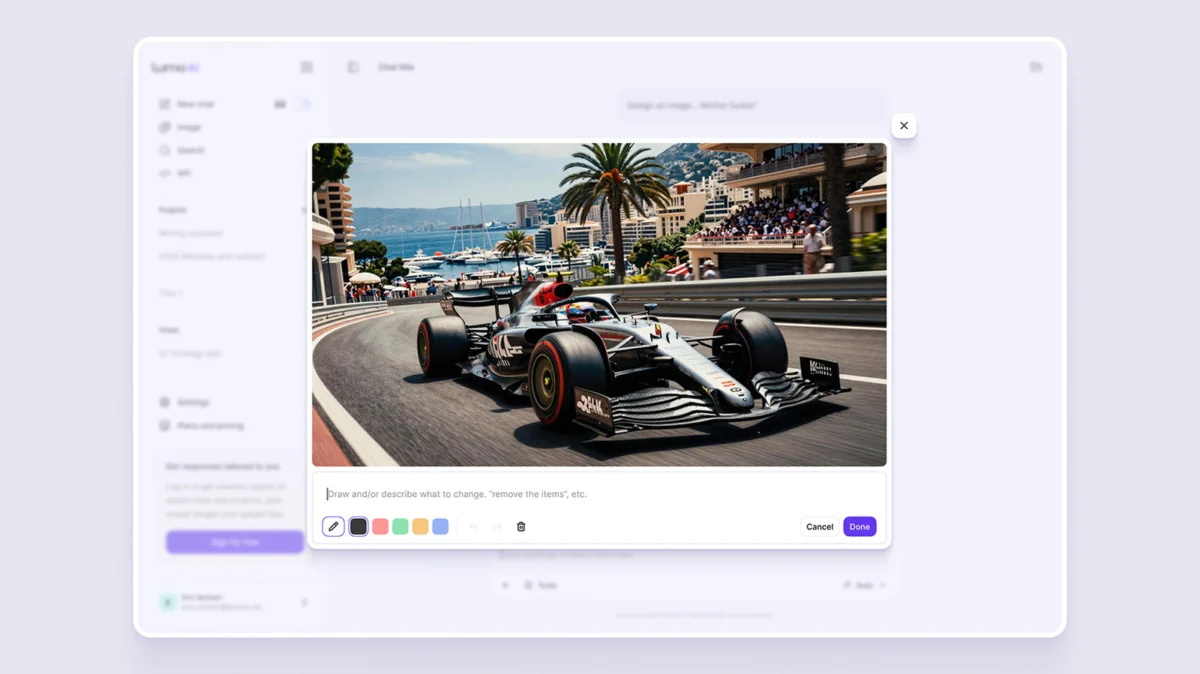
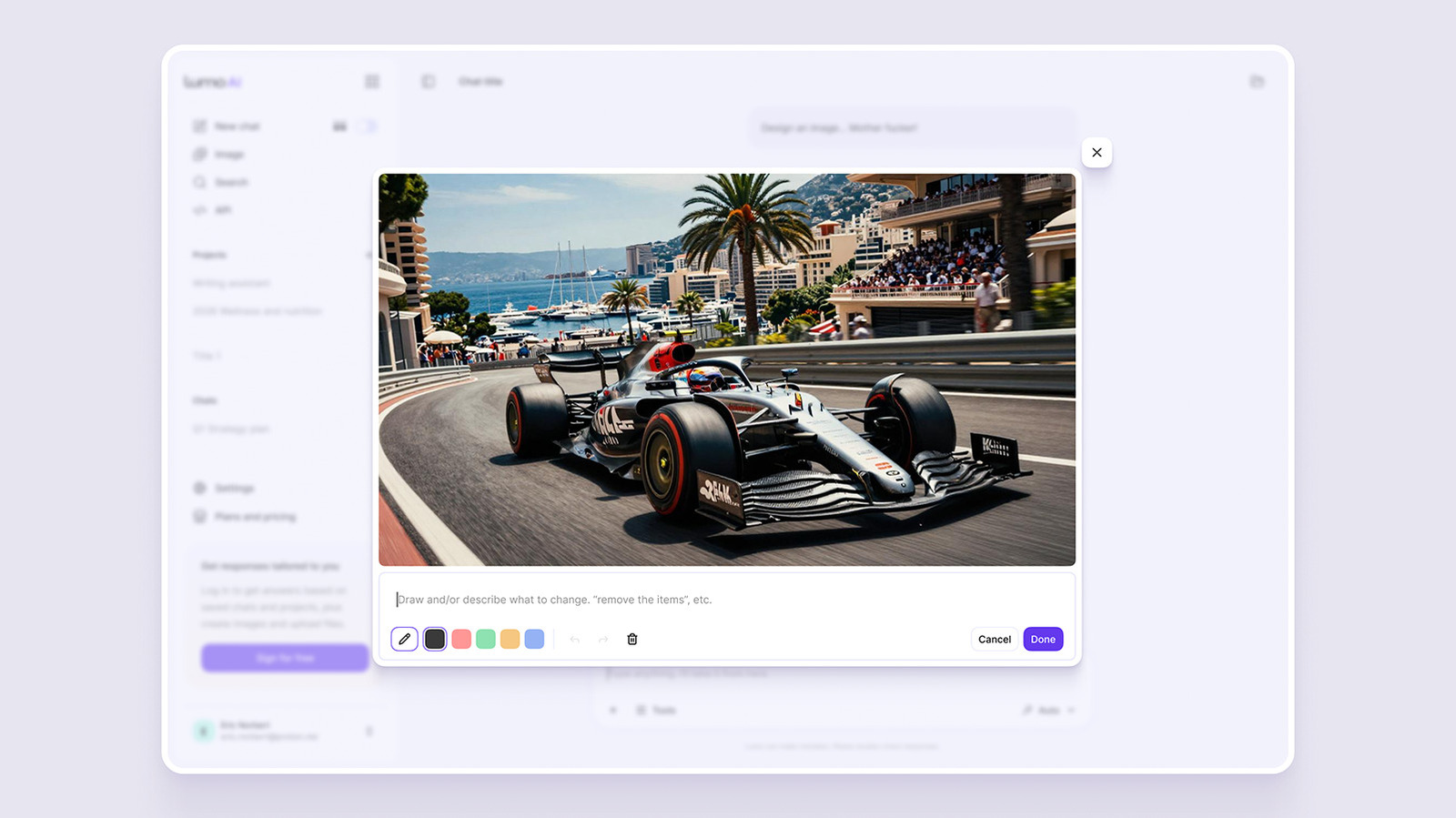
Perhaps the most significant addition to Lumo 2.0 is its newfound vision capabilities. Users can now upload images for the chatbot to analyze, edit, or interpret. Whether it is summarizing a complex infographic or providing creative feedback on a design draft, Lumo 2.0 handles visual data with the same rigorous encryption protocols as its text-based chats.
Crucially, the image generation features are also protected by Proton’s signature zero-access encryption. This ensures that even when a user creates high-fidelity visuals, the prompts and the resulting outputs are accessible only on the user’s local device. Proton maintains that it cannot view, store, or train on the visual data generated by its users.
The Privacy Paradigm: Zero-Access Encryption
For many users, the primary barrier to adopting AI is the "black box" nature of data storage. Most AI companies process data in the cloud, often retaining access to prompts to refine their models. Proton’s unique approach effectively renders the company a "blind" service provider.
By employing zero-access encryption, Proton ensures that even if their servers were to be compromised or subpoenaed, the actual content of the conversations—including images and background research—remains scrambled and indecipherable to anyone except the end user. This technical choice is the bedrock of the Lumo brand, and with version 2.0, Proton is betting that the market is finally ready to prioritize digital sovereignty over the slightly higher convenience of non-private competitors.
Official Perspectives: The Vision of Andy Yen
Proton founder and CEO Andy Yen has been vocal about the necessity of this update. In his public statement regarding the release, Yen framed Lumo 2.0 not just as a product update, but as a statement of intent for the future of tech ethics.
"Lumo 2.0 has been re-engineered from the ground up, and the introduction of thinking mode gives it powerful new capabilities," Yen remarked. "User testing demonstrates that the gap has closed to the point that for many use cases, users can no longer perceive a qualitative difference between Lumo 2.0 Max and the latest models from OpenAI and Anthropic. Lumo 2.0 demonstrates that users no longer need to choose between powerful AI capabilities and meaningful privacy protections."
Yen’s rhetoric suggests a shift in the company’s strategy. Rather than positioning itself as a niche tool for privacy activists, Proton is now targeting the "power user" segment—professionals, researchers, and creators who need the capabilities of high-end AI but cannot afford to leak proprietary data to third-party servers.
Implications for the AI Industry
The launch of Lumo 2.0 has several ripple effects for the broader artificial intelligence landscape:
1. The Death of the "Privacy vs. Power" Trade-off
For years, the industry consensus was that privacy-preserving AI would inherently be less capable because it couldn’t leverage the massive datasets of global users to "learn." Proton’s performance benchmarks suggest that this bottleneck may be a thing of the past. By refining their architecture, they have proven that a secure model can be just as smart as a data-hungry one.
2. Monetization and Accessibility
Proton is maintaining a tiered model. The core features remain free, lowering the barrier to entry for privacy-conscious students and casual users. However, the introduction of "Lumo Plus"—priced at $10 per month—signals that Proton is ready to compete for recurring revenue from the professional segment. This subscription grants unlimited chats, advanced image generation, and access to the "Max" model, aligning its pricing structure with the industry standards set by ChatGPT Plus and Claude Pro.
3. Regulatory and Competitive Pressure
As governments worldwide—from the EU’s AI Act to various US privacy initiatives—begin to tighten regulations on how AI companies handle user data, Proton’s "privacy by design" approach may become a competitive advantage. If companies are forced to adopt stricter data handling practices, Proton will have a significant head start in the infrastructure necessary to comply with these laws without sacrificing model performance.
Looking Ahead
The release of Lumo 2.0 is a milestone in the "AI Wars." It moves the focus away from sheer parameter size and toward the usability and security of the interface. As the tool rolls out to the public, the real-world performance will be the true test. Will the "Thinking Mode" hold up under the pressure of complex, multi-layered user queries? Will the image generation quality rival the aesthetic mastery of Midjourney or DALL-E 3?
If the initial feedback and the 240% increase in benchmark scores are any indication, the answer is likely yes. Proton has successfully bridged the gap between cutting-edge AI utility and ironclad digital security. For those who have been waiting for an AI that is as powerful as it is private, the wait appears to be over. Lumo 2.0 is not just a chatbot; it is a blueprint for a future where AI serves the user, rather than the corporation.











