Nana Wu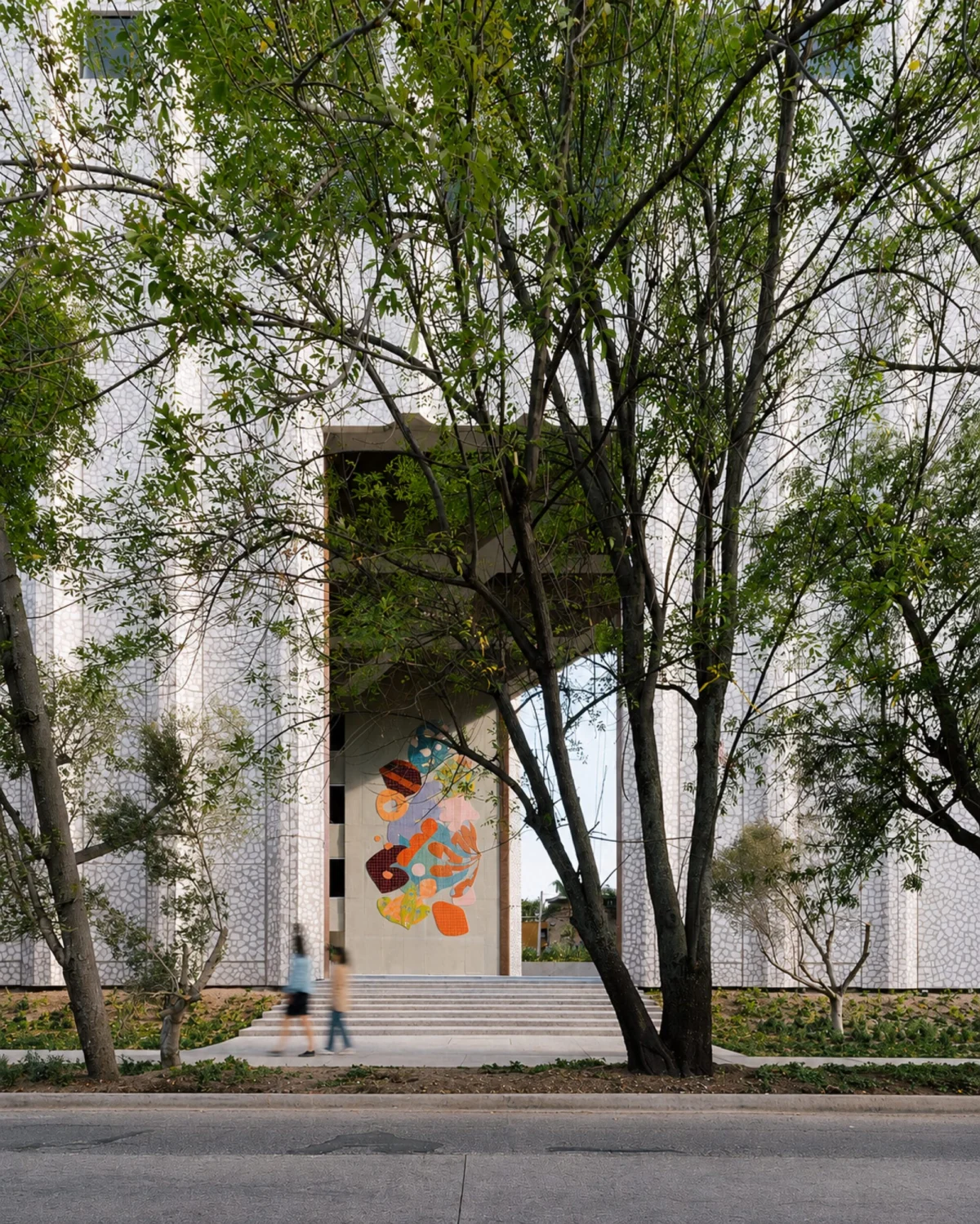
In the heart of Guadalajara, Mexico, a quiet revolution in architectural design is unfolding on the exterior of the Torre San Luis hotel. Thousands of custom-fabricated, hand-glazed ceramic tiles have been meticulously assembled to create a facade that functions less like a wall and more like a breathing, organic organism. Titled Shape of Movement, this large-scale public installation represents a landmark collaboration between multidisciplinary artist Alex Proba and the renowned master artisans of Cerámica Suro.
By merging contemporary abstract art with traditional Mexican ceramic craftsmanship, the project transcends mere decoration, inviting passersby to witness a dialogue between rigid architectural structure and the fluid, unpredictable essence of nature.
The Genesis of a Ceramic Masterpiece
Main Facts and Artistic Vision
Shape of Movement is a site-specific installation that utilizes a vast array of bespoke ceramic tiles. Each tile acts as a puzzle piece within a larger, complex mural that spans the facade of the Torre San Luis. The aesthetic language employed by Alex Proba—characterized by bold, organic shapes and a sophisticated interplay of color—is instantly recognizable. However, in this iteration, Proba has evolved her signature style to harmonize with the architectural verticality of the hotel.

The color palette is a direct response to the Mexican landscape. Earthy neutrals provide a grounding base, while accents of dusty pink, deep terracotta, and azure blue reflect the sun-drenched atmosphere of Guadalajara. The forms are suggestive of a lush, hyper-real garden, where flora appears to be captured in a moment of growth or transition.
The Collaboration
The success of the project rests on the symbiotic relationship between Proba’s design-led vision and the technical prowess of Cerámica Suro. Based in Guadalajara, Cerámica Suro has long been a destination for international artists and architects seeking to push the boundaries of clay. For this project, the studio’s artisans faced the challenge of translating Proba’s two-dimensional digital concepts into three-dimensional, durable ceramic elements that could withstand the elements while maintaining a delicate, fluid aesthetic.
A Chronology of Creation
The realization of Shape of Movement was a multi-phased endeavor that spanned several months of intense planning, production, and installation.

Phase 1: Conceptualization and Prototyping
The process began with an intensive period of research into the hotel’s site. Proba spent time studying the light patterns and the movement of guests and local residents around the Torre San Luis. Her sketches focused on capturing the "flow" of life. During this phase, she worked closely with the team at Cerámica Suro to test clay densities and glaze reactions, ensuring that the vibrant colors would not fade under the intense Mexican sun.
Phase 2: Fabrication at Cerámica Suro
Once the design was finalized, the studio began the labor-intensive process of hand-casting and glazing each tile. Unlike mass-produced architectural tiling, every piece in this mural bears the subtle marks of the artisan’s touch. The firing process was calibrated to ensure that the tiles, while appearing soft and organic in form, possessed the structural integrity required for a permanent outdoor installation.
Phase 3: The Installation
The final phase, which concluded in mid-2026, involved the meticulous arrangement of the tiles on-site. The project required extensive scaffolding and a team of installers who worked alongside Proba to ensure the "puzzle" was assembled according to her exact vision. Each tile was positioned to create a sense of forward momentum, effectively guiding the eye across the building’s facade.

Supporting Data: The Craft of Ceramic Architecture
The use of ceramics in contemporary architecture has seen a significant resurgence, driven by a desire to move away from the sterile, cold surfaces of glass-and-steel modernism.
- Materiality: The tiles used for the Torre San Luis are high-fired ceramics, known for their resistance to UV degradation and thermal expansion. This is critical in Guadalajara’s climate, which features significant seasonal temperature fluctuations.
- Scale: The installation covers thousands of square feet. By breaking the wall down into thousands of individual, unique shapes, Proba has effectively "humanized" the scale of the building.
- Production Volume: While the exact count remains proprietary, the project involved the creation of several thousand unique ceramic units, each requiring individual glazing and kiln-time, marking it as one of the most significant ceramic facade projects in the region to date.
This is not the first time Proba and Cerámica Suro have teamed up. Their previous partnership, which resulted in a vivid, immersive swimming pool installation at a private residence in Miami, served as a proof-of-concept for the technical challenges of working with ceramic on a grand scale. The Guadalajara project, however, represents a significant escalation in both ambition and visibility.
Official Responses and Artist Perspectives
In interviews following the completion of the project, Alex Proba emphasized the conceptual weight of the work. "The work is about the movement we carry through spaces every day," she stated. "I wanted the mural to feel as if the shapes are interacting with one another and flowing through the architecture itself."

The collaboration has been hailed by local art critics as a triumph of "contextual art." By utilizing a medium that is deeply rooted in Mexican cultural history—ceramics—and applying it through a contemporary, abstract lens, the Torre San Luis has transformed from a conventional hotel into a public landmark.
The team at Cerámica Suro noted that the project pushed their artisans to innovate. "Working with Alex requires us to move beyond traditional geometric tiling," a studio representative remarked. "She challenges us to treat the wall as a canvas where the medium itself has to express motion, depth, and personality."
Implications for Public Art and Urban Design
The Shape of Movement installation carries significant implications for the future of urban development in Guadalajara and beyond.

1. Humanizing the Urban Fabric
In many modern cities, large-scale architecture often feels detached from the people who interact with it. By integrating tactile, hand-crafted art into the very skin of a building, developers are discovering that public spaces can be made more welcoming and emotionally resonant. The Torre San Luis serves as a case study in how private real estate can contribute to the public aesthetic of a city.
2. The Resurgence of Traditional Craft
The project highlights the vital role that heritage crafts play in modern innovation. Rather than replacing human labor with automated, 3D-printed solutions, this project celebrates the "imperfections" and the soul inherent in handmade items. It serves as a reminder that the most compelling architectural statements are often those that maintain a connection to the human hand.
3. Sustainability and Longevity
Ceramic is one of the most durable and sustainable building materials available. It is fully recyclable, non-toxic, and, as demonstrated by the millennia of ceramic history, built to last. As architects seek out materials that reduce the carbon footprint of buildings while ensuring longevity, the return to high-quality, regionally sourced ceramics is likely to gain momentum.

Conclusion: A Living Legacy
The Torre San Luis is no longer just a place for travelers to sleep; it has become a destination for art lovers and a source of daily inspiration for the residents of Guadalajara. The Shape of Movement serves as a permanent, evolving narrative of color and form, frozen in clay but vibrant in spirit.
As Alex Proba and Cerámica Suro look toward future collaborations, they leave behind a testament to what is possible when an artist’s vision is supported by the dedicated hands of master craftspeople. The mural stands as a reminder that even the largest architectural structures are capable of reflecting the delicate, flowing, and ever-changing beauty of the natural world.
For those interested in following the ongoing work of the contributors, further insights into the fabrication process and future installations can be found through the respective social media channels of Alex Proba and Cerámica Suro. As the sun sets on Guadalajara, the tiles of the Torre San Luis continue to capture the light, shifting in tone and character—a true, living work of art that captures the essence of movement in every single glaze.

 Reynand Wu
 Dwi Wanna