

By Sports Desk | Tokyo, Japan
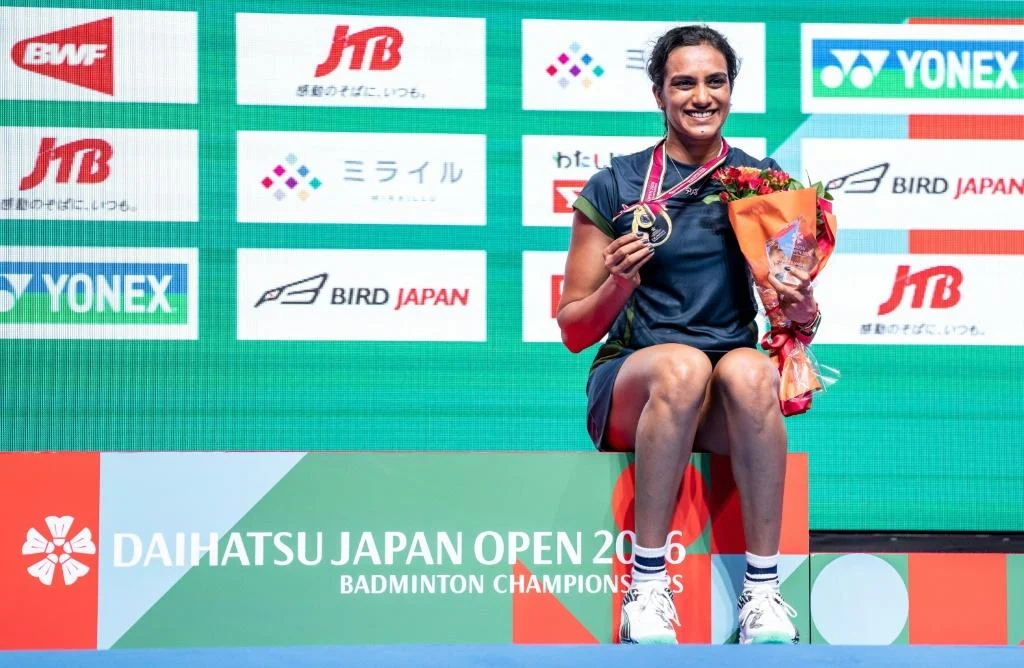
In a performance that signaled a definitive return to elite form, Indian badminton icon Pusarla Venkata Sindhu captured the Japan Open title on Sunday, snapping a title drought that had spanned nearly two years. The 31-year-old, a former world champion and dual Olympic medalist, overcame a formidable challenge from local favorite Akane Yamaguchi in straight sets, 21-17, 21-17.
The victory at the Tokyo Metropolitan Gymnasium is not merely a trophy to be added to her expansive collection; it represents a psychological watershed moment for the world number 10, who has battled inconsistency, injury, and mounting external scrutiny since her last major triumph at the Syed Modi India International in early 2024.
Main Facts: A Masterclass in Tokyo
The final was a testament to Sindhu’s tactical maturity and mental fortitude. Facing the world number three on her home turf, Sindhu was required to navigate a hostile crowd and the relentless pace of Yamaguchi’s defensive game.
From the opening rally, Sindhu dictated the tempo, utilizing her height to unleash steep, punishing smashes that kept the Japanese star on the defensive. While the scoreline—21-17, 21-17—suggests a comfortable outing, the reality was a high-octane battle of endurance and precision. The climax of the match was fittingly dramatic: with match point on the line, a contentious call on a shot from Yamaguchi was initially ruled in, only for Sindhu to utilize a video review to successfully overturn the decision, confirming the shuttle had landed out.
For Sindhu, the gold medal is a tangible reward for her persistence. Having struggled to convert semifinal appearances into final-round victories throughout the 2026 World Tour, this win provides the validation she has been seeking during a period of transition.
Chronology: The Road to Redemption
The Long Silence (2024–2026)
Following her victory at the Syed Modi International in early 2024, Sindhu’s career entered a challenging phase. While she remained a fixture in the top tier of world badminton, the podium’s top step proved elusive. Throughout 2025 and the first half of 2026, Sindhu suffered a series of heartbreaking exits, often falling in the semifinals or quarterfinals, leading to speculation among analysts regarding her longevity and physical condition.
The Tokyo Campaign
Sindhu’s journey to the Japan Open final was anything but straightforward. She navigated a grueling draw, overcoming younger, aggressive opponents in the early rounds. Her semifinal victory, in particular, was a gritty affair that tested her stamina. By the time she reached Sunday’s final, she had shed the tentative approach that characterized her play earlier in the season, opting instead for a more aggressive, front-court dominance.
The Final Match
The match began with Sindhu establishing a lead, a departure from her recent tendency to start slow. By maintaining a four-point cushion through the middle of the first set, she forced Yamaguchi to take uncharacteristic risks. The second set followed a similar pattern, with Sindhu refusing to allow the Japanese crowd to influence the momentum. The final challenge, which secured the title, served as the perfect punctuation mark to a match defined by composure.
Supporting Data: Sindhu’s Career Context
To understand the magnitude of this victory, one must look at the numbers. At 31, Sindhu is competing against a new generation of players, many of whom possess greater speed and recovery. However, her current world ranking of 10 remains a testament to her consistency.
- 2016 Olympic Silver Medalist: Rio de Janeiro.
- 2019 World Champion: Basel, Switzerland.
- Title Drought Duration: Approximately 22 months (from Syed Modi International 2024 to Japan Open 2026).
- Head-to-Head Impact: This victory narrows the gap in her historical rivalry with Akane Yamaguchi, further cementing Sindhu’s status as one of the most formidable competitors in the women’s singles circuit.
Her statistical profile reveals a shift in her game; while she has lost some of her explosive pace, her net play and defensive anticipation have improved significantly. This strategic evolution has allowed her to remain competitive even as she enters the twilight of her professional career.
Official Responses: The Emotional Aftermath
The post-match press conference was characterized by raw emotion. Sindhu, usually stoic, spoke candidly about the burden of the past two years.
"This one was very important because playing in finals is one thing, but winning and getting that gold is a different thing altogether," Sindhu told reporters. "I had tears in my eyes because it was really important to me. I am working hard and focusing hard on myself. I kept believing that I could do it, even though a lot of people were wondering what was happening."
Her camp has emphasized that the win was a result of a revamped training regime that focused heavily on sports psychology and injury prevention. The victory has been hailed by the Badminton Association of India (BAI) as a "triumph of character," highlighting the player’s refusal to succumb to the "noise" surrounding her recent performance slumps.
Implications: The Road to New Delhi
The timing of this victory could not be more fortuitous. With the World Championships set to take place in New Delhi next month, the pressure on Sindhu to perform on home soil will be immense.
Building Momentum for New Delhi
The Japan Open win serves as the perfect catalyst for her home campaign. "I’m happy that I’m on the positive side. This gives me a lot of confidence," she remarked when asked about her prospects for the upcoming championships. Winning in a high-pressure environment like Tokyo provides the mental "proof of concept" she needs to face the top seeds in New Delhi.
Tactical Shifts
Looking ahead to the World Championships, analysts suggest that Sindhu’s success in Tokyo was built on a "low-error" strategy. By forcing her opponents to play the extra shot, she neutralized the pace of the younger players. If she maintains this disciplined approach in New Delhi, she stands a genuine chance of adding another world medal to her collection.
Future Legacy
Beyond the immediate hardware, this win settles a narrative of decline that had begun to form in the sports media. At 31, Sindhu has demonstrated that she is not merely a legacy player, but a contender capable of evolving. The victory acts as a bridge between her legendary past and a potential final act in her career.
A Psychological Breakthrough
Perhaps the most significant implication of this victory is internal. By silencing the critics who questioned her ability to win "the big ones" after 2024, Sindhu has reclaimed the narrative of her own career. In the high-stakes world of professional badminton, where confidence is often as important as technique, this win is the psychological fuel required to sustain her through the rigors of the World Championships and the remainder of the 2026 season.
As the sport prepares to head to India, the focus will undoubtedly shift to whether this Tokyo surge was a singular peak or the beginning of a final, glorious chapter. For now, PV Sindhu stands where she belongs: at the top of the podium, with the weight of expectation replaced by the clarity of a champion.
© 2026 AFP











