

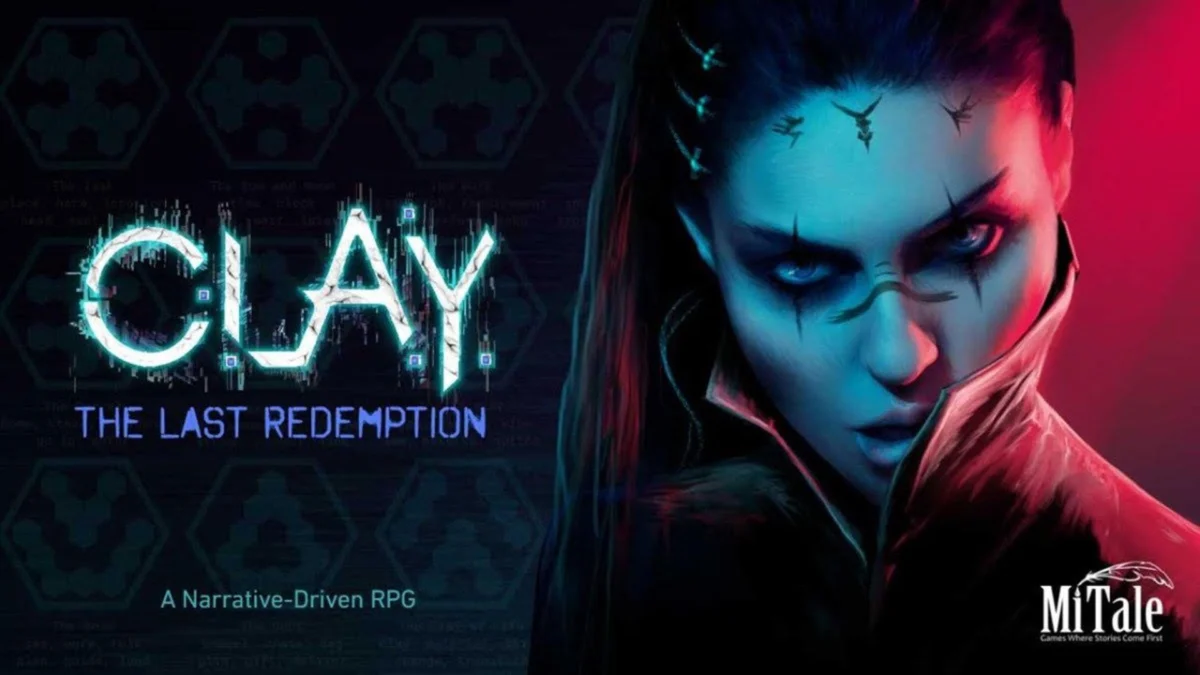
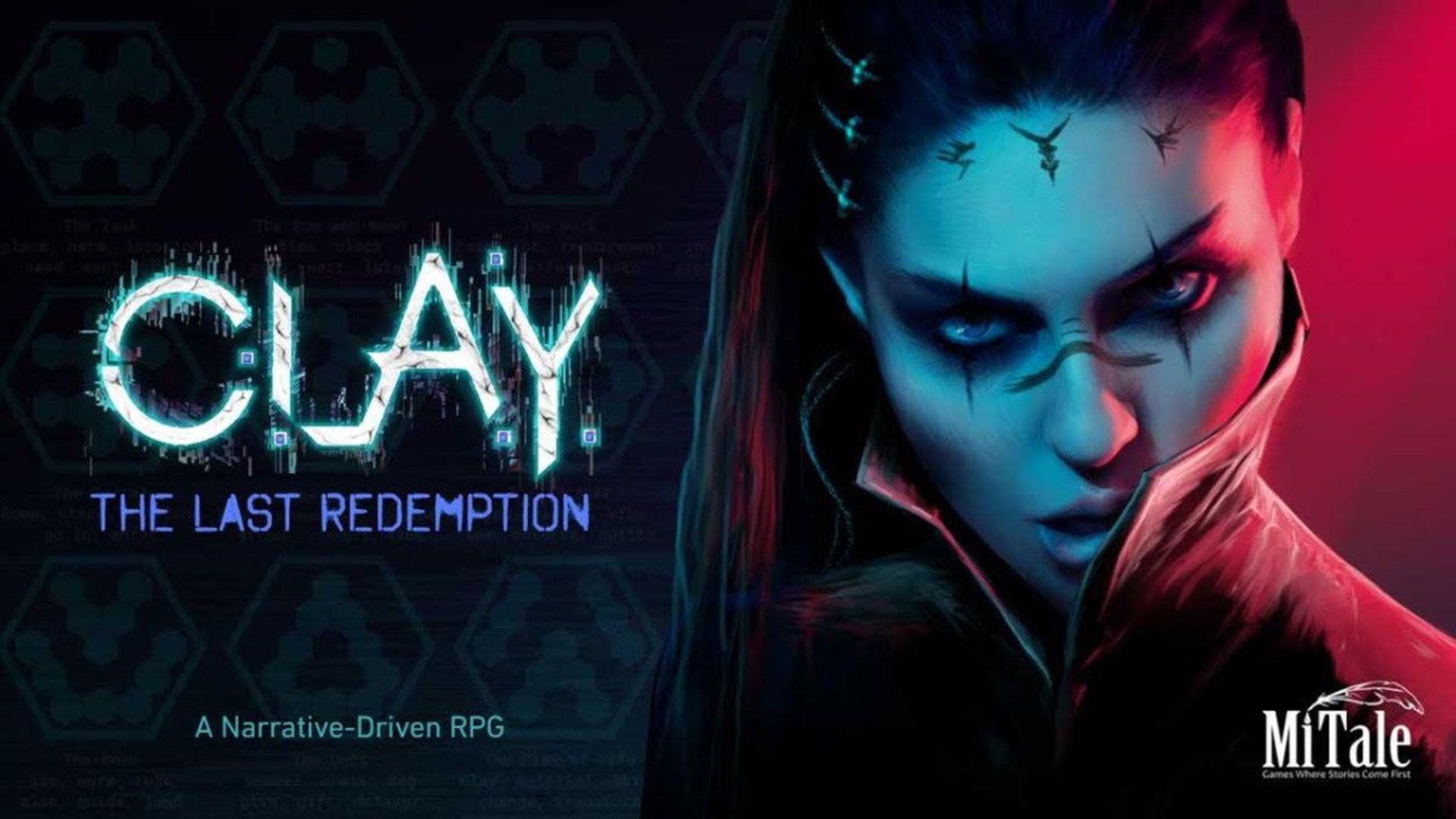
At the heart of the bustling Gamescom floor this year, amidst the sensory overload of high-fidelity graphics and cinematic trailers, a small studio named MiTale Ltd. is quietly attempting to redefine the boundaries of game development. The studio is showcasing C.L.A.Y. – The Last Redemption, a post-apocalyptic narrative-driven RPG that, on the surface, might appear to be yet another entry in an oversaturated genre. However, beneath its thematic exterior lies a radical technological departure: C.L.A.Y. is being billed as the first commercial title to integrate quantum computing into its development pipeline and narrative architecture.
By collaborating with experts from IBM Quantum, MiTale is not merely experimenting with gimmicks; they are attempting to bridge the gap between abstract quantum physics and the concrete demands of modern software design. Their claim is audacious: they envision a future where quantum hardware acts as a specialized accelerator for complex computational tasks, potentially occupying a space in our gaming rigs similar to the dedicated GPU.
The Genesis of a Quantum Vision: Chronology and Context
The journey toward C.L.A.Y. was not an overnight endeavor. MiTale’s fascination with the intersection of gaming and quantum mechanics dates back to 2019, a period when quantum computing was largely restricted to high-level academic research and corporate laboratory environments.
The Six-Year Arc
Since 2019, the studio has been methodically bridging the gap between classical game development environments—such as Unity, Unreal Engine, and the Godot engine—and the nascent world of quantum processors. The studio’s objective was never simply to "run a game on a quantum computer," as one might run a program on a standard CPU. Instead, they focused on how quantum circuits could enhance the creative process and the depth of procedural systems.
The development of C.L.A.Y. has spanned at least six years, a timeframe that underscores the technical difficulty of the project. During this period, the team worked on connecting established narrative systems, such as the popular "Ink" engine, with quantum-assisted logic. By the time of their 2026 Gamescom announcement, the studio had matured enough to pivot from internal research to a public-facing, commercially viable product.
The Technical Backbone: How Quantum Enhances Gameplay
To understand why a developer would bother with quantum computing, one must first understand the limitations of classical binary processing. Classical computers operate on bits (0s and 1s), which are excellent for predictable, linear calculations. However, when a game attempts to simulate complex, multi-variable environments, it often hits a "computational wall."
Beyond the Binary: Procedural Generation and Simulation
MiTale has leveraged IBM Quantum’s infrastructure to assist in the generation of game assets, specifically maps, character archetypes, and complex graphic simulations. In traditional development, procedural generation relies on pseudo-random number generators—mathematical algorithms that mimic randomness but are ultimately deterministic.
Quantum computing, however, utilizes qubits, which leverage the principle of superposition to exist in multiple states simultaneously. This allows for a fundamentally different approach to probability and stochastic modeling. In C.L.A.Y., this technology is used to create a "truly unique" narrative experience. Rather than relying on a predetermined set of branching paths, the quantum systems help calculate potential outcomes and environmental permutations that are statistically more varied and complex than what a standard CPU could achieve in real-time.
The "Quantum GPU" Hypothesis
One of the most provocative claims made by MiTale is that this project represents the first step toward using real quantum hardware to accelerate complex tasks in a manner analogous to a GPU. For decades, the GPU has evolved from a simple rasterizer into a massively parallel processor that handles everything from ray-tracing to AI inference.
MiTale posits that just as we offload graphics to the GPU and AI tasks to the NPU (Neural Processing Unit), we might eventually offload specific "quantum-hard" tasks to a QPU (Quantum Processing Unit). These tasks include:
- Massive Optimization: Solving for the most efficient pathing or resource distribution in massive, open-world environments with millions of interactive variables.
- Advanced Simulation: Simulating fluid dynamics, light transport, or molecular interactions at a level of fidelity previously impossible for consumer-grade hardware.
- Narrative Complexity: Managing "state space" for story variables that grow exponentially, allowing for truly meaningful player choices that don’t just feel like a "choose your own adventure" flowchart.
Official Stances and Industry Implications
The gaming industry is notoriously slow to adopt radical new hardware paradigms. We are currently in the midst of a massive transition toward AI-driven hardware, with companies like AMD and Intel flooding the market with NPUs. MiTale’s suggestion that quantum hardware could become the "next big thing" in PC components is, by their own admission, a bold prediction.
The IBM Collaboration
The partnership with IBM is significant. IBM is arguably the leader in making quantum hardware accessible via cloud-based interfaces (the IBM Quantum Experience). By allowing developers to interface with real quantum hardware, rather than just simulators, IBM is providing the foundational infrastructure for this experiment. While the current implementation likely involves the game client making cloud requests to a QPU—a process that introduces latency—the long-term vision is the integration of local or low-latency quantum accelerators.

The Criticism of "Hifalutin" Technology
It is important to maintain a grounded perspective. Quantum computers are often marketed as panaceas for all human problems, from climate change to universal medicine. Critics often point out that we are still in the "NISQ" (Noisy Intermediate-Scale Quantum) era, where quantum computers are prone to high error rates and decoherence.
However, gaming, by its nature, is forgiving. If an AI character makes a sub-optimal choice or a map generates a slight texture glitch due to a quantum calculation error, it is unlikely to break the game. This makes gaming an ideal "sandbox" for testing quantum hardware. As developers iterate on these systems, they are essentially stress-testing the reliability of quantum algorithms in a real-world, high-stakes application.
The Future: From Quandoom to C.L.A.Y.
We have seen early experiments before. The existence of Quandoom, a port of the seminal shooter DOOM that runs on a quantum computer, served as a proof-of-concept for the basic feasibility of quantum-assisted gaming. But C.L.A.Y. marks a shift from "can we do this?" to "what can this do for the player?"
Redefining the Next-Gen Experience
If MiTale succeeds, C.L.A.Y. will be cited as the catalyst for a new category of "Quantum-Enhanced" gaming. We could see:
- Infinite Replayability: Games that genuinely change their fundamental physics or narrative structure based on underlying quantum calculations, ensuring that no two players experience the same reality.
- Emergent Storytelling: A move away from scripted dialogue toward dynamic, responsive character behaviors that evolve based on a near-infinite array of causal variables.
- Hardware Evolution: A potential push for motherboard manufacturers to include dedicated quantum-ready slots or co-processors, once quantum hardware becomes sufficiently miniaturized.
Conclusion
As we look toward the future of interactive entertainment, the integration of quantum mechanics might feel like science fiction, yet the work being done by MiTale at Gamescom proves that the barrier to entry is lowering. While the Steam page for C.L.A.Y. – The Last Redemption may currently lack the full technical breakdown of its quantum underpinnings, the industry would be wise to pay attention to the press kits and the underlying research.
Whether quantum hardware will ever sit alongside the GPU in a standard gaming desktop remains an open question—one that will likely be debated for years to come. However, by treating the quantum computer as a creative tool rather than just a scientific instrument, MiTale is doing something that few others have dared: they are bringing the "spooky action at a distance" into our living rooms. C.L.A.Y. may be the first, but it is unlikely to be the last, and its success or failure will provide the roadmap for the next generation of digital storytelling.











