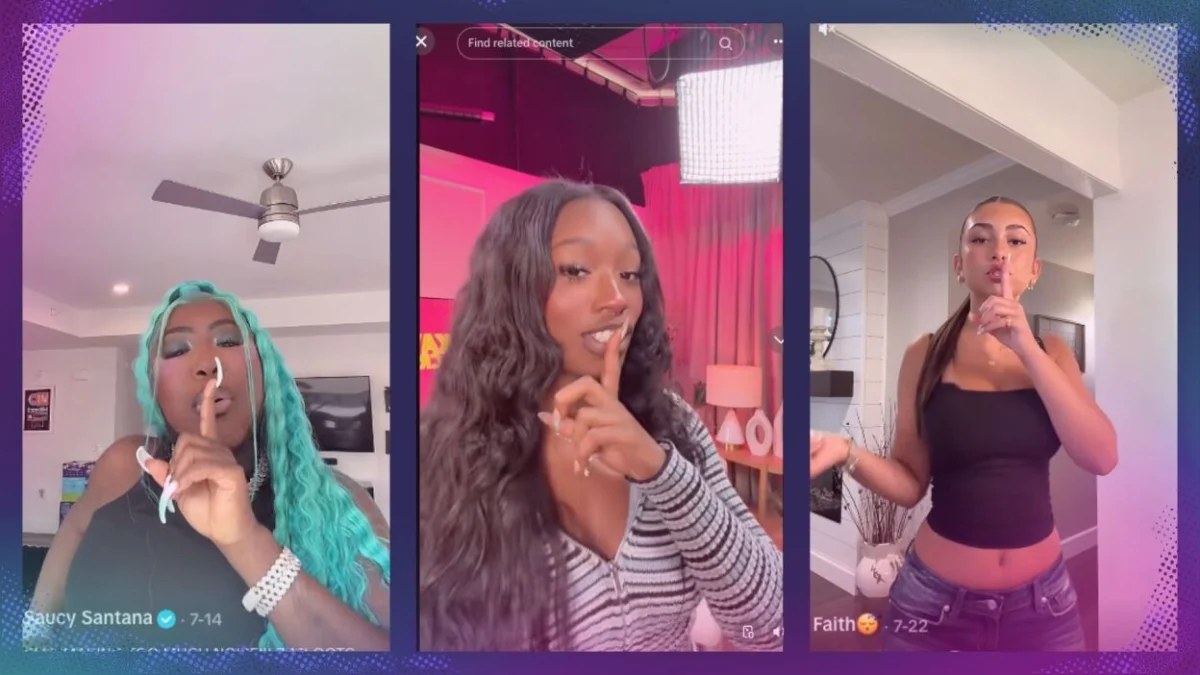
If you have spent any significant time scrolling through your TikTok For You page (FYP) this August, you have likely encountered a peculiar, rhythmic command: "Quiet on the creek."
It is a phrase that has transcended the bounds of social media, appearing in comment sections, Instagram captions, and even professional branding campaigns. While it may sound like a niche piece of advice from an avid angler, it has actually evolved into the internet’s favorite shorthand for discretion, secrecy, and "moving in silence." The trend, fueled by a resurfaced clip of rapper Saucy Santana, illustrates the unpredictable, lightning-fast nature of modern digital culture, where a two-year-old livestream snippet can transform into a Billboard-charting hit almost overnight.
The Genesis: A Childhood Memory Reimagined
The roots of the "Quiet on the Creek" phenomenon date back to a casual, candid conversation between rapper Saucy Santana and his friend, the rap artist Yung Miami. The original footage, which surfaced on social media earlier this summer, features the duo eating snapper during an informal livestream—originally believed to be an Instagram Live session from roughly two years ago.
In the clip, the conversation turns toward childhood memories. Santana, in a moment of nostalgic sincerity, remarks, "I used to go fishing when I was a little girl. You gotta be real quiet on the creek."
The advice, stemming from his grandmother’s stern warnings against stomping, shouting, or throwing rocks while fishing, was intended to teach the children how to avoid scaring away the fish. However, in the context of a high-energy, unfiltered livestream, the phrase landed with a comedic weight that the internet was quick to seize upon. By mid-summer 2026, the audio was ripped, remixed, and integrated into the TikTok ecosystem, where it underwent a total semantic transformation.
Chronology of a Viral Explosion
The rapid trajectory of the "Quiet on the Creek" trend serves as a masterclass in modern virality.
- The Resurgence (Early July 2026): The old clip resurfaced, catching fire as users began spamming Saucy Santana’s recent livestreams with references to the creek. The humor derived from the juxtaposition of Santana’s tough, public persona and this domestic, almost quaint memory of fishing.
- The Pivot (Mid-July 2026): Recognizing the organic momentum, Santana did not shy away from the meme. He leaned into it, collaborating with producer Tre Trax to turn the soundbite into a full-fledged song. In a display of transparency, he livestreamed the creative process, from beat selection to recording, allowing his fanbase to feel like architects of the track.
- The Release (July 17, 2026): The single "Quiet on the Creek" was released. It was an immediate success, capitalizing on the anticipation built during the studio sessions.
- The Saturation (August 2026): The trend reached its zenith as mainstream celebrities—including Lizzo, Monica, and Ice Spice—began filming their own versions. By mid-August, the audio had been used in hundreds of thousands of TikTok creations, and the track officially entered the Billboard charts.
The Cultural Anatomy of the Trend
What makes "Quiet on the Creek" more than just a catchy sound is its utility. In the lexicon of Gen Z and Millennial internet culture, the phrase has become a metaphorical framework for personal conduct.

"Quiet on the creek" effectively replaces older idioms like "keeping it on the down-low," "hush-hush," or "don’t count your chickens before they hatch." It implies a necessary level of stealth regarding one’s wins, relationships, or future plans. In an era of "oversharing" and constant digital surveillance, the trend resonates because it advocates for the opposite: privacy as a survival tactic for success.
The choreography associated with the trend reinforces this theme. Creators typically perform a series of gestures—shoulder-bouncing, hand-over-mouth motions, and the universal "shushing" finger—to signify the act of keeping a secret. Whether the secret is a new job offer, a discreet romantic partner, or simply a late-night snack, the audio provides the perfect sonic backdrop for the act of "moving in silence."
Data and Industry Impact
The commercial success of "Quiet on the Creek" is stark evidence of how social media metrics now dictate the music industry’s supply chain.
According to streaming data, the song surpassed 3.6 million streams on Spotify by August 19, 2026. On the Billboard charts, it debuted at No. 45 on the Hot R&B/Hip-Hop Songs list—a significant achievement for an artist who hadn’t charted since 2022.
Santana himself has been vocal about the "authentic" nature of this viral moment. During an appearance on The Breakfast Club on August 13, he noted, "People pay to go viral, people pray to go viral, and I’m doing it authentically." This shift toward "organic" viral marketing—where the artist engages with the meme rather than attempting to manufacture it from the top down—has proven to be a highly effective strategy for longevity.
Implications for Digital Content Creators
The "Quiet on the Creek" phenomenon offers several key takeaways for the future of digital content:
1. The Value of Authenticity
The audience’s willingness to embrace the song was largely contingent on the fact that the trend began as a genuine, unscripted moment. When creators attempt to manufacture "relatable" content, it often falls flat. Conversely, when an artist acknowledges their own "meme-ability," they gain a level of cultural capital that is difficult to purchase.

2. The Speed of Iteration
The window between a phrase appearing on a livestream and it becoming a commercially viable song is narrowing. For artists, the ability to pivot and produce content in real-time is now a prerequisite for relevance. Santana’s decision to involve his followers in the studio process turned the song into a communal project, effectively gamifying the release.
3. Language as a Commodity
Social media continues to be the primary engine for linguistic evolution. Phrases that start as inside jokes on platforms like TikTok or X (formerly Twitter) quickly migrate into the broader cultural consciousness. "Quiet on the creek" is now a permanent fixture in the modern vernacular, demonstrating how effectively the internet can distill complex social behaviors into a simple, three-word command.
Official Responses and Celebrity Integration
The trend was bolstered by high-profile endorsements that moved it out of the niche corners of the internet. When figures like Love Island USA star Serena Page and comedian Damon Wayans (who revived his iconic In Living Color character, Blaine Edwards, for the trend) participated, it signaled that the joke had achieved "mass appeal" status.
Santana’s own commentary on the trend has been equally important in shaping its meaning. While he acknowledges that some users apply the phrase to "sneaky" or illicit behavior, he has been careful to frame it as a broader philosophy of discretion. By rejecting the narrow interpretation that it only applies to closeted relationships, he allowed the trend to remain inclusive and applicable to any scenario involving the protection of one’s personal joy.
Conclusion: The Persistence of the Creek
As of late August 2026, the buzz around "Quiet on the Creek" shows few signs of abating. It serves as a reminder that the most successful viral trends are often those that possess a "hook" that is both linguistically versatile and culturally resonant.
Whether the phrase will hold its weight in the long term remains to be seen, but for now, it has provided the internet with a much-needed anthem for discretion. In a digital world that often demands constant noise, Saucy Santana has managed to turn the act of keeping quiet into the loudest cultural movement of the summer. As the saying goes: you’ve got to be real quiet on the creek—lest you scare away the success.