

The integration of artificial intelligence into the entertainment and creative industries has been met with a mixture of awe and intense skepticism. From the contentious resurrection of deceased actors to the automated generation of music and films that bypass human creative labor, the conversation surrounding AI in Hollywood has largely been defined by controversy. Critics argue that these tools often function as “brainrot” content or cold, soulless cash grabs that erode the value of human performance.
However, beneath this layer of friction lies a transformative potential that, when wielded with precision and empathy, can bridge the gap between historical erasure and digital preservation. Google has recently showcased this positive potential, unveiling a project that uses its proprietary Gemini AI ecosystem to reconstruct a moment of sporting history that was previously thought lost to time: the legendary “Gol da Rua Javari,” scored by the Brazilian football icon Pelé in 1959.
The Myth of the “Black Pearl’s” Greatest Goal
In the annals of football history, few figures loom as large as Edson Arantes do Nascimento, known to the world as Pelé. Throughout his storied career, the “Black Pearl” achieved feats of athleticism that bordered on the supernatural. Yet, even among his thousands of goals, one stood out in his own memory as the crowning achievement of his career.
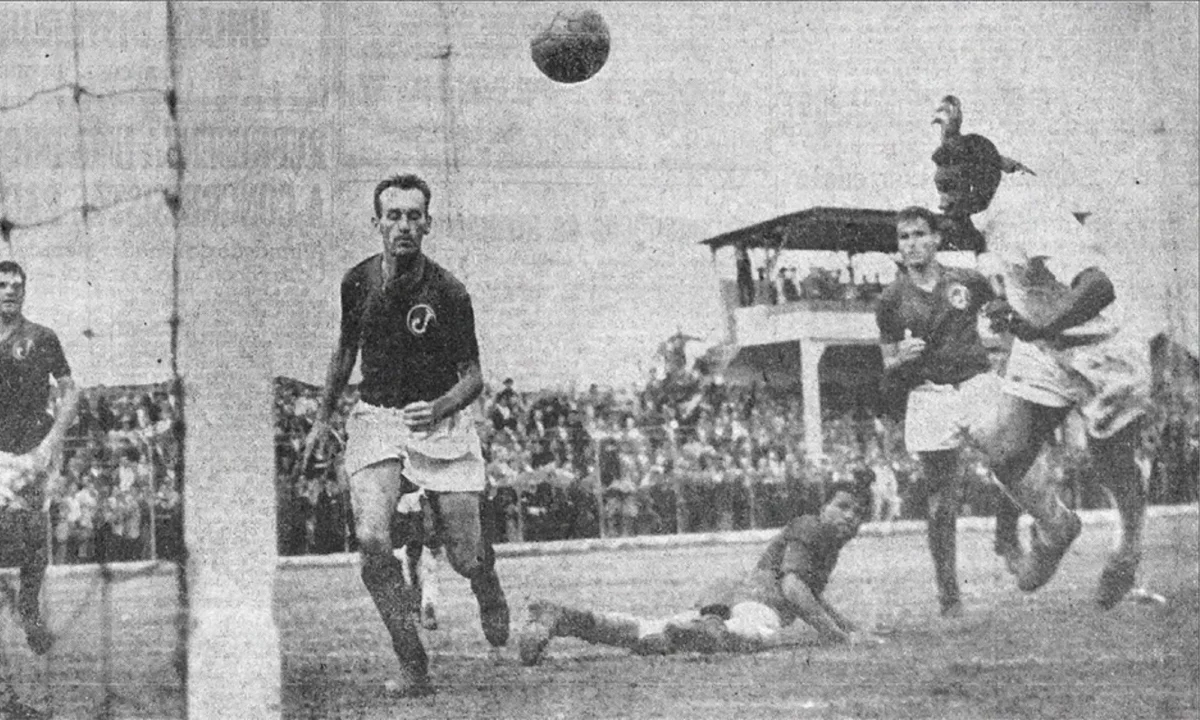
The “Gol da Rua Javari,” scored in 1959 during a match against Juventus-SP, was described by Pelé himself as his most exquisite display of skill. According to his accounts, he orchestrated a sequence that defied physics: he maneuvered the ball past three consecutive defenders using “sombreros” (flicking the ball over an opponent’s head), bypassed the goalkeeper with a delicate knee flick, and finished the sequence with a clinical header—all without the ball ever touching the grass.
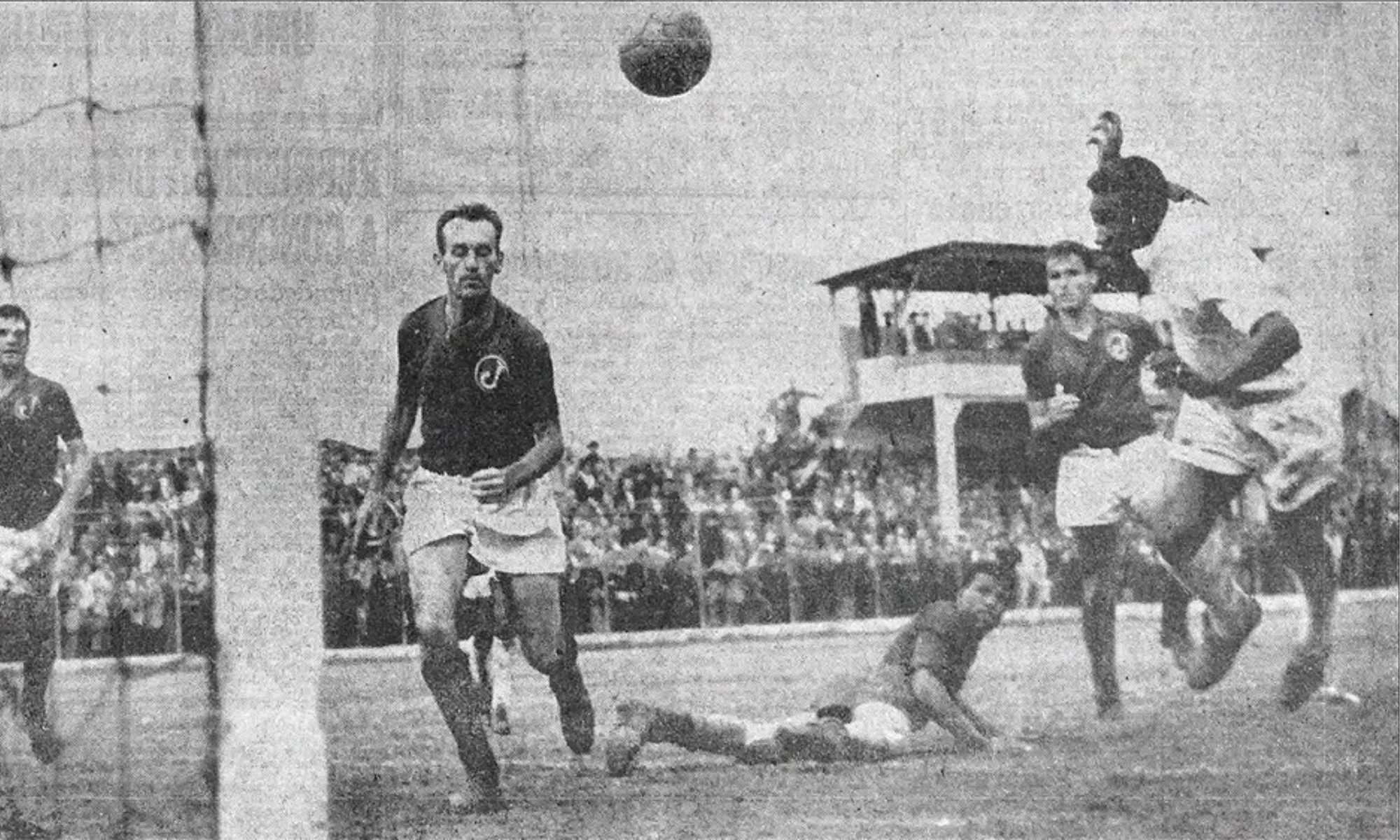
For decades, this goal existed only in the oral histories of the few thousand fans in attendance and the testimony of the players on the pitch. As time passed, the number of living witnesses dwindled, leaving the goal to exist only as a ghost of history, accompanied by a solitary, static photograph of the final header. It was a masterpiece of sporting art that had been cruelly denied the immortality of film.
A Chronology of Reconstruction
To bring this lost moment into the light, Google initiated an ambitious project that combined archival research, forensic sports analysis, and cutting-edge generative AI. The process was not merely about creating a visual effect; it was about honoring the historical reality of 1959.
Step 1: Gathering the Fragments
The project began with an extensive investigative phase. Google’s team tracked down the few remaining survivors who had witnessed the match in person. These interviews, conducted more than six decades after the event, provided the emotional and technical framework for the recreation. Researchers cross-referenced these testimonies with historical photographs of the Rua Javari stadium, the crowd, the uniforms of the time, and the specific physical characteristics of the players involved.
Step 2: The Physical Reenactment
Rather than relying solely on synthetic imagery, Google took a grounded approach. They recruited athletes to recreate the exact physical movements of the play in the very stadium where the goal was scored. To ensure period-accurate fidelity, the team manufactured replicas of the heavy, stitched leather balls used in the 1950s, along with the specific, unbranded dark leather boots and cotton-blend kits that Pelé and his contemporaries wore.
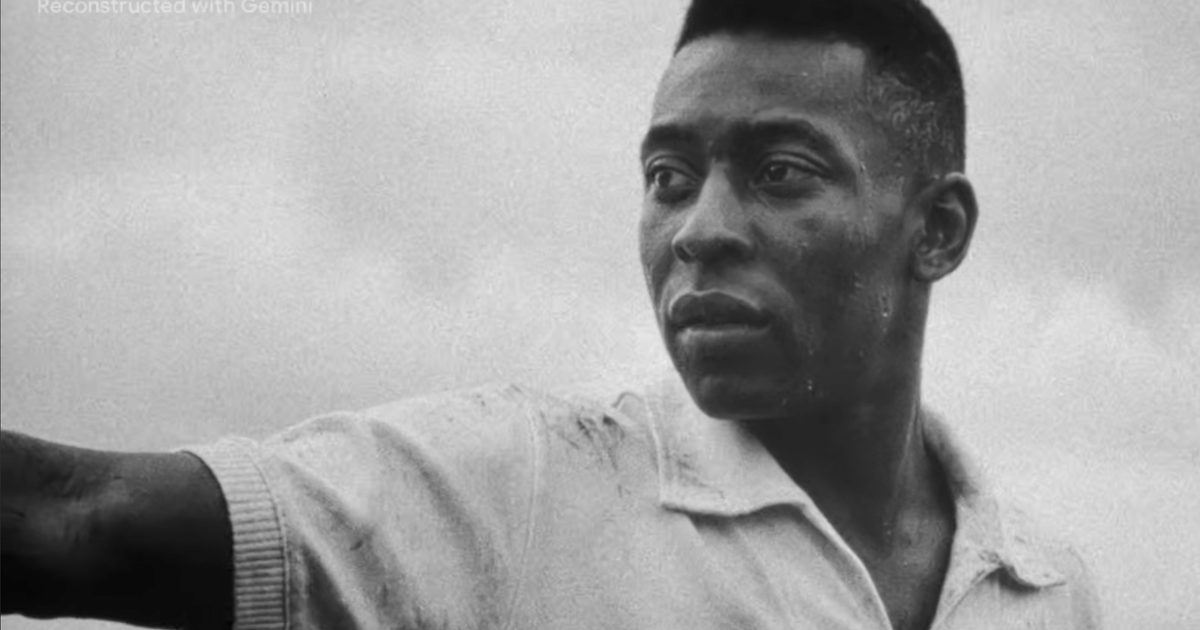
The movement was captured using advanced motion-capture techniques, mapping the kinetic energy and spatial awareness of the players without the typical modern tech gear that would distract from the historical aesthetic.
Step 3: The Generative Synthesis
With the raw physical data captured, the heavy lifting of the AI began. The team utilized Gemini Omni, Google’s multimodal AI model, to interpret the data and weave it into a cohesive narrative. Nano Banana Pro was employed for high-fidelity image generation, ensuring the facial features and physical build of the stunt players matched the archival likeness of Pelé. Finally, the Google Veo video engine was used to synthesize the movement into a fluid, cinematic sequence.
To avoid the “uncanny valley” effect often associated with AI-generated video, the team processed the final output through a digital filmout machine. This added the specific grain, frame rate, and color science of 1950s cinema, effectively "aging" the modern digital reconstruction to match the aesthetic of a match broadcast that never existed.
The Technological Architecture: How It Works
The success of the project relied on the synergy of Google’s newest AI tools. While many AI models struggle with temporal consistency—the ability to keep an object (like a football) moving logically through a scene—the combination of these three specific engines proved effective:
- Gemini Omni: Acts as the "director," processing the disparate data points from interviews and photos to maintain narrative and physical consistency.
- Nano Banana Pro: Serves as the "artist," handling the visual textures, rendering the specific look of the 1950s stadium, and ensuring the lighting reflects the afternoon sun of a mid-century Brazilian match.
- Google Veo: Serves as the "cinematographer," managing the complex physics of the football and the fluid motion of the human body in space.
This was not a simple "text-to-video" prompt. It was a highly structured, data-driven engineering effort that required precise human input to guide the machine.
Official Responses and Ethical Stewardship
One of the primary criticisms of AI in media is the issue of consent. In cases involving deceased celebrities, corporations are often accused of exploiting a persona for profit. However, the Pelé project stands as a notable exception.
The initiative was carried out with the full blessing and active participation of Pelé’s family. Their involvement ensured that the reconstruction was not just an exercise in technology, but an act of legacy preservation. In a statement regarding the project, Pelé’s daughter expressed the profound emotional impact of the endeavor: “He would be so proud to see all this happening. He’d always say it was a shame that the goal was never recorded. So being able to relive it, with all this technology, is amazing.”
By involving the estate and historians, Google has set a precedent for how AI can be used to treat historical figures with dignity rather than treating them as commodities.
The Broader Implications for Historical Preservation
The successful reconstruction of the “Gol da Rua Javari” invites a larger conversation about the future of history. If we can reconstruct a lost goal with this degree of accuracy, what else can be reclaimed?
The Case for “Digital Archaeology”
We live in a world where history is often fragmented. Many significant events, lost cultural artifacts, and extinct architectural sites exist only in text or partial photography. This project suggests that we are entering an era of "digital archaeology," where AI can be used to fill the gaps in our collective memory.
The Risk of Revisionism
However, historians warn that this power comes with risks. If we begin "recreating" history, we must be vigilant about the accuracy of those recreations. There is a fine line between a respectful reconstruction based on expert testimony and a revisionist narrative that alters historical facts to suit a more pleasing, synthetic version of the truth. Transparency, as demonstrated by Google’s open documentation of their process, is essential.
Moving Beyond the "Cash-Grab" Narrative
This project highlights a vital distinction in the current AI landscape: the difference between AI as a tool for automation and AI as a tool for amplification. The backlash against AI in Hollywood is largely centered on the replacement of human labor to cut costs. In contrast, the Pelé project required a massive investment of human labor—interviewers, historians, athletes, and technicians—to create something that had no market value until it was brought into existence.
It suggests that the future of AI in media should not be about replacing the creative process, but about completing it—giving us the ability to see the invisible and remember the forgotten.
Conclusion: A New Standard for Digital Memory
Google’s reconstruction of Pelé’s greatest goal is more than a technical showcase; it is a heartwarming bridge between the past and the present. By leveraging the power of Gemini, Veo, and Nano Banana Pro to honor the wishes of the Pelé family, Google has demonstrated that AI, when guided by human empathy and rigorous historical inquiry, can be a profound tool for cultural enrichment.
As we look toward the future, the lessons from this project will likely serve as a blueprint. The technology is here to stay, and while the debates over its usage will continue, the "Gol da Rua Javari" serves as a poignant reminder that, in the right hands, artificial intelligence can do more than generate noise—it can help us reclaim the moments that make us human. For the fans who never saw the ball hit the net, and for the legend who carried the memory of it to his final days, the gap has finally been bridged. History, it seems, can be re-recorded after all.











