In the rapidly evolving ecosystem of mobile computing, the demand for high-quality, portable display real estate has never been higher. Whether you are a digital nomad, a creative professional editing on the go, or a gamer looking to transform a handheld device into a full-fledged workstation, the external monitor is no longer a luxury—it is a necessity. Asus, a titan in the display industry, has long been a frontrunner in this space. With the release of the Asus ZenScreen OLED (MQ16FC), the company has delivered a compelling piece of hardware that aims to marry professional-grade color accuracy with the convenience of a compact, travel-friendly form factor.
Main Facts: A Display That Punches Above Its Weight
The Asus ZenScreen OLED (MQ16FC) is a 16.1-inch portable monitor built around an impressive OLED panel, offering a resolution of 1920 x 1200 pixels. By opting for a 16:10 aspect ratio, Asus provides that extra bit of vertical workspace that productivity enthusiasts crave.
At a price point hovering around $274, the MQ16FC occupies a sweet spot in the market. It manages to offer the deep blacks and infinite contrast ratios characteristic of OLED technology while maintaining a sleek, aluminum-clad build that weighs in at a mere 1.5 pounds. Its design is thoughtfully executed, featuring an integrated, high-stiffness kickstand and a quarter-inch tripod socket on the rear, allowing for flexible mounting options that few competitors provide.
Chronology: The Evolution of the ZenScreen Line
Asus’s journey into the portable display market began with utilitarian IPS panels, but the company has aggressively pivoted toward OLED technology over the last two years. The MQ16FC represents the logical evolution of the ZenScreen series.
- Early Days: Initial ZenScreen models focused primarily on connectivity, introducing the world to the "single-cable" USB-C workflow that has since become the industry standard.
- The OLED Shift: As OLED manufacturing costs began to stabilize, Asus introduced the ProArt and standard ZenScreen OLED lines. These models were initially targeted at high-end colorists and designers.
- The MQ16FC Refinement: The MQ16FC arrives as a "democratized" version of these earlier, more expensive units. It strips away some of the niche professional calibration tools to reach a wider audience, focusing on a balance between build quality, color saturation, and portability.
Supporting Data: Performance Under the Microscope
When we put the MQ16FC through our rigorous testing suite at Tom’s Hardware, the results were, in many respects, market-leading.
Color Accuracy and Gamut Coverage
The standout feature of this monitor is its color performance. In our instrumented testing, the panel covered an astonishing 153.2% of the DCI-P3 color gamut and 216.2% of the sRGB gamut. These figures place the MQ16FC well ahead of competitors like the ViewSonic ColorPro VP16-OLED and the Innocn 15A1F. Whether you are editing photos or enjoying high-dynamic-range (HDR) video content, the colors are remarkably vibrant, and the blacks are absolute—the hallmark of a high-quality OLED display.
Brightness and Limitations
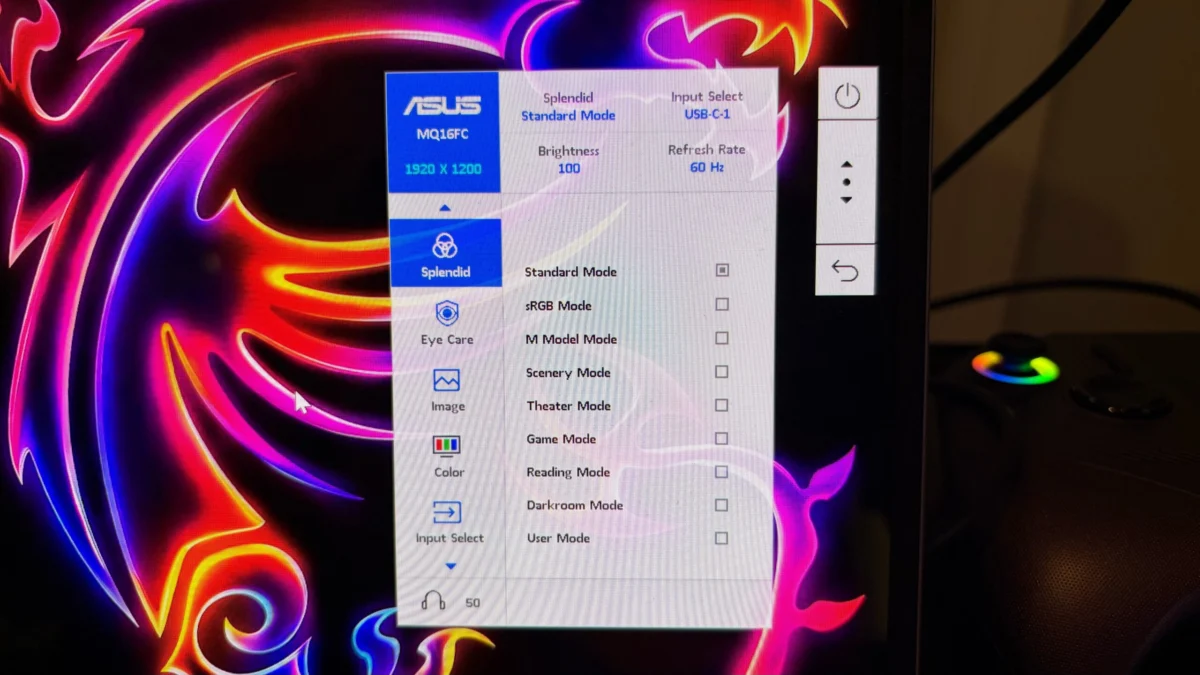
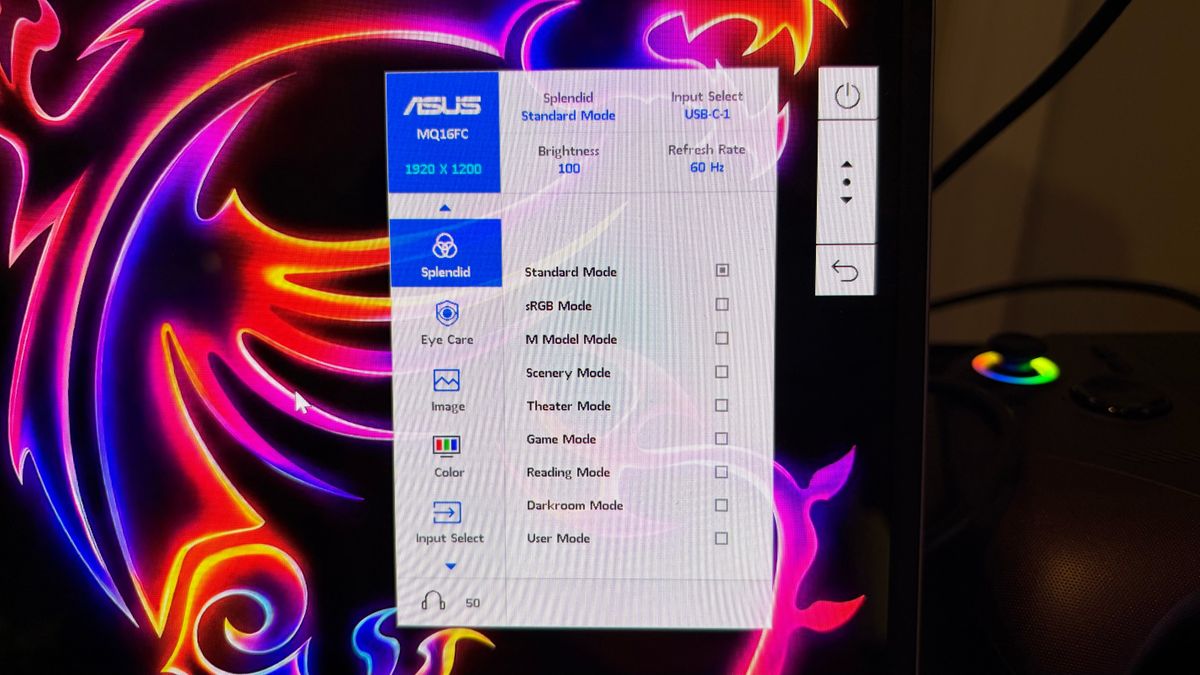
While the color reproduction is stellar, it is important to address the monitor’s brightness limitations. Rated for a typical brightness of 300 nits, the unit ships in a "Standard" mode that limits output to approximately 140 nits to preserve battery and panel health. By switching to "User Mode," we were able to push the peak brightness to 271 nits. While this is sufficient for indoor environments and shaded workspaces, it does trail behind some of its rivals, which can push closer to 370 nits. This makes the MQ16FC a phenomenal indoor monitor, though it may struggle in direct sunlight or highly reflective outdoor settings.
Connectivity and Ergonomics
Connectivity is handled via a versatile array of ports located on the right chassis:
- Two USB-C ports (supporting DisplayPort Alt Mode)
- One Micro-HDMI port
- A 3.5mm headphone jack
- A dedicated jog wheel and action button for OSD control
The inclusion of two USB-C ports is a major advantage. It allows users to daisy-chain devices or charge the laptop connected to the monitor simultaneously. The lack of built-in speakers is a conscious choice by Asus; in the world of portable monitors, integrated speakers are notoriously poor, and omitting them allows for a thinner, more durable chassis.
Official Perspectives: The Utility of the ZenScreen
The design philosophy behind the MQ16FC, as communicated by Asus, is centered on "versatility." By including a tripod mount and supporting auto-rotation (with a built-in G-sensor), the company is positioning this not just as a screen for laptops, but as an extension for gaming handhelds and mobile photography rigs.
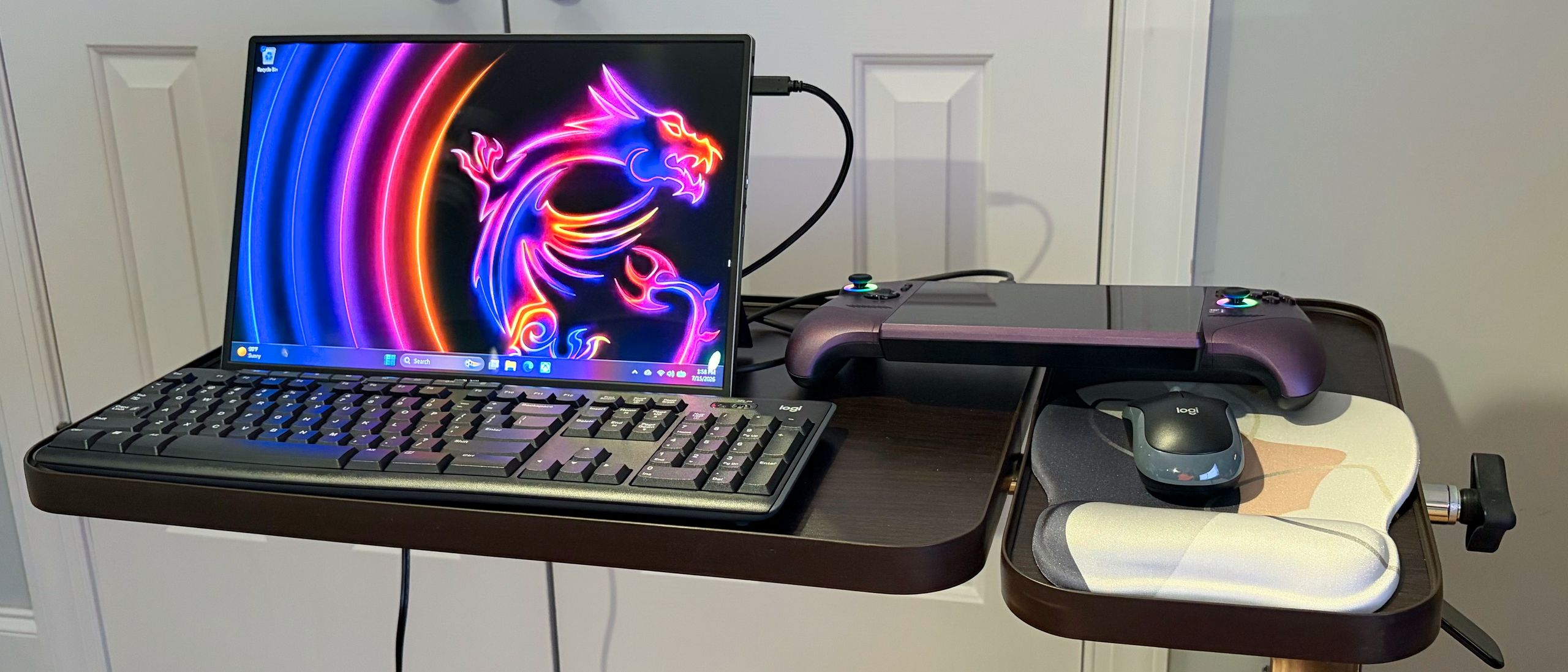
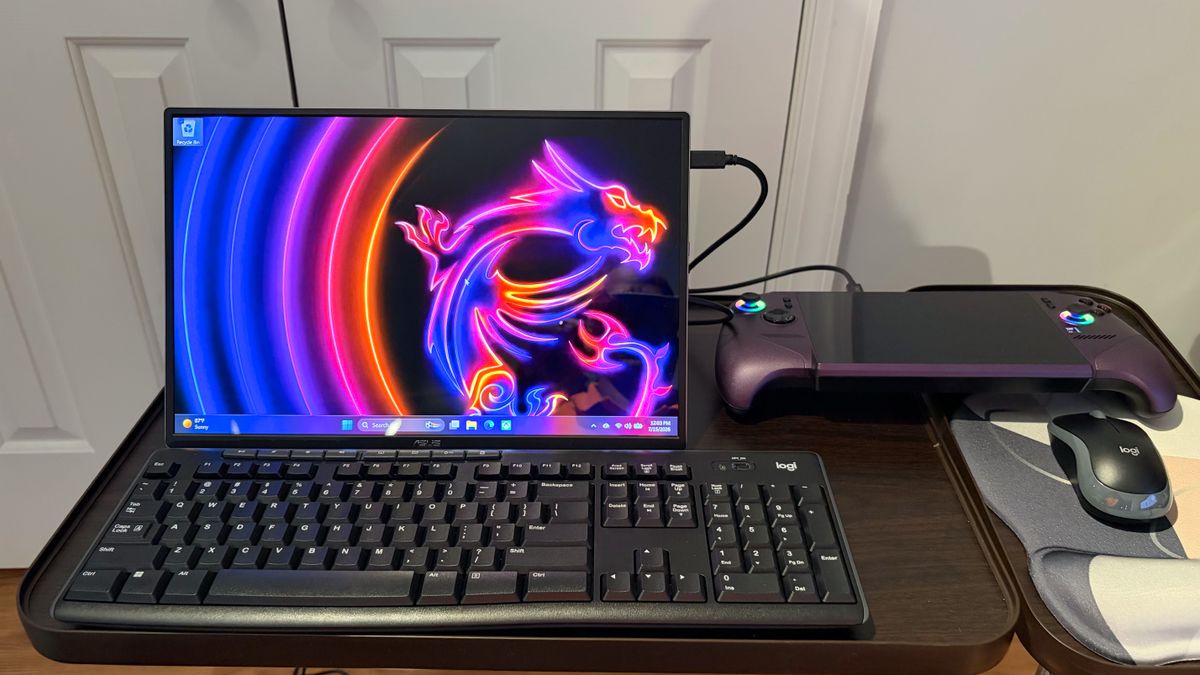
In our testing, we verified this flexibility by connecting the MQ16FC to an MSI Claw 8 EX AI+. By pairing the monitor with a Thunderbolt 5 dock and a wireless peripheral set, the handheld transformed into a legitimate desktop workstation. This level of utility changes the way users interact with their mobile hardware, turning temporary travel setups into long-term productivity solutions.
Implications: Why the MQ16FC Matters
The release of the MQ16FC carries significant implications for the portable display industry.
1. The Death of the IPS Monopoly
For years, IPS panels have been the default for portable monitors due to their low cost and longevity. The MQ16FC signals that OLED is now ready to become the mainstream choice. When a consumer can get a 16-inch OLED panel for under $300, the incentive to buy a lower-contrast IPS screen diminishes significantly.
2. A Focus on "Content Consumption"
With the rise of high-quality streaming and mobile gaming, users are demanding the same display quality on their secondary monitors as they have on their primary workstations. The MQ16FC succeeds because it understands that users don’t just want a "second screen"—they want a "beautiful screen."
3. Professional-Grade Features for the Consumer
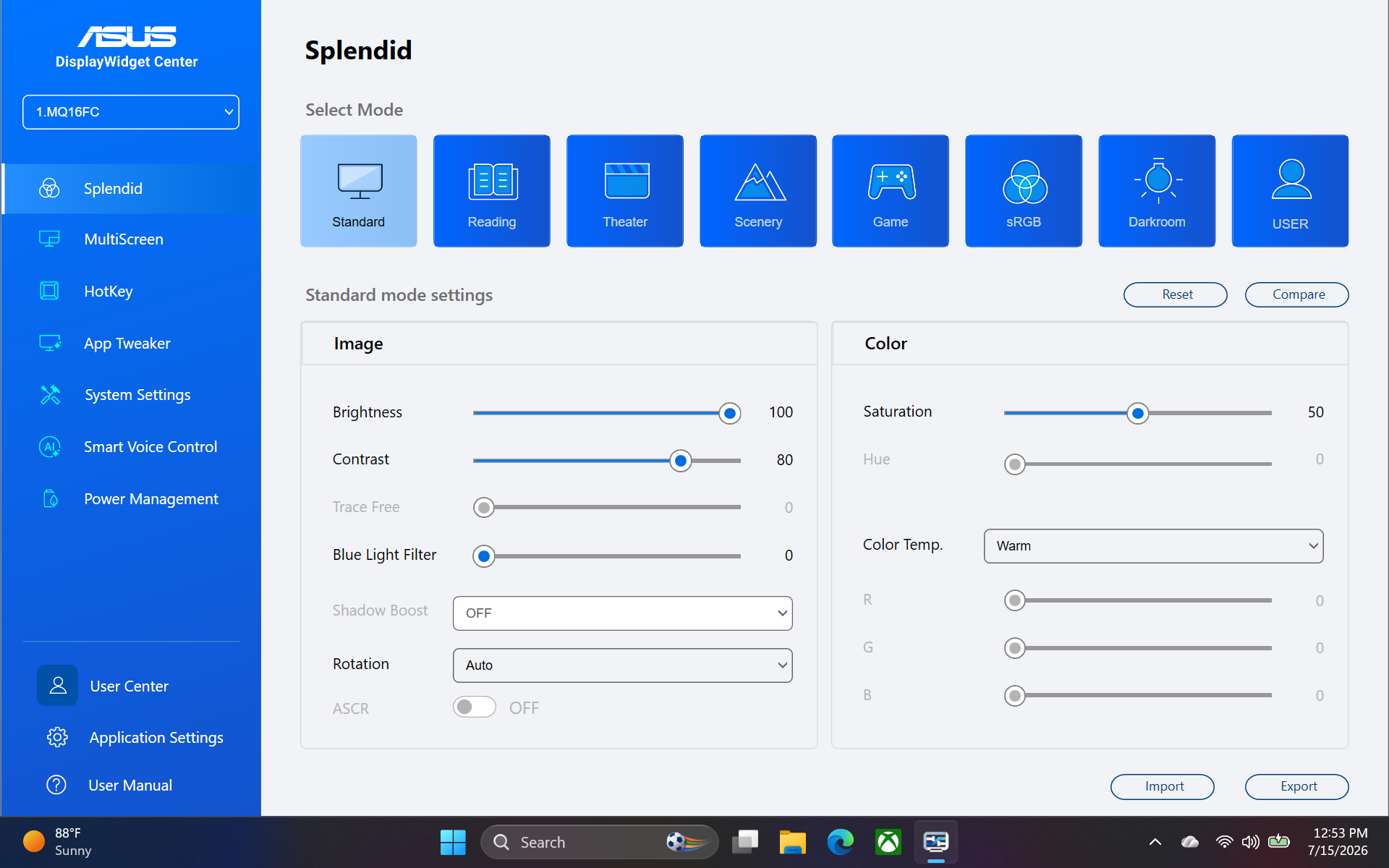
By including features like the DisplayWidget Center app, which allows users to tweak color profiles and brightness levels directly from their Windows desktop, Asus is bridging the gap between professional, calibrated displays and consumer electronics. The user experience is no longer dictated by clunky, hardware-only OSD buttons; it is integrated into the OS.
Final Verdict: Is it Worth It?
The Asus ZenScreen OLED (MQ16FC) is a rare example of a product that hits almost every mark it sets out to achieve. It is not without its minor trade-offs—specifically the maximum brightness levels—but these are easily overshadowed by its exceptional color depth, build quality, and versatile mounting options.
For the mobile professional, the student, or the gamer on the move, the MQ16FC provides a transformative visual experience. It is a testament to how far portable display technology has come, and it currently stands as one of the best value-to-performance propositions on the market. If you are in the market for a portable monitor that treats your eyes to the quality they deserve, the MQ16FC should be at the very top of your list. Backed by a robust three-year warranty, it is an investment that provides both peace of mind and an unparalleled viewing experience.