

By Mustafa Mahmoud
Nintendo’s foray into the mobile gaming landscape has always been a complex, often polarizing experiment. While the Kyoto-based giant is famously protective of its intellectual property, it eventually conceded to the ubiquity of smartphones, rolling out a suite of titles featuring its most iconic mascots. From the strategic depth of Fire Emblem Heroes to the cozy social simulation of Animal Crossing: Pocket Camp, Nintendo’s mobile track record has been a mix of massive commercial triumphs and quiet exits.
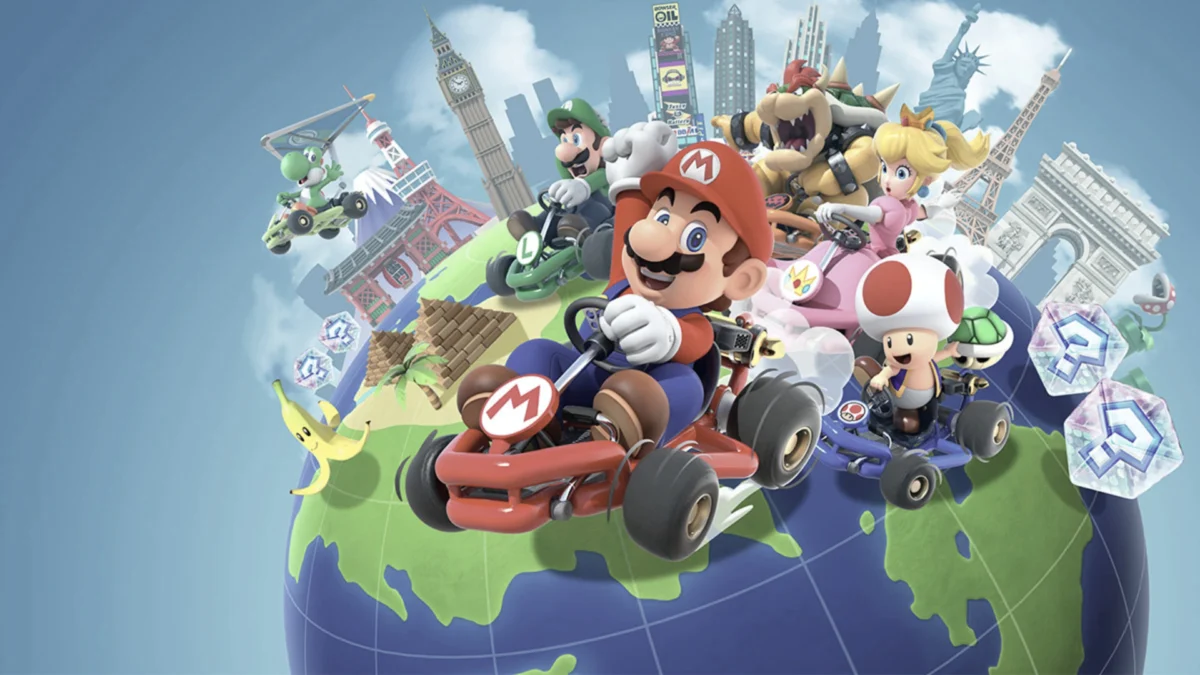
However, one of the company’s most recognizable mobile ventures is reaching the end of its journey. Nintendo has officially confirmed that Mario Kart Tour, the mobile-exclusive spin-off of its legendary racing franchise, will cease operations on September 29. As the final checkered flag approaches, we look back at the game’s tumultuous history, its evolution from a barebones release to a content-rich experience, and what its departure signals for the future of Nintendo’s mobile strategy.
The Final Checkered Flag: The Core Facts
The official announcement arrived via Nintendo’s support portal, signaling the definitive end for the title. "Service for the Mario Kart Tour game for smart devices will come to an end as of 11:00 p.m. Pacific on September 29," the statement read.
Nintendo expressed gratitude to the community, noting: "We sincerely thank the many players who have loved and supported the game since service began so long ago."
The closure is not merely a cessation of live events; it is a total sunsetting of the application. After September 29, users will no longer be able to access the game servers. Nintendo has also outlined a transition plan for in-game purchases and digital assets, urging players to consult the official support documentation to understand how their existing accounts and items will be handled before the server lockout goes into effect.
A Chronological Retrospective: From Launch to Maintenance
To understand the significance of Mario Kart Tour, one must look at the climate in which it was released. When the game launched in 2019, the gaming community was in the midst of a significant "drought" regarding the mainline Mario Kart 8 Deluxe on the Nintendo Switch. Players were hungry for new content, and Mario Kart Tour was positioned as the stopgap solution.
The Rocky Start
At its inception, Mario Kart Tour was, by many accounts, a stripped-down experience. It lacked the precision controls players associated with the console versions, and, perhaps most controversially, it was initially locked to a portrait-only orientation. The absence of a landscape mode was a point of frustration for fans who found the mobile interface cramped and counter-intuitive.
The Evolution
Despite a shaky beginning, the development team at Nintendo demonstrated a remarkable commitment to iterating on the feedback provided by the community. Over the subsequent years, the game underwent a massive transformation. The introduction of landscape mode was a pivotal turning point, allowing for a more traditional racing experience.
Perhaps more importantly, the game’s economic model shifted. In response to the growing global backlash against "predatory" loot box mechanics (the "gacha" system used to unlock characters and karts), Nintendo gradually overhauled the game’s monetization. They transitioned away from purely luck-based acquisitions toward more transparent player-choice systems.
The "Booster Course" Legacy
Perhaps the most lasting impact of Mario Kart Tour is not the mobile app itself, but its influence on the console experience. As the game matured, Nintendo added dozens of original tracks, themed characters, and unique skins. Many of these "Tour-exclusive" tracks were eventually ported to Mario Kart 8 Deluxe via the Booster Course Pass, bridging the gap between the mobile and console ecosystems.
By 2023, the game entered "maintenance mode." This meant that while the servers remained active, the flow of new content—new tracks, drivers, and events—had come to a halt. The game effectively became a museum of its own history, kept alive for the existing player base until this final decision to pull the plug.
Supporting Data: The Mobile Gaming Context
Nintendo’s mobile division, while profitable, has always struggled to find the perfect balance between "Nintendo-level quality" and the "freemium" expectations of the App Store and Google Play.
- Market Saturation: The mobile racing genre is incredibly competitive. Titles like Asphalt and Real Racing have set high bars for visual fidelity and technical performance. Mario Kart Tour succeeded because of the strength of the IP, but it struggled to retain players who found the gameplay loop repetitive.
- The Shift to Subscription: In its later years, the introduction of the "Gold Pass" subscription model became a primary driver of revenue. While this provided a steady income stream, it signaled that Nintendo was moving away from the more aggressive microtransactions of its earlier mobile years.
- Maintenance Mode as a Strategy: The "maintenance mode" phase, which lasted for over a year, serves as a testament to Nintendo’s desire to keep the community engaged without investing further development resources. It allowed them to support their loyal users while redirecting developers toward the next generation of console titles.
Official Responses and Stakeholder Impact
Nintendo’s communication regarding the shutdown has been professional, if brief. By providing a clear roadmap for the end of service, the company aims to mitigate player frustration.
However, the closure raises questions about the "permanence" of digital-only mobile titles. When a game like Mario Kart Tour goes offline, it effectively vanishes. Unlike console games that can be played on original hardware decades later, mobile games are tethered to server availability and OS compatibility.
Industry analysts suggest that Nintendo’s decision reflects a broader trend: as the company pivots toward the successor to the Nintendo Switch, it is cleaning house. By closing older mobile services, they ensure that their resources—both technical and financial—are concentrated on their core hardware business.
Implications: What This Means for Nintendo’s Mobile Future
The shutdown of Mario Kart Tour is not necessarily a sign that Nintendo is abandoning mobile gaming. Rather, it suggests a shift in philosophy.
1. The Pokemon Exception
It is widely understood that the Pokemon brand, which operates somewhat independently under The Pokemon Company, will continue to utilize mobile platforms aggressively. Titles like Pokemon GO and Pokemon Sleep have proven that mobile can be a primary, rather than secondary, pillar of a franchise’s success.
2. Premium Over Freemium?
Nintendo’s recent move to replace Animal Crossing: Pocket Camp with a "paid complete edition" suggests they are moving away from service-based games that require constant server updates. This "offline-first" approach is likely the future of Nintendo’s mobile strategy—releasing titles that don’t rely on a "live service" death clock.
3. The Preservation Debate
The loss of Mario Kart Tour reignites the debate regarding game preservation. With no offline version of the game planned, a massive library of tracks and aesthetic content will effectively be lost to time. For fans, this is a bittersweet moment. While the game was often criticized for its mobile-first limitations, it provided a unique, fast-paced experience that served as a core part of the Mario Kart legacy for millions of users.
Final Thoughts: A Legacy of Innovation
As September 29 approaches, the gaming world pauses to reflect on what Mario Kart Tour achieved. It took a franchise defined by local multiplayer and couch-co-op and successfully ported that frantic energy into the palms of our hands.
It was a testbed for new ideas, a source of content for the best-selling game on the Nintendo Switch, and a place where millions of players shared their first experience with the series. While the servers may be shutting down, the influence of Mario Kart Tour will persist in the tracks we race on Mario Kart 8 Deluxe and in the lessons Nintendo has learned about the challenges—and opportunities—of the mobile market.
For the players, the question remains: Was it enough? Did Mario Kart Tour satisfy the craving for mobile racing, or did it leave us wanting a more robust, console-quality experience? As we say goodbye to this chapter, the answer likely lies somewhere in the middle. It was an imperfect, ambitious, and ultimately significant piece of gaming history.
What are your memories of Mario Kart Tour? Did you stick with it through the years, or did you drop off after the initial hype? Join the conversation on our forums and let us know your take on the legacy of Nintendo’s mobile racer.











