

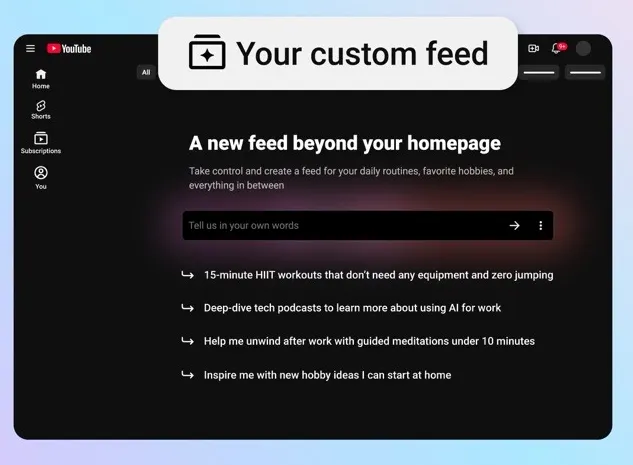
In a significant pivot toward generative AI-driven user experiences, YouTube has officially launched a new discovery feature that empowers users to curate their own video feeds through natural language prompts. This update, which aligns with the broader industry shift toward conversational search and interaction, represents a fundamental change in how viewers interact with the platform’s recommendation engine. By moving away from static algorithms toward a dynamic, intent-based discovery model, YouTube is aiming to solve the "choice paralysis" that often plagues users in an era of infinite content.
The Core Innovation: Conversational Feed Generation
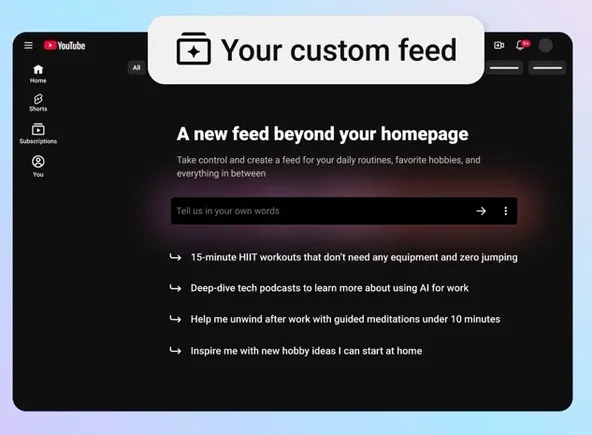
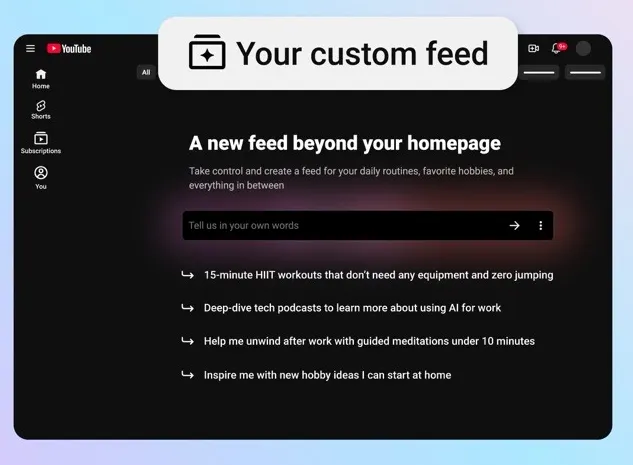
The newly introduced feature, described by YouTube as a "new discovery experience designed by you," allows users to bypass the limitations of the standard algorithm by explicitly stating what they want to see. Instead of relying solely on past watch history to dictate the homepage, users can now input specific prompts into a designated interface.
The mechanism is straightforward: a user types a request—such as "help me unwind after work with guided meditations under 10 minutes" or "show me something completely different from my usual tech reviews"—and the platform generates a custom, continuously refreshing feed based on that criteria. These bespoke feeds can then be "pinned" as saved chips to the top of the user’s homepage, providing a permanent shortcut to that specific category of content.
This shift marks a departure from the traditional "passive" consumption model. Historically, YouTube’s recommendation engine operated in the background, serving content based on latent signals. Now, the platform is inviting the user into the driver’s seat, treating the discovery process as a collaborative dialogue between the viewer and the AI.
A Chronology of the Update
The journey toward this interactive feed began with subtle backend experiments and was first teased to the public in November of last year.
- November 2024: YouTube first signaled its intention to give users more granular control over their feeds. Early reports indicated that the platform was testing a "Custom Feed" option to see if users would engage with a prompt-based discovery system.
- Late 2024 to Early 2025: Throughout the development phase, YouTube focused on refining the natural language processing (NLP) capabilities of its recommendation system. The goal was to ensure the AI could interpret vague or mood-based queries with high accuracy.
- The Official Rollout: In recent weeks, Google officially confirmed the feature’s deployment. The update is currently rolling out to signed-in users in the United States, accessible via both the YouTube mobile app and desktop browsers.
- The Integration Phase: As of now, the feature is being integrated into the main user interface for English-language users, provided they have their search and watch history settings enabled.
Understanding the "Why": The Rise of Conversational Discovery
The logic behind this update is rooted in the way modern consumers interact with artificial intelligence. With the explosion of Large Language Models (LLMs) like ChatGPT, Claude, and Gemini, users have become accustomed to the "conversational" search paradigm. People no longer want to perform multiple keyword searches to find a specific vibe or theme; they want to express a complex intent and receive a curated result immediately.
By adopting this interface, YouTube is effectively bridging the gap between traditional social media discovery and AI-assisted search. The platform recognizes that while algorithms are excellent at predicting "what comes next," they often fail to capture the "what I’m in the mood for right now" factor. By allowing users to define their current mood or interest, YouTube is essentially outsourcing a portion of the recommendation logic to the user, leading to higher satisfaction and longer dwell times.
Official Responses and System Requirements
YouTube has been transparent about the technical prerequisites for this feature. Because the system relies heavily on personal data to generate high-quality, relevant results, the platform has set specific guardrails.
"To see the chip, please make sure your YouTube search and watch history are turned on in your account settings," a company representative stated. This underscores the reliance on historical data as a baseline. The AI doesn’t start from zero; it uses the user’s existing history to interpret the context of the new, custom prompt.
From a user experience standpoint, the company emphasized that these feeds are not static. "We’ll create a new, constantly refreshing feed that you can quickly jump into at any time," the official release noted. This ensures that even within a custom category, the content remains timely and relevant, preventing the feed from becoming stale.

Implications for Content Creators
The implications for the creator economy are significant. Historically, creators have spent years optimizing their content for the "algorithm"—focusing on high-performing titles, thumbnails, and watch-time metrics. With the introduction of user-driven feeds, the discovery pathway becomes more nuanced.
- Niche Discovery: Creators who produce highly specific content—whether it be niche tutorials, deep-dive documentaries, or specific lifestyle content—may find it easier to reach their target audience. If a user explicitly asks for "10-minute meditation guides," the system will prioritize content that matches those specific parameters, potentially boosting smaller, highly relevant channels that might otherwise get buried in the general feed.
- Increased Competition for Intent: While niche creators might benefit, the barrier to entry for appearing in "general" search might rise. Creators will need to ensure that their metadata—titles, descriptions, and even the spoken content within the video—is clear and descriptive. As AI gets better at "listening" to the content of the video to match it to a user’s prompt, the quality of the video’s information will become more important than ever.
- The Shift in Metrics: Creators may eventually need to track how much of their traffic comes from "Custom Feed" versus "Browse Features" or "Suggested Videos." This could lead to a new era of "intent-based SEO" for video creators, where describing the utility of a video becomes just as important as the click-through rate of the thumbnail.
The Technical Challenges and Future Outlook
While the feature is a leap forward, it is not without its challenges. The effectiveness of the custom feed is entirely dependent on the AI’s ability to interpret the user’s intent. If a user asks for "something funny," the AI must discern whether that means stand-up comedy, blooper reels, or comedic sketches.
YouTube’s system must balance "personalization" (what the user has liked before) with "serendipity" (what the user might like). If the AI defaults too heavily to existing watch history, the custom feed will feel like a repackaged version of the user’s existing homepage. If it leans too far into the prompt, it might serve content that the user finds uninteresting.
Furthermore, as this feature rolls out, YouTube will likely refine its NLP models based on the types of prompts users generate. We can expect future iterations to include more complex capabilities, such as multi-modal prompts (e.g., uploading an image or a snippet of a song to define a "vibe") or collaborative feeds that allow multiple users to define a shared discovery experience.
Conclusion: A New Era for Digital Consumption
YouTube’s move to introduce conversational, AI-generated feeds is a clear admission that the era of the "one-size-fits-all" algorithm is evolving. By empowering users to define their own digital environments, YouTube is not only enhancing user experience but also insulating itself against competition from other platforms that are increasingly integrating AI into search and discovery.
As the feature rolls out to more users globally, it will be fascinating to observe how the content landscape shifts. Will this lead to more fragmented, niche consumption? Or will it solidify YouTube’s position as the ultimate, all-encompassing destination for both passive entertainment and active, intent-driven learning?
For now, the message from YouTube is clear: the user is the primary architect of their discovery experience. In a digital world overflowing with content, the ability to filter, define, and curate one’s feed via a simple conversation is perhaps the most valuable tool a platform can provide. As this technology matures, we are likely looking at the beginning of a fundamental transformation in how we discover, watch, and value online video.












No comments yet. Be the first to join the conversation!