Nana Wu
The science-fiction landscape is set for a seismic shift as the highly anticipated conclusion to the acclaimed comic series Astro Quantum arrives. With the release of Astro Quantum #5, creators Arturo Fabra and Andrea Mutti are finally pulling the curtain back on one of the most intense, high-stakes narratives in modern independent comics. As the crew of the PEKUOD reaches the point of no return, the series promises a climactic finale that balances cosmic horror with the visceral, human cost of vengeance.
The Main Facts: A Culmination of Vengeance and Cosmic Terror
Astro Quantum #5 serves as the definitive end to the saga that has meticulously built its tension over the preceding four issues. At the center of the story remains Captain Akhabb, a figure defined by his unrelenting, monomaniacal pursuit of the "Pale Beast," known as Goyakla. The narrative trajectory of this final installment is clear: the hunt, which has spanned the reaches of the galaxy, has finally led the crew into the heart of the Moloks’ birthing grounds.
The thematic core of the series—a dark, futuristic reimagining of the classic hunt—reaches its zenith here. However, the story is not merely a tale of a creature and its pursuers. It is a tragedy of shifting moral landscapes. As the PEKUOD penetrates the sanctuary of the Moloks, the narrative shifts from the hunters seeking their prey to the hunters becoming the prey. The stakes have been elevated from simple survival to a confrontation with divinity, as the abyss itself—a recurring motif throughout the series—begins to reveal its true, terrifying nature.
Chronology: The Road to the Abyss
To understand the weight of the events in issue #5, one must look at the trajectory of the PEKUOD’s mission. The journey has been characterized by a slow descent into moral and physical degradation.
- The Inception: The mission began with a singular focus: the tracking of the elusive Goyakla. Captain Akhabb’s drive, bordering on the fanatical, set the tone for a journey that prioritized the kill above all else.
- The Escalation: As the crew traveled deeper into the unknown, internal strife began to manifest. Ishmaeel, the moral compass of the vessel, found himself increasingly at odds with the Captain’s cold calculations. Simultaneously, the physical toll on the crew, particularly the near-fatal injuries sustained by Quee-Keg, underscored the lethality of their environment.
- The Point of No Return: The transition into the fifth issue begins with the breaching of the Moloks’ birthing grounds. This is the tactical turning point where the hunters lose their advantage.
- The Final Conflict: The current issue documents the disintegration of the PEKUOD. As the ship burns, the crew is forced into a final stand. The narrative timeline focuses on the splintering of loyalties—specifically the betrayal by Talya, which serves as the final catalyst for the destruction of the crew’s remaining hope.
Supporting Data: The Craftsmanship of Fabra and Mutti
The success of Astro Quantum rests largely on the synergy between writer Arturo Fabra and artist/co-writer Andrea Mutti. Mutti, who is responsible for the visual identity of the series, has created a aesthetic that feels both claustrophobic and expansive.
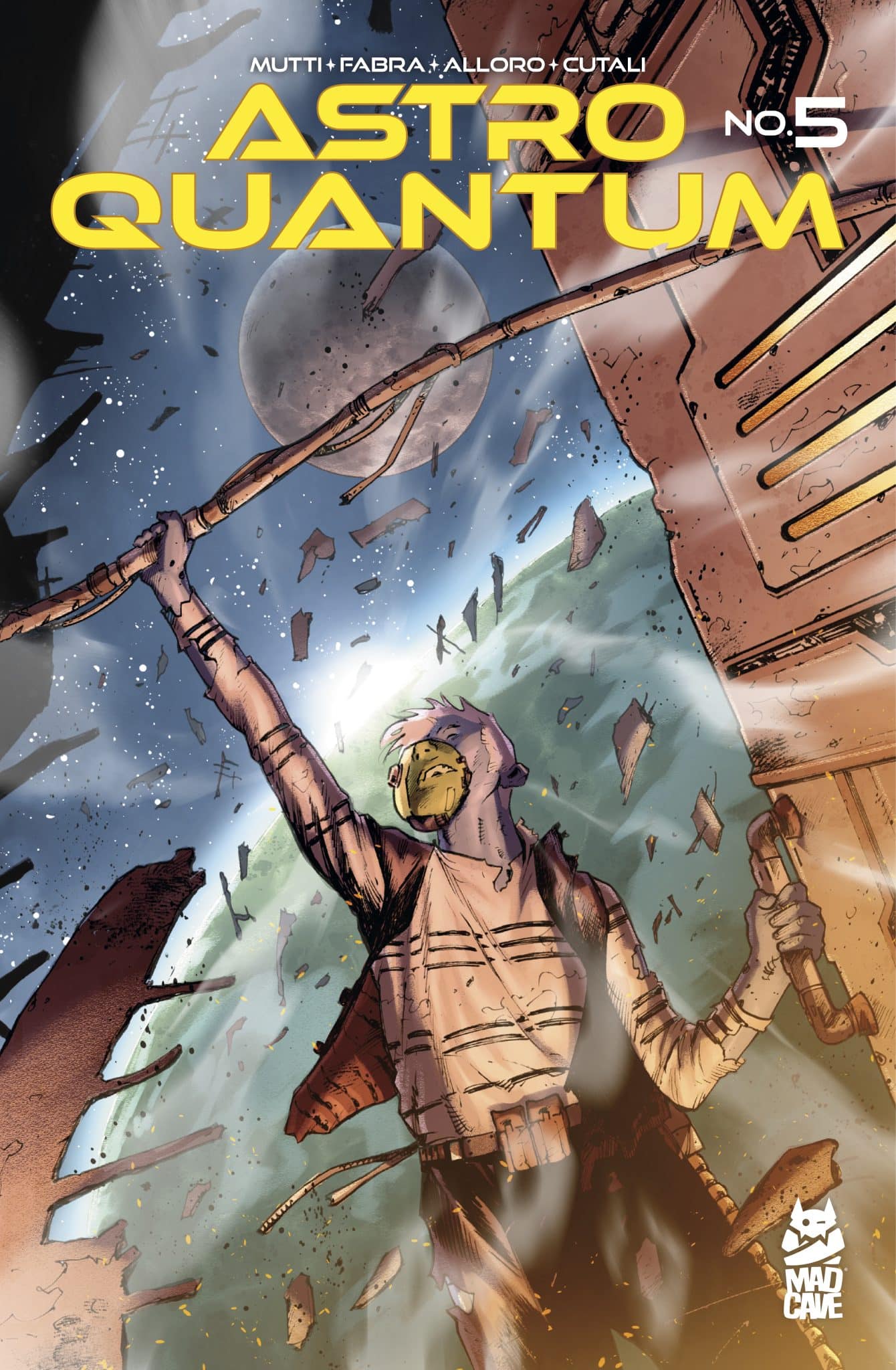
In Astro Quantum #5, the art plays a crucial role in conveying the sense of "cosmic dread." The provided previews for the issue highlight Mutti’s use of lighting and shadow to depict the PEKUOD in states of decay. The visual language of the series has consistently moved from the clinical, high-tech environment of a starship to the organic, terrifying textures of the Moloks’ domain. This visual transition mirrors the thematic arc of the story: as the crew loses their tether to human civilization, the art becomes more chaotic, more visceral, and more rooted in the primordial.
Fabra’s script utilizes this visual foundation to heighten the psychological stakes. By focusing on the fracture of the crew’s internal hierarchy, the writers ensure that the reader feels the weight of the impending disaster. The "betrayal that will damn them all" is not merely a plot twist; it is the inevitable outcome of a journey that asked its participants to sacrifice their humanity for a victory that may be meaningless.
Official Responses and Creative Vision
While the creators have kept spoilers for the final outcome tightly under wraps, early industry reactions suggest that Astro Quantum #5 is a bold departure from traditional genre tropes. In discussions surrounding the series, the creators have noted that their intention was always to explore the intersection of "obsessive drive" and "existential insignificance."

"The hunt is never just about the beast," one creative lead suggested in a previous interview regarding the series’ direction. "It’s about what the hunter is willing to throw overboard to reach the finish line."
By positioning Astro Quantum as a finite, five-issue arc, Fabra and Mutti have avoided the pitfalls of serialized storytelling that often lose momentum. The decision to conclude the story with such finality—"before the stars claim them forever"—indicates a commitment to a cohesive, impactful narrative experience that prioritizes thematic resolution over franchise expansion.
Implications: The Legacy of Astro Quantum
The conclusion of this series carries significant implications for the landscape of independent science fiction comics.
1. The Power of Limited Series
Astro Quantum serves as a case study for the effectiveness of the limited series format. By setting a hard limit on the narrative, the creators have been able to maintain a level of tension and character development that is often diluted in long-running titles. The industry is currently seeing a resurgence of interest in these self-contained "graphic novels in issues," and Astro Quantum is likely to be cited as a premier example of this trend.

2. Redefining Genre Tropes
The series has successfully taken the framework of a classic maritime epic and transplanted it into a high-concept sci-fi setting. By doing so, it has opened up discussions about how classic literature can be deconstructed and rebuilt to speak to modern anxieties—in this case, the fear of the unknown and the danger of unchecked ambition.
3. A Catalyst for Future Collaborations
The success of the Fabra/Mutti partnership in Astro Quantum sets a high bar for future collaborative projects. Their ability to integrate deep philosophical questions with high-octane, space-faring action is a testament to the versatility of the medium. Readers and critics alike will be watching closely to see how the market receives the final, potentially tragic, conclusion of the PEKUOD and its crew.
Conclusion
As the dust settles on the PEKUOD and the abyss opens wide, readers are left with a final question: was the hunt worth the cost? Astro Quantum #5 does not shy away from the harsh realities of its premise. It is a bleak, beautiful, and unflinching look at the end of a journey. For those who have followed the crew from the beginning, the final issue offers the only thing a story like this can provide: a definitive, and perhaps inevitable, confrontation with eternity.
The epic conclusion of Astro Quantum is more than just the end of a comic book; it is the final chapter of a modern sci-fi tragedy. Whether the crew finds redemption in the stars or is consumed by the dark, one thing is certain: the legacy of the hunt will linger long after the final page is turned.


 Sagoh
Sagoh
 Ammar Sabilarrohman