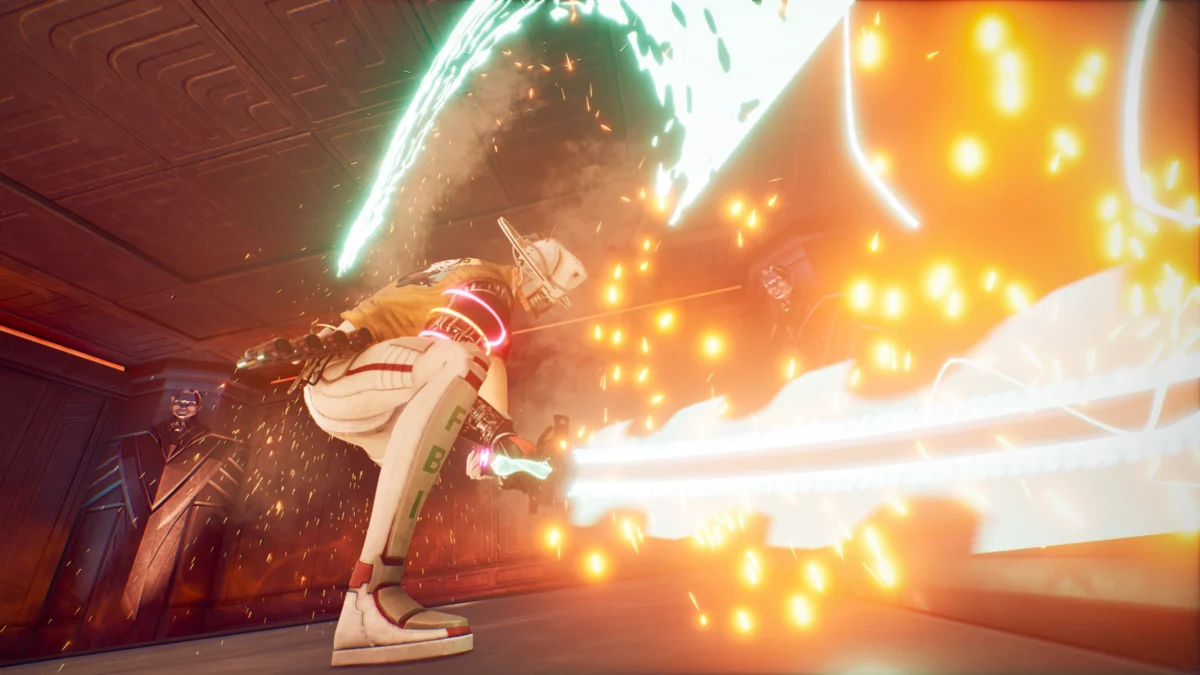
Grasshopper Manufacture, under the visionary direction of Suda51, has long carved out a niche in the video game industry for its uniquely eccentric, often hyper-violent, and always stylish titles. Their latest offering, "Romeo is a Dead Man," is no exception, pushing the boundaries of artistic expression and gameplay convention to deliver an experience that is both exhilarating and bewildering. Our in-depth review explores how this new IP masterfully blends disparate elements into a cohesive, albeit chaotic, whole, earning it significant acclaim while embracing its inherent oddities.
Main Facts
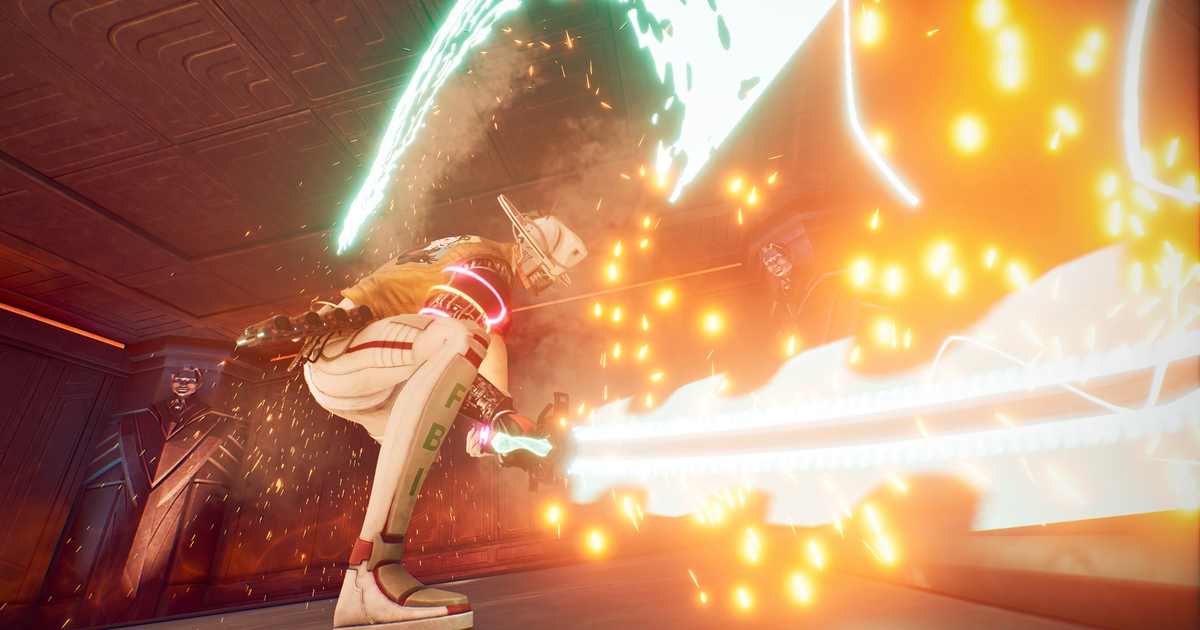
"Romeo is a Dead Man" plunges players into the shoes of Romeo, a cybernetic agent of the Space-Time FBI, whose origin story is as bizarre as the world he inhabits: his face was devoured by interdimensional aliens. This premise alone sets the stage for a game that revels in the surreal and the grotesque. Developed by the renowned Grasshopper Manufacture, known for its distinctive flair, the game immediately distinguishes itself with its "ultra-violent and ultra-stylish action." It’s a title that doesn’t just feature mixed media; it weaponizes it, integrating everything from real-life miniatures and VHS-style cutscenes to lush comic book panels and 16-bit graphics, all interwoven with particle-heavy, Unreal Engine-powered set pieces.
At its core, "Romeo is a Dead Man" is an action game, building upon the refined combat mechanics seen in titles like "No More Heroes 3." However, it elevates the experience by infusing it with a relentless stream of visual and narrative surprises, creating a "dream logic" that keeps players constantly engaged and slightly off-kilter. The game’s protagonist, Romeo, embodies this spirit—a trenchcoat-clad agent who is equally at home stopping cosmic crimes as he is peddling knock-off watches, all while his Grandpa mysteriously resides within the confines of his jacket. This blend of the mundane and the fantastical, the coherent and the utterly inexplicable, forms the bedrock of "Romeo is a Dead Man," making it a standout entry in Grasshopper Manufacture’s storied portfolio and a memorable addition to the PlayStation 5 library.
Chronology: Grasshopper Manufacture’s Legacy of Subversion
To fully appreciate "Romeo is a Dead Man," one must understand the legacy of Grasshopper Manufacture and its enigmatic founder, Goichi Suda, better known as Suda51. Since its inception in 1997, the studio has consistently defied conventional game design, opting instead for narratives steeped in punk rock aesthetics, pop culture homages, and philosophical musings, often delivered with a generous helping of ultraviolence and dark humor.
Grasshopper’s journey began with titles like The Silver Case (1999) and Flower, Sun, and Rain (2001), establishing a reputation for unconventional storytelling and atmospheric thrillers. However, it was Killer7 (2005) that truly solidified Suda51’s unique voice on the global stage. Its cel-shaded graphics, bizarre plot involving a multi-personality assassin, and rail-shooter mechanics were unlike anything else on the market, marking Grasshopper as a studio willing to take significant risks.
The No More Heroes series, starting in 2007, further refined this identity. Centering on otaku assassin Travis Touchdown, these games blended open-world exploration with intense beam katana combat, punctuated by quirky side jobs and memorable boss battles. The series, particularly No More Heroes 3 (2021), demonstrated Grasshopper’s evolving approach to gameplay refinement, offering a tighter, more engaging combat loop while retaining its signature anarchic spirit and experimental art styles, incorporating FMV and various mixed-media elements into its cutscenes.
"Romeo is a Dead Man" represents the culmination of these design philosophies, taking the experimental ethos of No More Heroes 3 and pushing it into uncharted territory. While NMH3 flirted with diverse visual styles, Romeo fully commits to a kaleidoscopic vision, using real-life miniatures, grainy VHS footage, vibrant comic book sequences, and retro 16-bit graphics not just as stylistic flourishes, but as integral components of its narrative and aesthetic fabric. This chronological progression reveals a studio unafraid to constantly reinvent itself while staying true to its core identity: creating games that challenge expectations, provoke thought, and entertain with a uniquely unhinged brilliance. "Romeo is a Dead Man" is not just a new IP; it’s the latest evolution of Grasshopper Manufacture’s relentless pursuit of artistic freedom and unconventional interactive experiences.
Supporting Data: A Deep Dive into "Romeo’s" Artistic Anarchy and Gameplay Nuances
"Romeo is a Dead Man" is a masterclass in controlled chaos, where every visual shift and narrative twist contributes to an overarching sense of dream logic and artistic rebellion. The game’s distinct character is forged through a meticulous, albeit audacious, blend of various artistic mediums and a gameplay loop that is both challenging and uniquely rewarding.
A Kaleidoscope of Visuals and Narrative Fusion
The most striking aspect of "Romeo is a Dead Man" is its audacious fusion of visual styles. Where many games strive for graphical consistency, Grasshopper Manufacture deliberately shatters it, creating a "medley" that is as exciting as it is novel. The game seamlessly transitions between high-fidelity, particle-heavy environments rendered in Unreal Engine for its core action sequences, to meticulously crafted real-life miniatures that add a tangible, almost tactile quality to certain scenes. These are further augmented by grainy, retro VHS-style scenes that evoke a sense of nostalgic dread, and vibrant comic book panels that serve as dynamic narrative devices, preventing cutscenes from feeling like mere passive intermissions. Even 16-bit graphics are integrated, particularly in mission hubs and character menus, providing a nostalgic yet functional aesthetic that deepens the game’s multi-layered identity.
This mixed-media approach is not simply for aesthetic shock value; it’s integral to the game’s narrative fabric. It underscores the liminality of Romeo’s existence, a cybernetic agent navigating interdimensional threats, where reality itself is fluid and fragmented. The visual shifts serve to disorient and re-orient the player, mirroring Romeo’s journey through different planes of existence and perception. It’s a daring artistic statement that pays off, ensuring that the player is constantly surprised and engaged by the ever-evolving presentation.
Embracing the Absurd: Dream Logic and Lynchian Inspirations
The review highlights that "Romeo is a Dead Man" is "vibes," positioning its protagonist as an artist disrupting space crimes. This interpretation is crucial to understanding the game’s narrative philosophy. While the marketing might lean into its supposed incomprehensibility, the game is more about evoking a feeling and a sensory experience than a strictly linear narrative. This is where its "dream logic" comes into play, creating a world where bizarre occurrences are simply accepted as part of the fabric of reality.
The game openly draws inspiration from the works of David Lynch, particularly "Twin Peaks." Hallmarks such as first-person views of night-time road markings, the presence of the FBI, instances of immediate and shocking violence, and the overarching theme of liminality between dimensions are all present. The reviewer muses on whether a traditional interactive experience can capture the same surreal journey as Lynch’s works, a question previously pondered after playing Alan Wake 2. While "Romeo is a Dead Man" might not delve into the same thematic depths as Alan Wake 2, its "grab-bag of settings, mechanics, storylines and visual styles is an exciting and effective exercise in dream logic." It allows the player to inhabit a world where the rules are constantly shifting, and the unexpected is the norm, forcing a kind of surrender to its unique rhythm.

The Muscular, Meaty Gameplay Loop
Beneath its avant-garde exterior, "Romeo is a Dead Man" boasts a robust and engaging combat system. Described as a "muscular, meaty mix of ego-stoking fodder and more technical mini-bosses," the gameplay is fast, frenetic, and demands constant adaptation. Players unlock a diverse arsenal of both melee and ranged weapons, reminiscent of Grasshopper’s past successes. The iconic beam katana, a staple of Travis Touchdown, makes an appearance, alongside a formidable two-handed "Guts sword" (a clear homage to Berserk), a Resident Evil-style over-the-shoulder pistol, and a chunky shotgun.
The combat thrives on variety. Players are encouraged to switch between weapons and combat styles dynamically to exploit enemy weak points or manage crowds effectively. This constant weapon swapping and tactical engagement keep the action fresh and prevent it from becoming repetitive. However, the game introduces certain "peculiar spikiness" that can be both thrilling and frustrating. The manual reloading of all firearms, either by a dedicated button press or dry-firing an empty weapon, is highlighted as a clunky mechanic that disrupts the frantic flow of combat, akin to "catching a crab in rowing." While adding a layer of realism or challenge, it often feels out of place in the otherwise hyper-stylized action.
Divisive Mechanics and the Art of the Unexpected
Grasshopper Manufacture is renowned for its willingness to experiment, and "Romeo is a Dead Man" is replete with mechanics that are genuinely surprising, for better or worse. The reviewer recounts encountering environmental hazards in boss battles that disable abilities, requiring a "relatively lengthy button-mash mini-game" to resolve. These are described as the kind of "surprise anyone is looking for," abruptly halting the flow of an intense fight.
Even more perplexing are the "meditation" puzzles. To manifest stairs or ladders in the environment, players must meditate with a "fuzzy green tear in reality" by vaguely moving the left stick. The reviewer admits to completing all these "puzzles" without truly understanding how, noting that the in-game manual suggests simply resetting until it works. This design choice prompts a critical debate: is it "absolute genius or complete lunacy"? On one hand, it could be interpreted as a deliberate attempt to force players into a state of detachment and intuitive problem-solving, mirroring the act of meditation itself. On the other, it represents an opaque implementation that could have benefited from a more intuitive design. This duality encapsulates much of "Romeo is a Dead Man" – its willingness to challenge conventional expectations often leads to moments of brilliance, but occasionally veers into genuine frustration.
Official Responses: Interpreting Developer Intent and Critical Consensus
While no direct official developer responses are provided in the source text, Grasshopper Manufacture’s consistent design philosophy allows us to infer the intent behind "Romeo is a Dead Man." Suda51 and his team have always prioritized artistic vision and player experience over adhering to industry norms. Their games are often characterized by a deliberate subversion of expectations, a playful defiance of polish in favor of raw creativity, and a focus on generating memorable, singular moments.
The "mischief" highlighted in the review is a cornerstone of Grasshopper’s approach. Elements like the sudden, unexplained mini-games, the opaque meditation puzzles, and even the manual reload mechanic, while potentially frustrating, align with a design ethos that seeks to surprise and challenge. These aren’t necessarily oversights but rather deliberate choices to inject personality and disrupt predictable gameplay loops. Suda51 has often spoken about creating games that are "punk rock" in spirit—loud, unconventional, and unapologetically themselves. "Romeo is a Dead Man" fits this description perfectly, prioritizing unique ideas and artistic expression even if it means sacrificing some traditional "player comfort."

From a critical perspective, the game’s reception, as suggested by the positive tone and a probable 4-star rating, indicates that these eccentricities are largely embraced. Critics and fans familiar with Grasshopper’s work often anticipate and even celebrate these unconventional choices. In a landscape increasingly dominated by "good enough" Live Service and competitive games, "Romeo is a Dead Man" stands out precisely because of its willingness to be different. It’s a game that doesn’t aim for universal appeal by smoothing out its edges; instead, it sharpens them, ensuring that those who connect with its unique wavelength find a deeply rewarding and unforgettable experience. The critical consensus, therefore, seems to be that the game’s flaws are often part of its charm, contributing to its distinct identity rather than detracting significantly from its overall quality.
Implications: The Future of Interactive Art and Grasshopper’s Trajectory
"Romeo is a Dead Man" holds significant implications for the broader landscape of video game design and Grasshopper Manufacture’s future trajectory. Its audacious use of mixed media and "dream logic" serves as a powerful testament to the untapped potential of interactive art, demonstrating that games can be as experimental and boundary-pushing as any other artistic medium.
For game design, "Romeo is a Dead Man" challenges the prevailing trends of hyper-realism and mechanical predictability. It suggests that there is a hungry audience for experiences that prioritize artistic expression, narrative ambiguity, and sensory immersion over strict adherence to conventional gameplay loops. The game’s ability to seamlessly weave together disparate visual styles—from miniatures to 16-bit—without sacrificing narrative coherence or player engagement, could inspire other developers to explore more diverse and experimental aesthetic approaches. It reinforces the idea that games don’t always need to explain everything; sometimes, evoking a feeling or a state of mind can be more powerful than explicit exposition.
For Grasshopper Manufacture, "Romeo is a Dead Man" solidifies their position as one of the industry’s most unique and important voices. It shows a studio that is not content to rest on its laurels or simply iterate on past successes. Instead, they continue to evolve, refine, and push the limits of their signature style. This game suggests that their future titles will likely continue down this path of extreme artistic fusion, perhaps even venturing into more complex narrative structures that leverage their mixed-media expertise. It reinforces their brand as a haven for players seeking games that are unapologetically strange, profoundly stylish, and deeply personal.
Ultimately, "Romeo is a Dead Man" is a game for a specific kind of player: those who appreciate the unexpected, who are willing to surrender to a game’s unique rhythm, and who find joy in artistic mischief. It’s a game that doesn’t just entertain; it provokes, challenges, and leaves a lasting impression. In an industry often accused of creative stagnation, "Romeo is a Dead Man" stands as a vibrant, violent, and utterly unique counterpoint, reminding us that the most memorable experiences are often found far off the beaten path, where games "never sit still, never settle for boring but functional and dies with a live hand grenade slipping from its fingertips." Its legacy will undoubtedly be one of a bold artistic statement, a benchmark for how interactive entertainment can truly be a form of unbridled, surrealist art.