

In the tranquil, pixelated world of Pelican Town, the stakes usually involve winning the Grange Display at the Stardew Valley Fair or securing the final artifact for Gunther’s museum. However, a whirlwind of misinformation recently swept through the community, suggesting that developer Eric "ConcernedApe" Barone was planning to introduce scandalous mechanics—specifically infidelity and divorce—into the beloved farming simulator.
The rumors, which spread rapidly across social media platforms and gaming forums, prompted a rare and direct intervention from Barone himself. In an era where game development transparency is often shrouded in PR speak, Barone’s candid and humorous social media "blitz" served as a definitive reality check, quashing the speculative firestorm and clarifying his stance on the creative direction of Stardew Valley.
The Genesis of the Rumor: A Linguistic Misunderstanding
The controversy began following a wide-ranging feature interview between Barone and Game Informer, which explored the intersection of the supernatural, the creative process, and the development history of Stardew Valley. During the discussion, the topic of player agency arose, specifically regarding the desire of some fans to pursue romantic relationships with existing, already-married NPCs like Caroline, Robin, or Demetrius.
Barone, always one to engage deeply with his game’s design philosophy, reflected on the moral complexities of such an addition. He noted that allowing players to break up these established families would fundamentally change the game’s tone.
However, the "news" took a turn for the dramatic when the Japanese gaming outlet Automaton covered the interview. In a classic case of "telephone" errors caused by translation, the article suggested that Barone was actively considering the implementation of infidelity and divorce mechanics. When the text was re-translated into English, it claimed that the developer was "considering the introduction of infidelity and divorce."
The internet, never one to miss an opportunity for speculation, reacted instantly. Players began debating the ethical implications, wondering if a "homewrecker" update was on the horizon for the cozy sim.
Chronology of a Viral Misconception
To understand how a single comment spiraled into a headline-grabbing story, it is helpful to look at the timeline of events:
- May 12, 2026: Game Informer publishes its feature interview with Eric Barone, covering the philosophical underpinnings of Stardew Valley.
- May 13, 2026: Automaton publishes its coverage of the interview, with a translation error suggesting active development of infidelity mechanics.
- May 14, 2026: The news cycle picks up the story, with various outlets reporting the "potential" addition of divorce and cheating mechanics.
- May 14, 2026 (Mid-day): Eric Barone takes to X (formerly Twitter) to address the reports, labeling them "fake news" and "clickbait," and providing the necessary context.
- May 14, 2026 (Afternoon): Barone continues to engage with fans, clarifying his thoughts on player agency, consequences in sandbox games, and his specific design philosophy regarding the "escape" that Stardew Valley provides.
The Developer’s Stance: Theoretical Sandbox Ethics
At the heart of the misunderstanding was Barone’s nuanced take on what it means to create a "sandbox" experience. During his interactions with the community, Barone clarified that he had only ever considered the concept of breaking up NPC marriages as a theoretical thought experiment—one he ultimately found incompatible with the game’s core identity.
"I wouldn’t baby people about it," Barone stated in response to the discourse, emphasizing that if such a feature were ever to exist, it would not be a consequence-free narrative choice. "There would be very serious consequences. If you’re making a sandbox game, I think it’s interesting to allow people to do things, even bad things. But there should be consequences. That teaches you a life lesson. If you just get away with it or everyone is chill with it, that would be bad."
Barone’s perspective highlights a fundamental design philosophy: player freedom is only as meaningful as the world’s reaction to those choices. However, he also acknowledged the "too real" nature of such mechanics, noting that Stardew Valley is, above all, an escape from the complexities and moral failures of the real world. By introducing systemic infidelity, he feared he would erode the sense of comfort and community that defines the town of Pelican.
Precedent: The Darker Side of Stardew Valley
While the idea of cheating on a spouse was dismissed, observers were quick to point out that Stardew Valley is not entirely devoid of "morally iffy" content. Barone himself referenced the "Dark Shrine of Selfishness," a late-game feature that allows players to turn their children into doves.
The inclusion of such grim mechanics serves as a reminder that the world of Stardew Valley contains hidden depths. However, these features are opt-in, eccentric, and largely detached from the core social loop of the game. Comparing the potential, systematic destruction of NPC families to the niche, supernatural "doving" mechanic highlights why Barone ultimately rejected the idea of incorporating infidelity; one feels like a cruel subversion of the game’s central social premise, whereas the other is an odd, hidden secret.
Implications for Future Updates
The "Infidelity Gate" controversy highlights the unique relationship between Eric Barone and his player base. Because Barone is a solo developer who maintains a constant, conversational presence on social media, his theoretical musings are often treated as potential roadmap items.
The implications of this incident are twofold:
- The Perils of Solo-Dev Transparency: When a creator is as accessible as Barone, the line between a design thought experiment and a feature announcement becomes blurred. Moving forward, the community may need to exercise greater caution when interpreting off-the-cuff remarks, even when they are part of professional interviews.
- Community Expectations vs. Developer Vision: The uproar also demonstrated a segment of the audience that is hungry for more "mature" or "consequence-heavy" narrative choices. While Barone remains committed to the current tone of the game, the desire for these features indicates that players are deeply invested in the personal lives and moral complexities of the NPCs.
Conclusion: The "Grandpa" Test
Ultimately, the confusion serves as a testament to the enduring success of Stardew Valley. Years after its release, the community remains intensely protective and curious about the inner workings of the game’s social ecosystem.
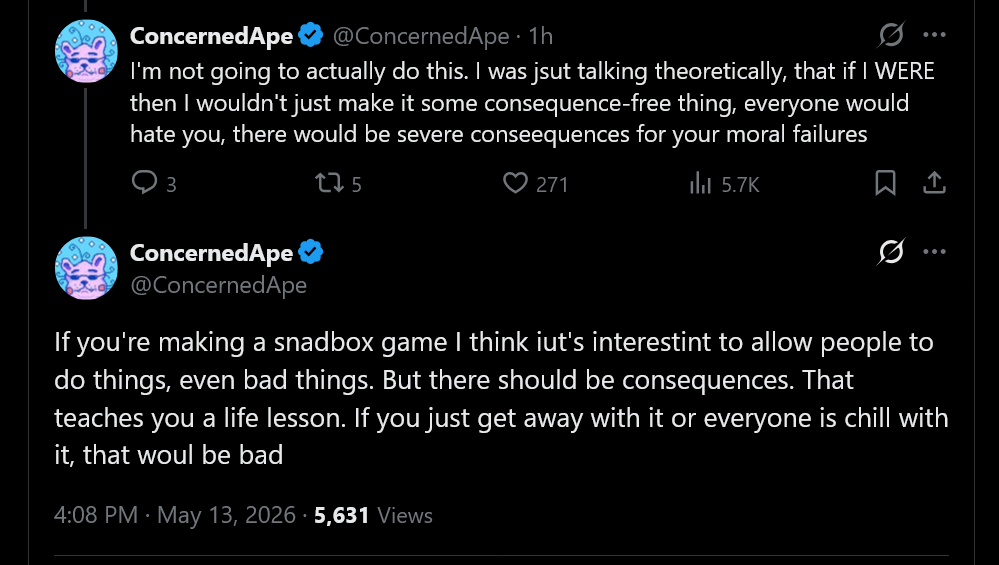
As Barone noted in his final quips on the subject, the idea of causing heartbreak in Pelican Town doesn’t just clash with the game’s mechanics—it clashes with the spirit of the game. As he playfully asked: "Would you really want to disappoint Grandpa like that?"
The answer, for most players, is a resounding no. The rumors of infidelity have been put to bed, and Pelican Town remains a place where, despite the occasional trip to the Dark Shrine, the values of friendship, hard work, and community remain the order of the day. Eric Barone continues to focus on the game he wants to make, and for now, that means keeping the marriages of Pelican Town—and the players’ reputations—intact.












No comments yet. Be the first to join the conversation!