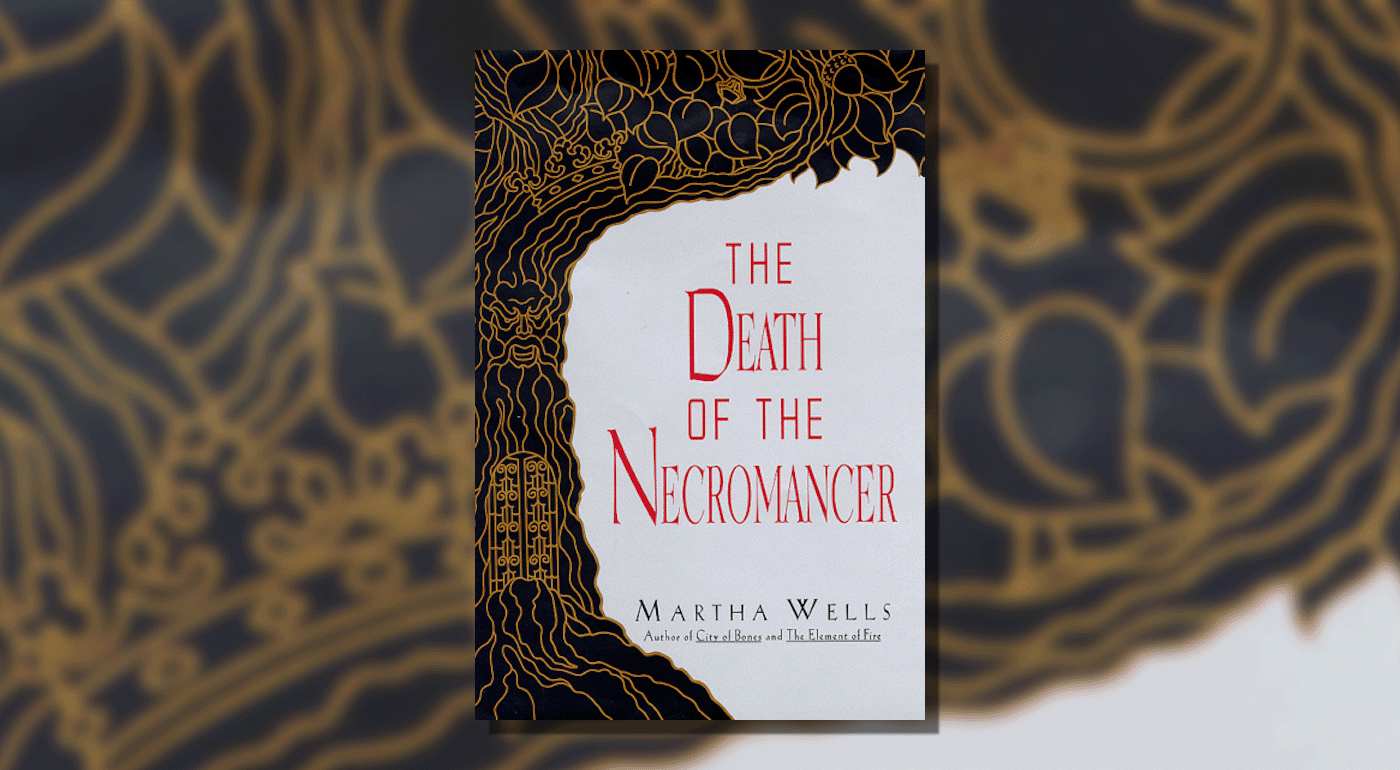
In the vast, interconnected tapestry of Martha Wells’ bibliography, few works stand as distinct—or as deceptively complex—as The Death of the Necromancer. Set two centuries after the events of her debut, The Element of Fire, this novel serves as both a standalone thrill ride and a pivotal exploration of a gaslamp fantasy world. It is a story where the dead refuse to stay buried, where heists spiral into supernatural catastrophes, and where a cast of emotionally stunted men confront the dire consequences of unchecked sorcery.
The Heist That Unraveled Reality
The narrative begins with a high-stakes, meticulously planned robbery that serves as a masterclass in atmospheric misdirection. Madeline, a talented actress, navigates the opulence of a noblewoman’s ball on the arm of Reynard, a disgraced military officer. However, the veneer of high society is merely a stage for a more clandestine operation. Their associate, Nicholas Valiarde—a man of many faces—is the true architect of the scheme. To the public, Nicholas is a prosperous art importer; to his criminal cohorts, he is the legendary thief "Donatien." To the few privy to his bloodline, he is the last scion of a legacy rooted in the events of The Element of Fire.
What starts as a precise theft quickly descends into chaos when Nicholas encounters a rival crew with their own supernatural agenda. This collision of interests thrusts him into a deadly dance with Dr. Octave, a spiritualist who claims to bridge the divide between the living and the dead, and his puppet master—a formidable sorcerer wielding dark arts. As revenants and reanimated fae are unleashed, Nicholas finds himself pitted against Inspector Ronsarde, a brilliant lawman whose intellectual pursuit of Donatien mirrors the classic dynamic of Holmes and Moriarty.
A Chronology of Cursed Legacies
The roots of the current conflict lie deep in the past. Years prior to the novel’s primary action, Nicholas’s adoptive father, the natural philosopher Dr. Edouard Viller, was executed on what Nicholas maintains were fabricated charges of necromancy. The only remnants of Viller’s life work are a series of mystical metal orbs—artifacts that hold the key to a power far greater than the world understands.
The search for these orbs defines the chronology of the novel’s second act. As Nicholas navigates the sewers, tunnels, and crumbling estates of Ile-Rien, he is joined by a ragtag group of survivors. Dr. Arisilde, a man who once helped Viller forge the orbs, now exists in an opiate-induced haze, unable to offer the guidance needed to stop the impending catastrophe. Meanwhile, the stakes are raised when Madeline’s grandmother, Madele—a formidable witch in her own right—becomes a primary target for the mysterious sorcerer stalking Nicholas. The result is a life-or-death chase that forces the protagonists to reckon with a history of trauma they have long attempted to bury.
Supporting Data: Narrative Structure and World-Building
While The Death of the Necromancer is the second book in the Ile-Rien series, it functions independently of its predecessor. Readers need not have read The Element of Fire to appreciate the world-building, though the historical context adds a layer of weight to the political landscape.
The Evolution of Magic
One of the most compelling aspects of this novel is how Wells treats magic as an environmental variable rather than a static plot device. In the first book, magic felt like a flourish; here, it is a resource—a dangerous, volatile commodity that has been left to fester in the hands of the arrogant. Wells explores the systemic consequences of such power, introducing a concept where pain is used as a conduit for magical enhancement—a precursor to the themes she would later refine in her Rising World series.

Representation and Social Dynamics
The novel stands out for its progressive approach to diversity, particularly given its 1998 publication date. The inclusion of Isham, a Parscian man, provides a refreshing departure from the era’s standard tropes; he is treated as a peer and a professional, rather than an "other" or a subordinate. Furthermore, the presence of queer and trans characters, integrated into the narrative without being relegated to the status of a "social issue," marks the story as ahead of its time. These characters exist, operate, and thrive within the gaslamp setting, lending the world a lived-in, authentic feel.
Official Critiques and Literary Analysis
In assessing the work, critics often point to a recurring tension in Wells’ early characterizations. While Nicholas Valiarde is a charming, wily protagonist, some argue that he lacks the narrative weight of his predecessors, such as Thomas from The Element of Fire. Conversely, the female characters—specifically Madeline—are frequently noted as being underutilized. Despite her competence and agency, she is often left with less narrative "room" to maneuver than the male leads, a point of contention for readers who find her perspective both intriguing and frustratingly constrained.
The antagonist, too, follows a familiar template: the arrogant sorcerer driven by personal tragedy who weaponizes his grief. While the characterization is grounded, the complexity of the plot—frequently described as "fiddly" or overly convoluted—can occasionally detract from the emotional core of the story. As the character Reynard aptly notes, even the master criminal of the city seems perpetually bewildered by the sheer scale of the mess he has stumbled into.
Implications: The Legacy of Ile-Rien
The true triumph of The Death of the Necromancer lies in its atmosphere. The gaslamp-esque setting, with its blend of industrial-age grime and eldritch horror, is rare in contemporary fantasy. It provides a perfect backdrop for a story that is essentially about the refusal to move forward. The men in this story, from the protagonist to the villain, are united by a common failing: a stubborn, destructive refusal to seek "therapy" for their pasts, choosing instead to let their trauma dictate the fate of the city.
The audiobook version, narrated by Derek Perkins, is frequently cited as the definitive way to experience the story. Perkins’ ability to manage a vast, diverse cast of characters provides the necessary momentum to keep the listener engaged through the more labyrinthine sections of the plot. His pacing, coupled with Wells’ sharp, witty dialogue, ensures that the story remains immediate and exciting despite its complex architecture.
Looking forward, the publication of The Wizard Hunters—the third installment in the series—signals a continued shift in the Ile-Rien universe. By choosing to jump a generation ahead rather than tethering herself to the survivors of The Death of the Necromancer, Wells demonstrates a willingness to prioritize the evolution of her world over the comfort of her readers. Whether this strategy succeeds remains a point of debate, but it confirms one thing: Martha Wells is a writer who is never content to repeat the same trick twice.
As we turn our attention to the next chapter in this grand, sprawling saga, the lessons of the Necromancer remain clear: in a world where the dead return and sorcery comes with a price, the most dangerous thing one can do is remain haunted by the past. The intricate, flawed, and deeply human world of Ile-Rien continues to serve as a reminder of why Wells remains a titan of the genre, constantly leveling up her craft and challenging the boundaries of what fantasy can achieve.