Nana Muazin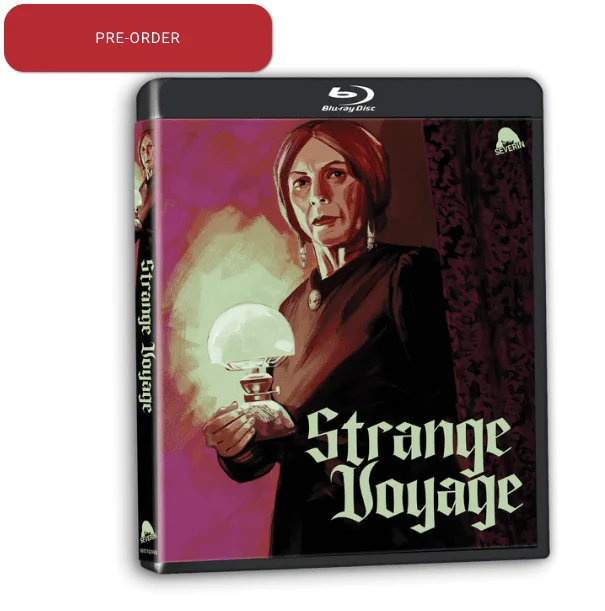
In the landscape of international horror cinema, few niches have proven as enduringly atmospheric or as deeply transgressive as the "Spanish Gothic." Characterized by its haunting isolation, baroque aesthetic, and a penchant for pushing the boundaries of moral acceptability, this subgenre has long served as a playground for some of European cinema’s most daring auteurs.
Today, Severin Films—the boutique label renowned for its meticulous restoration and curation of cult, horror, and exploitation cinema—has officially announced the forthcoming release of Danza Macabra Volume Five: The Spanish Gothic Collection. This massive five-disc box set marks the fifth installment of what Mondo Digital has hailed as "an essential series of Euro-Gothic tastiness." By returning to the decaying cemeteries, mist-shrouded catacombs, and cobwebbed castles that define the genre, Severin is offering a definitive deep dive into four uncut masterpieces of Spanish horror.
The Resurrection of the Macabre: Main Facts
The Danza Macabra Volume Five collection is not merely a box set; it is an act of cinematic preservation. Featuring four films, each scanned from original camera negatives or archival 35mm prints, the collection is a testament to the technical prowess of the Spanish film industry during the 1960s, 70s, and 80s.
The set includes:

- Strange Voyage (1964): A North American disc premiere directed by the legendary Fernando Fernán Gómez.
- Exorcism’s Daughter (1971): A dual-version presentation including the Spanish original (Las Melancólicas) and the complete U.S. cut, both making their debut on disc.
- The Dracula Saga (1973): A grisly, visceral reinvention of vampire mythology by León Klimovsky, appearing uncut in North America for the first time.
- The Turn of the Screw (1985): A daring, psychosexual adaptation of the Henry James classic by the controversial Eloy de la Iglesia.
Beyond the films themselves, the collection boasts over ten hours of supplemental material, including new audio commentaries, scholarly video essays, and rare interviews, ensuring that these titles are placed within their proper cultural and historical contexts.
A Chronology of Terror: The Evolution of Spanish Gothic
To understand the significance of this collection, one must view these films through the lens of the era in which they were produced. The evolution of Spanish horror was frequently dictated by the tension between the country’s conservative social climate and the burgeoning desire of filmmakers to express dark, often subversive themes.
1964: The Birth of Subversion
Strange Voyage (1964) serves as the collection’s foundation. Directed by Fernando Fernán Gómez, it stands as a pillar of artistic subversion. Based on a true-crime story, it blends black comedy with grotesque drama in a way that shocked the censors of the time. The film’s inclusion of a poignant performance by Jess Franco—a titan of the genre in his own right—adds a layer of meta-textual importance that fans of the era will undoubtedly appreciate.
1971–1973: The Height of Exploitation and Reinvention
The early 1970s saw Spanish cinema lean into the visceral. Exorcism’s Daughter (1971), directed by Rafael Moreno Alba, serves as a masterclass in psychological dread. Misleadingly marketed in the U.S. as a mere Exorcist cash-in, it is, in reality, a deeply unsettling look at mental health, trauma, and institutional cruelty. The inclusion of the "infamous orgy sequence" in the U.S. version, previously lost to many, highlights the lengths to which Severin goes to provide the "uncut" experience.

Shortly thereafter, The Dracula Saga (1973) proved that the vampire subgenre was far from exhausted. León Klimovsky, a director known for his ability to squeeze maximum atmosphere out of limited budgets, crafted a film that is "gory, gritty, and beautifully gothic," as noted by At The Mansion of Madness. It remains a vital piece of the puzzle for understanding how Spanish directors reinterpreted Anglo-centric monsters for a Mediterranean audience.
1985: The Modernist Turn
The collection concludes its chronological journey with Eloy de la Iglesia’s 1985 take on The Turn of the Screw. By this point, the "Gothic" had evolved into the "psychosexual." De la Iglesia, a figure known for his provocations in films like Cannibal Man, stripped away the Victorian artifice of Henry James’s novella to expose the rot beneath, replacing ghosts with the far more terrifying specters of repression and forbidden desire.
Technical Specifications and Restoration
For the cinephile, the value of the Danza Macabra series lies in its restoration standards. Severin has confirmed that each of the four films has undergone a meticulous scanning process:
- Strange Voyage and The Dracula Saga have been scanned in 2K from original camera negatives.
- Exorcism’s Daughter has been scanned in 4K from the original negative for the Spanish version, with the U.S. version salvaged from archival 35mm prints.
- The Turn of the Screw features a 4K scan from the original camera negative.
This dedication to archival integrity ensures that the visual texture of the films—the heavy shadows, the grainy film stocks, and the nuanced color palettes—are preserved for future generations.

Official Perspectives: A Labor of Love
The release of Danza Macabra Volume Five follows in the footsteps of the previous four volumes, all of which have solidified Severin’s reputation as the primary gatekeeper of Spanish horror in the West.
In a statement accompanying the announcement, Severin noted that the collection is designed to bridge the gap between "essential Euro-Gothic tastiness" and the rigorous academic study of cinema history. By providing multiple cuts of films like Exorcism’s Daughter, the label allows viewers to witness how regional markets perceived and altered foreign horror. This serves as a vital tool for film historians who track the "globalization" of horror tropes.
Furthermore, the label has incentivized collectors by offering a 50% discount on the previous four volumes of the Danza Macabra series through June 8th, encouraging newcomers to the genre to complete their libraries.
The Implications for Global Horror Cinema
The release of this collection has broad implications for the genre. First, it challenges the "canon" of horror cinema. By focusing on Spanish-language films that were once relegated to "drive-in" status or hidden behind heavy censorship, Severin is effectively expanding the definition of what constitutes a "classic."

Second, the collection highlights the "Director as Auteur" within the horror sphere. By grouping films from directors like Eloy de la Iglesia and Fernando Fernán Gómez, the collection encourages audiences to look past the monsters and gore to appreciate the directorial voice. De la Iglesia’s work, in particular, demonstrates how horror can be used as a scalpel to dissect the political and moral failings of a nation—in his case, the final years of the Franco era and the early years of the transition to democracy.
Finally, the success of such niche collections suggests a healthy market for physical media in the digital age. In an era where streaming services often rotate content at the whim of licensing agreements, physical releases like Danza Macabra offer permanence. For the dedicated horror community, these sets are not just purchases; they are artifacts of a subculture that refuses to let the past die.
Conclusion
As the genre continues to evolve, the importance of looking back becomes increasingly apparent. Danza Macabra Volume Five: The Spanish Gothic Collection is a monumental achievement in curation and restoration. By gathering these four distinct, transgressive, and deeply atmospheric films, Severin Films has provided a gateway into a world where horror is never just about the jump scare—it is about the reflection of a culture in the mirror of the macabre.
For those eager to descend into the crypts, pre-orders are currently open via the official Severin Webstore. Whether you are a long-time devotee of Euro-horror or a curious newcomer, this collection is an essential addition to any serious film library, promising hours of, as Mondo Digital put it, "essential Euro-Gothic tastiness."


 Evan Lee Salim
 Nana Wu