

For the better part of a decade, the budget 3D printing market has been a battlefield defined by a singular, obsessive metric: speed. Manufacturers have engaged in an "arms race" to shave milliseconds off travel moves and push acceleration to the limits of physical stability. Alongside this, the checklist for a "good" entry-level machine became standardized: auto bed leveling, input shaping, silent stepper drivers, and a user interface that doesn’t require a degree in computer science to navigate.
However, as the market matures, a quiet, tectonic shift is occurring. While enthusiasts remain rightfully concerned with vibration dampening, extrusion consistency, and assembly ease, the "build plate" has emerged as the most significant, yet often overlooked, differentiator in the budget segment. It is no longer just about how fast a printer can move; it is about how much of your life—and your home—it can physically accommodate.
The Evolution of the Budget Spec Sheet
To understand why build volume is suddenly taking center stage, one must look at the historical trajectory of consumer 3D printing. In the early days, "budget" was synonymous with "project." If you bought a printer for under $300, you were essentially buying a box of parts that would require significant tuning, manual leveling, and hardware modifications just to print a calibration cube.
As the industry stabilized, companies like Creality, Elegoo, Anycubic, and eventually Bambu Lab moved the goalposts. The focus shifted to "out-of-the-box" reliability. We saw the rapid adoption of strain-gauge auto-leveling, which effectively killed the dreaded "paper-under-the-nozzle" calibration method. We saw the move from noisy 8-bit controllers to silent 32-bit boards. Once the baseline for "it works" was met, the industry pivoted to speed, with firmware like Klipper becoming the industry standard for affordable high-speed output.
But with speed now commoditized—even $200 printers can reach 250mm/s—manufacturers are finding that speed alone no longer provides a competitive edge. They are looking for the next "value unlock." That unlock is, quite simply, size.
The Psychological Barrier of Small Build Volumes
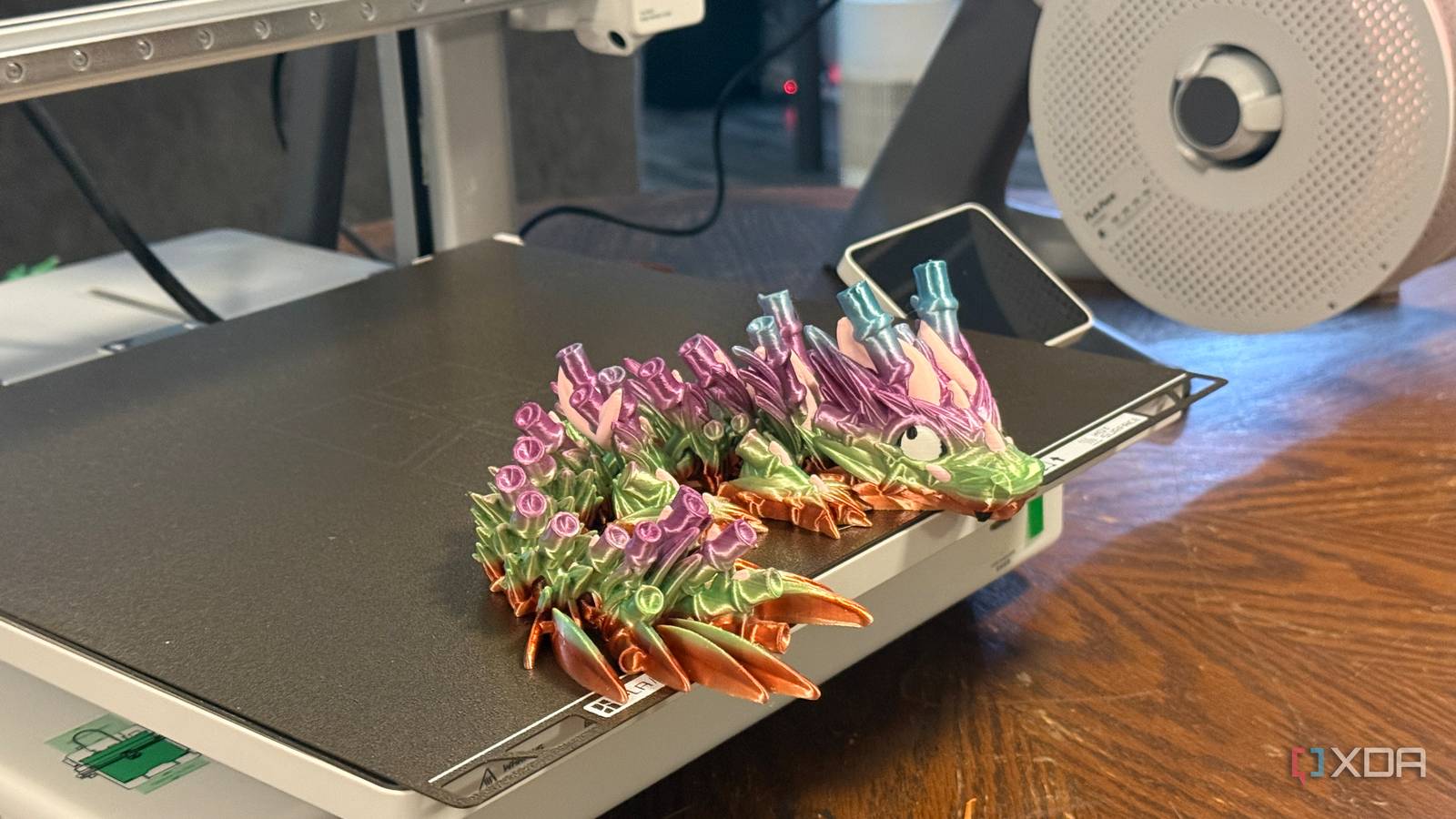
A small build plate does more than limit the dimensions of your output; it fundamentally alters the user’s relationship with their machine. When a printer is limited to a 220mm x 220mm bed, the user begins to think in terms of "compromise."
Before a file is even sent to the slicer, the user performs a mental calculation: Does this fit? Do I need to split this into four parts? Are the cut lines going to weaken the structural integrity of the print?
This "mental friction" acts as a deterrent. Many of the most practical, household-saving prints—large drawer organizers, custom-fitted wall mounts for power tools, oversized air-flow ducts for computer cases, or long-form decorative items—require a footprint that small printers simply cannot provide. When a user realizes that a project requires a multi-part assembly, glue, and post-processing, the likelihood of that project being completed drops significantly. A larger build plate removes this friction, transforming the printer from a specialized tool for "toys and trinkets" into a functional appliance that serves the home.
The New Guard: Large-Format Budget Machines
The market has responded with a wave of large-format machines that would have cost four times as much just three years ago. We are seeing a proliferation of printers like the Elegoo Neptune 4 Plus/Max, the Anycubic Kobra 3 Max, and the Sovol SV08. These machines are not merely "upsized" versions of their predecessors; they are designed to handle the structural challenges of larger footprints.
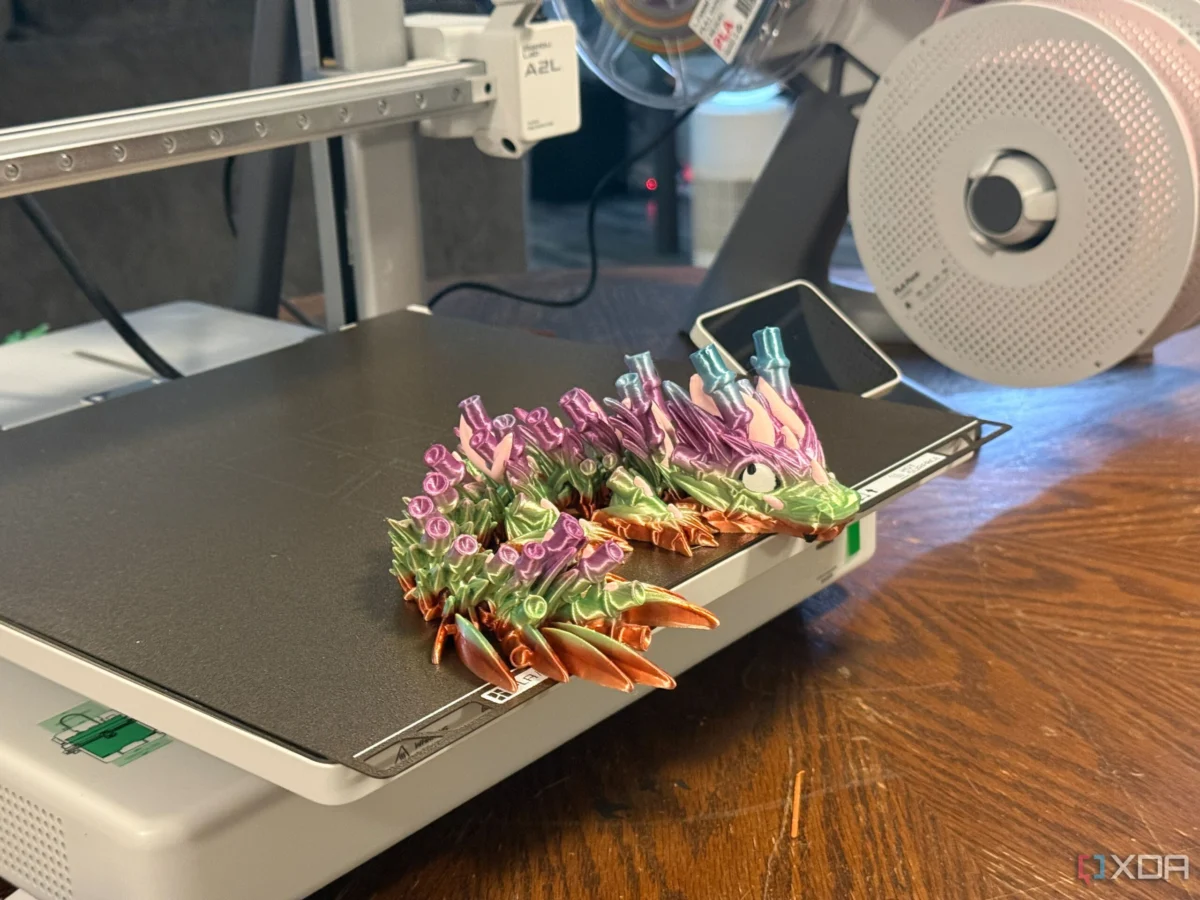
These printers are pushing the boundaries of what consumers expect for under $600. For instance, the Bambu Lab A2L, while slightly more premium in its positioning, exemplifies this shift. With a build volume of 330mm x 320mm x 325mm, it caters to a demographic that wants the "Bambu experience" (ease of use, speed, reliability) without the spatial constraints of the standard A1 or P1 series.

Chronology of the Shift:
- 2020–2022: The era of "Bed-Slingers." The industry focused on perfecting the 220mm format. Speed was the primary marketing hook.
- 2023: The rise of Klipper firmware and input shaping in budget printers. Stability and speed became the baseline for entry-level machines.
- 2024–2025: The emergence of the "Max" series. Manufacturers began releasing larger-volume versions of their successful mid-sized printers, testing the consumer appetite for larger footprints.
- 2026 (Present): Large format is no longer a "niche" category. It is a mainstream consideration. Budget-adjacent companies are now prioritizing build volume alongside automation as a core value proposition.
Implications of Scaling Up: The Trade-offs
It is crucial to acknowledge that a larger build plate is not a panacea. Physics dictates that as you increase the size of the bed, you introduce new engineering hurdles.
1. Thermal Inertia and Energy Consumption
A larger bed requires a more powerful heating element and, consequently, more time to reach the target temperature. For a busy user, an extra five minutes of waiting for a 330mm bed to reach 60°C might seem trivial, but it adds up. Furthermore, uneven heating across a large surface can lead to warping if the manufacturer has not invested in a high-quality, thick build plate that distributes heat uniformly.
2. The Footprint Problem
A 330mm build plate often requires a printer frame that is significantly larger. For a "bedslinger" design, the depth required is double the Y-axis travel, which can quickly consume a standard desk. Potential buyers are now forced to consider spatial planning—the printer might be "budget," but the physical space it occupies is not.
3. Calibration Sensitivity
A larger bed is more susceptible to "leveling drift." Even a fraction of a millimeter of tilt is magnified over a 300mm+ span. While modern auto-leveling sensors are excellent, they are still subject to mechanical tolerances. Users who upgrade to large-format machines must be prepared for a slightly more rigorous calibration routine than they might have been used to on a compact machine.
Why the "Build Volume" Argument Wins
Despite the challenges, the "value-per-dollar" argument for large build plates is overwhelming. When a printer can print a single, solid, structural component, the reliability of that component is higher than a part that has been printed in segments and glued together.
Furthermore, larger plates allow for "batching." A user can print six identical brackets at once rather than printing them one by one. This increases the machine’s throughput, effectively making it "faster" in a practical sense, even if the raw movement speed is the same as a smaller, cheaper printer.
Official Industry Perspective
Industry leaders are increasingly viewing the "build volume" metric as a retention tool. A user who buys a small, cramped printer often hits a ceiling; they feel they have "outgrown" the machine once they start attempting complex, functional projects. A user with a larger build volume, however, finds new uses for their printer, extending the lifecycle of the product and increasing the likelihood that they will remain within that brand’s ecosystem for future purchases—such as buying specialized filaments or accessories.
Conclusion: The New Definition of Value
As we look toward the future of home fabrication, it is clear that the obsession with "maximum speed" is beginning to plateau. While we all want our benchies to print in under 10 minutes, the novelty of speed eventually gives way to the utility of the object.
The build plate is the new differentiator. It represents the potential of the machine, the limit of the user’s ambition, and the practical utility of the tool in a home environment. For the next generation of budget-conscious buyers, the smartest purchase will likely not be the one that is the fastest, but the one that offers the most breathing room. By choosing a larger build volume, you aren’t just buying more plastic; you are buying the freedom to stop compromising and start creating.











