The deep-space grand strategy landscape is about to become significantly more treacherous. Pavonis Interactive, the acclaimed developers behind the hyper-realistic alien invasion simulator Terra Invicta, have officially announced the title’s first major downloadable content (DLC) expansion: Dark Skies. Published by Hooded Horse, the expansion promises to inject a new layer of temporal complexity and aesthetic polish into a game already renowned for its staggering, sometimes punishing, level of detail.
Scheduled for release on July 27th across Steam, GOG, the Epic Games Store, and the Microsoft Store, Dark Skies is not merely a content drop; it is an invitation for veteran commanders and newcomers alike to re-examine the geopolitical foundations of the game’s conflict. By introducing two radically different starting scenarios, Pavonis Interactive is shifting the focus from the late-game orbital warfare that defines the current experience toward the messy, clandestine origins of the human resistance.
The Core Expansion: A New Chronology of Conflict
At the heart of Dark Skies are two distinct "start date" scenarios that fundamentally alter the player’s relationship with the incoming alien threat. In the base game, players are thrust into a near-future setting where the alien presence is already an encroaching reality. The DLC pulls back the curtain on the timeline, challenging players to navigate the complexities of international relations long before the first alien ship enters the solar system.
The 2003 Scenario: The Long Game
The first of these scenarios places the player in 2003, at the height of the United States-led invasion of Iraq. This provides a twenty-year lead time compared to the standard campaign. While a two-decade advantage might sound like a massive tactical boon, the developers have crafted this start to be a test of political patience and intelligence gathering.
In 2003, the world is vastly different. The technological baseline is lower, the geopolitical alliances are shifting, and, most importantly, the public is entirely unaware of the extraterrestrial menace. Players must contend with the difficulty of building a shadow organization while managing a world that is distracted by regional conflicts. It is a slow-burn experience where the "hard" sci-fi elements—research, technology trees, and bureaucratic influence—take center stage. Players will be forced to hunt for offworld infiltrators and navigate the treacherous waters of human politics, all while trying to prepare a foundation for a defense force that the world doesn’t yet know it needs.
"Broken Earth": The Alternate History Nightmare
If the 2003 start is a slow burn, the "Broken Earth" scenario is a brushfire. This scenario presents an alternate timeline where the Cuban Missile Crisis did not end in a diplomatic standoff, but rather escalated into a global nuclear exchange.
The world of "Broken Earth" is a century removed from that nuclear winter, a fractured, post-apocalyptic landscape where the major powers of the 20th century have collapsed or been radically transformed. Humanity is not entering the space age from a position of relative global stability; they are clawing their way out of the ashes. This scenario presents a unique challenge: the player must unite a broken species and reconstruct the industrial base required to reach for the stars, all while knowing that an implacable alien force is watching from the shadows of the outer system. It is a masterclass in atmospheric storytelling, forcing players to prioritize survival and unity over pure technological dominance.
Aesthetic Evolution: Hard Sci-Fi Meets Industrial Grit
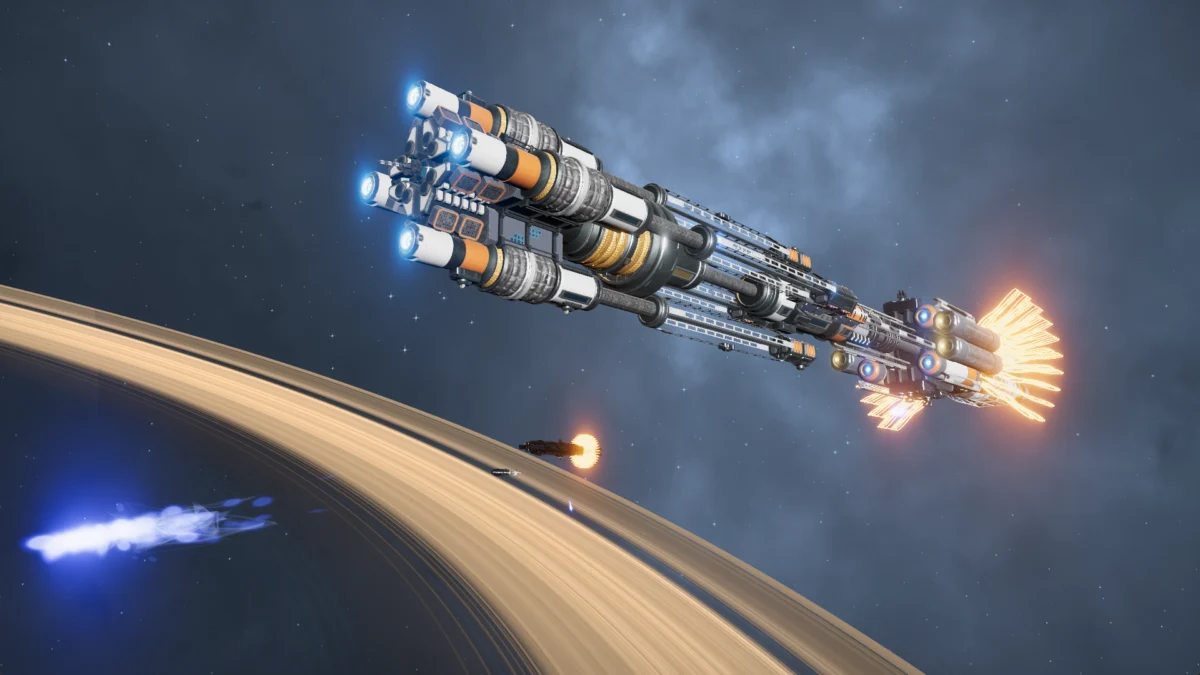
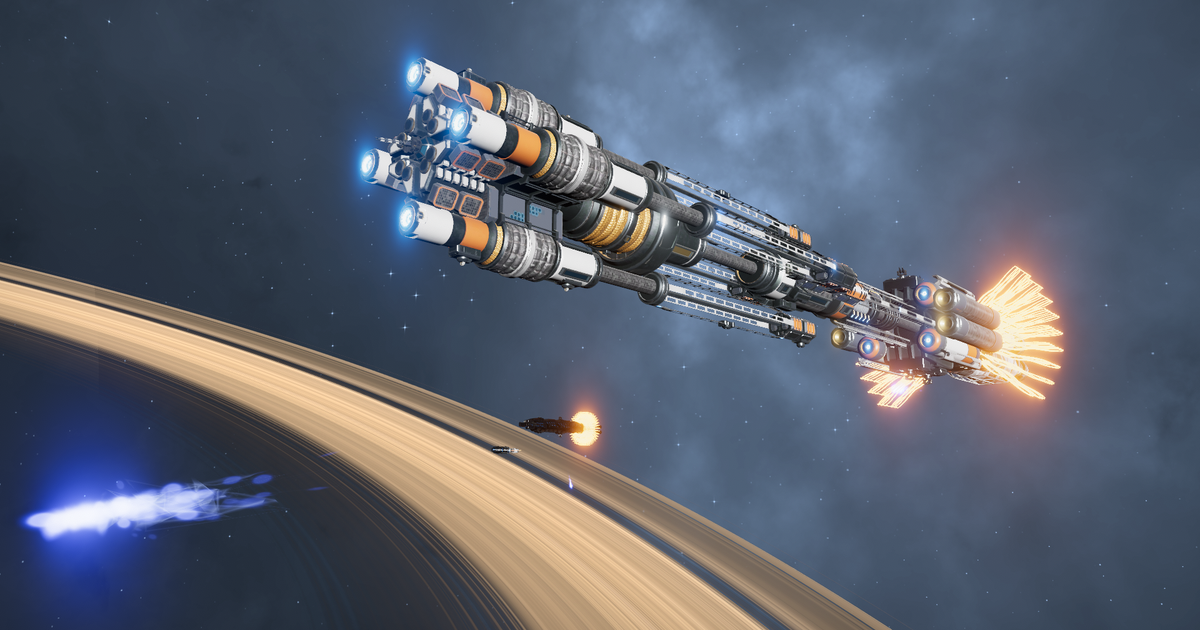
Beyond the scenarios, Dark Skies introduces significant visual updates to the game’s most iconic feature: its spacecraft. Terra Invicta has always been praised for its commitment to "hard" physics-based combat, where ships are long, cylindrical, and functional rather than sleek and aerodynamic.
The DLC adds two new visual styles for these vessels. The first is an aesthetic directly inspired by NASA’s real-world engineering philosophy. This design language emphasizes modularity, exposed radiator panels, and the utilitarian look of current space exploration. The second style leans into "industrial hard sci-fi," characterized by a rugged, "lived-in" aesthetic that suggests ships built under duress, meant to be repaired in the vacuum of space by desperate crews.
These aesthetic shifts are more than just cosmetic. They serve to reinforce the tone of the respective eras. Whether the player is commanding a state-of-the-art NASA-style vessel in the early 21st century or a makeshift, industrial warship in the ruined future of "Broken Earth," the visual design reinforces the stakes of the conflict.
Supporting Data: Why "Hard" Sci-Fi Matters
Terra Invicta remains a niche title in the grand strategy genre, yet it commands a dedicated following precisely because of its commitment to scientific accuracy. The developers at Pavonis Interactive—notable for their work on the Long War mods for XCOM—have built a game where orbital mechanics, delta-v, and heat dissipation are as important as tactical positioning.
The data supports the idea that players crave this level of depth. Since its 1.0 launch six months ago, the game has maintained a consistent player base that values "slow" strategy. The Dark Skies DLC recognizes that the core audience for this game isn’t looking for quick-fix arcade action; they are looking for simulations that offer hundreds of hours of replayability. By expanding the timeline and introducing modular ship designs, the developers are effectively increasing the game’s depth without compromising its core identity.
Official Responses and Developer Intent
In their recent press communications, Pavonis Interactive and Hooded Horse have emphasized that Dark Skies is a response to community feedback. Players have long asked for more variety in the early game, as well as more ways to customize the appearance of their space-faring fleets.
"This start date brings new projects and technology to research, as well as a longer, slower fight on Earth," the press release stated. The developers are clearly interested in leaning into the "simulation" aspect of the genre. By introducing the 2003 scenario, they are acknowledging that the most interesting part of Terra Invicta isn’t always the climactic battle against an alien fleet, but the quiet, intense preparation that occurs in the shadows of world governments.
The "Broken Earth" scenario, meanwhile, reflects a desire to experiment with the game’s own engine. By changing the starting political map, the developers are showing that the game’s underlying mechanics—the "Engine of Politics"—are flexible enough to accommodate wildly different world states.
The Implications for the Strategic Landscape
The inclusion of Dark Skies creates several interesting implications for the future of Terra Invicta.
- Increased Replayability: By adding two distinct historical/alternate-history start dates, the variety of campaigns is effectively tripled. Players who found the base game’s pacing to be too rapid or too focused on the late game now have access to a much more granular experience.
- Modding Potential: These scenarios provide a blueprint for what is possible. If the developers can successfully integrate a 2003 start and a post-nuclear 21st-century start, the modding community will undoubtedly take notice, potentially leading to a flood of new, user-created scenarios.
- The "Slow" Strategy Movement: Terra Invicta sits at the vanguard of a movement in gaming that prioritizes intellectual engagement over rapid-fire feedback loops. Dark Skies doubles down on this. It is a declaration that games do not need to be fast to be compelling; they only need to be deep.
Final Thoughts: The Long Road Ahead
As July 27th approaches, the community’s anticipation is palpable. For those who have already spent months mastering the orbital mechanics of the outer solar system, Dark Skies offers a compelling reason to return to the drawing board.
Whether you are a newcomer intimidated by the game’s steep learning curve or a veteran who has already established a foothold on Mars, the expansion offers something new. It promises to deepen the narrative, broaden the strategic possibilities, and, most importantly, provide a fresh challenge in a game that has already redefined the standards for the grand strategy genre.
It is time to get those asteroid bases operational. The skies are getting darker, and the threat of the alien invasion is no longer just a late-game concern—it is a shadow that now stretches back through the history of our own world. The wait for July 27th will be long, but for those ready to commit to the long haul, the rewards of Dark Skies appear well worth the effort.