

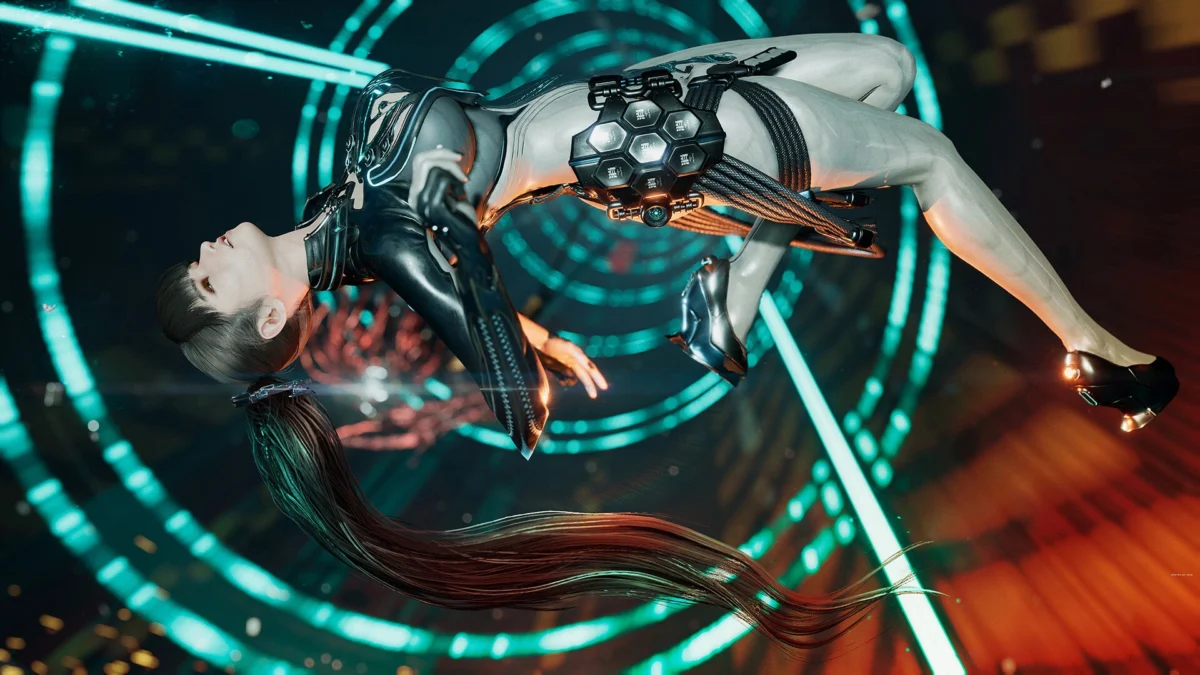
SEO Keywords: Shift Up, Stellar Blade 2, self-publishing, first-party service model, game development, South Korea, Shinji Mikami, Unbound, IP management, video game industry
Main Facts: Shift Up Charts Independent Course for Stellar Blade Franchise
SEO Keywords: Shift Up self-publishing, Stellar Blade sequel, first-party model, marketing strategy
Seoul, South Korea – In a significant strategic shift that underscores its growing ambition and confidence, South Korean developer Shift Up has officially announced its intention to self-publish the highly anticipated sequel to its critically acclaimed action-adventure title, Stellar Blade. The move, revealed in a recent communication to investors, marks a pivotal transition for the studio, moving away from its previous partnership with Sony Interactive Entertainment for the original game.
The decision to adopt a "first-party service model" for Stellar Blade 2 is a direct response to the impressive and "steady sales" performance of the first Stellar Blade since its launch in April 2024. This success has evidently emboldened Shift Up to take full control over its burgeoning intellectual property (IP), from development to global marketing and distribution. The developer explicitly stated that the sequel’s development is "progressing smoothly," indicating that plans for its future are well underway and meticulously considered.
Under this new operational framework, Shift Up aims to revolutionize its approach to engaging with its player base and shaping the public perception of the Stellar Blade universe. "Notably, starting with [Stellar Blade 2], Shift Up will transition to a first-party service model," the studio elaborated in its investor brief. "This will allow us to lead marketing strategies that fully reflect the distinctive identity of the IP, and we expect to communicate the unique appeal of its universe to players more directly and effectively." This statement highlights a desire for greater creative autonomy and a more intimate connection with the burgeoning fanbase.
The studio’s vision extends beyond mere control; it’s a calculated move towards maximizing market penetration and sales. Building on the foundation laid by the original game, which swiftly garnered a dedicated following, Shift Up is "formulating an optimal go-to-market strategy designed to maximize sales and reach a broad global audience from day one." This robust strategy aims to leverage the established brand loyalty and critical acclaim of the first title to propel its successor to even greater commercial heights.
Shift Up concluded its announcement with a declaration of its commitment to "high-quality self-publishing," articulating a clear path forward for the franchise. The company expressed profound confidence in its new direction, citing "three key tailwinds" that it believes will ensure the success of Stellar Blade 2. These crucial factors include its newly established "high-quality self-publishing capabilities," a meticulously crafted "sales maximization strategy," and, perhaps most importantly, a "proven IP fanbase." With these elements converging, the studio unequivocally stated, "we are confident the next title will deliver meaningfully improved results compared to its predecessor." This bold declaration signals not just a change in publishing strategy but a profound evolution in Shift Up’s corporate identity and operational philosophy.
Chronology: Shift Up’s Ascendancy and the Birth of a New Strategy
SEO Keywords: Shift Up history, Stellar Blade development, Sony partnership, Unbound acquisition
Shift Up Corporation, founded in 2013 by renowned art director Kim Hyung-tae, has steadily carved out a niche in the competitive South Korean gaming landscape. Initially known for its visually striking mobile titles like Destiny Child and the more recent Goddess of Victory: Nikke, the studio has consistently pushed boundaries in character design and artistic direction. However, it was their foray into console gaming with Project Eve, later retitled Stellar Blade, that truly propelled them onto the global stage.
The development of Stellar Blade began several years ago, generating considerable buzz from its earliest reveals due to its stunning graphics, fluid combat, and distinctive protagonist, Eve. The game quickly garnered attention for its high production values and unique blend of post-apocalyptic sci-fi aesthetics with fast-paced, hack-and-slash gameplay. A crucial turning point came when Sony Interactive Entertainment announced it would publish Stellar Blade exclusively for the PlayStation 5, a significant endorsement that elevated Shift Up from a prominent mobile developer to a serious contender in the console space. This partnership provided Shift Up with invaluable resources, marketing reach, and technical support typically afforded to first-party or close-partner studios.
Stellar Blade officially launched on April 26, 2024, to a diverse reception. Critics praised its breathtaking visuals, satisfying combat mechanics, and intricate world-building, though some critiques centered on its narrative depth and character development. Despite the varied critical consensus, the game resonated strongly with players, quickly building a passionate community drawn to its unique style and challenging gameplay. The "steady sales" mentioned by Shift Up in their investor update suggest that the game not only met but likely exceeded commercial expectations, establishing Stellar Blade as a successful new IP in a market often dominated by established franchises. Its performance on the PlayStation 5 solidified Shift Up’s reputation as a developer capable of delivering high-quality, graphically intensive console experiences.
In the midst of this success and looking towards an even more ambitious future, Shift Up made another significant move: the acquisition of Unbound, the new studio established by legendary game designer Shinji Mikami. Mikami, known for his groundbreaking work on titles like Resident Evil and The Evil Within, brings an unparalleled legacy of horror and action game design expertise. While the immediate implications for Stellar Blade 2 are not explicitly stated, this acquisition, announced shortly before the self-publishing news, signals Shift Up’s intent to rapidly expand its creative talent pool and diversify its development capabilities. It positions the company as a major player actively seeking to collaborate with industry veterans and cultivate a diverse portfolio of high-quality games.
The latest announcement regarding Stellar Blade 2 and the pivot to self-publishing therefore represents the culmination of Shift Up’s journey from a mobile-focused studio to an independent, globally-minded console developer and now, a burgeoning publisher. It’s a bold declaration of self-reliance, leveraging the success of its flagship IP to forge a new path in the competitive global gaming industry. This strategic evolution highlights Shift Up’s confidence in its internal capabilities and its determination to fully harness the potential of the Stellar Blade universe without external publishing constraints.
Supporting Data: The Strategic Rationale Behind Self-Publishing
SEO Keywords: game industry trends, self-publishing benefits, Shift Up strategy, IP control, revenue maximization
Shift Up’s decision to self-publish Stellar Blade 2 is not an isolated incident but rather reflects a broader trend within the global video game industry. Increasingly, successful developers are opting to take greater control over their intellectual properties (IPs) and publishing processes, driven by a desire for increased revenue share, creative autonomy, and direct engagement with their audience. The "steady sales" of the first Stellar Blade, while not quantified with specific numbers, are a crucial indicator that the game achieved sufficient commercial traction to warrant this significant investment in self-publishing infrastructure. For a new IP, especially one from a studio primarily known for mobile games, establishing such a foothold on a major console platform like the PlayStation 5 is a considerable achievement, providing the financial stability and market confidence necessary for such a pivot.
The benefits of a "first-party service model" or self-publishing are multifaceted and compelling for a developer of Shift Up’s caliber. Firstly, it allows for a substantially higher revenue share. When partnering with a traditional publisher like Sony, a developer typically receives a percentage of sales, with the publisher taking a significant cut to cover distribution, marketing, and platform fees. By self-publishing, Shift Up stands to retain a much larger portion of each sale, which can be reinvested directly into future game development, marketing efforts, or company expansion. This financial leverage is critical for long-term growth and sustainability.
Secondly, and perhaps equally important, is the aspect of creative and marketing control. As Shift Up explicitly stated, self-publishing will enable them to "lead marketing strategies that fully reflect the distinctive identity of the IP" and "communicate the unique appeal of its universe to players more directly and effectively." This means having the final say on promotional campaigns, trailer content, community management, and brand messaging, ensuring that the Stellar Blade brand identity remains consistent and authentic across all touchpoints. This level of granular control is often diluted when working with an external publisher, whose broader portfolio and strategic priorities might sometimes necessitate compromises. For an IP as visually striking and distinct as Stellar Blade, maintaining this purity of vision is paramount.
The concept of "evergreen IP status," as mentioned by Shift Up, is also central to this strategy. An evergreen IP is one that maintains relevance and commercial viability over an extended period, capable of generating sustained revenue through sequels, spin-offs, merchandise, and other transmedia adaptations. By controlling the publishing arm, Shift Up can strategically plan and execute a long-term roadmap for the Stellar Blade universe, ensuring that new content, updates, and expansions are delivered in a manner that maximizes player engagement and brand loyalty. This proactive management is essential for cultivating a truly enduring franchise that transcends individual game releases.
However, the transition to self-publishing is not without its challenges and significant investments. Shift Up will need to build or significantly expand its internal capabilities in areas such as global marketing, digital distribution, community management, customer support, legal and licensing, and quality assurance for multiple regions. These functions, traditionally handled by a publisher, require substantial financial outlay, experienced personnel, and robust infrastructure. The "high-quality self-publishing capabilities" mentioned by Shift Up suggest they are already investing heavily in these areas, perhaps leveraging their experience with global mobile titles like Goddess of Victory: Nikke which requires extensive live service and marketing operations.
The move also inherently increases financial risk. While the potential for higher profits is significant, Shift Up will now bear the full financial burden of Stellar Blade 2‘s development, marketing, and distribution costs. The success or failure of the game will directly impact the company’s bottom line without the financial buffer or shared risk typically provided by a publishing partner. This indicates a strong belief in the Stellar Blade IP and Shift Up’s ability to execute on its ambitious plans, confident that the "optimal go-to-market strategy" and "proven IP fanbase" will mitigate these risks and drive "meaningfully improved results."
Official Responses: Shift Up’s Articulated Vision and Industry Silence
SEO Keywords: Shift Up official statement, game developer independence, Stellar Blade IP
The primary official response concerning this strategic shift comes directly from Shift Up’s own communication to its investors, an internal document that has now been made public. The language used in this brief is notably confident, assertive, and forward-looking, signaling a well-thought-out and deliberate corporate strategy rather than a reactive decision.
The core message from Shift Up emphasizes empowerment and control. Phrases like "lead marketing strategies that fully reflect the distinctive identity of the IP" and "communicate the unique appeal of its universe to players more directly and effectively" underscore a clear intent to protect and cultivate the Stellar Blade brand with an unfiltered vision. This is a powerful statement about the importance of creative integrity and direct engagement in an industry where developer-publisher relationships can sometimes be complex. The studio believes that by taking the reins, they can ensure the Stellar Blade experience, from its core gameplay to its marketing campaigns, remains authentic and deeply resonant with its audience.
Furthermore, the declaration of "formulating an optimal go-to-market strategy designed to maximize sales and reach a broad global audience from day one" showcases a sophisticated understanding of global market dynamics. It suggests that Shift Up isn’t just seeking independence but is actively developing the internal expertise to compete effectively on a global scale. This is a challenging endeavor, requiring deep knowledge of diverse markets, cultural nuances, and intricate distribution channels, all of which traditionally fall under the purview of experienced publishers. The confidence in achieving "meaningfully improved results compared to its predecessor" is therefore not merely wishful thinking but, presumably, backed by detailed market analysis and strategic planning.
The mention of "three key tailwinds" – high-quality self-publishing capabilities, a sales maximization strategy, and a proven IP fanbase – serves as a robust internal justification for this bold move. It frames the decision as a convergence of internal strengths and external market opportunities. The "high-quality self-publishing capabilities" suggest that Shift Up has already invested significantly in the necessary infrastructure and talent to handle publishing operations. The "sales maximization strategy" implies a data-driven and targeted approach to reach and convert potential players. And the "proven IP fanbase" is the ultimate validation, confirming that the first game has successfully cultivated a loyal audience eager for more content.
Notably, as of the time of this report, there has been no official public comment from Sony Interactive Entertainment regarding Shift Up’s announcement. Sony published the first Stellar Blade as a PlayStation 5 exclusive, a partnership that likely involved significant marketing and distribution support. The absence of a statement from Sony could be interpreted in several ways. It might signify an amicable parting of ways for the sequel, with Sony respecting Shift Up’s ambition for independence. Alternatively, it could simply mean that both parties are handling this transition behind the scenes without public fanfare, or that Sony views Stellar Blade as a successful but not indispensable part of its broader first-party lineup. For a platform holder, securing exclusive content is a key strategy, so a developer opting for self-publishing on a subsequent title, potentially opening up to other platforms, is a noteworthy development. However, without direct comment, the precise nature of the evolving relationship between Shift Up and Sony remains speculative.
This silence, juxtaposed with Shift Up’s confident declarations, further emphasizes the developer’s newfound autonomy and its determination to steer its own destiny in the competitive gaming landscape. It signals a new era where the developer, having successfully launched a major console IP, feels empowered to control every aspect of its future iterations.
Implications: A New Era for Shift Up and the Industry Landscape
SEO Keywords: Shift Up future, game industry implications, developer independence, Stellar Blade franchise growth, Mikami Unbound
Shift Up’s audacious move to self-publish Stellar Blade 2 carries profound implications, not just for the South Korean developer but for the broader video game industry. It signals a transformative period for the company, positioning it as a rapidly expanding entity that transcends the traditional developer role to become a comprehensive game entertainment powerhouse.
For Shift Up: This strategic pivot marks a significant step towards full corporate independence and enhanced profitability. By cutting out the middleman (a traditional publisher), Shift Up stands to retain a much larger percentage of sales revenue from Stellar Blade 2. This increased financial autonomy can be a game-changer, allowing for greater reinvestment into game development, expanding internal teams, exploring new technologies, and potentially even funding new IP creation. The acquisition of Shinji Mikami’s Unbound studio, announced prior to this self-publishing news, takes on even greater significance in this context. It suggests Shift Up is not only expanding its publishing capabilities but also aggressively acquiring top-tier creative talent, signaling a long-term vision to become a multi-project, multi-genre developer and publisher. This dual growth strategy could transform Shift Up into a major global player, akin to how studios like CD Projekt Red or Larian Studios have achieved success through self-publishing and strong IP management.
The shift also grants Shift Up unparalleled control over the Stellar Blade franchise. This means complete creative freedom, direct oversight of all marketing and branding efforts, and the ability to dictate the future trajectory of the IP without external pressures or conflicting priorities from a publisher. For a distinctive IP like Stellar Blade, known for its unique aesthetic and specific gameplay style, this level of control is crucial for maintaining brand consistency and fostering a strong, loyal community. Direct engagement with players through a first-party model can lead to more responsive development, community-driven features, and a stronger sense of ownership among the fanbase.
For the Stellar Blade Franchise: The future of Stellar Blade under Shift Up’s self-publishing model looks promising. With direct control, the studio can ensure a cohesive vision across potential sequels, spin-offs, and even transmedia expansions. The "evergreen IP status" mentioned by Shift Up indicates plans for a long-term franchise, potentially venturing into merchandise, animation, or other forms of entertainment. The success of the first game, coupled with a dedicated internal team managing its marketing and community, could allow Stellar Blade to grow into a truly iconic series, unhindered by external publishing agendas. However, this also places the entire burden of success squarely on Shift Up’s shoulders. The performance of Stellar Blade 2 will be a critical test of their newly established publishing capabilities and marketing prowess.
For the Video Game Industry: Shift Up’s move reinforces a growing trend of developer empowerment. As development costs soar and digital distribution becomes the norm, more successful studios are questioning the traditional publisher model. This trend, exemplified by companies like Epic Games with their self-publishing initiatives or several indie studios scaling up, suggests a potential shift in the power dynamic within the industry. It could inspire other developers with strong, established IPs to explore similar self-publishing avenues, particularly if Stellar Blade 2 achieves the "meaningfully improved results" Shift Up anticipates. This could lead to a more diverse publishing landscape, with more developer-led publishing houses and potentially more direct-to-consumer relationships. It also highlights the increasing value of strong IP as a foundation for building sustainable, independent businesses.
The decision could also indirectly influence platform holders like Sony. While exclusive content remains vital for console sales, a successful developer opting to self-publish a sequel, potentially across multiple platforms, demonstrates the evolving landscape of content ownership and distribution. It might prompt platform holders to reassess their partnership models, perhaps offering more attractive terms or co-development opportunities to retain or attract top-tier talent.
For Players: Ultimately, players stand to benefit from this shift. Direct communication channels between Shift Up and its community could foster a more transparent development process and a greater sense of inclusion. Tailored marketing strategies mean that information about Stellar Blade 2 will likely be more targeted and authentic to the game’s identity, enhancing anticipation and engagement. The commitment to a "high-quality self-publishing" model suggests that Shift Up is investing in robust support systems, which should translate into a better overall experience for players, from pre-launch information to post-launch support and content updates.
In conclusion, Shift Up’s strategic pivot to self-publishing for Stellar Blade 2 is a bold and calculated move that reflects the company’s meteoric rise and its ambitious vision for the future. It signifies a coming of age for the South Korean developer, transforming it into a formidable player on the global stage, poised to leverage its creative prowess and newfound independence to shape the destiny of its flagship franchise and potentially influence the wider industry landscape for years to come.












No comments yet. Be the first to join the conversation!