In the rapidly evolving landscape of live-service gaming, few titles possess the cultural footprint of Epic Games’ Fortnite. Since its explosive transition to a battle royale format, the game has served as a digital playground, a concert venue, and a storefront for the world’s most recognizable intellectual properties. However, as the game’s aesthetic direction shifts, so too does its regulatory standing.
The Entertainment Software Rating Board (ESRB) has officially updated the rating summary for Fortnite Battle Royale to include the descriptor "Suggestive Themes." While the game maintains its long-standing "T for Teen" rating, the inclusion of this specific tag—defined by the ESRB as "mild provocative references or materials"—marks a significant turning point in how the platform’s content is categorized. This shift comes on the heels of a season defined by increasingly revealing character designs and a surge in community discourse surrounding character animation physics.
The Regulatory Update: What “Suggestive Themes” Means
For years, Fortnite carried warnings primarily focused on "Violence," "Lyrics," and the ever-present "In-Game Purchases." The addition of "Suggestive Themes" is not merely administrative; it is a direct response to the visual evolution of the game’s cosmetic ecosystem.
The official ESRB listing now explicitly highlights the reason for this update, noting: "Players can encounter a female character depicted with deep inner cleavage and lower breast exposure." This clinical description represents a departure from the game’s earlier, more stylized aesthetic, which leaned heavily into cartoonish, exaggerated proportions rather than anatomically suggestive designs. The update also references the presence of censored profanity in certain licensed music tracks and vague references to marijuana, painting a picture of a game that is moving further away from its initial, more sanitized roots.
A Chronology of “Thirst Traps” and Aesthetic Shifts
The path to this rating adjustment was paved by a steady stream of community-labeled "thirst trap" skins that have dominated social media discourse over the past several months.
The Summer of Change
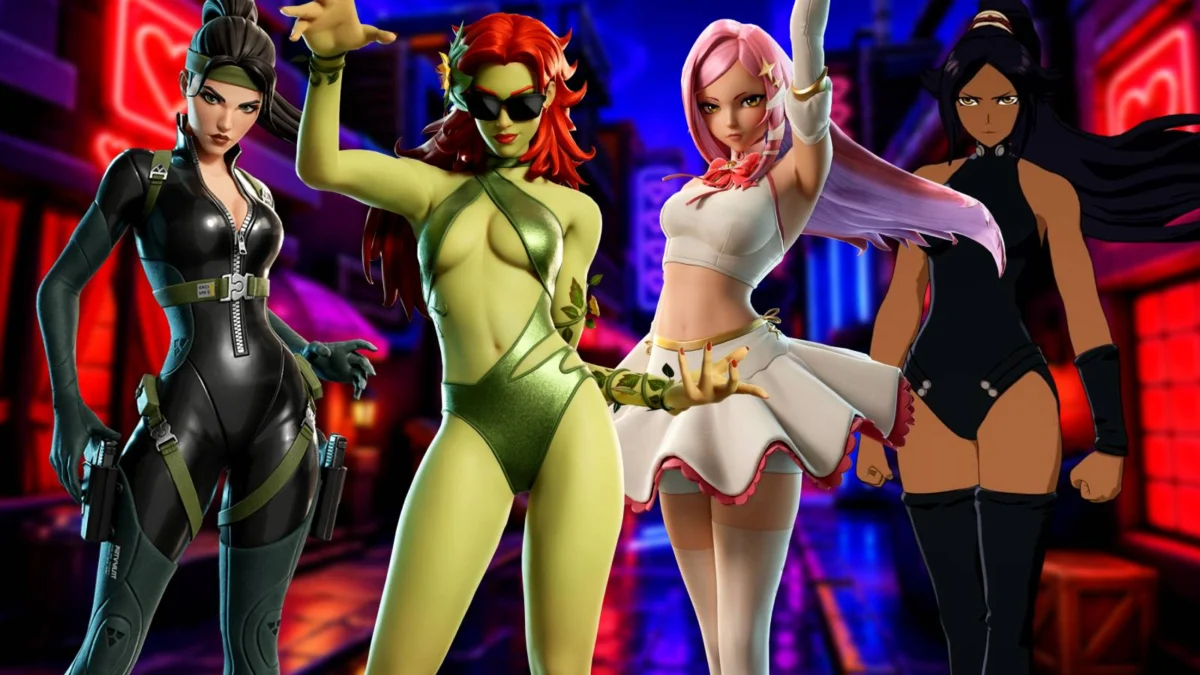
The trend arguably reached a fever pitch during the "Hot Bat Summer" event in July. The introduction of Chlorophyll Ivy and High Tide Harley Quinn served as a lightning rod for player attention. The designs, which featured swimsuits that exposed underboob and bikini-style silhouettes, were notably restricted to T-rated experiences—a sign that Epic Games was already acknowledging the sensitivity of these assets.
The Anime Influence
In August, the arrival of Yoruichi Shihouin from the Bleach anime franchise further fueled the conversation. As leaks emerged, the community became vocal about the potential for Epic to "nerf" or censor the character’s design. While the final product was arguably more conservative than her source material, the fervor surrounding her release solidified the community’s role as the primary curators of what they deemed "suggestive."
Recent Controversy: Fernet and Grace Crowne
The conversation expanded from static skin designs to movement-based mechanics with the introduction of Fernet from Kernel Hearts and, subsequently, the Battle Pass character Grace Crowne. Clips circulating on platforms like X (formerly Twitter) and TikTok showcased what many players identified as "jiggle physics"—a level of animation complexity that Epic Games had previously disavowed.
The “Calamity” Precedent: Epic’s Changing Stance
To understand the significance of the current situation, one must look back to the "Calamity" incident of 2018. When players discovered that the character model for the skin "Calamity" featured exaggerated breast movement during the "Jubilation" emote, the public outcry was immediate.
At the time, Epic Games was swift and apologetic. A spokesperson issued a formal statement: "This is unintended, embarrassing, and it was careless for us to let this ship. We are working now to fix this as soon as possible." The animation was patched within days, and the incident was held up as an example of Epic’s commitment to maintaining a "family-friendly" or at least "all-ages appropriate" aesthetic for a game with a massive youth demographic.
The stark contrast between the 2018 response and the current silence from Epic regarding the physics of characters like Fernet and Grace Crowne suggests a fundamental shift in the developer’s corporate strategy. Whether this is an intentional move to capture a more mature audience or a byproduct of an increasingly complex character customization engine, the company has clearly moved away from the "embarrassment" of 2018.
Data and Community Sentiment
The community’s obsession with these skins is easily quantifiable through social media engagement. Clips highlighting the physics of the latest skins frequently garner hundreds of thousands of views and thousands of likes, often eclipsing posts about gameplay updates or competitive news.
This creates a self-reinforcing cycle: players share clips of these specific skins, which drives higher engagement, which in turn encourages the developers to produce similar designs. The "thirst trap" label, while colloquial, has become a functional descriptor for a specific sub-sector of the Fortnite item shop. By allowing this trend to persist, Epic is effectively catering to an audience that values character aesthetics as much as, if not more than, the underlying battle royale mechanics.
Implications for the Future of Fortnite
The ESRB rating update carries several long-term implications for both the developer and the consumer.
1. The Broadening of the Player Base
By accepting a rating that includes "Suggestive Themes," Epic Games is tacitly acknowledging that its audience is aging. The cohort that started playing Fortnite as children in 2017 are now young adults. The game’s aesthetic evolution reflects this demographic shift. However, this creates a tension for parents of younger children who still view Fortnite as a safe, cartoon-style game.
2. The Risk of Future Regulation
"Suggestive Themes" is a broad umbrella. Should the game continue to lean into more mature character designs, it risks drifting toward an "M for Mature" rating, which would be a death knell for its reach. Epic Games will likely perform a delicate balancing act, providing enough "suggestive" content to keep the current player base engaged without crossing the threshold that would mandate a more restrictive rating.
3. The Future of Character Physics
The current silence from Epic on the "jiggle physics" controversy is a deliberate policy. By not patching these animations, they have effectively signaled that this level of detail is now the new standard. Whether this will lead to a more permissive design philosophy across all new skins remains to be seen, but it is unlikely that the company will backtrack to the 2018 standard of rigid, static character models.
Conclusion
The update to Fortnite’s ESRB rating is a milestone in the life cycle of one of the world’s most successful games. It marks the transition of the title from a purely cartoon-inspired shooter to a more complex, multi-faceted platform that is no longer afraid to embrace more mature visual themes.
While the ESRB’s warning is technically "mild," it serves as a wake-up call for the industry. Fortnite is growing up, and the days of the company apologizing for "embarrassing" physics are clearly in the past. As Epic Games continues to iterate on its character designs, the community can expect these "suggestive" elements to remain a core, albeit debated, part of the Fortnite experience. Whether this shift will continue to drive growth or invite further scrutiny from regulatory bodies and concerned parents remains the defining question for the next chapter of the game.