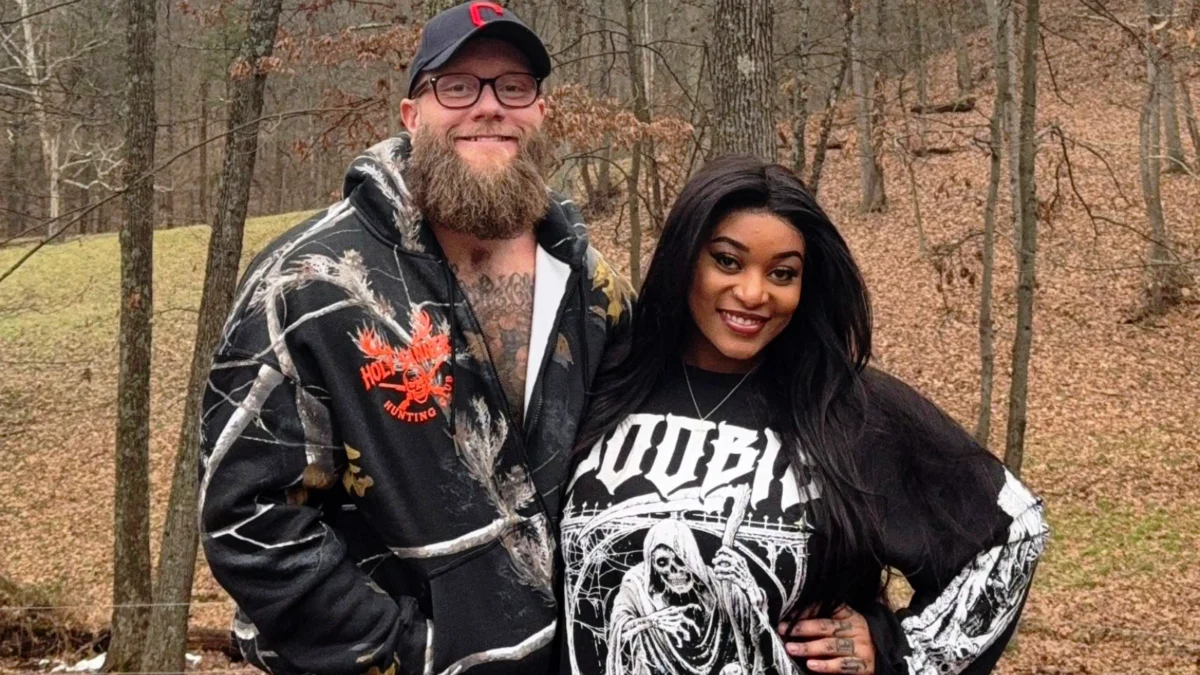
In an unprecedented intersection of family law and the creator economy, TikTok power couple Dalton “Ain’t Worried” Memel and Ntsako “Sako” Mathivha have been placed under a court-mandated filming schedule. Despite the dissolution of their marriage, the pair—who built a digital empire on the foundation of their romantic partnership—must continue to produce content together for at least eight hours per week. This temporary order serves as a stark reminder of the unique complexities faced by modern influencers, whose personal lives and professional assets are inextricably linked.
The duo, known collectively for their massive presence on the @dalton.aint.worried TikTok account, commands a following of 4.4 million users. With over 172 million aggregate likes, their content—which frequently highlighted their contrasting cultural backgrounds and the dynamics of their “country boy meets city life” relationship—has become a lucrative business entity. As the couple navigates a contentious legal separation, the court has prioritized the preservation of this joint venture, treating their social media presence as a shared marital asset that requires ongoing maintenance.
A Chronology of the Split: From Viral Bliss to Legal Battle
The disintegration of the Memel-Mathivha marriage became public in late summer, sending shockwaves through their dedicated fanbase. For years, the couple’s brand was synonymous with domestic stability and lighthearted marital banter. However, the veneer of their online persona began to crack in July.
The July Filing
On July 30, Dalton Memel officially filed for divorce. The move, which he confirmed publicly in August, signaled the end of a relationship that had provided the narrative arc for the majority of their content. The filing occurred amidst a flurry of online speculation regarding the state of their union, fueled by a noticeable absence of joint content and cryptic social media activity.
The Public Rebuttal
Following the announcement, Sako Mathivha broke her silence, offering a different perspective on the narrative. In a video that drew significant attention, Sako addressed her followers, stating that she had left the relationship earlier that month. She explicitly denied allegations of infidelity that had circulated on social media platforms, suggesting that her audience had been privy to only one side of a multifaceted story. Her assertion that she was “never looking back” served as a definitive declaration of her intent to move forward independently, though the legal reality of their shared business has complicated this path toward total separation.
The Court-Mandated Content Strategy
The most striking development in this divorce case is the temporary court order that mandates professional cooperation. According to legal documents reviewed by Dexerto, the court has established a rigid framework for the couple’s continued collaboration, ensuring that their primary revenue stream does not collapse during the legal proceedings.
The “Eight-Hour” Requirement
The order stipulates that Dalton and Sako must coordinate at least two filming sessions per week. Each session must last a minimum of four hours, creating a total of eight hours of dedicated production time. This arrangement is not merely a suggestion; it is a binding component of the temporary court order designed to preserve the financial value of their shared social media accounts.
Logistics and Coordination
To minimize conflict, the court has mandated a strict communication protocol. The pair must:
- Agree on the nature and content of their videos before filming commences.
- Coordinate the schedule for these sessions at least 24 hours in advance.
- Maintain shared access to all business-related financial and social media accounts.
- Provide updated login credentials to the other party immediately upon any password change.
Furthermore, the court has implemented financial guardrails. Neither party is permitted to withdraw more than $500 in business funds without written consent from the other. This prevents either creator from unilaterally draining the assets generated by their joint brand, ensuring that the business remains solvent while the divorce is litigated.
Supporting Data: The Value of the Brand
The insistence of the court to keep the @dalton.aint.worried account active is rooted in the substantial economic value of the brand. With 4.4 million followers, the account is a high-performing asset in the creator economy.
Influencer marketing experts estimate that a following of this size, combined with the high engagement rates typically associated with relationship-focused content, generates significant income through brand deals, affiliate marketing, and TikTok’s Creator Fund. For the court, treating the account as a “business” rather than a personal hobby is a pragmatic approach. By enforcing a filming schedule, the court is essentially engaging in “asset management.” If the account were to go dormant, the algorithmic reach—and consequently the market value—would likely plummet, resulting in a loss of marital property.
Official Responses and Legal Context
While both Dalton and Sako have addressed the divorce on their platforms, they have remained relatively guarded regarding the specific details of the court order. However, the nature of the agreement suggests a collaborative, albeit forced, effort.
The Role of West Virginia Law
The legal basis for this order lies in West Virginia’s family law, which grants courts the authority to enter temporary orders deemed "reasonably necessary" to preserve property during the pendency of a divorce. While standard divorce proceedings often involve the division of real estate, bank accounts, or retirement funds, the inclusion of a "content production schedule" represents a burgeoning frontier in family law.
It is worth noting that under the rules of practice for family courts in West Virginia, most petitions and supporting documentation remain confidential. This serves to protect the privacy of the minor child involved. Beyond the professional requirements, the couple has also agreed to a rotating parenting schedule for their son, who is nearly two years old. Balancing the demands of an eight-hour weekly filming requirement with the responsibilities of co-parenting will undoubtedly be one of the greatest challenges the pair faces in the coming months.
Implications for the Creator Economy
The situation surrounding Dalton and Sako serves as a case study for the risks associated with building a business entirely on a romantic partnership. When the relationship ends, the “product” is fundamentally altered, leading to significant legal and professional friction.
The “Influencer Divorce” Phenomenon
This case highlights a growing trend where the “personal brand” of an influencer couple is treated as a corporate entity. When a couple divorces, they are essentially facing a corporate merger dissolution, but with the added emotional baggage of a failed marriage. The requirement to continue filming suggests that, in the eyes of the law, the "Dalton and Sako" brand is a distinct entity that exists independently of the individuals’ personal feelings.
The Future of Joint Content
Industry observers are watching this case closely to see if it sets a precedent for how future influencer divorces are handled. If courts begin to routinely mandate content production as a condition of asset preservation, it could change how influencers draft their pre-nuptial or post-nuptial agreements. Some may choose to include “content termination” clauses that allow for the immediate dissolution of joint accounts upon a split, while others may opt for formal business contracts that dictate the terms of their professional separation long before any legal filings occur.
The Human Element
Despite the rigid structure of the court order, the underlying reality remains that two people who have ended their marriage must sit in a room together and perform for a camera. Whether they can successfully navigate this professional obligation while navigating the emotional turbulence of a divorce remains to be seen. For their millions of followers, the content will continue to flow, but the nature of that content—and the chemistry behind the camera—has irrevocably changed.
As the legal proceedings continue, the case of Dalton and Sako stands as a sobering reminder that for the modern creator, the boundary between the private self and the public brand is often non-existent. In the world of social media, the show must go on—even when the marriage is long gone.