

As climate patterns shift and summer temperatures continue to reach record-breaking highs, the construction and industrial sectors are facing an escalating challenge: how to maintain peak productivity without compromising worker safety. Prolonged exposure to intense heat is not merely a matter of discomfort; it is a significant occupational hazard that leads to fatigue, reduced cognitive function, and, in severe cases, heatstroke.
Milwaukee Tool, a brand synonymous with rugged durability, has recognized that their users are often the first to face these extreme conditions. In a strategic expansion of their safety and accessory lines, Milwaukee has introduced a suite of innovative solutions for 2026 designed specifically to mitigate heat stress. By blending high-performance textile engineering with advanced battery-operated airflow technology, the company is attempting to redefine the modern jobsite environment.
The Chronology of Heat-Adaptive PPE
The evolution of Milwaukee’s cooling solutions has been marked by a transition from basic protective apparel to high-tech, integrated gear. Historically, jobsite safety focused primarily on physical hazards—falling objects, sharp materials, and electrical risks. However, as the industry began to prioritize human factors, the conversation shifted toward thermal regulation.
In recent years, Milwaukee began testing the application of their "WORKSKIN" proprietary fabric technology—a material originally developed for moisture-wicking and quick-drying base layers—across a wider range of accessories. By 2024, the success of these moisture-wicking textiles prompted the development of phase-change cooling garments. The 2026 product cycle represents the culmination of this research, introducing items that go beyond passive cooling, such as the BOLT REDLITHIUM USB Cooling Fan and the M18 Scissor Lift Fan, which leverage the company’s massive cordless power ecosystem to solve localized cooling problems.
Supporting Data: The Mechanics of Modern Cooling
The efficacy of these new products lies in the intersection of thermodynamics and material science. Milwaukee’s approach to personal cooling is two-pronged: evaporative cooling for the body and forced-air convection for the immediate workspace.
Evaporative Cooling: The Gaiter and Sleeves
The Cooling Neck Gaiter and the Cooling Cut Level 1 Protective Sleeves utilize a specialized fabric blend of polyester, nylon, and spandex. Unlike traditional cooling towels that may lose their effect within minutes, these items are engineered to retain water in a way that slows evaporation, providing up to two hours of active cooling relief.
- Thermal Protection: Both products offer UPF 50+ protection, effectively blocking 98% of UV radiation. This is critical in preventing skin damage and reducing the overall heat load on the body.
- Safety Integration: The protective sleeves are particularly notable for incorporating Level 1 cut resistance. This dual-purpose design allows workers to maintain safety protocols regarding sharp materials while simultaneously managing their core body temperature.
Forced-Air Convection: The Scissor Lift and Hard Hat Fans
When ambient temperatures are too high for passive cooling, forced air is required. The M18 Brushless Scissor Lift Fan is a response to a long-standing jobsite frustration: the lack of airflow in confined or elevated spaces.
- Specifications: Producing 750 CFM (Cubic Feet per Minute) of airflow, the unit is compact enough to clamp onto structural railings.
- Battery Life: Utilizing the M18 REDLITHIUM XC5.0 battery, the fan provides up to eight hours of run-time on low settings or 3.5 hours on high, ensuring coverage for the majority of a standard shift.
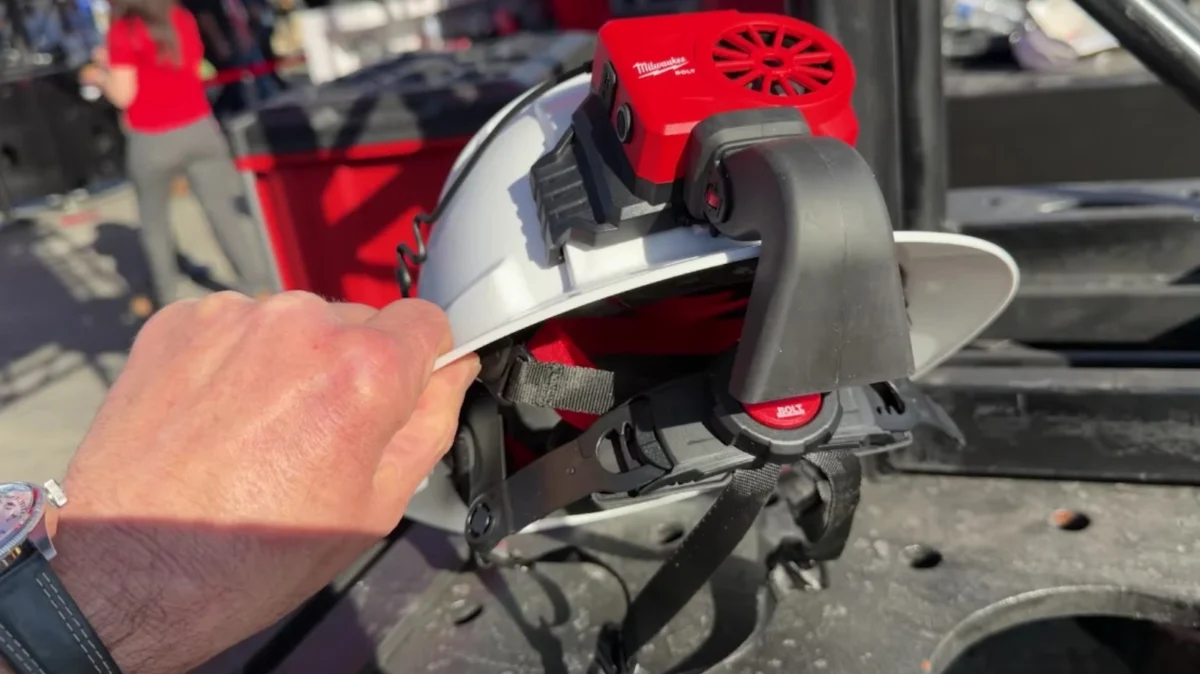
The BOLT REDLITHIUM USB Cooling Fan represents a more radical approach: localized head cooling. By integrating a low-profile fan directly into existing hard hat systems, the device bypasses the insulation of the helmet, which typically traps heat against the scalp. By directing air into the helmet’s internal channels, the system creates a 15 mph airflow that significantly lowers the perceived temperature for the user.
Official Responses and Industry Reception
The initial market response to these 2026 offerings has been overwhelmingly positive. At major retailers like The Home Depot and Acme Tools, customer ratings for these items consistently hover between 4.8 and 4.9 stars.
Industry experts suggest that Milwaukee’s decision to integrate these products into their existing ecosystems (such as the M18 battery platform and the BOLT hard hat accessory mounting system) is the key to their success. By making cooling a "plug-and-play" addition to tools workers already own, Milwaukee removes the friction of adopting new safety protocols.
"We are moving toward a future where the tool and the worker are integrated into a single, climate-controlled system," notes an industry analyst familiar with the launch. "Milwaukee isn’t just selling fans or fabric; they are selling the ability to work for eight hours in conditions that would have sent a crew home by noon a decade ago."
The Implications for Workplace Safety
The implications of these developments extend beyond simple comfort. Heat stress is a silent killer in the construction industry, often manifesting as "near-misses"—dropped tools, missed safety checks, or miscommunications—caused by heat-induced cognitive decline.
1. Productivity and Economic Impact
Standard economic models for the construction industry often fail to account for the "heat tax"—the loss of efficiency as the day progresses. By maintaining a more stable body temperature, workers are less likely to experience the mid-afternoon slump. For contractors, the upfront investment in a $199 scissor lift fan or a $134 hard hat fan is negligible when compared to the cost of a heat-related safety incident or the loss of man-hours due to heat exhaustion.
2. The Shift in PPE Culture
There is a long-standing "toughness" culture in the trades that historically stigmatized cooling gear as unnecessary. However, the introduction of high-tech, professional-grade equipment is changing this narrative. When a cooling device is branded as a professional tool rather than a consumer accessory, adoption rates among veteran tradespeople increase. Milwaukee’s branding strategy effectively positions heat management as an essential component of professional equipment, no different from a drill or a saw.
3. Future-Proofing the Jobsite
As global temperatures rise, the industry will likely see stricter regulations regarding mandatory heat breaks and cooling stations. Companies that adopt these mobile, personal cooling technologies will be better positioned to comply with evolving OSHA standards. Furthermore, as the M18 platform continues to expand, it is anticipated that we will see further integration of environmental sensors that alert workers when humidity and heat levels reach critical thresholds, potentially syncing with cooling hardware to automatically adjust airflow.
Conclusion: A New Standard for Summer Operations
The 2026 Milwaukee lineup is a clear signal that the company views human endurance as the most important asset on the jobsite. While the Cooling Neck Gaiter and WORKSKIN hats provide immediate, low-cost protection against the sun, the more advanced M18 and USB-powered cooling systems represent a technological leap forward.
For the contractor, the foreman, and the independent tradesperson, the message is clear: the environment is no longer an excuse for downtime. Through strategic design, high-quality materials, and the leverage of their established battery platforms, Milwaukee has provided a comprehensive toolkit for beating the heat. As these products become staples in tool bags across the country, the standard for what constitutes a "safe" and "productive" summer workday is being rewritten.
Whether it is through the simple, effective wicking of a polyester-nylon gaiter or the high-velocity air of a scissor lift fan, the goal remains the same: ensuring that every worker returns home safely, regardless of how high the mercury rises.
Disclaimer: This article contains information on products available at various retailers. Pricing and availability are subject to change based on supply chain fluctuations and regional inventory. Always follow manufacturer guidelines when operating power tools and safety equipment.












No comments yet. Be the first to join the conversation!