Laily UPN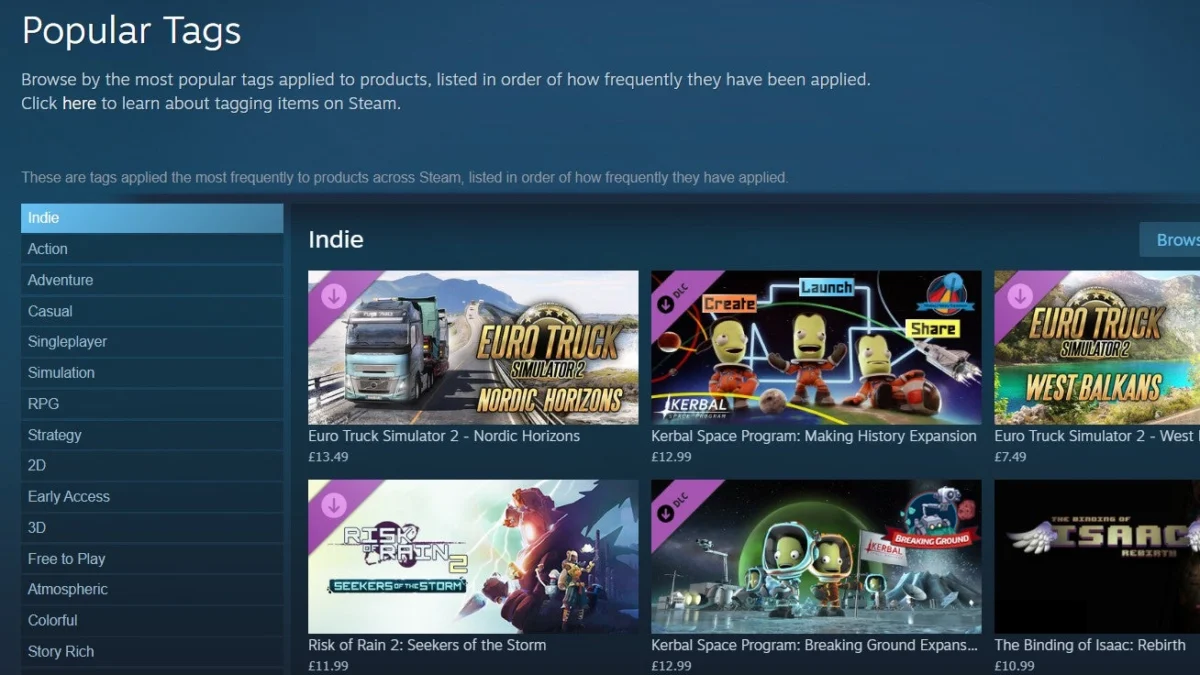
In a significant update to its digital storefront architecture, Valve has overhauled the Steam tagging system, a foundational component of how millions of players discover, browse, and filter games. By introducing 17 new classifications and removing 28 legacy tags, Valve is signaling a transition toward a more precise, descriptive, and data-driven ecosystem. This move, while seemingly technical, addresses long-standing issues regarding tag ambiguity, subjective quality metrics, and the clutter of redundant identifiers.
The Anatomy of the Update: Why Steam is Tidying Up
For years, the Steam tagging system has been a double-edged sword. While it provided an invaluable way for niche titles to find their audiences, the system suffered from "tag bloat"—a phenomenon where user-applied labels became inconsistent, prone to misuse, or mathematically insignificant.
Valve’s latest update is a systematic pruning process. The company has explicitly removed broad, catch-all terms like "NSFW" (Not Safe For Work) and "Mature." According to Valve, these labels had become redundant, as they frequently overlapped with more specific, descriptive content warnings such as "Gore," "Violent," or "Sexual Content." By forcing the system to rely on concrete, granular descriptors, Valve is ensuring that content warnings are both more informative for the consumer and more useful for the platform’s recommendation algorithms.
Furthermore, the company has purged subjective quality labels, including "Well-Written" and "Masterpiece." Valve noted that these tags were subject to "disagreements and inconsistent application," essentially acting as echo chambers for popular opinion rather than functional descriptors of game mechanics or themes. Similarly, tags that were too niche—such as "Drama" or "Ambient"—were pruned due to a lack of meaningful product coverage, while franchise-specific tags like "Lego" or "Warhammer 40k" were retired to streamline the storefront, as these titles are already categorized via dedicated franchise pages.
A Chronology of Platform Evolution
The evolution of Steam’s discovery tools has been a multi-year project, reflecting Valve’s ongoing struggle to maintain a functional storefront amidst an ever-growing influx of new releases.
- 2014-2015: The Rise of User Tags. Initially introduced to decentralize the curation process, the system quickly became the backbone of Steam’s recommendation engine.
- 2020-2022: The Algorithmic Shift. Valve began placing greater emphasis on machine learning, using tag data to power the "More Like This" section on store pages.
- 2023: Accessibility Integration. Recognizing that generic tags failed a significant portion of their user base, Valve introduced accessibility tags. This allowed developers to highlight features like remappable controls, high-contrast modes, and audio cues, marking a shift toward utility-focused taxonomy.
- 2024-2025: The Current Pruning. The removal of 28 tags and the addition of 17 new ones represents the largest refinement of this system to date, focusing on clarity over volume.
Supporting Data and the Logic of Precision
The new additions to the platform reflect the current landscape of indie and AA development. New tags such as "Bullet Haven" (a nod to the explosive popularity of the Vampire Survivors sub-genre) and "Desktop Companion" highlight the emergence of new gameplay archetypes. The inclusion of "Wolves" and "Zoo" demonstrates a desire for more thematic searchability, allowing players to find specific environments or subject matter with ease.
Perhaps the most humorous yet practical change involves the word "Pool." Previously, this tag was applied to almost any game featuring a swimming pool, regardless of the gameplay. It has now been clarified as "Billiards," ensuring that fans of cue-stick physics games are not led astray by interior design choices in unrelated titles.
This granular approach serves a dual purpose:
- Algorithmic Accuracy: By replacing broad categories with specific ones, Valve’s recommendation engines can more accurately group games with similar mechanics.
- User Agency: Players can filter out "noise" more effectively, ensuring that search results for "Simulation" aren’t cluttered with irrelevant entries.
Official Responses and Strategic Rationale
Valve’s official statement on the update emphasizes that the core objective is, and remains, the empowerment of the player. "These changes are made with the goal of helping players identify the games that best fit their interests, and helping Steam generate appropriate recommendations," the company stated in their official communication.
By removing the "Masterpiece" and "Well-Written" tags, Valve is effectively stating that the storefront is not the place for subjective reviews—that space belongs to the user-review section. The tagging system is being repositioned as a tool for classification, not critical assessment. This distinction is vital for developers who have long complained that their games are mislabeled by community-led tagging, which can lead to poor recommendation placement and, ultimately, lower sales.
Implications for Developers and the Indie Scene
The impact of this update extends far beyond simple aesthetics; it touches the very bottom line of independent developers. Alex Nichiporchik, CEO and founder of TinyBuild, has been vocal about the life-changing potential of accurate Steam tagging.
"Based on the games that you play and the tags associated with those games, you are given a lot of personalised recommendations," Nichiporchik noted. He pointed out that for a game like The King is Watching, which relies on a specific target audience, the tag system is the primary driver of visibility. Without the refined taxonomy, a game could be buried under a mountain of irrelevant tags, failing to reach the "wish list" threshold necessary for a successful launch.
For developers, this update requires a shift in marketing strategy. They must now ensure their game’s store page is populated with the most relevant, precise tags available, as these are the levers that control their visibility within the recommendation engine. The "niche" is no longer a disadvantage; thanks to these improvements, the niche is a measurable, searchable, and profitable space.
The Future of Steam’s Discovery Ecosystem
As Steam continues to grow, the tension between "too much content" and "effective discovery" will persist. Valve’s decision to prune the tag list suggests that they are moving away from the "more is better" philosophy. Instead, they are moving toward a curated-data model where the quality of the metadata dictates the success of the product.
This update also suggests that Valve is listening to the friction points expressed by developers. By eliminating confusing tags and replacing them with clearly defined, gameplay-focused identifiers, Valve is reducing the barrier to entry for developers who are not adept at "gaming" the system.
Ultimately, this update is a testament to the fact that Steam is no longer just a digital store; it is a massive, complex data-driven marketplace. As the platform matures, the ability to categorize the infinite variety of human creativity into a searchable format will be the difference between a thriving indie ecosystem and a chaotic, unnavigable storefront. For now, the transition to a cleaner, more descriptive tagging system is a welcome step toward a more user-centric, efficient gaming experience for everyone involved.
Players can review the comprehensive, finalized list of these changes via the official Steam Community announcement, which serves as the definitive reference for how these shifts will impact future store browsing. As these tags propagate across the platform, the real-world impact will become clear: a storefront that is slightly more intuitive, significantly more precise, and better equipped to handle the demands of a modern gaming audience.


 Asro
Asro
 Nana Wu