

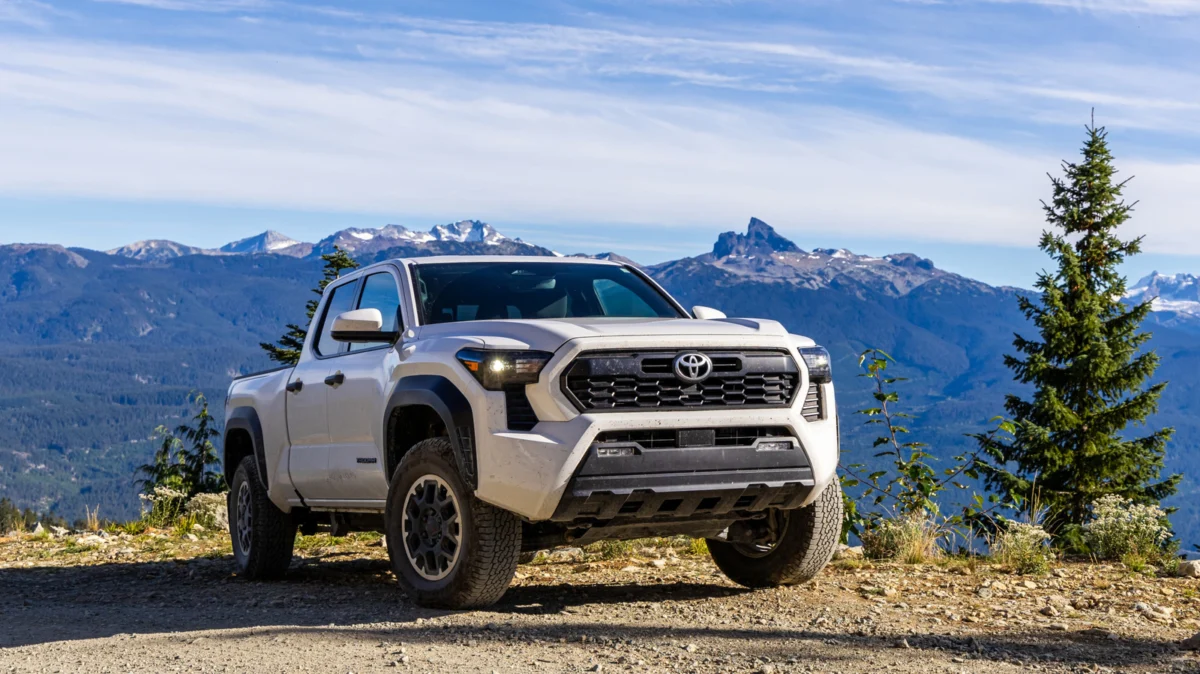
For many owners of rugged, off-road-capable vehicles, the four-wheel-drive (4WD) selector is a feature used sparingly. Whether it is a Toyota Tacoma tackling a weekend trail or a Sequoia navigating a muddy campsite, these systems are often left in two-wheel drive for the vast majority of the vehicle’s service life. However, Toyota’s engineering team suggests that leaving your 4WD system dormant for months on end could be a silent recipe for mechanical trouble.
In a move to ensure the longevity of their off-road drivelines, Toyota recommends a simple yet often overlooked maintenance step: driving your 4WD vehicle in four-wheel drive for at least 10 miles every month. While it may seem counterintuitive to engage a system designed for dirt and gravel on paved surfaces, this practice is a critical component of preventative vehicle health.
The Science of Lubrication: Why Movement Matters
At the heart of a 4WD system lies a complex network of gears, bearings, seals, and driveshafts. Unlike a standard two-wheel-drive system, which keeps the front differential and transfer case components relatively static during normal highway driving, a 4WD system—particularly one with a manual transfer case or locking hubs—relies on the circulation of gear oil to maintain the integrity of its internal parts.
Preventing Seal Degradation
When components remain stationary for extended periods, the lubricant inside the transfer case and front differential can settle. Over time, the seals—which are essential for keeping oil in and contaminants out—can dry out or become brittle. By engaging the 4WD system, you force the internal components to rotate, which splashes oil across the gears, bearings, and seals. This process keeps the rubber pliable and ensures that the mechanical parts remain coated in a protective film of lubricant.
Avoiding "Stiction" and Corrosion
Mechanical "stiction"—the static friction that must be overcome to enable movement—can develop in linkages and actuators that haven’t been cycled in months. If a 4WD system is left untouched for a year, the electronic actuators or physical shift linkages can become sluggish or even seize entirely due to minor oxidation or the gumming up of old lubricants. Engaging the system monthly ensures that these moving parts remain free and responsive, preventing the dreaded scenario where a driver finally needs 4WD on a snowy mountain pass only to find the system unresponsive.
Chronology of a Healthy Drivetrain
To understand the necessity of this maintenance, it is helpful to look at the lifecycle of a typical Toyota off-roader:
- The Break-in Period (Months 0–6): New owners are generally diligent about testing all features of their new vehicle. The 4WD system is often engaged during this phase as the driver explores the capabilities of their new truck or SUV.
- The "Commuter" Phase (Months 6–18): As the vehicle settles into a routine of school runs, grocery trips, and highway commuting, the 4WD lever or dial is often relegated to the "2WD" position indefinitely.
- The Critical Maintenance Window (Ongoing): This is where Toyota’s recommendation becomes vital. Owners who fall into the trap of assuming that 4WD is "off" until needed often neglect the system for months or years.
- The Failure Point (Year 3+): Without the 10-mile monthly cycle, the likelihood of seal leaks, seized actuators, or stiff shifting increases exponentially. When the owner finally needs the system, they may encounter a warning light on the dashboard or a system that refuses to engage.
Navigating the "Paved Road" Dilemma
One of the most frequent questions from Toyota owners is: How can I drive in 4WD on paved roads without damaging the vehicle?
It is true that engaging 4WD on high-traction surfaces like dry asphalt can lead to "driveline bind." Because 4WD systems lock the front and rear axles together, they force all four wheels to rotate at the same speed. On a turn, the front wheels need to travel a different distance than the rear wheels. If the tires cannot slip—as they would on mud, sand, or snow—this force travels back through the drivetrain, causing significant stress on the transfer case and differentials.
The Solution:
Toyota’s guidance is not to go off-roading for 10 miles; it is to find a straight, flat road where you can drive at a moderate, consistent speed. By avoiding sharp turns and high-speed maneuvers, you allow the gears to rotate and lubricate themselves without putting the drivetrain under excessive torque or binding pressure. Ten miles of straight-line driving is sufficient to circulate the oil, engage the front hubs, and ensure that the entire system remains in prime working order.
Understanding the Toyota Lineup: 4WD vs. AWD
Not all Toyota vehicles are built the same, and understanding the difference between All-Wheel Drive (AWD) and 4WD is essential to knowing whether your vehicle requires this maintenance.
Vehicles Requiring the "10-Mile Rule"
These vehicles utilize traditional, selectable, or part-time 4WD systems that feature a transfer case and front-locking capabilities:
- Toyota Tacoma: The gold standard for mid-size off-roading.
- Toyota 4Runner: A legendary SUV built for rugged terrain.
- Toyota Tundra: A full-size truck designed for heavy-duty work and off-road capability.
- Toyota Sequoia: A full-size SUV that comes with standard 4WD, requiring regular circulation.
- Toyota Land Cruiser: Known for its "full-time" 4WD system, which inherently keeps components moving, though it still benefits from regular engagement of low-range gearing if equipped.
The AWD Alternative
Conversely, vehicles like the Toyota Prius, RAV4 (non-TRD variants), Highlander, and Corolla Cross utilize All-Wheel Drive. AWD systems are designed to be "always on" or electronically managed to activate automatically when slip is detected. These systems do not require the same monthly "exercise" as 4WD systems, as they are designed to function on paved, high-traction surfaces without the risk of driveline binding.
Implications for Owners
For the average driver, this maintenance tip has significant financial and safety implications.
- Cost Savings: Repairing a seized transfer case actuator or replacing dried-out axle seals is an expensive endeavor. Proactive maintenance costs nothing but a few minutes of driving time and a negligible amount of extra fuel.
- Operational Readiness: The worst time to discover a mechanical failure is during an emergency. Whether you are driving through a blizzard or navigating a muddy construction site, knowing that your 4WD system will engage instantly provides peace of mind.
- Resale Value: A well-maintained vehicle is a more valuable vehicle. Documenting your maintenance—including the care taken to exercise the 4WD system—demonstrates to future buyers that the vehicle was treated with mechanical empathy, potentially leading to a higher resale price.
Official Guidance and Best Practices
Toyota’s manuals are written with the longevity of the vehicle in mind. The recommendation to drive 10 miles in 4WD is not merely a suggestion; it is a vital part of the owner’s responsibility.
Beyond the 10-mile rule, owners should also ensure they are changing their transfer case and differential fluids according to the severe-service schedule if they frequently use their vehicles off-road. Using the correct viscosity oil as specified by the manufacturer is just as important as keeping the components moving.
In summary, if you own a Toyota Tacoma, 4Runner, Tundra, or Sequoia, take a moment this month to find a quiet, straight stretch of road. Engage your 4WD system, enjoy the mechanical connection to your vehicle, and ensure that your rugged machine stays ready for the next adventure. It is a small investment of time that pays massive dividends in reliability and performance.












No comments yet. Be the first to join the conversation!