

For nearly a decade, the Stellaris development team at Paradox Interactive has been bound by a singular, immovable cosmic law: empires are anchored to the soil of their home worlds. Planets were the bedrock of civilization, the center of gravity around which every diplomatic, economic, and military strategy revolved. That is, until now.
In a bold move that marks the most significant paradigm shift in the game’s history, Paradox has announced Stellaris: Nomads, a sprawling expansion that finally allows players to shed the terrestrial shackles of planetary life. By decoupling colonization from static worlds and introducing mobile Arkships, the developers are challenging the very foundations of the 4X space strategy genre.
The Impossible Becomes Reality: Breaking the Planetary Shackles
"For years we have said that moving planets are impossible," admits Stellaris Game Director Stephen ‘Eldarin’ Muray. "For years, we said even mentioning it would make programmers cry. We like to do the impossible, and we also (apparently) like to make our programmers cry."
This lighthearted admission underscores the technical audacity behind Nomads. By re-engineering the game’s core architecture to support mobile habitats, the team has enabled a playstyle that turns the traditional Stellaris map from a collection of fixed borders into a living, breathing network of transient influence. The expansion isn’t merely adding content; it is fundamentally altering the "grand" in Grand Strategy, forcing players to abandon the safety of a capital city in favor of a life spent among the stars.

Arkships: The Heart of the Nomad Empire
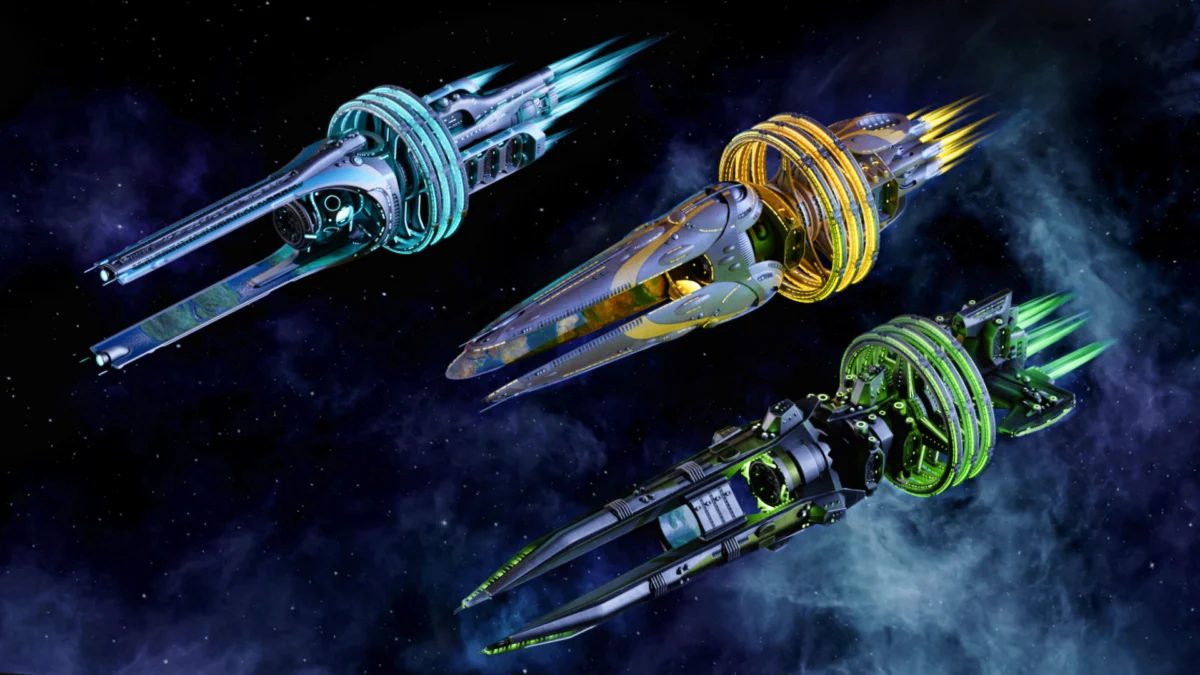
The centerpiece of this expansion is the Arkship—a colossal, multi-purpose vessel that serves as a mobile home, shipyard, and administrative center for nomadic civilizations. When starting a campaign as a Nomad empire, players must select a specialized Arkship class: Civilian, Military, or Scientific.
While the Scientific Arkship—the focus of the latest developer preview—offers a unique starting agenda centered on ‘Arkship Development,’ the potential for growth is immense. These vessels are not just temporary stops; they are full-scale, upgradeable mobile colonies. With a dedicated, custom UI designed to manage ship components and tier-based upgrades, players can refine their Arkship to suit their evolving needs.
The logistical implications are profound. Arkships come pre-equipped with point-defense systems and strike craft, allowing them to project power without needing a conventional navy parked in a static starbase. They can initiate construction of megastructures, conduct deep-space scans, and manage fleets on the fly. However, this mobility comes with a distinct trade-off: Arkships are restricted from investigating anomalies, archeology sites, or astral rifts.
"We don’t want your entire colony being eaten by a dimensional horror or whatever other evil our content designers have made for the last decade," explains developer Alfray Stryke. To explore the deeper mysteries of the galaxy, players must rely on dedicated, smaller science ships, ensuring that the Arkship remains a vulnerable, albeit powerful, centerpiece of the empire.
Logistics and Influence: The Rise of Waylines
With the elimination of traditional construction ships, Stellaris: Nomads introduces ‘Logistic Ships.’ These vessels are the backbone of a nomadic economy, tasked with constructing and maintaining ‘Waystations.’
Waystations represent a novel approach to territorial control. Unlike starbases, which claim a system in perpetuity, Waystations act as temporary hubs for resource collection and observation. When placed in adjacent systems, they automatically generate ‘Waylines’—interstellar trade routes that provide localized modifiers and economic boosts to any connected systems or empires.
This system creates a complex web of soft power. Constructing a Waystation within the borders of a settled, stationary empire is an act of diplomatic friction. It will inevitably damage relations with the host civilization, requiring the player to navigate a delicate balance of trade agreements, defensive pacts, and, if necessary, strategic retreat. Conversely, nomadic empires can form pacts with one another, creating a cross-pollination of Wayline modifiers that can turn a cluster of wandering fleets into an economic juggernaut.
The Sacred Path: A New Origin for the Devout
The expansion introduces four new origins, the first of which was unveiled this week: ‘The Sacred Path.’ This origin centers on the ‘Consecrated Community,’ a fleet of pilgrims and acolytes whose lives are dictated by their spiritual pursuit rather than material gain.

In this mode, the traditional civilian job structure is replaced by a tiered spiritual hierarchy. The campaign becomes an odyssey of faith, requiring the player to travel between specific sacred sites scattered across the galaxy. Each site poses questions regarding the civilization’s history and theology, forcing the player to choose between blind adherence to dogma or the forging of a new, secular path.
Content Designer ‘PDS_Bojj’ notes that these choices are not merely cosmetic. "This choice influences which of your three classes benefits most in the early game, so it’s worth thinking about your play style before you click." The result is a narrative-heavy campaign that feels distinct from the standard expansionist gameplay of the base game, focusing instead on the endurance and ideological evolution of a people in motion.
Technical and Economic Implications
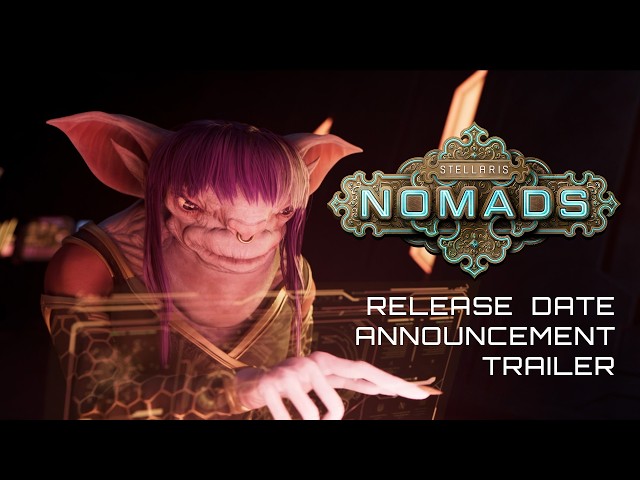
The release of Stellaris: Nomads is timed for Monday, June 15, with a price point of $24.99 / £20.99. For long-term fans, it is also bundled into the Stellaris Season 10 package for $49.49 / £41.59.
The implications for the Stellaris meta are significant. For years, the game has rewarded the ‘tall vs. wide’ debate—the strategy of building a small, highly developed empire versus conquering vast swathes of space. Nomads introduces a third pillar: ‘Transient.’ This style of play potentially bypasses the bureaucratic overhead of managing hundreds of planets, instead focusing on the high-stakes management of a single, highly vulnerable, and highly mobile asset.

Furthermore, the simultaneous release of the 4.4 ‘Pegasus’ update promises to provide the necessary under-the-hood stability for these new mechanics. While details on ‘Pegasus’ remain scarce, the synergy between a major feature expansion and a core engine update is typical of Paradox’s "custodian" approach, ensuring that the game remains performant even as it adds more complex entities to the map.
Looking Ahead: The Road to Launch
The Nomads DLC is positioned as a transformative moment for the Stellaris community. By shifting the focus away from the planet and toward the fleet, Paradox is testing the limits of what a space strategy game can be.
Next week, the developers are expected to provide a deeper dive into the mechanics of Civilian Arkships and the day-to-day management of nomadic life. Additionally, the unveiling of the second origin, ‘Forever Cruise,’ will likely shed more light on the variety of playstyles available to nomadic empires.
As the launch date approaches, one thing is certain: the galaxy of Stellaris is becoming a much more dangerous, and much more fluid, place. Whether players choose to embrace the life of a pilgrim on the Sacred Path or the opportunistic expansion of a logistic-focused merchant fleet, the era of being anchored to a single world is coming to an end. The stars are no longer the destination—they are the home.











No comments yet. Be the first to join the conversation!