

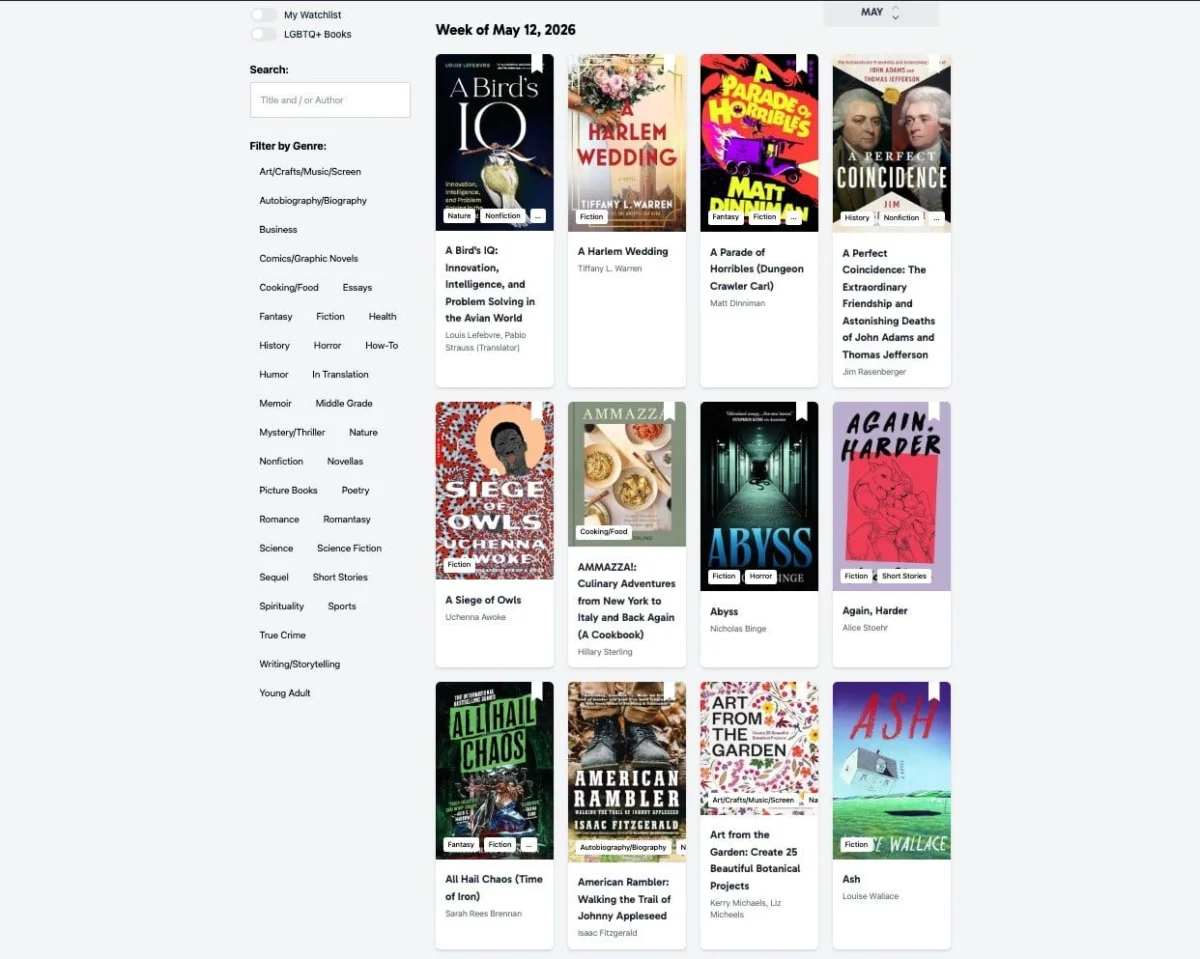
In the digital age, the publishing industry has reached a state of perpetual acceleration. Every month, thousands of new titles hit the shelves, each vying for a precious spot on an already overflowing "To-Be-Read" (TBR) pile. For the avid reader, the experience of keeping up with new releases has shifted from a leisurely hobby to a high-stakes logistical challenge. The sheer volume of output, combined with the disproportionate visibility of books backed by massive marketing budgets, has created a "discoverability crisis."
Readers are frequently left to navigate a landscape where high-quality, mid-list, or independent titles are buried under the weight of algorithmically favored bestsellers. How does a reader cut through the noise without turning their literary passion into a part-time job of cross-referencing catalogs, newsletters, and spreadsheets? Enter the New Release Index—a sophisticated digital tool designed by Book Riot to democratize book discovery and streamline the way readers curate their literary lives.
The Evolution of the Modern TBR
To understand the necessity of the New Release Index, one must first examine the shift in how books reach the public consciousness. Historically, readers relied on local bookstore staff recommendations, traditional literary reviews, and word-of-mouth. Today, that ecosystem is heavily mediated by social media algorithms, influencer marketing, and corporate advertising spends.
The "TBR anxiety"—a phenomenon characterized by the stress of having an ever-expanding list of unread books—is no longer just a joke shared in online communities; it is a byproduct of a saturated market. When every week brings hundreds of new releases, the cognitive load required to track them becomes significant. Readers often find themselves paralyzed by choice or, conversely, defaulting to the most heavily advertised titles, missing out on the vast breadth of literature that doesn’t benefit from a multi-million-dollar promotional campaign.
The New Release Index: A Functional Breakdown
The New Release Index is not merely a list; it is a curated, interactive database designed to return control to the reader. By consolidating information that is typically scattered across disparate publisher websites, social media feeds, and retail platforms, the Index serves as a centralized hub for book lovers.
How the Mechanism Works
The utility of the Index lies in its simplicity and intentional design. The architecture of the tool is based on three core pillars:
- Chronological Curation: The database is organized primarily by release date. This allows readers to plan their reading schedules, anticipate upcoming hype, and ensure they are among the first to dive into highly anticipated titles.
- Genre-Specific Filtering: Recognizing that reader tastes are rarely monolithic, the Index allows users to drill down by genre. Whether one is a devotee of high-fantasy, hard-boiled crime fiction, or historical biography, the filter ensures that the user is only viewing titles that align with their personal interests.
- The "Watchlist" Integration: Perhaps the most vital feature is the integrated "Watchlist." By clicking on a book cover, users are presented with a concise, high-impact description of the title. If the premise resonates, a single click adds it to their personal Watchlist, effectively offloading the mental work of "remembering" to a reliable digital infrastructure.
Chronology of the Discoverability Crisis
The urgency for a tool like the New Release Index didn’t manifest overnight. The last decade has seen a dramatic shift in the publishing timeline.
- 2015–2018: The rise of "Bookstagram" and early "BookTok" influencers began to shift the power dynamic of book marketing. Publishers began prioritizing titles with "viral potential," leading to a homogenization of book covers and thematic hooks.
- 2019–2022: The COVID-19 pandemic accelerated the shift toward online book purchasing. With physical browsing in bookstores restricted, the digital discoverability gap widened. Readers were forced to rely on online storefronts, which are notoriously poor at surfacing non-bestseller titles.
- 2023–Present: The current era is defined by the "Information Overload" phase. As AI-generated content and mass-produced genre fiction proliferate, the value of human-curated databases like the New Release Index has skyrocketed.
Supporting Data: The Impact of Curation
Data from industry analysts suggests that discoverability is the primary barrier to entry for new authors and niche genres. A study conducted by independent booksellers found that while 60% of readers want to support diverse or independent voices, only 15% are actually able to identify those books before they are already released.
The New Release Index directly addresses this "intent-action gap." By providing a clean interface that highlights covers and descriptions, the tool encourages "micro-browsing." Users are spending on average 30% more time exploring niche categories when using a structured index compared to scrolling through a standard retail algorithm, which tends to repeat the same "customers also bought" recommendations.
Official Responses and Industry Perspectives
Industry professionals have reacted to the introduction of the Index with cautious optimism. Publishers, who spend significant portions of their budgets on metadata optimization, see this as an opportunity to reach "super-readers" who are actively looking for new content rather than those who are passively influenced by ads.

"We are moving toward an era of ‘Intentional Reading,’" says one industry consultant. "Tools like the New Release Index aren’t just lists; they are filters that remove the noise of the marketing machine and allow the actual merit of the book—the description, the cover art, the premise—to speak for itself."
Conversely, some critics argue that any curated list is inherently biased toward the taste of its curators. However, the prevailing sentiment is that the democratization of discovery is a net positive. When readers are given the tools to organize their own TBR piles, they are more likely to diversify their reading habits, as the barriers to finding hidden gems are significantly lowered.
Implications for the Future of Publishing
The emergence of the New Release Index suggests a broader trend in the publishing industry: the shift from "push" marketing to "pull" discovery.
The Decline of the "Hit-Driven" Model
For years, the industry has relied on the "hit-driven" model, where a small percentage of books account for the vast majority of sales. If tools like the New Release Index succeed in making mid-list titles more discoverable, we may see a flattening of this curve. This would provide more stability for mid-list authors and allow publishers to take more risks on unconventional manuscripts.
The Rise of the "Curated Reader"
Readers are increasingly identifying as "curators of their own library." The stigma of having an unread stack of books is being replaced by the pride of having a well-curated, intentional selection of future reads. The New Release Index facilitates this identity, transforming the TBR pile from a source of shame into a source of excitement.
Technological Synergy
As we look toward the future, the integration of such databases with library systems and local bookstore inventory could be the next logical step. Imagine a world where the New Release Index not only tells you about a book but instantly informs you if it is available for checkout at your local library or in stock at your nearest independent bookstore. This would bridge the gap between digital discovery and physical consumption, potentially revitalizing local economies.
Conclusion: A New Standard for Readers
The New Release Index represents a necessary evolution in how we consume information about literature. By providing a clean, accessible, and user-friendly database, it solves the problem of information overload while preserving the joy of the hunt.
As readers, we are often overwhelmed by the sheer scale of the publishing machine. But with the right tools, we can navigate that machine with precision. The Index does not dictate what we should read; it simply ensures that we have the visibility required to make our own choices. In an age where our attention is the most valuable commodity, tools that respect our time and empower our preferences are not just convenient—they are essential.
Whether you are a casual reader looking for your next vacation novel or a dedicated bibliophile tracking the latest literary fiction, the New Release Index offers a way to move past the noise and find the stories that truly matter. It is a testament to the fact that while the publishing landscape may be crowded, there is always room for a good book if you know where to look.











No comments yet. Be the first to join the conversation!