

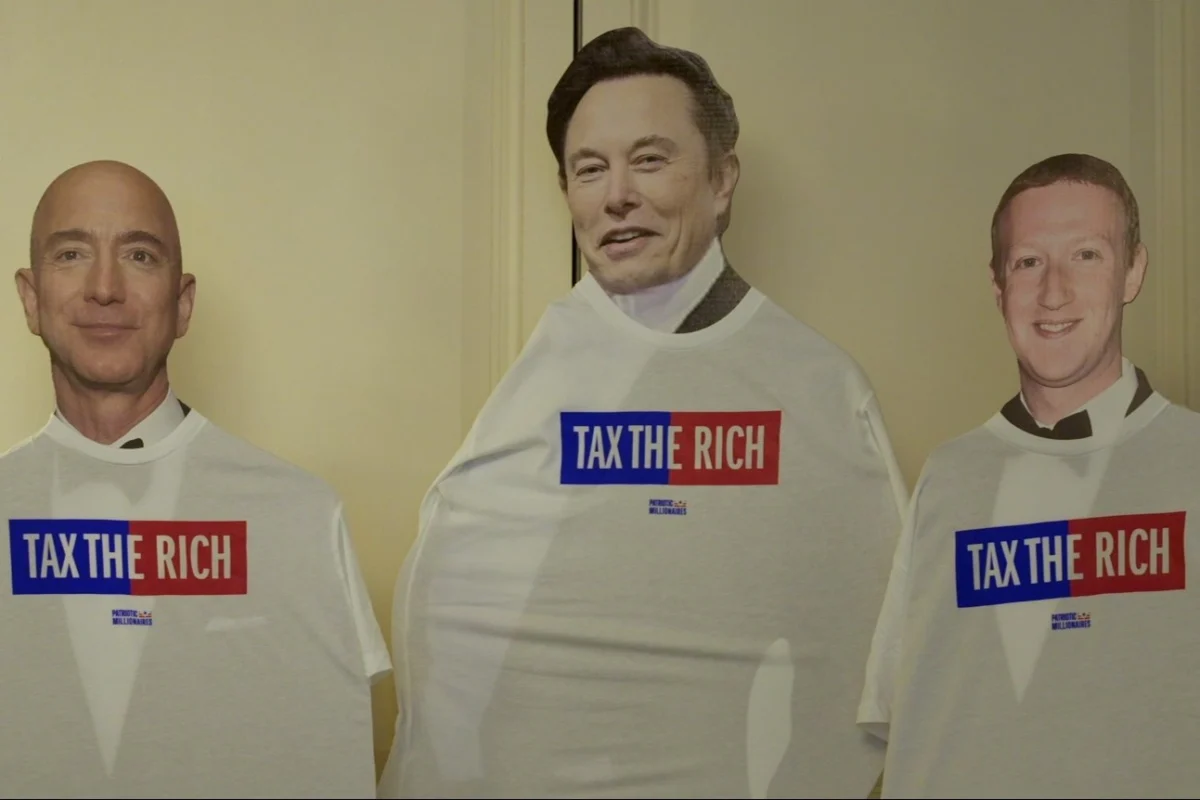
As the global discourse surrounding wealth inequality reaches a fever pitch, a hard-hitting new documentary is poised to become the definitive cinematic entry in the conversation. Tax Me (If You Can!), the latest investigative masterwork from French filmmaker Thomas Lafarge, has secured a wave of international distribution deals even before its television premiere, signaling a potent appetite for economic transparency among global broadcasters.
The documentary, produced by the acclaimed Little Big Story, is currently being showcased at the Unifrance Rendez-Vous in Le Havre. It arrives at a critical juncture, as policymakers and the public alike grapple with the concentration of wealth and the efficacy of modern fiscal policies.
The Core Investigation: A "Man Bites Dog" Narrative
At its heart, Tax Me (If You Can!) is an exploration of the paradox of modern wealth. Lafarge, known for his incisive examinations of corporate power in The World According to Amazon and In the Murky Waters of BNP Paribas, turns his lens toward the ultra-rich and the shifting tides of economic philosophy.
The film meticulously charts the rise of the "trickle-down" economics model—championed by U.S. economist Arthur Laffer—and contrasts it with the burgeoning "tax the rich" movement. This movement, spearheaded by prominent French economist Gabriel Zucman and supported by a surprising coalition of millionaires like Abigail Disney, argues that the current global tax framework is fundamentally broken.
Lafarge describes the genesis of the project as a pursuit of the unexpected. "The traditional approach would have been to reach out to NGOs like Oxfam or Attac, which have been working on these issues for decades," Lafarge explains. "But as activist Chuck Collins says in the film, ‘A dog biting a man is no surprise, but a man biting a dog—that’s news!’ Ultra-rich people asking to be taxed is a man-bites-dog story."
Chronology of the Production
The development of Tax Me (If You Can!) was a process of calculated risk and fortuitous timing. The project was conceived by Lafarge, along with producer Valérie Montmartin and creative partner Olivier Lamour. Their primary challenge was not just finding the data, but finding the people willing to speak on it.
- Conceptualization: The team observed a growing trend of high-net-worth individuals publicly calling for higher taxes. Recognizing this as a potential cultural tipping point, they began formalizing the documentary structure.
- The Zucman Connection: Gaining access to economist Gabriel Zucman was a turning point for the production. Lafarge recounts that after reaching out to Zucman’s team, he was invited to Washington for the G20 summit. "They told me something interesting was going to happen," Lafarge notes. "I had no idea it would be the starting point for an international campaign on taxing billionaires that is now part of the public debate across France, the U.K., Sweden, and the United States."
- The Production Hurdles: The most significant obstacle remained the reticence of the ultra-wealthy. According to Lafarge, the discomfort surrounding money is universal, regardless of nationality. "People often think that wealthy French people have a problem talking about money. But in reality, wealthy people all over the world have a problem talking about money. Even those who want to pay more taxes. They know they’re exposing themselves to risks, and they’re very cautious."
Strategic Distribution and Market Impact
Ahead of its national debut on Arte France—scheduled for September 8 on the streamer arte.tv and September 14 on the broadcast channel—Tax Me (If You Can!) has already made significant inroads in the international market.
The Party Film Sales, the Paris-based powerhouse behind Oscar-nominated The Voice of Hind Rajab and Cannes winner Congo Boy, has successfully closed deals with several major public service broadcasters. New partners include:
- RTVE (Spain)
- RTS (Switzerland)
- RTV (Slovenia)
- YLE (Finland)
Estelle de Araujo, co-head of international sales at The Party Film Sales, views these early acquisitions as a testament to the film’s urgency. "Managing to secure leading European broadcasters so quickly, ahead of the first broadcast, is a very encouraging sign," De Araujo stated. "It’s particularly significant in the current challenging market where public broadcasters and their funding are facing pressure."
The film is being offered in two formats: a 52-minute feature or a two-part series of 45-minute episodes, providing flexibility for varied broadcast slots. The Party Film Sales is currently in advanced negotiations with partners in the Nordics, Japan, Portugal, and Eastern Europe to finalize further acquisitions during the Unifrance Rendez-Vous market.
Supporting Data and Political Context
The film situates itself within a broader, often contentious, economic debate. For the past two decades, the wealth of the ultra-rich has expanded at an unprecedented rate. This growth has occurred alongside the stagnation of real wages for the middle and lower classes in many developed economies, fueling a resurgence of interest in wealth redistribution.
By featuring insights from Gabriel Zucman, the film provides a rigorous intellectual framework for the debate. Zucman’s work has been instrumental in shifting the needle on international tax cooperation, advocating for a coordinated global minimum tax on the world’s billionaires. The documentary captures the transition of these economic theories from academic papers to the floor of international summits, effectively humanizing the policy debate.
Official Responses and Editorial Implications
The industry response has been overwhelmingly positive, driven by the belief that the documentary addresses a "real appetite" for investigative content that challenges the status quo.
"The fact that broadcasters have chosen to air it so fast is an encouraging editorial and political signal," says De Araujo. "It shows a real appetite for these topics from the decision-makers who have a key role to play in bringing them to wider audiences."
For the production team at Little Big Story—who have previously explored high-profile subjects in Nicole Kidman, Eyes Wide Open—Tax Me (If You Can!) represents a shift toward more direct, policy-oriented activism. The production was made possible through a collaborative effort involving Arte France, Public Sénat, and significant support from the CNC, PROCIREP, and the Auvergne-Rhône-Alpes Region.
Global Implications: Beyond the Screen
As the world watches the rollout of this documentary, the implications extend beyond mere viewership numbers. The film serves as a catalyst for a global conversation on tax ethics. By highlighting the voices of those who hold the power to change the rules of the game, Lafarge is effectively democratizing a conversation that has historically been siloed within the halls of finance ministries and private wealth management offices.
If the success of the pre-broadcast sales is any indicator, the public is ready for this dialogue. The "tax the rich" movement is no longer a fringe sentiment; it is a central feature of the modern political landscape. As Tax Me (If You Can!) makes its way to screens across Europe and potentially beyond, it will likely serve as a benchmark for how documentary filmmaking can influence, rather than merely reflect, the economic realities of our time.
The film’s journey, from the streets of Paris to the G20 in Washington and now to international television, is a testament to the enduring power of the "man bites dog" story. In an era of economic uncertainty, the public is searching for narratives that offer clarity, courage, and a path toward a more equitable future. With Tax Me (If You Can!), Thomas Lafarge may have provided exactly what is needed to move the needle.










