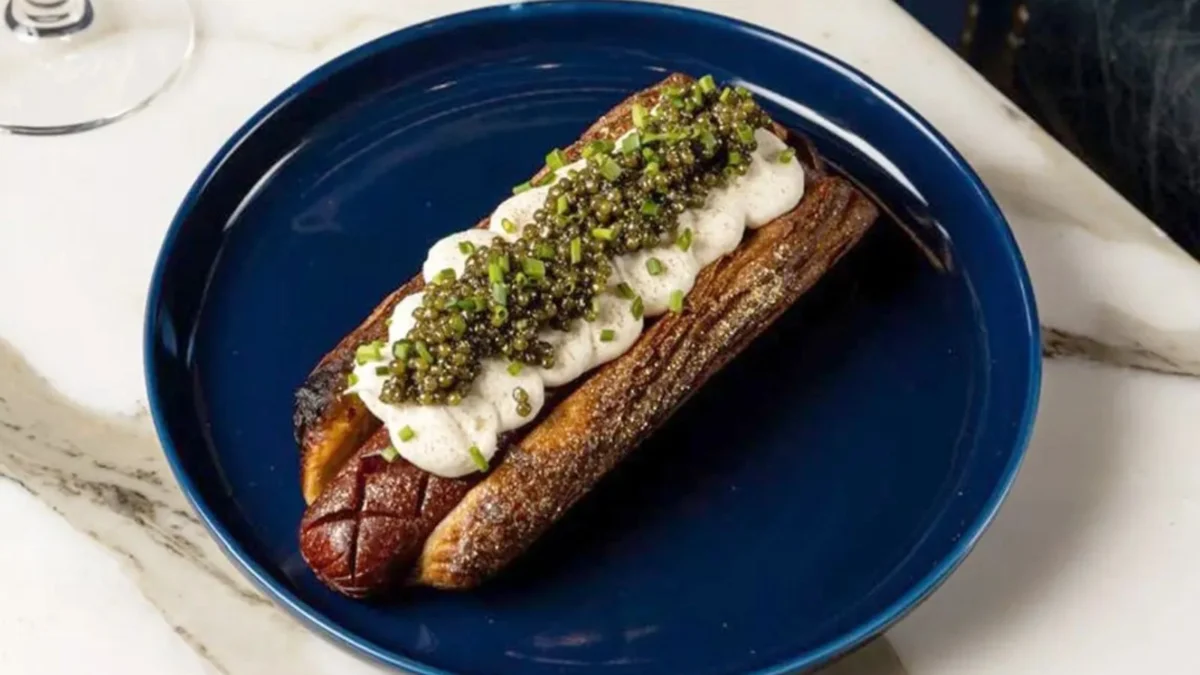
In an era defined by social media spectacle and the “experience economy,” the boundaries between high-end culinary art and viral stunts have become increasingly porous. Nowhere is this more apparent than in the meteoric rise of the “Golden Glizzy,” a $100 hot dog that has captured the collective imagination of the internet. While a three-figure price tag for a ballpark staple might seem like an exercise in absurdity, the creators behind the dish argue that it represents a deliberate shift in how we perceive value, luxury, and the democratization of elite ingredients.
Anatomy of an Indulgence: What You Are Actually Buying
To the uninitiated, the concept of a $100 hot dog is a punchline. However, when one dissects the components of the Golden Glizzy, the narrative shifts from one of pure excess to one of high-end ingredient curation. The dish, brought to market by Golden Goat Caviar, eschews the processed, mystery-meat profile of the traditional frankfurter in favor of premium protein.
The core of the product is an Australian Wagyu beef sausage, known for its intense marbling and buttery texture. Rather than a standard, spongy white bun, the sausage is encased in delicate, flaky croissant dough, adding a layer of pastry-chef-level complexity to the mouthfeel.
The garnishes, however, are where the true financial weight lies. The dog is adorned with:
- Golden Goat Classic Ossetra Caviar: A high-grade, briny delicacy often reserved for white-tablecloth service.
- Crème Fraîche and Mascarpone: These dairy elements provide a rich, tangy counterpoint to the saltiness of the caviar.
- Edible 24-Karat Gold Flakes: The final aesthetic flourish that cements the item’s status as a viral icon.
This construction is not merely for show; it is a calculated effort to elevate the "glizzy"—a slang term for a hot dog that rose to prominence via internet meme culture—into the realm of fine dining.
A Chronology of the Viral Sensation
The trajectory of the Golden Glizzy is emblematic of the modern "pop-up" food movement. It did not begin in a brick-and-mortar restaurant, but rather in the high-traffic, high-visibility environment of elite sporting events.
The Genesis: Golden Goat Caviar, a company that specializes in high-end roe, sought a way to bridge the gap between its luxury product and the broader, casual consumer base. By identifying the sports arena—specifically high-profile events in Miami—as a venue where consumers are already accustomed to paying premium prices for concessions, the brand identified a market gap.
The Miami Debut: The Golden Glizzy made its high-profile debut at the Miami Open. The initial reaction was a mix of bewilderment and curiosity. Because the item was inherently "Instagrammable," the digital footprint grew exponentially within hours of its first sale.
The Formula 1 Grand Prix Expansion: Following the success at the tennis courts, the brand brought the concept to the F1 Miami Grand Prix. This was a strategic masterstroke; Formula 1 has become a global epicenter for luxury lifestyle branding. Placing a $100 hot dog in the paddock area aligned perfectly with the existing atmosphere of conspicuous consumption, ensuring that the product remained a "must-have" accessory for influencers and celebrities in attendance.
Supporting Data: The Economics of the "Bargain"
Critics of the Golden Glizzy often point to the price tag as evidence of late-stage capitalism run amok. However, Keith Glickman, the managing partner of Golden Goat Caviar, suggests that the math tells a different story.
In interviews with the Wall Street Journal, Glickman highlighted that the caviar alone—the centerpiece of the dish—carries a retail value of roughly $120 when sold in a standalone tin. From this perspective, the $100 price point is not merely a markup; it is a loss-leader strategy intended to introduce luxury consumers to the brand’s core product while providing an experiential benefit.
Comparative Value Analysis
When one considers the cost of dining at a high-end restaurant in a major metropolitan hub like Miami, the $100 price point begins to lose its shock value. A standard steak dinner at a premium restaurant, coupled with wine and appetizers, can easily exceed $200. In this context, the Golden Glizzy acts as a "luxury lite" experience. It offers the consumer a taste of high-end ingredients—gold, Wagyu, and caviar—at a fraction of the cost of a traditional fine-dining tasting menu.
Official Responses and the "Craftsmanship" Narrative
The creators of the Golden Glizzy have been quick to defend the product, not just on financial grounds, but on the grounds of culinary craftsmanship. During an appearance on FOX News, Glickman emphasized that the product’s success is rooted in the alignment of quality partners and the desire to create a memorable "event" for the consumer.
"The debut of the Golden Glizzy at the Miami Open showed what happens when craftsmanship, indulgence, and the right creative partners align—the response is instant and electric," Glickman noted.
This response touches on a crucial aspect of modern food marketing: the "experience premium." Consumers are increasingly willing to pay a premium not just for the raw ingredients, but for the story, the branding, and the opportunity to share that experience across social platforms. By framing the product as a result of expert craftsmanship, Glickman successfully reframes the hot dog from a processed food item into a curated culinary piece.
Broader Implications: Is Luxury Food Losing Its Meaning?
The existence of the $100 hot dog raises significant questions about the state of the food industry. We are witnessing a trend where traditional definitions of "luxury" are being disrupted by "accessible luxury."
The Democratization of Excess
Traditionally, caviar and gold were reserved for the ultra-wealthy. By putting them on a hot dog, the brand has effectively democratized these status symbols. While the price is high for a hot dog, it is relatively low for an entry into the "luxury lifestyle" club. This mirrors trends seen in fashion, where luxury houses offer branded t-shirts or keychains to capture a younger, aspirational demographic.
The Role of Social Media
The Golden Glizzy would likely not exist without the infrastructure of Instagram and TikTok. The product is designed to be photographed. Its physical appearance—the sheen of the gold, the texture of the caviar—is as important as its taste. This leads to an "aesthetic-first" approach to food development, where the visual impact is prioritized, sometimes at the expense of traditional culinary standards.
The "Budget" Counter-Narrative
Interestingly, the news cycle surrounding the Golden Glizzy often intersects with more traditional, budget-friendly food news. For every article highlighting a $100 hot dog, there is a corresponding story about $4.99 pizzas at Little Caesars or promotional food giveaways at chains like Carl’s Jr. This juxtaposition highlights the current bifurcation of the food market: one sector focused on high-concept, viral luxury, and the other focused on extreme value and affordability. Both are fighting for the same consumer attention in a crowded media landscape.
Conclusion: A Sign of the Times
The $100 Golden Glizzy is neither a revolution in gastronomy nor a mere scam. It is a perfect specimen of 21st-century marketing. It utilizes the power of viral media to turn a commodity—the humble hot dog—into a luxury experience. Whether one views it as a clever bargain for high-end ingredients or a pretentious gimmick, its success at major sporting events suggests that there is a robust market for "spectacle food."
As we look toward the future of the food industry, we can expect to see more of these collaborations. Chefs and brands will continue to push the boundaries of what is considered "appropriate" for high-end treatment. The Golden Glizzy has set a precedent: as long as there is an appetite for viral content and a desire for status, there will be a place for the $100 hot dog at the table of modern culture.
Ultimately, the Golden Glizzy serves as a mirror to our current consumption habits—a reminder that in the age of the internet, the value of a meal is determined not just by the ingredients on the plate, but by the story we can tell about it.