

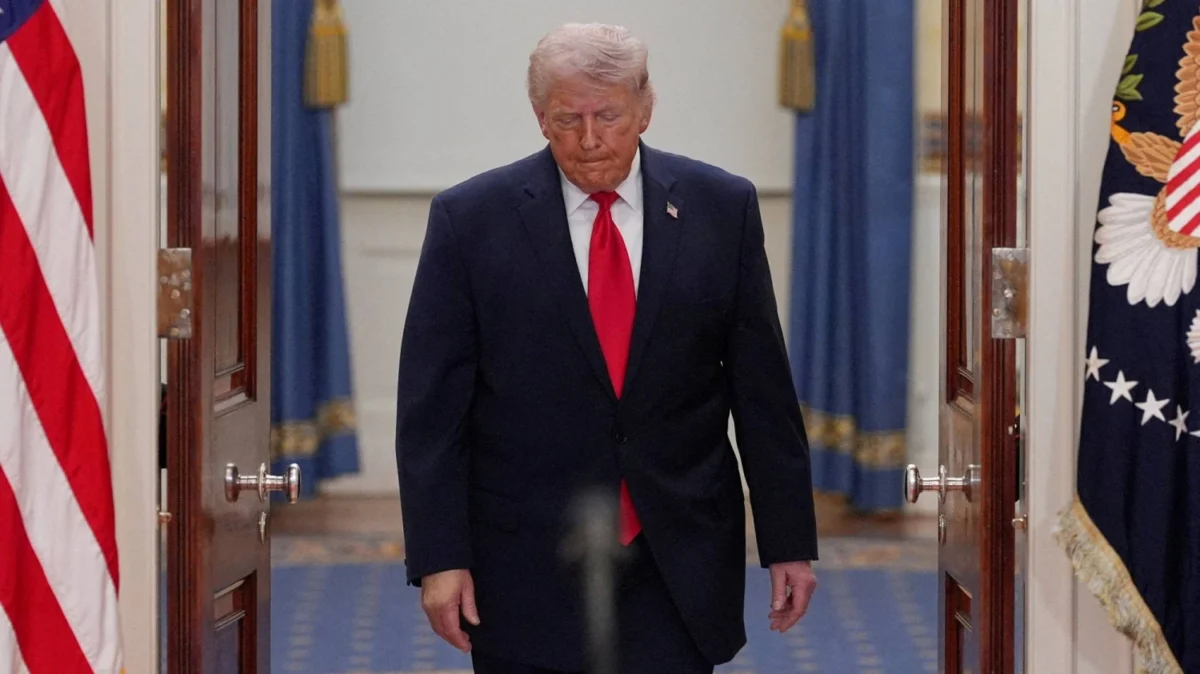
WASHINGTON — As the ten-week conflict between the United States and Iran shows tentative signs of cooling, a profound, structural shift is occurring beneath the surface of international diplomacy. President Donald Trump’s recent strategic pivots—most notably the withdrawal of U.S. troops from Germany and a calculated indifference toward Iranian aggression against Gulf partners—have signaled a departure from the post-World War II order. For Washington’s traditional allies, the takeaway is clear: the era of guaranteed American protection is undergoing a radical, and perhaps permanent, transformation.
The Main Facts: A Pivot Toward Isolationism
The current geopolitical landscape is defined by a paradoxical retreat. While the U.S. remains engaged in a high-stakes military confrontation with Tehran, the White House has simultaneously signaled a reduction in its global footprint.
The core of the current tension lies in the intersection of three distinct policy decisions:
- The German Drawdown: The administration’s decision to pull significant troop concentrations from Germany has sent shockwaves through NATO, suggesting that the U.S. security umbrella may no longer be a static asset for European partners.
- Strategic Ambiguity in the Gulf: By downplaying recent Iranian strikes on critical energy infrastructure belonging to Gulf allies, the White House has effectively communicated that the cost of intervention now outweighs the benefits of stability in the region.
- The "America First" Doctrine: The underlying philosophy driving these decisions is a prioritization of domestic interests over collective security obligations, a move that critics argue abandons the very alliances that have maintained global order for 80 years.
Chronology of the 10-Week War
The current volatility did not emerge in a vacuum. The trajectory of the conflict has been marked by a series of escalations that have tested the resolve of international coalitions.
- Week 1-2 (The Trigger): The conflict ignited following a series of maritime incidents in the Strait of Hormuz, which the U.S. attributed to Iranian proxies. Washington responded with limited airstrikes, expecting a unified front from European partners.
- Week 3-5 (The Diplomatic Gap): As the conflict intensified, cracks appeared in the trans-Atlantic alliance. European leaders expressed concerns over the lack of prior consultation, leading to a breakdown in unified sanctions packages.
- Week 6-8 (The Strategic Shift): Facing domestic pressure and rising fuel prices, the Trump administration began its pivot. The announcement of the German troop withdrawal served as a signal to the world that the U.S. was re-evaluating its global commitments.
- Week 9-10 (The Search for an Off-Ramp): With both sides exhausted by the economic and military toll, back-channel diplomacy has intensified. However, the trust deficit between the U.S. and its allies has never been wider.
Supporting Data: The Erosion of Trust
Quantifiable metrics of global opinion and military posture underscore the gravity of the current situation.
According to recent surveys by the Chicago Council on Global Affairs, support for U.S. security guarantees among NATO-member populations has dropped by 18% since the onset of the Iran crisis. Furthermore, the volatility in energy markets—exacerbated by the perception of an unstable Gulf—has forced nations in the Indo-Pacific to reconsider their reliance on U.S.-secured shipping lanes.
Economic data from the past two months shows that major Asian economies are increasingly moving toward bilateral security agreements with regional powers, effectively hedging against the possibility that a future U.S. administration might adopt a strictly isolationist stance.
Official Responses and Diplomatic Fallout
The response from the international community has been a mixture of alarm and pragmatic adaptation.
The European Perspective
European Union officials, speaking on the condition of anonymity, have described the U.S. troop withdrawal as "a strategic gift to Moscow." In Brussels, the sentiment is that Europe must now accelerate the development of an autonomous defense capability. "We can no longer rely solely on the transatlantic bond," one senior diplomat noted. "The American commitment to European security has become a variable rather than a constant."

The Gulf States’ Calculation
For the Gulf Cooperation Council (GCC) states, the U.S. failure to respond forcefully to Iranian provocations has forced a difficult conversation. Having long invested in U.S. military hardware and intelligence sharing, these nations are now quietly exploring diplomatic normalization with Tehran to ensure their own survival. The "all-in" strategy on Washington is being replaced by a multi-vector foreign policy.
The Washington Defense
The White House has defended these shifts as necessary "burden-sharing." Administration officials argue that decades of U.S. global policing have resulted in a "free-rider" problem. By threatening to draw down forces, the President contends he is forcing allies to invest more in their own defense, thereby strengthening the alliance in the long term.
Implications: A World of Competing Spheres
The long-term consequences of this shift are likely to be profound and irreversible.
1. The Rise of the "Middle Powers"
As Washington steps back, nations like India, Japan, and Turkey are moving to fill the power vacuum. These "middle powers" are forming ad-hoc coalitions to secure their interests, creating a more fragmented and less predictable global security architecture.
2. Strategic Openings for Beijing and Moscow
China and Russia are the primary beneficiaries of this fraying order. By positioning themselves as "reliable" partners who do not impose moral or political conditions, these nations are successfully peeling away traditional U.S. allies. Beijing’s Belt and Road Initiative is increasingly being paired with security guarantees that were once the sole province of the United States.
3. The Future of the Liberal Order
The post-1945 order was built on the assumption that the United States would act as the "indispensable nation." If that role is discarded, the global system will likely transition into a series of regional power blocks. This would mean higher costs for international trade, less cooperation on climate change and pandemics, and a heightened risk of localized conflicts escalating into major regional wars.
Conclusion: The New Normal
The current conflict with Iran will likely be remembered not for its military outcomes, but as the turning point where the U.S. decided that its global interests were secondary to its domestic stability. Whether this leads to a more sustainable, decentralized world or a more chaotic and dangerous one remains to be seen.
What is certain is that the world of yesterday—one defined by clear-cut alliances and American hegemony—is rapidly dissolving. As the dust settles from the current crisis, every capital from Tokyo to Berlin to Riyadh is recalculating its relationship with Washington. In this new reality, the only constant is uncertainty. The U.S. may be seeking an off-ramp from the war in the Middle East, but it has unwittingly embarked on a much longer, and more perilous, road toward a total redefinition of its place in the world.
As the global landscape continues to shift, staying informed is paramount. Our team of veteran journalists is dedicated to providing the deep-dive analysis you need to navigate these complex geopolitical waters. By subscribing to our premium digital service, you support the rigorous, independent reporting that holds power to account. Subscribe today to ensure you don’t miss the next chapter in this unfolding story.












No comments yet. Be the first to join the conversation!