

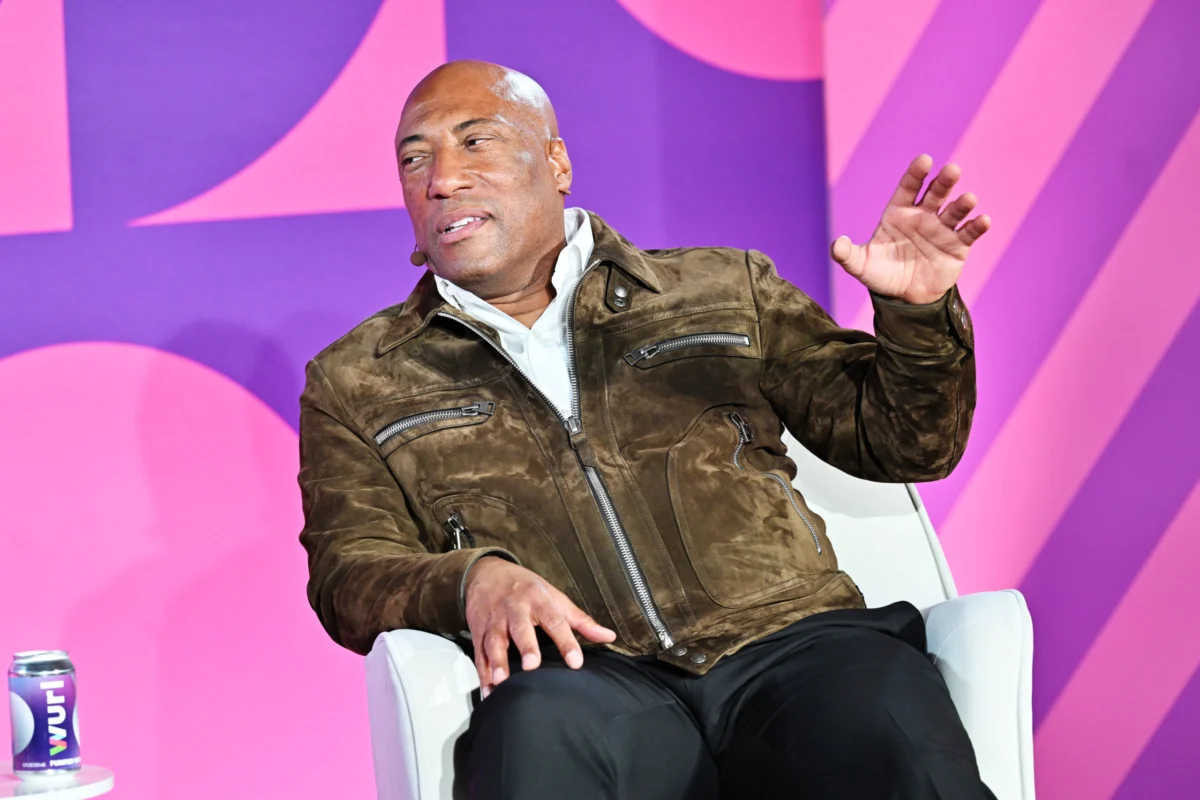
In a seismic shift for the broadcast television industry, CBS has officially confirmed a radical restructuring of its late-night strategy. By offloading the financial burden of its flagship late-night slot to media mogul Byron Allen, the network has successfully transitioned a once-draining timeslot into a significant revenue generator. This move marks the end of an era for the iconic Late Show franchise and signals a broader trend of cost-cutting and outsourcing as traditional networks grapple with the erosion of linear television audiences.
The Financial Mechanics of the "Time Buy"
For years, the economics of late-night television have been precarious. High production costs, coupled with a shrinking viewership, turned what was once a prestige-heavy daypart into a fiscal liability for CBS. According to network insiders, the hour occupied by Stephen Colbert’s Late Show was losing approximately $40 million annually.
The new agreement, structured as a "time buy," flips this ledger entirely. Under the terms of the deal, Byron Allen’s production company, Allen Media Group, pays CBS for the privilege of broadcasting its long-running program, Comics Unleashed, in the coveted slot. By doing so, Allen assumes all production costs, while also retaining the rights to sell advertising within the program.
For CBS, the math is stark: the network has achieved a $55 million swing in its annual performance, moving from a $40 million deficit to a $15 million profit. "We’re proud to partner with Byron Allen on a new business and programming model for late night that proactively addresses a network daypart that was cost-prohibitive to continue," a CBS spokesperson stated late Thursday.
A Chronology of the Transition
The transition was not sudden, though its finality—marked by the physical dismantling of the Late Show set—has left a lasting impression on industry observers.
- The Proposal: Recognizing the network’s need for fiscal discipline, Byron Allen approached CBS leadership with a solution rooted in his own successful syndication history. Allen, who has produced Comics Unleashed for two decades, pitched the show as a low-cost, high-reliability replacement. "I said, ‘Let me put that show there and let me buy the time period. I can save you $30 million to $40 million.’ They said, ‘Brilliant idea, let’s do it,’" Allen told The Hollywood Reporter.
- The Final Bow: Following the announcement of the deal, Stephen Colbert’s Late Show concluded its run. The final broadcast served as a somber coda to a storied tenure.
- The Dismantling: Within one week of the final broadcast, the Late Show studio was officially shuttered. Former staff members took to social media to share images of the "struck" set, signaling the permanent end of that specific production iteration.
- The Launch: Comics Unleashed made its debut in the new timeslot, drawing roughly 1.1 million viewers. While this figure represents a significant decline from the 2.7 million viewers that The Late Show averaged during its final season, the profitability of the slot is no longer tied to traditional Nielsen ratings in the same way, as the risk has been effectively transferred to Allen Media Group.
The Economic Implications for Broadcast Networks
The decision by CBS to move away from in-house late-night production in favor of an outsourced time-buy model is a watershed moment for the "Big Three" networks. For decades, late-night programming was considered a cornerstone of network identity, acting as both a cultural barometer and a consistent vehicle for promotional synergy.
However, as audiences migrate to streaming platforms and on-demand digital content, the "prestige" of late-night talk shows has struggled to justify its bottom-line impact. By embracing the time-buy model, CBS is signaling that it is no longer willing to subsidize legacy prestige at the expense of fiscal solvency.
Industry analysts suggest that this could trigger a domino effect. Other networks, currently facing similar pressures, may look to the CBS-Allen partnership as a blueprint for offloading underperforming or expensive dayparts. The model prioritizes cash flow over cultural cachet, a shift that may eventually reshape the late-night landscape from a hub of celebrity interviews and political commentary into a marketplace for syndicated or third-party content.
Byron Allen’s Aggressive Expansion Strategy
The takeover of the CBS late-night slot is merely one piece of a much larger, more ambitious puzzle for Byron Allen. His media empire has been on an aggressive trajectory, marked by high-profile acquisitions and a clear vision for the future of digital and linear media integration.
Just as the CBS deal was being solidified, Allen finalized his acquisition of BuzzFeed. This deal, which closed on a Wednesday, is central to his long-term strategy of creating a multi-platform media conglomerate that bridges the gap between traditional broadcast and the digital-first era.
The Vision for BuzzFeed
Allen’s ambitions for his newly acquired assets are extensive. He intends to leverage the "iconic foundation" of BuzzFeed and HuffPost, scaling them by integrating free-streaming video, audio, and user-generated content.
"Our vision is to build on the iconic foundation of BuzzFeed and HuffPost by expanding into free-streaming video, audio and user-generated content," Allen said in his post-acquisition statement. He went further, explicitly naming his primary competitor in the digital space: "As of this moment, with the power of AI, BuzzFeed is officially chasing YouTube to become another premier free-streaming video service."
This strategy suggests that Allen views the CBS time buy not as an isolated project, but as part of an integrated ecosystem where his content—whether it be Comics Unleashed or digital-native videos—can be distributed across every available channel, from network television to global streaming platforms.
The Cultural Cost of Fiscal Realism
While the financial logic of the deal is sound for CBS, critics argue that the move represents a profound loss for the television ecosystem. The Late Show was a cultural institution that fostered national conversation. Comics Unleashed, while a successful long-running syndication product, serves a different purpose—it is designed for efficiency and broad appeal rather than topical relevance or cultural impact.
The loss of 1.6 million viewers compared to the Late Show era suggests that a segment of the audience is being left behind in this transition. However, from a shareholder perspective, the network has successfully excised a "cost-prohibitive" tumor. The question remains whether other networks will follow suit, and if so, whether the institution of late-night television will survive in any recognizable form or if it will simply become a clearinghouse for syndicated content bought and sold by third-party media moguls.
Conclusion: A New Era for CBS
As the dust settles on the shuttered Late Show set, the reality of the new television economy is clear. The partnership between CBS and Byron Allen is not just a business deal; it is an admission that the traditional broadcast model is undergoing a painful, necessary evolution.
By prioritizing the $55 million swing in profitability, CBS has chosen to focus on fiscal stability in a volatile market. Meanwhile, Byron Allen continues to build an empire that defies traditional categorization, moving fluidly between legacy broadcast deals and digital-first acquisitions. As the industry watches, the success of Comics Unleashed in its new home will serve as a bellwether for whether this "time buy" model is the future of broadcast television or a temporary patch for a declining medium.
One thing is certain: the era of the high-budget, network-produced late-night talk show is facing its most significant challenge to date, and the shift toward efficiency, outsourcing, and digital-first integration appears to be the new guiding principle for the industry at large.











No comments yet. Be the first to join the conversation!