Raul Delapena Setiawan
In the volatile world of consumer audio, few companies have managed to capture the industry’s attention as rapidly as WiiM. Emerging from the shadow of established giants, the brand—a subsidiary of Linkplay Technology—has spent the last few years masterfully navigating a market left reeling by the strategic missteps of legacy players like Sonos. By pivoting from niche, high-value streaming accessories to a comprehensive ecosystem of integrated hardware, WiiM is now poised to redefine the "connected home" experience.
To understand the trajectory of this disruptor, one must look at the man behind the brand: Dr. Lifeng Zhao, Founder and CEO of Linkplay Technology. In an exclusive interview, we delve into the philosophy, engineering challenges, and future roadmap of a company that is rapidly becoming a household name.
From Streaming Adapters to Full-Scale Ecosystems: A Chronology
WiiM’s rise was not accidental; it was a calibrated progression of product releases that built deep consumer trust.
Initially, the company made its mark with compact, affordable streaming boxes—the WiiM Pro and its successors—which allowed audiophiles to breathe new life into vintage, non-connected hi-fi gear. This was the "hook." Once consumers realized they could achieve high-resolution, multi-room audio on a budget, they began demanding more from the brand.

WiiM responded by launching integrated streaming amplifiers, effectively cutting out the need for separate DACs and streamers. This laid the foundation for the current, most ambitious phase: the transition into wireless speakers and, most recently, the company’s first foray into the Dolby Atmos soundbar market. This evolution represents a shift from "upgrading existing gear" to "becoming the primary source" of home entertainment.
The Design Philosophy: Why a Soundbar?
When asked why WiiM, a brand known for its modular streaming prowess, decided to tackle the crowded soundbar market, Dr. Zhao points to the most powerful force in tech: user feedback.
"WiiM is four years old; in terms of brands right now, we are a new player," Dr. Zhao explains. "Our users started expanding our gear into their living rooms and media rooms. We were constantly receiving requests: ‘When will you launch home theater? We already have your gear, but we don’t want separate components.’ They wanted one powerful, all-in-one device that handles music and TV without the mess of wires."
For the consumer, the soundbar represents "simplicity." For WiiM, it represents a technical challenge: how to achieve high-fidelity audio, including deep bass response, in a chassis that is sleek enough for a living room but powerful enough to compete with traditional home theater systems.

The Engineering Tug-of-War: Physics vs. Aesthetics
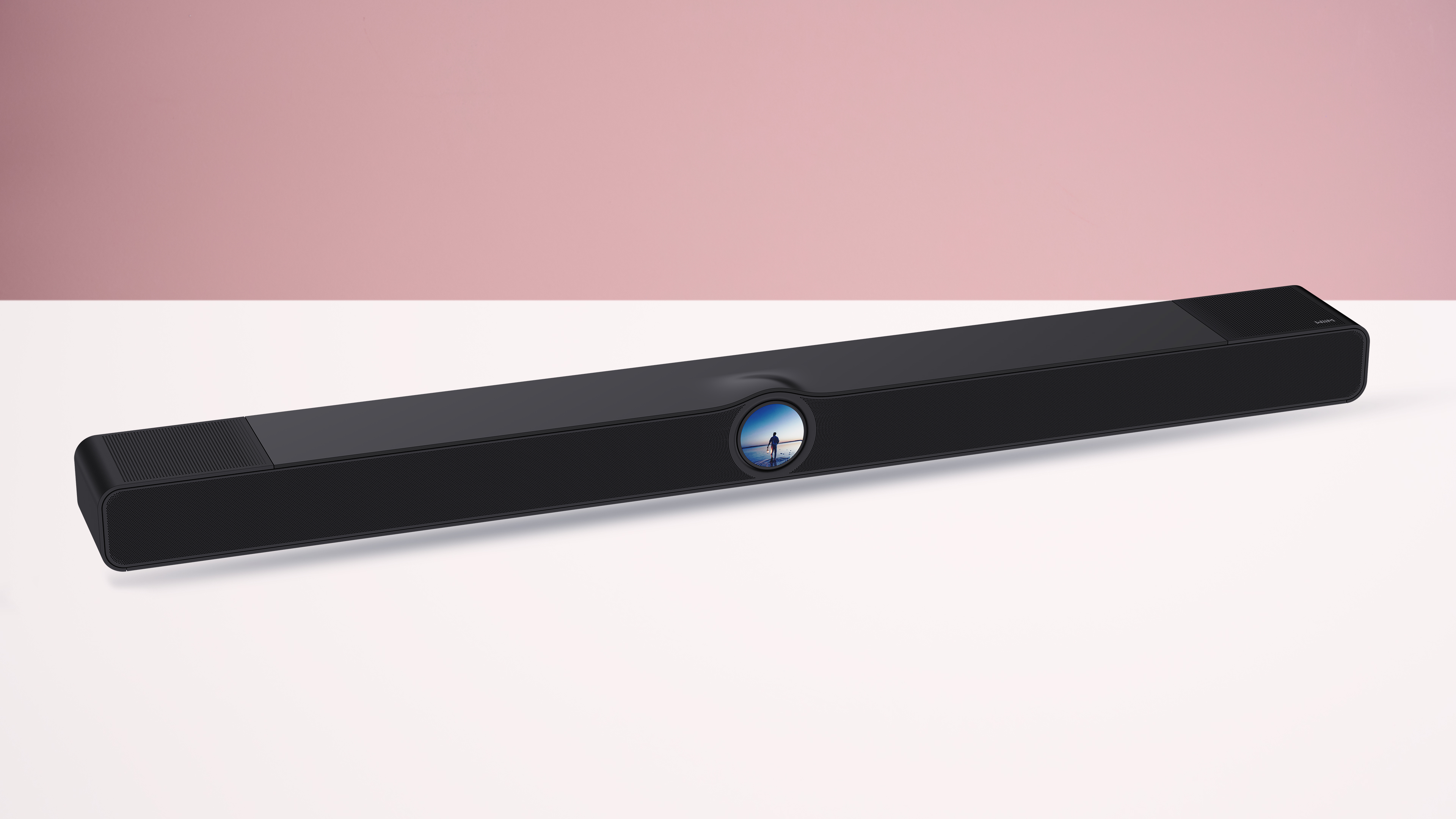
One of the most notable aspects of the new WiiM soundbar is its physical footprint. While competitors often prioritize ultra-thin profiles, WiiM has opted for a more substantial design.
"We start with acoustic criteria," Dr. Zhao reveals. "We determined we wanted to hit 50Hz for deep, impactful bass. Physics dictates volume. We calculated the necessary acoustic volume first, then designed the dimensions of the soundbar to fit that volume, rather than the other way around."
This "physics-first" approach is a departure from the mass-market trend of sacrificing sound quality for a slim aesthetic. By utilizing four passive radiators and a carefully tuned internal architecture, WiiM is betting that consumers in the US and Europe—who typically have larger living spaces—will value performance over extreme thinness.
The "Information as Simplicity" Debate
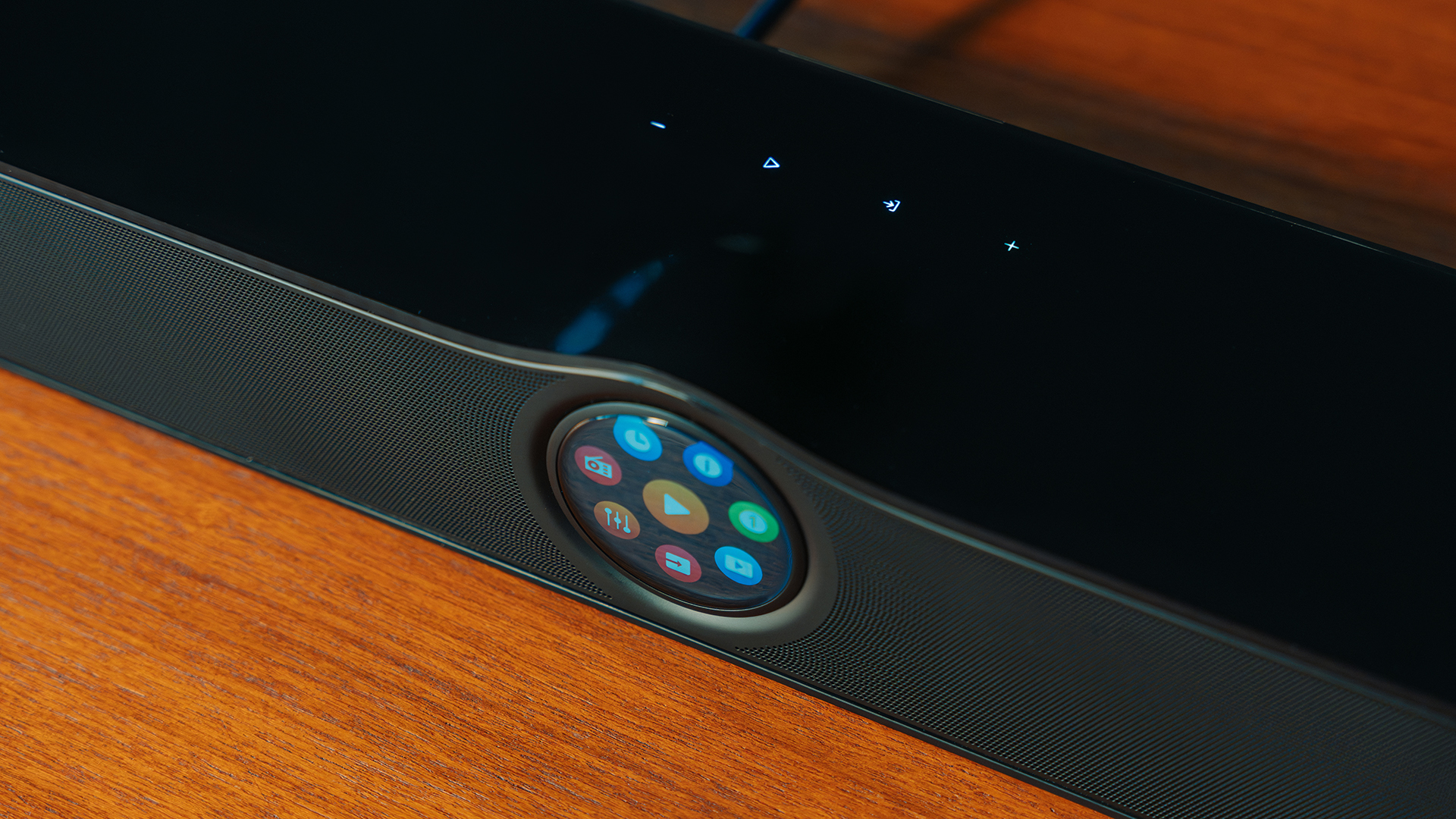
A controversial feature of the new soundbar is the inclusion of an on-device screen—a choice that has divided the audiophile community, which often prefers minimalist, light-free interfaces. Dr. Zhao, however, defends the decision as a cornerstone of "true" simplicity.

"We debated this a lot internally," he admits. "But when you have a device that handles multiple inputs, high-res streaming, and Dolby Atmos, an LED light is insufficient. If the network drops or a format isn’t supported, a simple blinking yellow light causes frustration and confusion. We want to provide instant, clear feedback. By providing information, we remove the guesswork."
He clarifies that this doesn’t mean a cluttered experience. "If you don’t want the screen while watching a movie, you can set it to turn off automatically. We believe that ‘simplicity’ isn’t just about having fewer buttons; it’s about not having to question what your device is doing."
Ecosystem Expansion and Future-Proofing
Perhaps the most significant revelation from our discussion is the company’s flexible approach to multi-channel expansion. While the soundbar launches as a 3.0.2 system, its ability to integrate with the existing WiiM ecosystem—specifically the ability to add external wireless speakers—is a game-changer.
In a follow-up clarification, Dr. Zhao confirmed a significant feature upgrade: the ability to use wireless speakers (or speakers connected to a WiiM Amp) as dedicated front-left and right channels. "This wasn’t originally intended as a launch feature," he noted, "but based on community feedback, we decided to push for it. We don’t want to make a legacy AV receiver; we want to make a compact, powerful, and wireless version of one."
Addressing the "AirPlay 2" Question
A recurring point of friction for some users has been the omission of Apple AirPlay 2 in recent releases. Dr. Zhao frames this as a deliberate strategic choice favoring quality over convenience.
"We support over 25 music services, and we value the integrity of the content," he explains. "If you are using Spotify, we want you to use Spotify Connect to access the best quality possible, rather than a compressed stream via AirPlay. We offer options that allow for lossless audio and multi-room functionality, regardless of the source. It’s a design choice to ensure the user is hearing exactly what the artist intended."
The "WiiM Signature": A Digital-First Approach
When asked if there is a "WiiM sound," Dr. Zhao clarifies that the brand isn’t attempting to impose a "colored" sound profile on the listener.
"We aren’t traditional hi-fi. We value the source. We want to replicate the original bit depth and resolution with minimal distortion. We use DSP and RoomFit to tackle the room’s influence, but we leave the high-end frequency signatures of your speakers intact because that’s what the user paid for."
This approach highlights the company’s identity: a digital platform company that has evolved into a hardware manufacturer. By marrying advanced wireless infrastructure (including Wi-Fi 6E) with deep DSP expertise and acoustic engineering talent—recruited from legends like Harman Kardon—WiiM is effectively bridging the gap between the "analog" hi-fi era and the "digital-first" smart-home future.
Implications for the Audio Market
WiiM’s trajectory suggests that the future of home audio is not found in complex, rack-mounted receivers or expensive, proprietary ecosystems, but in flexible, software-defined hardware.
By listening to its community, maintaining a focus on high-resolution streaming, and refusing to compromise on the physical requirements of sound, WiiM has carved out a unique position. As they move into the soundbar and home theater space, they are forcing traditional players to rethink their own strategies. If the company continues to deliver on its promise of "simplicity, plus powerful control," it may well become the new standard-bearer for the modern living room.
For the consumer, the takeaway is clear: the era of the "messy" home theater is drawing to a close. In its place is a new, simplified, and highly capable ecosystem that finally puts the music—and the listener—at the center.


 Azzam Bilal Chamdy
 Layla Zulfa