

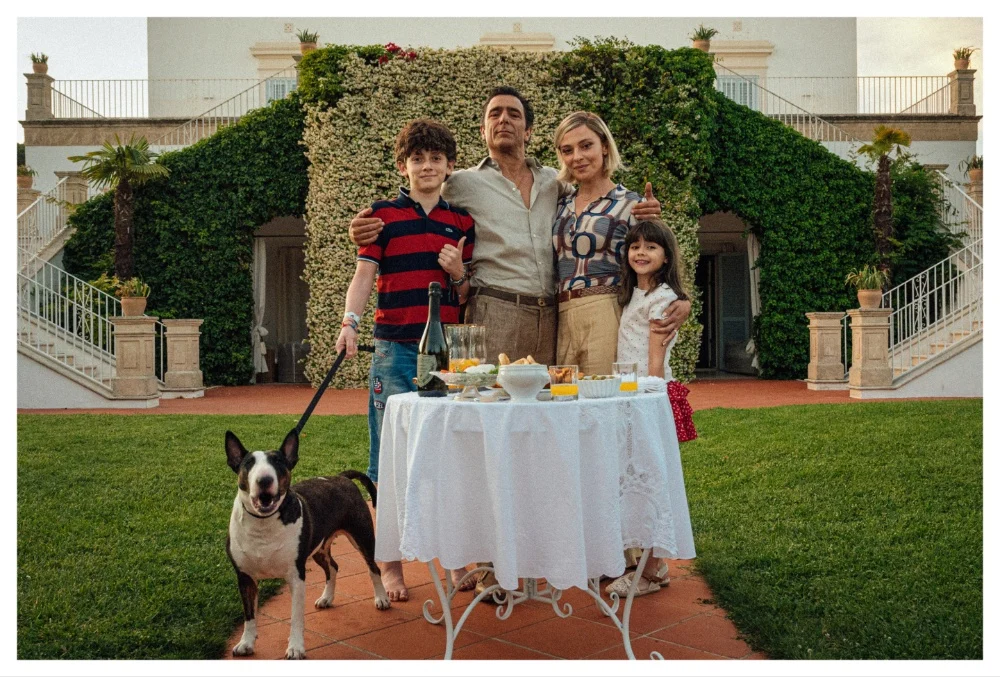
The Venice Film Festival has long served as a prestigious launchpad for bold, visionary cinema, and this year, the spotlight falls squarely on Paolo Strippoli. Regarded as Italy’s most electrifying young voice in genre filmmaking, Strippoli returns to the Lido with The Spiral, a high-concept psychological thriller that probes the unsettling intersection of maternal ambition, intergenerational trauma, and the impossibility of control.
Featuring a powerhouse ensemble led by the formidable Valeria Bruni Tedeschi and the emotionally resonant Jasmine Trinca, The Spiral is not merely a film—it is a meticulous, puzzle-box narrative designed to challenge the viewer’s perception of morality and fate.
The Premise: A Faustian Bargain in the Modern Age
At its core, The Spiral is a story about the devastating ripple effects of a single, desperate decision. The narrative is ignited by a harrowing reunion: Anna (Jasmine Trinca) is visited at her home during a ferocious thunderstorm by her mother, who brings with her a chilling revelation.
Two decades prior, following a life-altering accident that left a young Alice with a severe leg injury, her mother entered into a clandestine pact with a mysterious, demonic entity known as "The Stranger" (Valeria Bruni Tedeschi). This bargain, intended to save her daughter, has instead served as the catalyst for a series of catastrophic events that have plagued the family for twenty years. The film follows Alice as she grapples with the realization that the "miracle" that saved her limb came with a metaphysical debt that is now due. The central conflict is stark: to restore order to her life, Alice must confront The Stranger—but the price of such salvation remains terrifyingly ambiguous.
A Rapid Ascent: The Chronology of Paolo Strippoli
To understand the weight of The Spiral, one must look at the meteoric trajectory of its director. Strippoli has emerged as a singular talent, capable of blending visceral tension with profound psychological inquiry.
- 2021: Strippoli made a thunderous debut with the Netflix Original A Classic Horror Story, co-directed with Roberto De Feo. The film gained international attention for its subversive take on established slasher tropes, signaling the arrival of a director who understands the grammar of fear.
- 2022: He solidified his reputation with Piove (Rain), a psychological horror film that delved into the dark, repressed urges of a grieving family.
- 2025: Strippoli saw the release of his third feature, The Holy Boy, which premiered at the Venice Film Festival to critical acclaim.
- Present: With The Spiral, Strippoli marks his return to the festival circuit, positioning himself not just as a "genre helmer," but as an auteur capable of maintaining a rigorous aesthetic and thematic through-line across diverse projects.
Behind the Lens: Strippoli on the Genesis of "The Spiral"
In an exclusive discussion, Strippoli revealed that the seed for The Spiral was planted long before it reached the screen. Originally conceived as a novel, the story transformed into a cinematic project through his collaboration with co-screenwriter Salvatore De Chirico.
"It was born from my fear of not having control over things in life," Strippoli explains. "We live in a world that pushes us toward self-determination, but the truth is that such control is often an illusion. The film is an exploration of that failure."
The Psychology of Parenthood
When asked if the film serves as a critique of motherhood, Strippoli is quick to nuance the discussion. He frames the characters of Anna and her husband, Walter, not as villains, but as products of their environment—specifically, the industrial and economic landscape of Bari at the turn of the century.
"They are social climbers, people who achieved status but weren’t born into it," Strippoli notes. "Their love for their children is projected through ambition and control. It’s a twisted, sometimes perverse way of wanting the best for their family, but it is ultimately a form of rigidity that suffocates."
Casting the Nightmare: Bruni Tedeschi and Trinca
The success of The Spiral rests on the shoulders of its two leads. Strippoli admits that securing the pair was a process of both instinct and persistence.
Valeria Bruni Tedeschi as "The Stranger"
Strippoli describes Bruni Tedeschi as the only actress capable of embodying the dual nature of The Stranger—a character who oscillates between terrifying cruelty and a disarming, almost comedic lightness. "I couldn’t imagine anyone else in the role," the director says. "She has this rare quality of never judging the things her character says. She keeps the performance suspended in time, which makes the horror all the more potent."
Jasmine Trinca as the Embattled Anna
In contrast, casting Jasmine Trinca was a longer, more arduous endeavor. Known for her deeply empathetic performances, Trinca was seen by many as an unconventional choice for a thriller of this nature. Strippoli, however, viewed her inherent warmth as the secret weapon of the film.
"Jasmine is a person of immense emotional intelligence," Strippoli shares. "Because she is so naturally empathetic, she makes the audience feel for Anna, even when the character is making reprehensible choices. We worked extensively on the physical manifestation of her control—her rigidity, her posture—to ensure the audience understood that her actions, while extreme, are born from a desperate, protective instinct."
Redefining Genre: Thriller or Horror?
Despite his reputation as a master of horror, Strippoli is surprisingly resistant to the label when discussing The Spiral. He classifies the project firmly as a "psychological thriller."
"I never conceived of this as a horror film," he maintains. "It’s a puzzle. It’s a journey where the final piece only arrives in the closing shot. While I respect and love the tropes of the horror genre, my goal was to tell a story that feels honest and entertaining. When I finished the edit and saw the complete vision, it confirmed that the film functions as a mechanism of revelations and twists, rather than a traditional scare-fest."
Supporting Data: Production and Industry Context
The film’s production is a testament to the strength of European co-production models. Lead produced by Rome-based Propaganda, the project was supported in tandem by France’s Kazak Productions. This cross-border collaboration is becoming increasingly vital for mid-budget, high-concept European genre films, allowing directors like Strippoli to access international talent and wider distribution pipelines.
The cast, which also includes Romana Maggiora Vergano (celebrated for her breakout in There’s Still Tomorrow) and Adriano Giannini (known for Supersex), reflects a strategic mix of established icons and emerging stars, ensuring that the film carries both artistic credibility and commercial appeal.
Implications: The Future of Italian Genre Cinema
The reception of The Spiral at Venice is likely to have significant implications for the landscape of Italian cinema. For years, the Italian industry was criticized for being overly reliant on domestic dramas or light comedies. Strippoli’s success demonstrates that there is a viable, high-quality market for genre films that are intellectually stimulating while maintaining high production values.
Furthermore, by moving away from the "horror" label and embracing the "psychological thriller" designation, Strippoli is effectively widening the audience for his work. The Spiral is not just catering to the niche horror crowd; it is positioning itself as a prestige drama with a dark, metaphysical edge.
As the film prepares for its wider release, the focus remains on whether the audience will embrace the "puzzle" that Strippoli has constructed. With its blend of existential dread, familial dysfunction, and the undeniable magnetism of its leads, The Spiral is poised to be one of the most talked-about Italian exports of the year. Whether or not it ultimately defines the "genre of the year," it has certainly solidified Paolo Strippoli’s position as a filmmaker who is firmly in control of his craft—even when the characters he creates are spiraling toward the abyss.










