Ali Ikhwan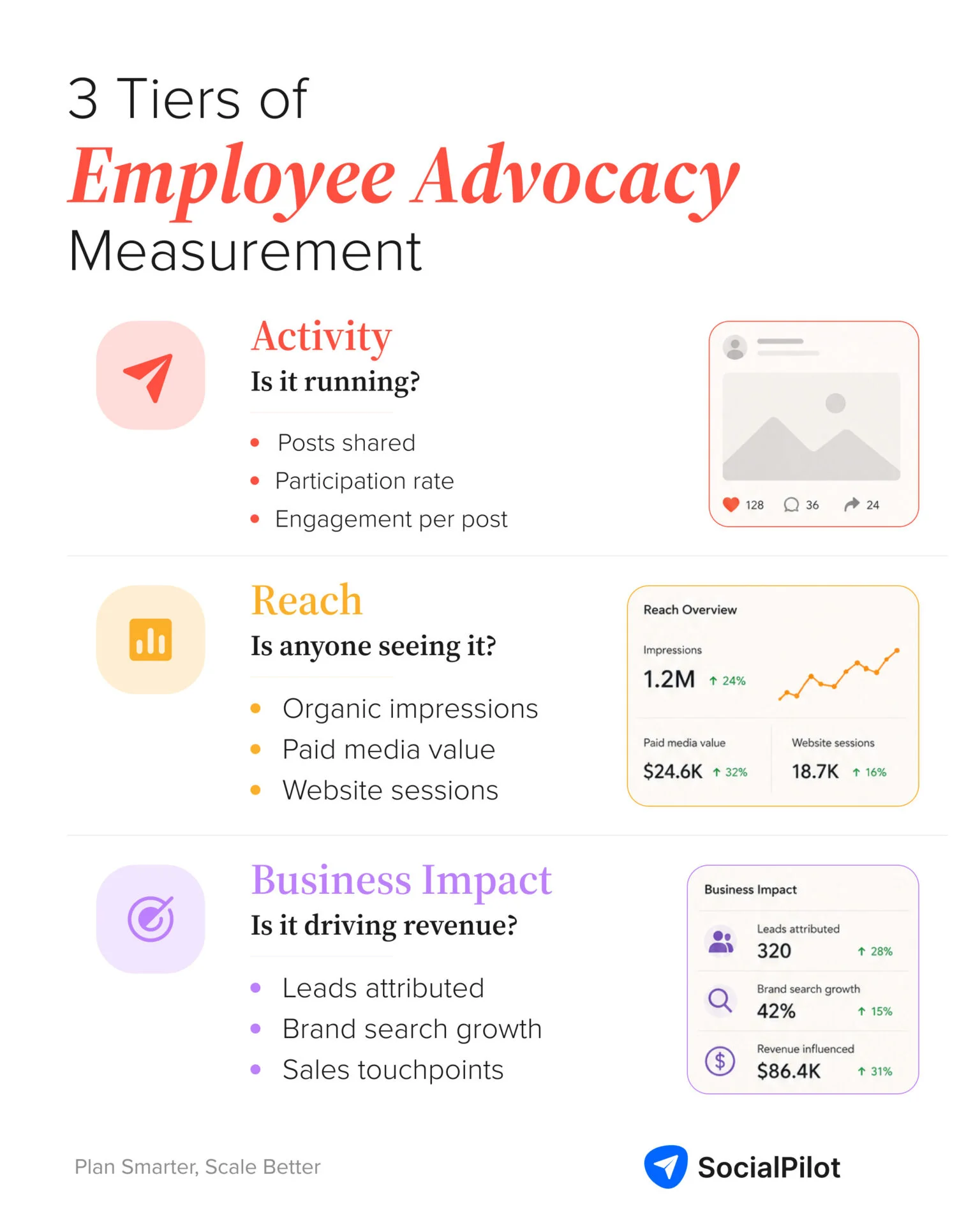
The pitch is rarely the problem. You walk into the boardroom—or join the Zoom call—and present the undeniable logic of employee advocacy: organic reach is dying for company pages, yet personal profiles remain the final frontier of authentic trust. You show the math. You explain the multiplier effect. The client is sold.
But then, the reality of the "build" sets in.
If you manage social media for agencies or brands, you know the theory. The numbers are ironclad: LinkedIn posts from employees generate eight times more engagement than the same content from a corporate page. Yet, industry data suggests a grim reality: the vast majority of these programs collapse within 90 days of launch. They don’t fail because employees are disloyal or because the strategy is flawed; they fail because the programs are designed as distribution channels rather than human systems.
This guide explores how to pivot from a "content dump" mindset to a sustainable operational system, scaling employee advocacy from a single pilot to a multi-client powerhouse.
The Participation Crisis: Why Programs Falter
Most advocacy programs are designed around the company’s need to broadcast, not the employee’s experience of sharing. When an agency or internal marketing team treats employees as mere "distribution nodes," they inevitably hit a wall.
The Design Flaw
The most common complaint from employees in stagnant programs isn’t a lack of willingness; it’s a lack of agency. Employees frequently report: "I don’t know what to say," or "This sounds like a press release." When content is pre-written and rigid, employees with any level of professional self-awareness refuse to share it. They fear that posting "corporate speak" will erode their own professional brand.
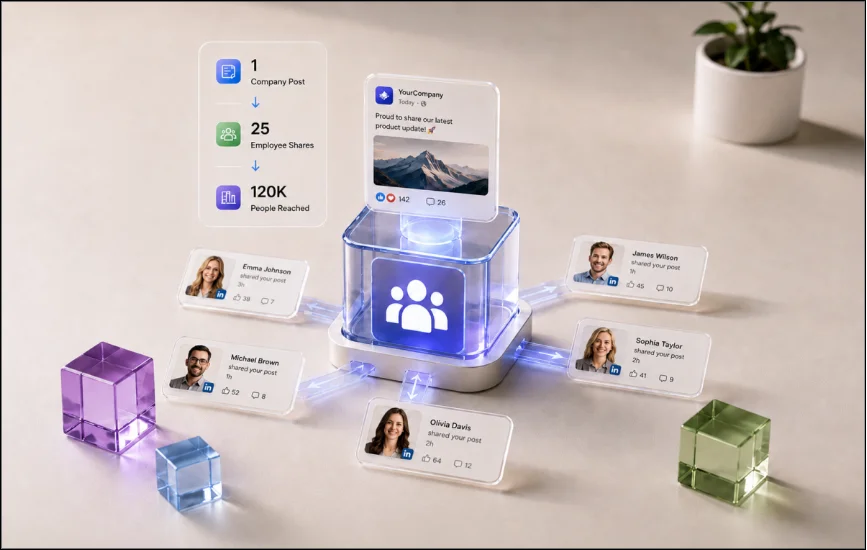
Participation is a design problem, not a motivation problem. Gamification—leaderboards and gift cards—are merely sticking plasters on a structural wound. The cure is a Content System that allows for personalization.
The Shift: Content Dump vs. Content System
The structural transition from a "Content Dump" to a "Content System" is the most critical decision an agency can make.
| Feature | Content Dump | Content System |
|---|---|---|
| Drafting | Brand team writes verbatim posts | Pre-written drafts with personalization fields |
| Audience | One version for all employees | Segmented by role and expertise |
| Approval | Post-by-post micromanagement | Monthly batch approval; 7-day windows |
| Guidance | None | Prompt: "[Add one sentence about your experience]" |
Chronology of a Successful Launch: A Seven-Step Framework
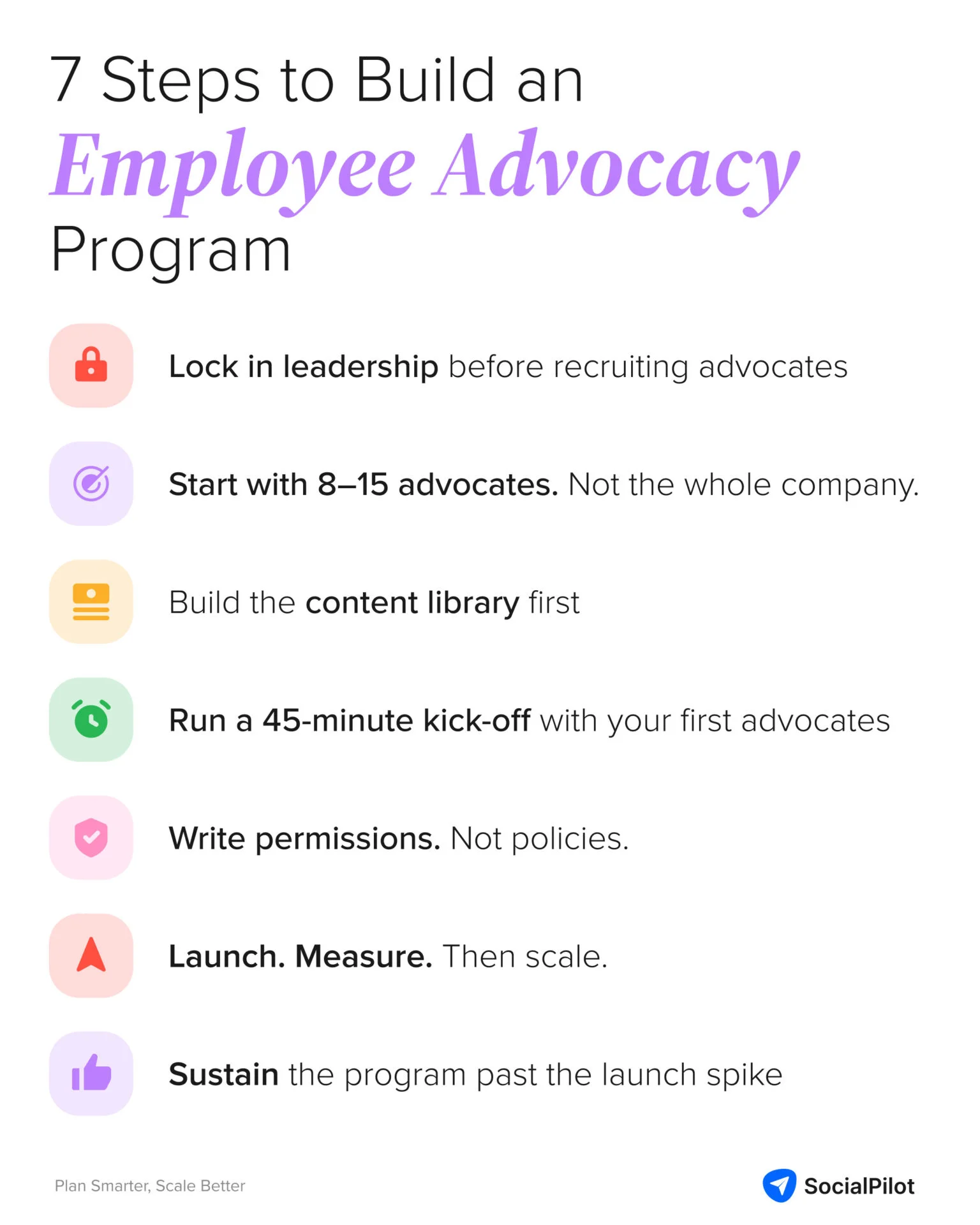
Building an advocacy program that survives the "90-day cliff" requires a disciplined, phased approach.
Step 1: Leadership Alignment (Weeks 1-2)
Never recruit a single employee before securing executive commitment. Executives are the signal that makes or breaks the program. If leadership doesn’t post, employees interpret the silence as an unspoken message that the program is optional. Frame this to your client as "Executive Visibility"—a way for leaders to reach audiences the brand page never will.
Step 2: The Pilot Cohort (Weeks 3-4)
Resist the urge to onboard the entire company. Start with a cohort of 8–15 "super-users"—employees already active on LinkedIn, such as sales leads or technical experts. A small group allows you to iterate on your content system and refine the feedback loop before scaling.
Step 3: The Content Library (Pre-Launch)
Before the first invitation is sent, build a library of 20–30 posts organized by content pillars (industry insights, product updates, team culture). Every post must include a bracketed prompt that encourages the employee to add their own "voice." Without this, you are sending them into a social channel without a map.

Step 4: The 45-Minute Kick-Off
The kick-off isn’t just for logistics; it’s for "WIIFM" (What’s In It For Me). Don’t sell the company’s goals. Sell the employee’s career growth. Explain how sharing expert content builds their personal brand and professional credibility.
Step 5: Permission, Not Policy
Replace the 20-page "Social Media Policy" with a one-page "Permission Guide." Tell them what they can do, how to handle tough questions, and what to avoid. Framing this as a set of guardrails rather than a restrictive manual fosters a culture of participation.
Step 6: The Launch and Measurement Loop
Launch in stages:
- Week 1: Executive-only posts.
- Week 2: First cohort sharing.
- Week 3: Feedback survey (What felt easy? What felt awkward?).
- Week 4: Initial reporting.
Step 7: Designing for Month Three
The "launch spike" is a dangerous illusion. Every program sees high activity in the first two weeks followed by a decline. Sustain momentum by rotating formats—polls, short-form video prompts, and opinion pieces—and providing visible, monthly recognition of top contributors.
Supporting Data: Why the Numbers Matter
The business case for advocacy is bolstered by compelling research. According to MSLGroup (2022), brand messages reach 24 times further when reshared by employees. Furthermore, employee-shared content generates eight times more engagement than the same post from a brand account.
However, despite these benefits, the Hinge Research Institute notes that 75% of employee advocates receive no formal social media training from their employer. The content library acts as that training, providing a bridge between corporate strategy and individual expression.
In a 2025 study published in Nature (Humanities and Social Sciences Communications), researchers found that employee engagement and willingness to advocate are sustained over time only when employees see tangible, professional outcomes from their participation. This validates that advocacy must be a value exchange, not a demand.
Implications for Agencies: Scaling the Service
Running one advocacy program is a project; running five is a business. The primary constraint for agencies is the operational load. If you are manually rebuilding content schedules, managing disparate inboxes, and fighting with approval chains, your margins will vanish by month four.
The Operational Infrastructure
To scale, you need a repeatable service model:
- Standardized Onboarding: Use a consistent questionnaire for brand voice and content pillars.
- Isolated Workspaces: Use tools like SocialPilot to maintain separate workspaces for each client. This prevents the "Client A content in Client B’s feed" nightmare.
- Automated Reporting: Do not build reports from scratch. Use automated templates that highlight Tier 1 (Activity), Tier 2 (Reach), and Tier 3 (Business Impact) metrics.
The Three-Tier Measurement Framework
Most agencies fail to retain clients because they only report Tier 1 metrics (likes/shares). To demonstrate long-term value, your reporting must evolve:
- Tier 1 (Activity): Participation rates and engagement trends. These prove the program is alive.
- Tier 2 (Reach): Organic impressions and equivalent paid media value. These prove the program is creating awareness.
- Tier 3 (Business Impact): Lead attribution, website sessions from UTM-tracked links, and sales touchpoints. These prove the program is contributing to the bottom line.
Official Perspective: The "Infrastructure" Imperative
The consensus among digital marketing experts is clear: the failure of most advocacy programs is not due to a lack of interest, but an absence of infrastructure. When an agency takes on an advocacy program, they aren’t just selling social media management—they are selling a change management process.
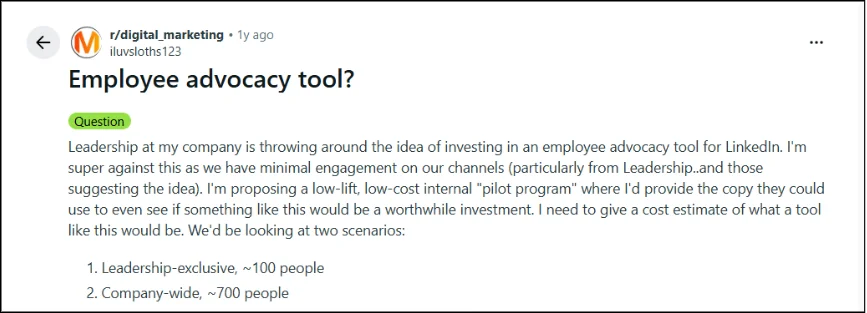
As noted by industry practitioners on platforms like Reddit and LinkedIn, the "Internal Champion Gap" is a silent killer. If the agency doesn’t design the workflow to require minimal bandwidth from the client-side coordinator, that coordinator will eventually stop sending reminders. The program doesn’t fail with a bang; it fades into irrelevance.
Conclusion: The Long Game
The pitch is the easy part. The infrastructure is what makes the service last. By treating employee advocacy as a systematic, human-centric, and measurable business process, agencies can transition from a "one-off campaign" provider to a long-term strategic partner.
When you build a system that respects the employee’s voice, provides the executive with easy-to-approve value, and delivers clear, business-linked reports to the client, you stop fighting for renewal. You become an essential part of their growth architecture.
Remember: One program is a project. Five is a business. Build your infrastructure accordingly.


 Nana
Nana
 Jia Lissa