Rifan Muazin
You have successfully grown a client’s Instagram following from 4,000 to 22,000 in just eight months. Engagement metrics are skyrocketing, the client is thrilled, and you are sitting in front of your laptop with a draft email proposing a larger scope of work. Yet, the cursor blinks mockingly. You hesitate, paralyzed by a familiar fear: If I ask for more money, they’ll think I’m just in it for the cash.
That hesitation is costing your agency more than you realize. The problem isn’t the act of asking; it is the lack of a systemic, professional framework for doing so. Without a strategy, you are guessing, and guessing is exactly what makes an upsell feel like a desperate cash grab.
To thrive in the agency world, you must transition from "service provider" to "strategic partner." This article outlines the seven specific triggers that signal a client is ready for more, a reporting structure that initiates the conversation naturally, and the precise language required to secure higher retainers without compromising the relationship.
The Psychological Barrier: Why Asking Feels Like a Risk
The anxiety surrounding pricing conversations is rarely about the fear of a "no." Instead, it stems from the fear of perception. Freelancers and agency owners alike worry that by bringing up budget, they are signaling that their previous value was transactional rather than relational.

This fear is, in many ways, rational. We operate in a landscape where over-promising, under-delivering competitors have conditioned clients to be suspicious of any mention of increased fees. When you ask for more budget without an earned, external justification, you sound exactly like every other vendor who has tried to nickel-and-dime them.
The solution is not to stop asking—it is to align your request with a reason the client can already see. When your "ask" is driven by external factors—such as a milestone, a competitor’s aggressive shift, or a change in platform algorithms—the framing shifts from "I want more money" to "you now need more resources to maintain your competitive advantage."
The Silent Trap: Why Undercharging Is a Liability
Many agency owners believe that staying quiet on pricing is the "safe" option. In reality, it is a slow-motion financial leak. As your clients’ needs grow, your costs—in software, labor, taxes, and time—compound.
When you avoid the conversation for too long, you are not just undercharging; you are building a deficit. Eventually, the discrepancy between the work required and the fee paid becomes impossible to ignore. When you finally attempt to address it, you aren’t proposing a new scope; you are attempting to undo years of underpricing in a single, often awkward, email.
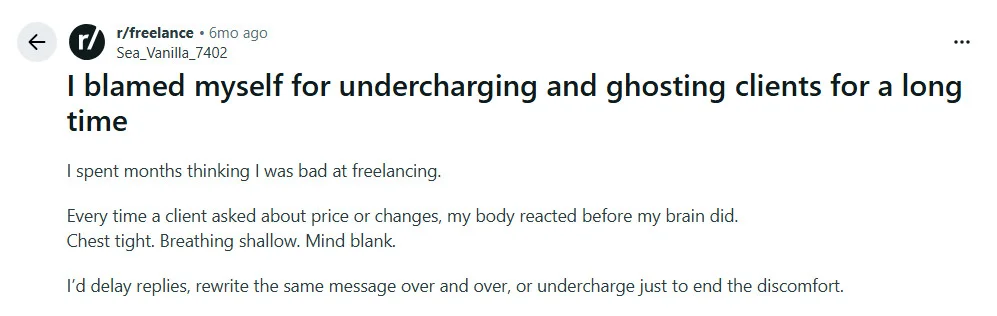
To prevent this, you must conduct regular audits of your retainers. If your actual hours, software overhead, and scope additions exceed your current fee, you are not being a "good partner"—you are being an unsustainable one.
Categorizing the Ask: Upsell vs. Scope Expansion vs. Rate Renegotiation
The first mistake most agencies make is blurring these three concepts. Each requires a distinct trigger and a different approach:
- Upsell: Adding a service the client does not currently have (e.g., adding TikTok video production to an existing Instagram retainer). Friction is low because this is additive, not a critique of the current agreement.
- Scope Expansion: Deepening work already underway (e.g., increasing posts from three to five per week). Friction is medium, as it requires clear data-driven evidence of the increased workload.
- Rate Renegotiation: Raising the price for the same deliverables. Friction is high. This should only be attempted during renewal periods, as it requires the strongest possible justification.
Disguising a rate hike as an upsell is a fatal error. Once a client realizes they are paying more for the same service, trust is permanently fractured.
The 7 Triggers: Identifying the "Why" and "When"
Timing is not a calendar guess; it is an observation of specific, actionable triggers.

1. The Performance Spike
When a client hits a major follower threshold or a post goes viral, momentum is undeniable. Use this as your "in." Frame the conversation as a way to capitalize on the current win. "We’ve hit our growth target; here is the infrastructure we need to double down on this success."
2. The Milestone Trigger
Campaigns and quarters have natural end dates. Use these "natural pauses" to initiate a review. Because these milestones are expected, the client is already in the mindset of evaluating the past and planning for the future.
3. The Platform Gap
If your client is present on two platforms, but their main competitors have successfully launched on a third, you have a "Platform Gap." Urgency here comes from the market, not from you. You are simply highlighting an opportunity they are missing.
4. The Competitor Move
When a competitor starts running ads or launches a new content format, it acts as an external deadline. You are not asking for more; you are responding to a shifting landscape.

5. The Algorithm Shift
Platforms change rapidly. If an algorithm update significantly impacts reach, you have a built-in reason to pivot your strategy. That "gap" between what they are getting now and what they need to stay visible is your opening.
6. The Capacity Trigger
This is the most common issue. If a client is constantly adding "just one more thing," they are engaging in informal scope creep. Track these requests meticulously. When the pattern becomes undeniable, present it as a formal "Expansion Package" to ensure the work is done properly.
7. The Renewal/Tenure Trigger
Contracts are the ultimate reset button. Never let a contract expire without a formal review. This is the only time it is appropriate to discuss a rate increase for existing services without a massive overhaul in deliverables.
The Reporting Structure: Turning Data into Opportunities
Your monthly analytics report is your most valuable, yet most underutilized, sales asset. Most agencies treat reports as an end-point—a summary of what happened. Instead, treat them as the beginning of a conversation.

Every report should end with these three sections:
- Results Delivered: The objective data (growth, engagement, reach).
- What’s Now Possible: The strategic bridge. Based on the data, what new opportunities have unlocked?
- Recommended Next Step: A single, clear, data-backed suggestion for growth.
By structuring your report this way, you remove the "pitch" entirely. You are simply showing them the data, explaining the implication, and offering a solution.
A Step-by-Step System for Success
If you follow this five-step sequence, you move from "salesperson" to "trusted advisor."
Step 1: Confirm the Value Link.
Before you speak, write one sentence: "Because [result], the client is now positioned to [opportunity], and [new service] is the logical step to get them there." If you cannot write this, the trigger is too weak.

Step 2: Choose the Move and Set the Price.
Decide between an upsell, expansion, or renegotiation. Benchmark your pricing against industry standards to ensure your request is defensible.
Step 3: Open with the Result.
Restate the win. Then, ask a qualifying question: "We hit [result] this quarter, which is a big deal. Before I share a thought on next steps, I want to ask: what does this actually change for you on the business side? Do you want to press on this, or is your priority elsewhere?"
Step 4: Present the Recommendation.
Offer one recommendation—not a menu. Give them the "why," the "how," and the "cost." Crucially, add a "pressure release" valve: "I think this is the right move, but you know your priorities better than I do—tell me if the timing is off." This keeps the door open even if they say "not now."
Step 5: Document and Schedule.
Once agreed, update the scope document immediately. Always set a date for the next review. If you manage multiple clients, keep a log of their lifecycle stage and upcoming renewal dates to ensure no opportunities slip through the cracks.

Implications for Agency Growth
The difference between an agency that plateaus and one that scales is the ability to manage the client relationship as a long-term asset. When you adopt a systematic approach to upsells, you reduce your stress and increase your revenue.
You are no longer asking for money; you are proposing the next logical step in a high-performing partnership. By leveraging the right tools—such as automated analytics and white-label reporting—you can make this process a repeatable, scalable part of your monthly operations.
The "ask" was never the problem. The problem was the lack of a system. Once you build the system, the conversation stops being a risk and starts being a strategy.


 Nana
Nana
 Asro
Asro