

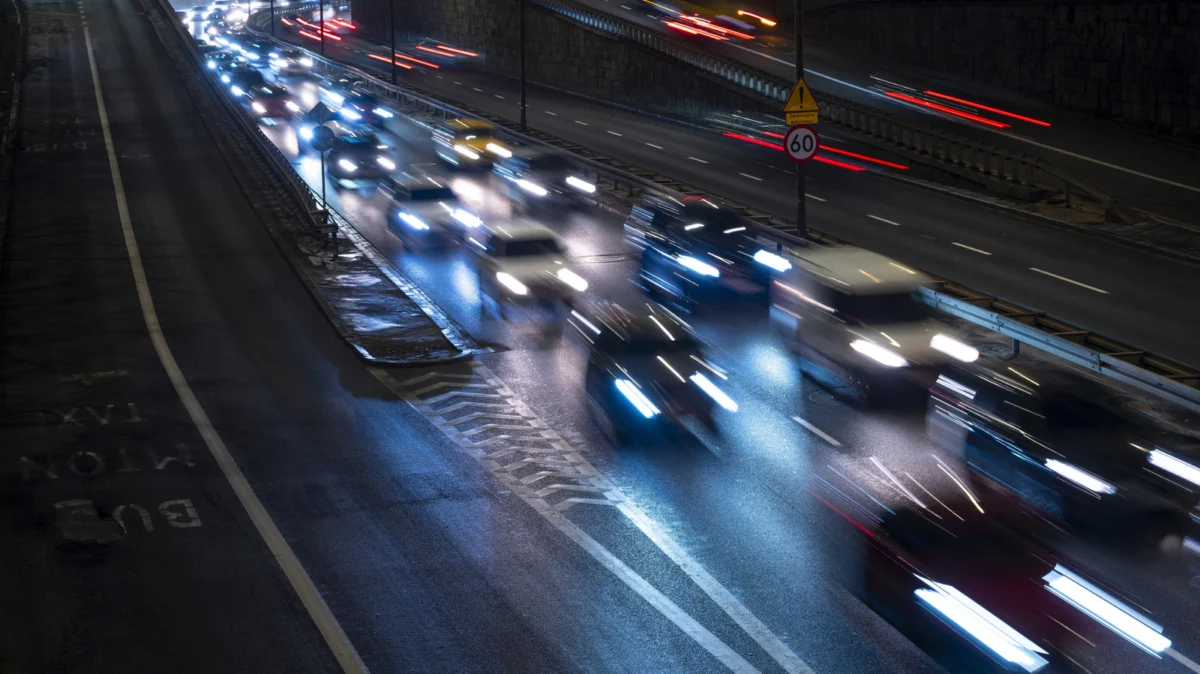
For the average motorist navigating the congested interstates of the United States, the sight of a 75-mph speed limit sign is often the ceiling of legal velocity. While outliers exist—such as Texas State Highway 130, which famously permits speeds of up to 85 mph—the American experience is defined by strictly enforced caps. However, crossing the Atlantic reveals a vastly different philosophy regarding transit, engineering, and driver responsibility. In Europe, the hierarchy of speed is governed by a complex interplay of geography, modern infrastructure, and long-standing cultural traditions that challenge the very necessity of a speed limit.
The Fastest Posted Limits: Poland and Bulgaria’s High-Velocity Corridors
When discussing "posted" speed limits—those explicitly defined by signage—the continent of Europe pushes the boundaries of modern automotive capability. Poland and Bulgaria currently stand at the forefront of this category, offering legal speeds that outpace the fastest American highways.
The Polish "Autostrada" Standard
In Poland, the driving landscape is meticulously regulated. Within urban centers, drivers are restricted to a cautious 50 km/h (31 mph) to account for pedestrian density and cross-traffic. However, the nation’s autostrada network is designed for efficiency. On these divided highways, the speed limit is set at 140 km/h (87 mph).
It is a common misconception among tourists that these limits are merely suggestions. In reality, the Polish authorities utilize a combination of sophisticated speed camera networks and aggressive patrol tactics to ensure compliance. Fines for exceeding these limits are not only punitive but, for repeat offenders, can lead to the temporary suspension of driving privileges. The 140 km/h threshold represents a balance between moving high volumes of traffic across the country’s expansive landscape and maintaining a margin of safety for modern passenger vehicles.
Bulgaria’s Strategic Infrastructure
Bulgaria mirrors this 87-mph (140 km/h) limit on its most modern segments of highway. The distinction in Bulgaria is rooted in engineering: only the newest, most robust divided highways—those equipped with dedicated emergency stopping lanes—are permitted to display the 87-mph sign. Standard highways remain capped at 75 mph.
The volatility of these laws was highlighted in 2025, when a legislative push to reduce the speed limit on specific heavy vehicle classes to 130 km/h (81 mph) sparked a nationwide debate. While the proposal was ultimately rejected, it signaled a growing tension between environmental groups, who cite carbon emissions and road safety, and transport lobbies, who prioritize the economic efficiency of rapid transit.

The Anomaly of the "Limitless" Road: Isle of Man and the Autobahn
While posted signs in Poland and Bulgaria represent the upper echelon of legal restriction, they pale in comparison to the unique status of roads that possess no speed limit at all. There are currently only two primary locations in Europe—and indeed, only two significant locales in the world—where drivers can legally test the mechanical limits of their vehicles on public thoroughfares.
The Isle of Man: A Heritage of Freedom
Situated in the Irish Sea, the Isle of Man is a pilgrimage site for automotive enthusiasts. The island is world-renowned for the "Isle of Man TT," a harrowing motorcycle race that utilizes the island’s public roads. Outside of race season, these winding, scenic mountain roads remain open to the public.
Crucially, there is no blanket national speed limit on these rural roads. This does not, however, imply a "lawless" environment. Local police maintain a visible presence, focusing on "spirited" but dangerous driving. The unspoken social contract here is one of mutual respect; drivers are encouraged to enjoy the technical nature of the roads, but any behavior deemed reckless or endangering to others is met with severe legal consequences.
The German Autobahn: The Gold Standard of Unrestricted Travel
The German Autobahn remains the global benchmark for high-speed travel. Spanning over 8,077 miles, it is a marvel of civil engineering, characterized by high-quality pavement, strict vehicle maintenance requirements, and disciplined lane etiquette.
Contrary to popular belief, the Autobahn is not universally "no limit." Roughly 50% of the network features permanent or variable speed limits based on traffic flow, weather conditions, and proximity to urban areas. Where the "no limit" sign appears—a white circle with five diagonal black lines—the restriction is lifted.
Chronology of Speed Regulation in Europe
- 1930s–1950s: The development of the German Reichsautobahn system, designed for high-speed transport, establishes the foundation for modern European highway philosophy.
- 1970s: Following the global oil crisis, many European nations, including Germany, introduced temporary speed limits to conserve fuel. Germany eventually reverted to its unrestricted status on the majority of its highways.
- 2010s: The widespread adoption of "Smart Motorway" technology allows countries like the UK and the Netherlands to dynamically adjust speed limits based on real-time traffic density.
- 2025: Bulgaria debates the reduction of highway speed limits to 81 mph, marking a significant legislative struggle between road safety advocates and the transport industry.
- 2026: A notable global change occurs as one of the world’s highest speed limits, which previously stood at 100 mph, is officially reduced to enhance safety and decrease emissions.
Supporting Data and Technical Implications
To understand why these speeds are permitted, one must look at the technical requirements of the vehicles and the roads themselves.
| Region | Max Posted Limit | Context |
|---|---|---|
| Poland | 140 km/h (87 mph) | Strictly enforced; high-tech monitoring. |
| Bulgaria | 140 km/h (87 mph) | Limited to modern highways with emergency lanes. |
| USA | 137 km/h (85 mph) | Limited to specific stretches (e.g., TX SH 130). |
| Germany | Unlimited | Recommended 130 km/h (80 mph); highly disciplined. |
The "Recommended" Speed Factor
Even on unrestricted stretches of the German Autobahn, the culture of driving is defined by a "recommended" speed of 130 km/h (approx. 80 mph). Data from 2025 indicates that the average speed on the Autobahn remains around 78 mph. This demonstrates that even when the legal ceiling is removed, the combination of driver training, vehicle cost, and fuel efficiency concerns serves as a self-regulating mechanism.
Official Responses and Safety Implications
The debate over high-speed limits is often framed by two opposing factions: those who prioritize the economic benefit of rapid transport and those who prioritize road safety.
Government transport ministries across Europe have consistently maintained that high speed is not the primary cause of accidents; rather, inconsistent speed is the danger. By requiring rigorous driver training—often taking months to complete and costing thousands of dollars—European countries ensure that drivers are capable of handling vehicles at higher velocities.
However, organizations like the European Road Safety Council argue that the physics of a crash at 140 km/h (87 mph) are exponentially more lethal than at 110 km/h (68 mph). The current policy shift, seen in the recent reduction of the world’s highest speed limit in 2026, reflects a growing global consensus: that as vehicle density increases, the margin for error must be accounted for through lower speeds.
The Future of the Open Road
The concept of the "fastest speed limit" is a moving target. As autonomous vehicle technology matures, the definition of a "safe" speed will likely evolve. Sensors and AI-driven lane-keeping systems may soon render the 87-mph limit obsolete, as machines can react to hazards faster than human biology allows.
For now, the fastest speed limit signs in Europe remain a testament to a specific era of motoring. They represent a culture that views the automobile not just as a tool for commuting, but as a vehicle for personal autonomy, provided that autonomy is exercised with the discipline and skill that such high speeds demand. Whether traversing the Polish autostrada or finding a clear, unrestricted stretch of the German Autobahn, the European experience offers a unique window into how a society balances the primal desire for speed with the pragmatic necessity of safety.











