In the hyper-competitive world of online gaming, where every millisecond can mean the difference between a “Victory Royale” and a respawn screen, players have long sought ways to optimize their performance. From ergonomic chairs and high-refresh-rate monitors to advanced macro peripherals, the pursuit of the “perfect setup” is an expensive, ongoing journey. However, a recent listing on Facebook Marketplace has pushed the concept of the “gaming setup” into the realm of the absurd—and perhaps the unsanitary.
A DIY contraption colloquially known as the “Battle Bucket” has resurfaced for sale, carrying a staggering $500 price tag. Designed for the most dedicated (or perhaps desperate) Fortnite players, the device aims to eliminate the need for bathroom breaks entirely. While the internet remains divided on whether the listing is a masterclass in trolling or a genuine attempt to offload a piece of questionable engineering, the story has captivated millions, sparked debates about gaming culture, and even caught the attention of professional esports organizers.
The Anatomy of the “Battle Bucket”
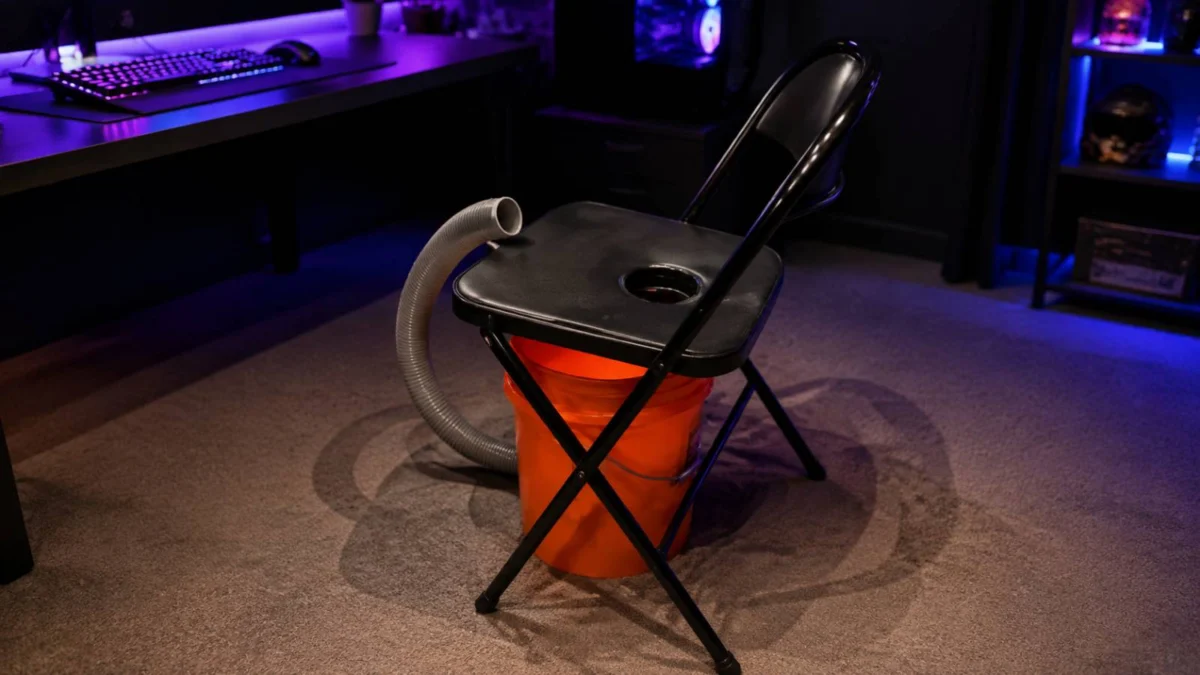
At its core, the Battle Bucket is a masterclass in low-budget, high-implication DIY fabrication. The setup is remarkably primitive: a standard folding chair modified with a hole carved directly into the seat, positioned over a bright orange hardware-store bucket. To round out the “features,” the builder included a crude tube attachment designed for urination.
The visual aesthetic of the device is underscored by a G FUEL sticker prominently displayed on the seat, a nod to the energy drink brand often associated with high-octane gaming sessions. The entire apparatus is essentially a commode disguised as a piece of gaming furniture. When images of the item appeared on social media, the reaction was immediate. Within days, the post had garnered over four million views on X (formerly Twitter), transforming a niche piece of internet detritus into a viral sensation.
A Chronology of Infamy: From TikTok to Marketplace
The origin of the Battle Bucket can be traced back to 2023, when a TikTok creator operating under the handle usecodelitty200iq shared a video showcasing the invention. In the original clip, the creator candidly explained the utility of his creation, stating, “This is how I can play Fortnite for so long without going to the bathroom.”
While the original video was eventually scrubbed from the platform, the internet’s archival nature ensured its survival. The video lived on through endless reposts and reaction videos, cementing the Battle Bucket as a legendary, if horrifying, relic of gaming subculture.
The story took a bizarre turn recently when a Facebook Marketplace listing appeared, featuring the exact same hardware. The seller claimed ownership of the device, asserting that it had been used “almost every day for years.” The audacity of the listing—not just in the nature of the item, but in its $500 valuation—has led to intense speculation. Is this the original creator looking to cash in on his infamy, or a copycat attempting to capitalize on the viral notoriety of the “Battle Bucket” brand? Regardless of its origin, the seller’s insistence that the item was “thoroughly cleaned” and their defiant declaration of “NO LOWBALLS I KNOW WHAT I GOT” has only fueled the internet’s obsession.
Supporting Data and Engineering Critiques
Beyond the immediate “ick factor,” the Battle Bucket has invited an unexpected amount of technical scrutiny from the gaming community. On platforms like Reddit and X, amateur engineers and DIY enthusiasts have begun to deconstruct the flaws in the design.
The most common criticism involves the physics of the fluid management system. Several observers pointed out that the tube connects suspiciously close to the bottom of the bucket. According to the laws of fluid dynamics, this would likely cause a backflow issue, where liquid would back up through the hose long before the bucket was even remotely full.
“It’s not just unhygienic; it’s a design failure,” one commenter noted. Others have criticized the ergonomics, suggesting that for a truly “pro-level” experience, the bucket would require a padded toilet seat and a significantly wider opening to account for extended, multi-hour gaming marathons. This strange level of engagement—where users provide constructive, albeit sarcastic, feedback on a bucket-based bathroom—highlights the unique intersection of gaming culture and technical debate.
Official Responses and Industry Impact
The notoriety of the Battle Bucket has not been confined to anonymous forums. The gaming industry, which prides itself on professionalism and high-production-value esports, has taken note of the absurdity.
EPIC.LAN, a prominent UK-based esports and gaming event organizer, made a humorous but firm statement regarding the device. Taking to social media, the organization jokingly announced that they were “adding this to the list of banned items at LAN.” While the post was made in jest, it speaks to the broader concern within the industry regarding the “health-at-all-costs” mentality that some gamers adopt.
This reaction is indicative of the industry’s ongoing effort to promote healthy gaming habits. Professional organizations and hardware manufacturers have increasingly pivoted toward wellness, focusing on ergonomic chairs, blue-light-filtering glasses, and encouragement of physical activity during breaks. The Battle Bucket stands as the antithesis of this movement—a symbol of the “grind” culture that, while often celebrated in gaming, can occasionally devolve into behaviors that are detrimental to the health and hygiene of the player.
The Broader Implications of “Grind Culture”
The viral nature of the Battle Bucket serves as a mirror to the darker side of competitive gaming. While the device is undoubtedly a joke, it draws upon a very real, very intense culture of persistence. In games like Fortnite or Grand Theft Auto 6, where rankings and rewards are often tied to time invested, the pressure to never step away from the screen is a genuine psychological phenomenon.
The Battle Bucket is merely the latest in a series of “cursed” gaming setups to go viral. Previous examples include a $15 “bedtime” gaming rig that consisted of little more than a mattress and a monitor mounted to a ceiling, and an incredibly elaborate “Truck Simulator” setup that involved multiple seats, custom steering wheels, and wraparound displays that cost thousands of dollars.
However, the Battle Bucket differs because it prioritizes bodily function over comfort. It represents the extreme endpoint of the “no-lifing” lifestyle—the idea that any time spent away from the keyboard is a wasted opportunity to climb the leaderboard.
Why We Are Obsessed
Psychologically, the fascination with the Battle Bucket stems from a combination of morbid curiosity and communal humor. By analyzing the bucket’s design or mocking the seller’s “I know what I got” attitude, the gaming community is participating in a shared ritual of boundary-setting. We laugh at the Battle Bucket because, at some level, we recognize the impulse to stay in the game, even if we find the execution repulsive.
Conclusion: A Legacy of Internet Lore
As of this writing, it remains unclear if the $500 listing has found a buyer. Perhaps some collector of digital curiosities will purchase it as a conversation piece, or perhaps it will remain a ghost of the Marketplace, forever haunting prospective buyers with its promises of “beautiful” functionality.
Ultimately, the Battle Bucket is a testament to the power of the internet to elevate the mundane—and the grotesque—into the realm of pop culture. It is a reminder that in the vast, interconnected world of gaming, there are no limits to how far someone might go to maintain their streak.
Whether you view it as a piece of performance art, a failed engineering project, or a terrifying health hazard, the Battle Bucket has earned its place in the annals of internet history. It serves as a humorous, if slightly nauseating, caution to the gaming world: sometimes, the most important part of a gaming session is knowing when to hit the “Pause” button and walk away from the screen. For the sake of everyone else, please, just go to the bathroom like everyone else.