Nila Kartika Wati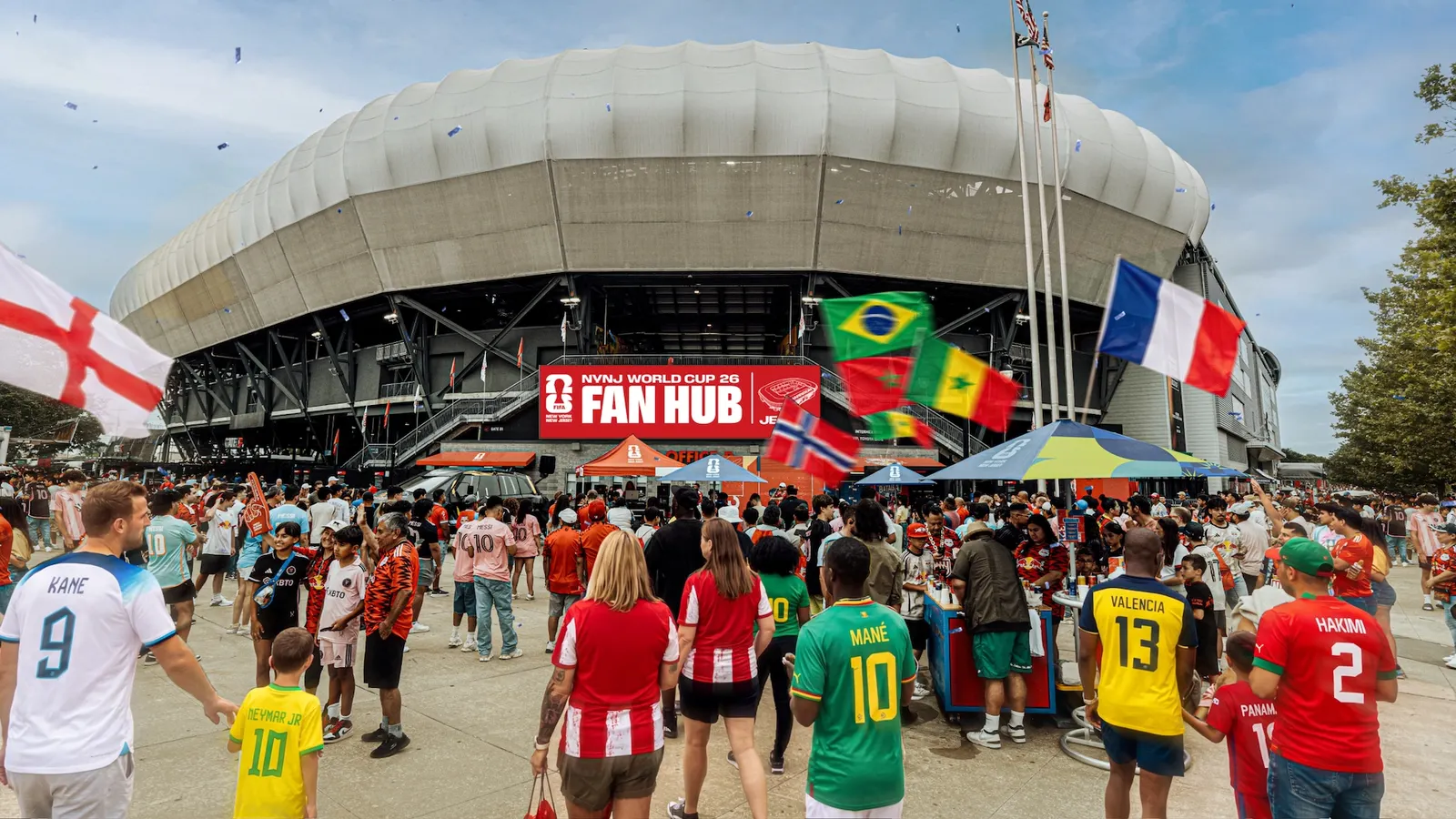
As the global spotlight intensifies on the World Cup, the American soccer landscape is undergoing a strategic metamorphosis. While casual viewers are captivated by the drama of the knockout stages, the executive offices of Major League Soccer (MLS) and the National Women’s Soccer League (NWSL) are working with surgical precision to ensure that this “summer of soccer” is not merely a transient cultural moment, but a permanent expansion of their fan bases.
For the two premier professional leagues in the United States, the current tournament represents a rare, high-stakes opportunity for massive customer acquisition. By leveraging a blend of influencer-led storytelling, experiential marketing, and deep-rooted brand partnerships, these organizations are positioning themselves as the inevitable destination for fans once the international spectacle concludes.
Main Facts: The Strategic Pivot
The core of this strategy lies in the realization that the World Cup creates a temporary surge in interest that—if managed correctly—can be converted into long-term domestic loyalty. Recent data from a Nielsen report reviewed by Marketing Dive indicates that while only 27% of U.S. consumers currently identify as soccer fans, a staggering 37% of the general population expects their interest in the sport to increase significantly in the wake of the tournament.
Both leagues are operating under the premise that they are the “home” for this newfound enthusiasm. The goal is to move the conversation away from the ephemeral nature of international tournaments and toward the consistent, year-round narrative of domestic club soccer. MLS, under CMO Radhika Duggal, has launched its first-ever enterprise-wide marketing campaign, unifying the league and its clubs in a singular, loud voice. Simultaneously, the NWSL is utilizing a grassroots-focused “Summer of Soccer” initiative to embed itself into the cultural conversation.
A Chronology of the "Bridge" Strategy
The timing of these campaigns is not coincidental; it is a calculated sequence designed to maintain momentum.
- Pre-Tournament Preparation: Throughout the spring, both leagues ramped up their digital presence, laying the groundwork for the mid-summer surge. The NWSL launched its “Summer of Soccer” campaign in May, focusing on fan activations and community programming.
- The Tournament "Pause": During the World Cup, as domestic play hits a scheduled hiatus, the leagues are shifting from live match broadcast marketing to “lifestyle” and “creator-led” content.
- The Re-Entry Window: MLS is scheduled to return from its summer pause just days before the World Cup final. This is the critical transition period. The league will move immediately into All-Star week, followed by the high-profile Leagues Cup against Mexico’s Liga MX.
- The Long-Term Horizon: This sequence is a precursor to a much larger strategic shift in 2027, where MLS will align its calendar with the European soccer schedule. For the NWSL, the current efforts serve as a five-year runway leading up to the 2031 Women’s World Cup, which will be partially hosted on American soil.
Supporting Data: Why Content is King
The shift in marketing tactics is rooted in a fundamental change in how modern sports fans consume media. The days of relying solely on linear television broadcasts are fading.
According to the IAB, creator marketing is now a core media channel, with spending on the sector projected to reach $44 billion by next year. Both MLS and NWSL are pivoting away from “interruptive” advertising toward “organic” integration. MLS, which boasts a combined social reach of nearly 113 million followers across league and club channels, acknowledges that most new fans do not start by watching a 90-minute match on Apple TV. Instead, they stumble upon the sport through curated clips on TikTok, Instagram, or YouTube.
“Increasingly, you are scrolling through YouTube, TikTok, or Instagram, and you are happening upon MLS because someone is talking about us,” noted Duggal. “We think that sports fandom increasingly is starting with players and creators.”
The NWSL echoes this sentiment. Their target audience—young, female “vibe shifters”—requires a more nuanced approach. By working with creators who possess authentic voices rather than just massive reach, the league aims to lower the barrier to entry for potential fans who might be intimidated by the technical complexities of the sport.
Official Responses: Voices from the Frontlines
Radhika Duggal, CMO of Major League Soccer
For Duggal, the challenge is one of market saturation. “This is the most crowded marketplace that there’s ever been for consumer eyeballs and attention, and if we don’t go together, we will not break through,” she stated.
Duggal emphasizes that the league’s marketing is an “enterprise-wide” effort. By integrating with local Fox affiliates and leveraging the massive reach of partners like Walmart—which maintains relationships with 90% of U.S. households—MLS is attempting to normalize soccer as a staple of American entertainment. “It is endemic to Major League Soccer,” she said. “When the World Cup leaves, we’re still here.”
Rachel Epstein, CMO of the NWSL
Epstein, who joined the NWSL in April, views the tournament as a unique platform to establish the league’s brand identity. Her approach is rooted in “organic embedding.”
“We built a platform that allows us to embed the NWSL in the broader soccer conversation during this moment for the country and the world,” Epstein said. “We want to be in that conversation in a really organic way, so that as the men’s World Cup comes to a close, they see our league as this next natural destination for their soccer fandom.”
Her strategy for the “Summer of Soccer Road Trip”—a branded bus touring NWSL markets—serves as a physical manifestation of this digital-first philosophy, proving that even in a digital age, experiential marketing remains a powerful tool for community building.
Implications: Building a Sustainable Ecosystem
The implications of this coordinated marketing push are significant for the future of U.S. sports business.
1. The Death of the “Logo-Slap”
Both leagues are moving away from traditional sponsorship models. They are no longer interested in “logo slapping”—the act of placing a brand’s logo on a stadium wall and hoping for the best. Instead, they are demanding that partners contribute to the narrative.
For instance, the NWSL’s partnerships with brands like Tylenol and Yeti are integrated into the “Summer of Soccer” tour, while Ally Financial and E.l.f. Cosmetics have become synonymous with specific league moments like Rivalry Week and the Challenge Cup. These partnerships are designed to drive business goals for the sponsors while simultaneously enriching the fan experience.
2. Financial Services as Cultural Barometers
MLS’s partnership with Chime represents a broader trend: fintech companies are increasingly eager to associate themselves with the “fabric of culture.” By aligning with MLS, Chime is not just selling a credit card; it is buying into the lifestyle of the modern soccer fan. This signifies that soccer in the U.S. has reached a level of mainstream relevance that appeals to the most sophisticated corporate marketers.
3. The Multi-Year "Supercharge"
Perhaps the most important takeaway is that these leagues are playing a long game. The current World Cup window is not viewed as a finish line, but as a catalyst.
“Once we restart our season, it’s nonstop for the next two years,” Duggal explained. “The campaign is the bridge to the next thing—it’s not the end point.”
By aligning their calendars, engaging with the creator economy, and fostering partnerships that go beyond simple commercial transactions, the MLS and NWSL are effectively attempting to build a sustainable soccer ecosystem. They are betting that once the World Cup trophy is lifted, the American fan will be looking for a new home for their passion. By positioning themselves as the inevitable destination, the leagues are not just waiting for fans to arrive—they are actively building the road that will lead them there.
As the tournament heads toward its conclusion, the true test will be the retention rates of these new fans. However, if the current strategy holds, the “summer of soccer” may well be the turning point that finally cements the sport into the permanent bedrock of American popular culture.

 Laily UPN
 Ammar Sabilarrohman