

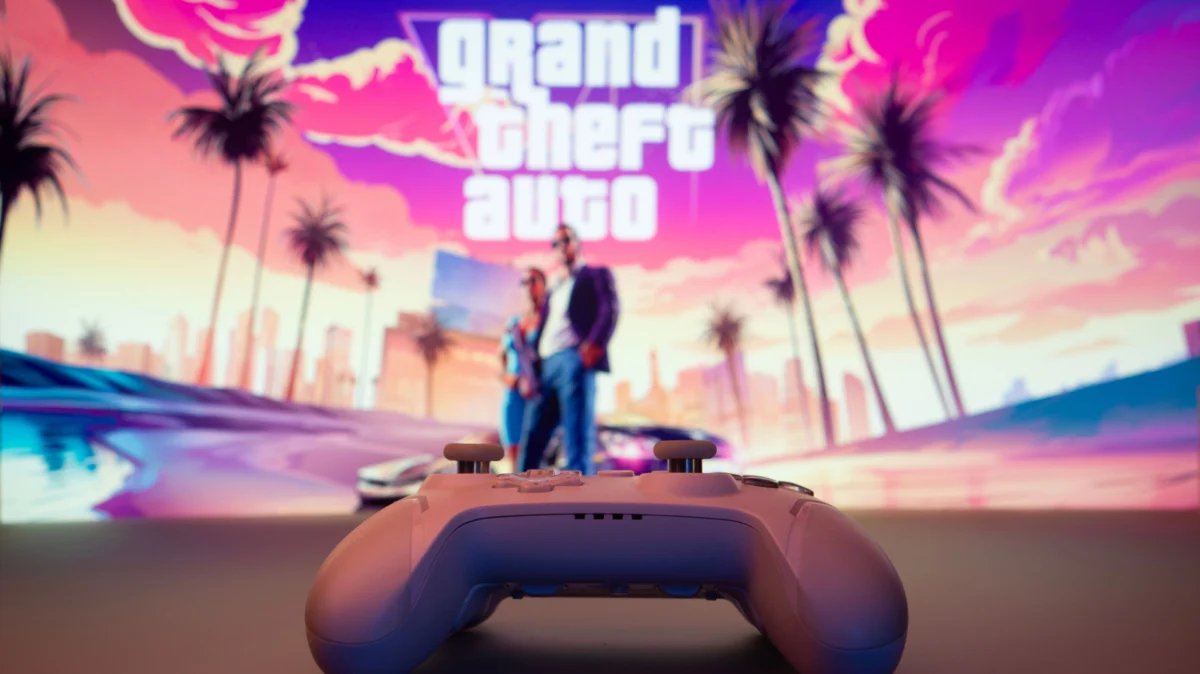
In the landscape of modern entertainment, the lines between blockbuster cinema and interactive media have blurred to the point of near-total convergence. Yet, while a tentpole film like Avatar or a Marvel installment might boast a production budget in the mid-hundred-millions, the gaming industry has quietly entered an era of "giga-budget" development. At the epicenter of this financial shift stands Rockstar Games’ Grand Theft Auto VI (GTA VI), a title currently projected to be the most expensive entertainment product ever produced, with estimates placing its total development cost between $1 billion and $1.5 billion.
This isn’t merely a case of inflation; it is a fundamental restructuring of how digital worlds are built. As the gaming industry matures, the financial stakes for AAA titles have evolved from a business risk into a high-wire act where a single failure could potentially imperil the future of an entire studio.
The Financial Scale: Defining the Modern AAA Budget
To understand the sheer magnitude of the GTA VI budget, one must look at the historical trajectory of game development. For years, the $100 million threshold was considered the "glass ceiling" for development costs—a level reserved for the most ambitious projects. Today, that ceiling has been shattered.
Recent disclosures, including court filings from the Activision Blizzard and Microsoft merger proceedings, have provided a rare, behind-the-curtain look at industry spending. Activision’s Call of Duty: Black Ops Cold War reportedly cost $700 million to develop and maintain over its lifecycle. Similarly, Sony Interactive Entertainment revealed that Horizon Forbidden West cost $212 million, while The Last of Us: Part II required $220 million. These figures, while massive, represent the standard for high-end gaming. GTA VI, by contrast, is operating in a different tax bracket entirely.
The reason for this leap is threefold: talent acquisition, extended development timelines, and the "live service" paradigm. Modern titles are no longer static products; they are expansive, persistent ecosystems that require constant updates, seasonal content, and server maintenance. When a game is expected to function as a decade-long revenue stream, the initial investment is no longer just for the base code, but for the infrastructure of a digital society.
A Chronology of Development: A Decade in the Making
The journey of GTA VI has been defined by a protracted, often grueling, development cycle that spans nearly a decade.
- Early Conceptualization (2014–2016): Following the massive success of GTA V, initial planning for its successor began. Rockstar focused on evolving the proprietary RAGE engine to handle new levels of environmental interactivity and graphical fidelity.
- The "Crunch" Years (2017–2020): During this phase, development ramped up, coinciding with the release of Red Dead Redemption 2. This period saw the studio consolidate its global resources, with teams across the world collaborating on the massive, sprawling map design.
- Refinement and Delays (2021–2024): The COVID-19 pandemic necessitated a shift in working patterns, contributing to a series of internal delays. Originally projected for a 2025 release, the project was pushed back to May 2026, and eventually to its current target of November 2026.
- The Final Stretch (2025–2026): Rockstar entered the "polishing" phase. According to Rockstar North co-head Aaron Garbut, this stage involves the implementation of a staggering 600,000 unique animations—a figure that serves as a testament to the game’s obsession with granular detail.
The Economics of "Feature Creep" and Detail
The primary driver behind these ballooning costs is what industry insiders refer to as "feature creep"—the constant drive to add more complexity, more interactivity, and more realism. GTA V was lauded for its 55,000 animations. GTA VI is attempting to exceed that by an order of magnitude.
Every additional animation, every non-player character (NPC) behavior script, and every square inch of high-fidelity texture adds to the payroll. In an industry where specialized labor—animators, software engineers, narrative designers, and motion-capture actors—commands a premium, the cost of staffing a project for ten years is astronomical.
Furthermore, the "open world" design philosophy requires an exponential increase in resources. Unlike a linear film where the camera only sees what the director chooses, an open-world game must be fully realized in 360 degrees, 24 hours a day, in every possible weather condition. The technical debt incurred by building such a world is the primary reason for the billion-dollar price tag.
Official Responses and Corporate Strategy
Rockstar Games and its parent company, Take-Two Interactive, have remained largely tight-lipped regarding the specific line-item expenditures of GTA VI. However, their financial strategy is clear: they are playing the long game.
The success of GTA V provides the roadmap. Since its 2013 launch, the game has generated approximately $10 billion in total revenue. Its online component, sustained by microtransactions and the GTA+ subscription model, continues to bring in millions in weekly revenue over a decade after its initial release. For the executives at Take-Two, a $1.5 billion investment is a calculated risk. If the game follows the trajectory of its predecessor, the return on investment (ROI) will be historic, solidifying Rockstar’s position as the titan of the interactive entertainment industry.
The Human Cost: Implications of the "Crunch" Culture
Perhaps the most contentious aspect of these massive budgets is the human cost. The history of AAA game development is marred by "crunch"—periods of mandatory, excessive overtime. Reports from the production of Red Dead Redemption 2 famously highlighted 100-hour work weeks, and similar allegations have followed the development of GTA VI.
The industry is currently facing a reckoning regarding these practices. As budgets reach the billion-dollar mark, the pressure to meet release dates becomes existential. Critics argue that the pursuit of "perfection"—seen in the thousands of extraneous animations and hyper-realistic environments—is a choice that prioritizes aesthetic excess over the well-being of the workforce.
Furthermore, the industry is seeing a rise in labor organizing. Rockstar has faced accusations of union-busting following reports that several employees involved in unionization efforts were terminated. While the company denies these allegations, the tension between the "prestige" of working on a project like GTA VI and the reality of the working environment remains a central narrative in the modern gaming discourse.
Conclusion: Is the Model Sustainable?
The existence of GTA VI raises a profound question: is the industry heading toward an unsustainable bubble? While the game will almost certainly be a commercial smash, it sets a standard that few other studios can ever hope to meet.
If $1.5 billion becomes the new baseline for a "successful" game, the mid-tier developer may be pushed out of the market entirely, leaving only the ultra-conglomerates capable of weathering the financial risk. GTA VI is not just a game; it is a monolith. It represents the pinnacle of what technology and capital can achieve when applied to entertainment. Whether that scale remains a blessing or becomes a burden for the future of interactive media remains to be seen. For now, the world waits for November 2026, when the most expensive gamble in the history of entertainment will finally be laid out on the table for all to see.











