

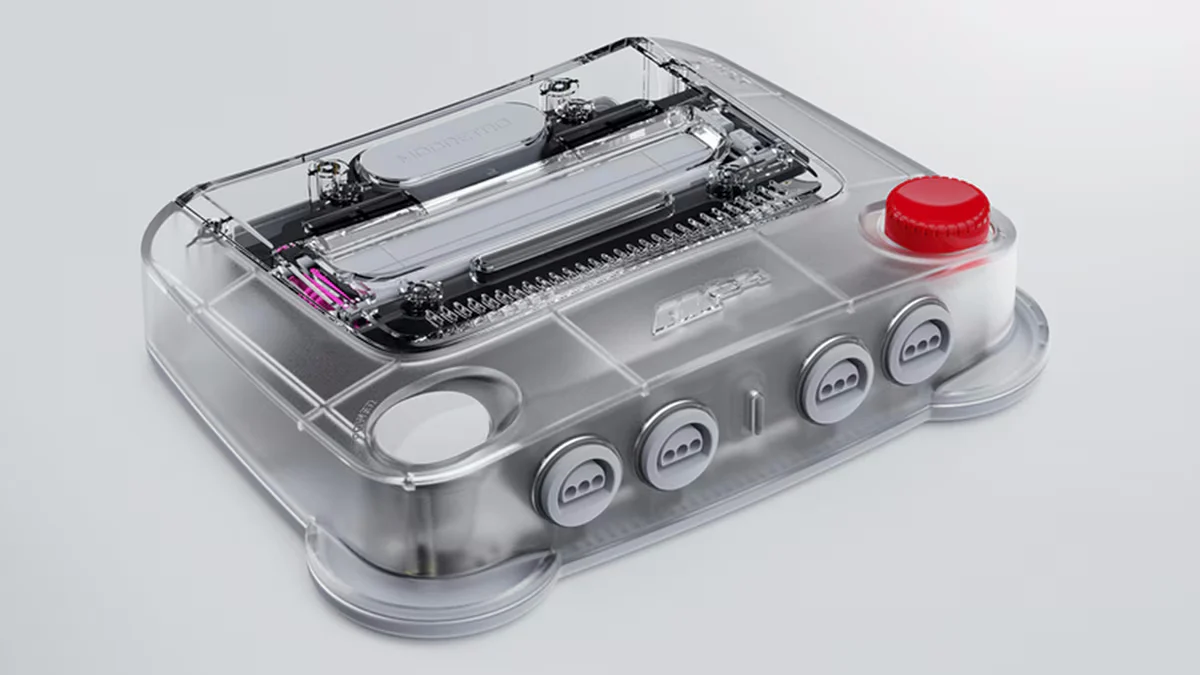
The landscape of retro gaming preservation is undergoing a quiet, high-tech revolution. While millions of players have spent the last two decades relying on software-based emulators—programs that attempt to trick a modern computer into acting like a legacy console—a new paradigm has emerged. Leading this charge is ModRetro, a company that has successfully carved out a niche by building hardware that respects the original source material. Their latest announcement, the M64, promises to be a watershed moment for Nintendo 64 enthusiasts, utilizing cutting-edge AMD FPGA (Field Programmable Gate Array) technology to bridge the gap between 1990s silicon and 2024 performance standards.
Main Facts: Hardware-Level Fidelity vs. Software Emulation
At the core of the ModRetro M64’s appeal is its rejection of traditional software emulation. To understand why this matters, one must distinguish between the two methods. Software emulators, such as Project64 or Mupen64Plus, translate the N64’s original machine code into instructions that a modern x86 or ARM processor can understand. This process is inherently "lossy"; it often results in input lag, audio desynchronization, and graphical glitches where shaders or textures fail to render as they did on the original CRT-bound hardware.
The ModRetro M64 takes a radically different approach. By integrating AMD Artix UltraScale+ FPGAs, the console is essentially "re-creating" the original N64 hardware logic within a reconfigurable silicon environment. Unlike a CPU that runs software, an FPGA is a collection of logic gates that can be wired electronically to mimic the exact behavior of the N64’s original chips.
This means that when a user inserts an original N64 cartridge, the console isn’t "interpreting" the game—it is interacting with the game data in the exact same physical way the original 1996 console did. The result is near-perfect cycle accuracy, which translates to a zero-latency gaming experience that feels identical to the original hardware.
Chronology: The Evolution of ModRetro
ModRetro’s journey to the M64 did not happen in a vacuum. The company has spent years refining its philosophy of "hardware preservation through modernization."
- The Foundation: ModRetro established its reputation by focusing on high-quality, boutique handhelds. Their primary focus was addressing the fragility of aging original hardware.
- The Chromatic Milestone: Before the M64, the company gained significant industry traction with the "Chromatic." This handheld system was designed specifically for Game Boy and Game Boy Color cartridges. It proved that there was a massive, untapped market for players who wanted to use their original physical media rather than resorting to digital ROMs.
- The Transition to 64-Bit: Following the success of the Chromatic, ModRetro shifted its engineering focus toward the Nintendo 64. The N64 is notoriously difficult to emulate due to its unique "Reality Co-Processor" and complex memory architecture. The choice to pivot to AMD’s Artix UltraScale+ series was a strategic decision to ensure the console could handle the N64’s complex signal processing without breaking a sweat.
- The Announcement: Following months of speculation in the retro-tech community, ModRetro officially unveiled the M64 in June 2026, confirming that the system would maintain full compatibility with original physical cartridges.
Supporting Data: The Power of the Artix UltraScale+
The choice of the AMD Artix UltraScale+ FPGA is not merely a marketing buzzword; it is a technical necessity. The N64 was a marvel of its time, featuring a custom MIPS-based CPU and a specialized GPU designed by Silicon Graphics. To accurately replicate these components, the FPGA must handle massive amounts of data throughput with virtually no overhead.
The Artix UltraScale+ family is renowned for its high-performance-per-watt efficiency. In the context of the M64, this means:
- Low Power Consumption: The system runs cool and efficiently, preventing the thermal throttling that can plague older, aging N64 consoles.
- Signal Integrity: The FPGA allows for modern output standards (such as HDMI) while maintaining the original timing of the video signal, ensuring that "frame-perfect" tricks used in competitive speedrunning remain functional.
- Future-Proofing: Because the hardware logic is stored in firmware, ModRetro can theoretically push updates to the console to improve compatibility or add features, something that would be impossible on a static, original N64 motherboard.
Official Responses and Industry Context
The response from the enthusiast community has been overwhelmingly positive. ModRetro has positioned the M64 not as a "clone" console, but as a "modern native" experience.
In a statement regarding the console’s design, ModRetro representatives emphasized that the goal was to eliminate the "uncanny valley" of emulation. "When you play on the M64, you aren’t playing a recreation or an approximation," the company noted in their launch documentation. "You are playing the original logic, on original media, with the exact timing and responsiveness that defined the late 90s console era."
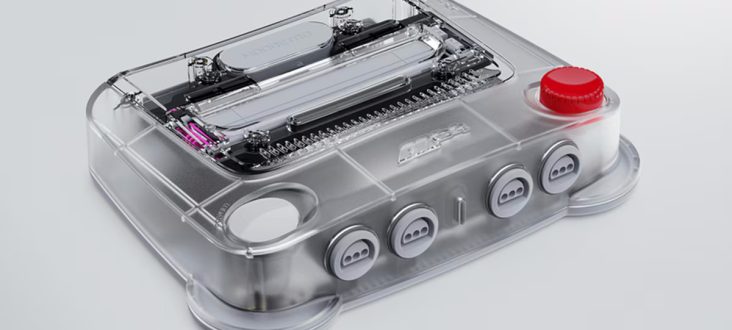
Industry analysts have noted that this move aligns with a broader trend in the tech industry: the "Premium Retro" movement. Companies like Analogue and ModRetro are proving that consumers are willing to pay a premium price for devices that prioritize authenticity over the convenience of digital emulation. By catering to the "purist" market, ModRetro is carving out a sustainable business model that honors the history of gaming hardware while leveraging the advancements of modern semiconductor manufacturing.
Implications for the Future of Preservation
The implications of the M64’s release extend far beyond a single piece of hardware. We are currently facing a "digital rot" crisis, where original capacitors on 30-year-old consoles are beginning to leak and fail. As original hardware becomes increasingly rare and expensive to maintain, FPGA-based solutions represent the gold standard for long-term preservation.
1. The Death of Input Lag
For competitive players, the M64’s hardware-level implementation is a game-changer. Most modern software emulators introduce one to three frames of latency. By using FPGAs, ModRetro effectively eliminates this delay, ensuring that high-speed games like F-Zero X or Super Smash Bros. play exactly as they did in 1999.
2. Physical Media Longevity
The M64 reinforces the value of physical media. In an era where digital storefronts are frequently shut down (as seen with the Wii and Wii U eShops), the ability to insert a physical cartridge and have it work instantly on a modern, reliable machine provides a level of security for game collectors.
3. The Bar for Quality
ModRetro has effectively raised the bar for what consumers expect from third-party hardware. If a company wants to enter the retro space, they can no longer rely on cheap "system-on-a-chip" emulation boards that offer poor performance. The success of the M64 will likely push competitors to invest in more robust FPGA architectures, ultimately benefiting the entire retro gaming ecosystem.
Conclusion
The ModRetro M64 represents a marriage of the past and the present. By utilizing AMD’s powerful FPGA technology, the company has managed to solve the most persistent problems in retro gaming: input latency, hardware degradation, and the lack of native modern output.
As we approach the official launch date on July 28th, the excitement surrounding the M64 serves as a reminder that the games of the 64-bit era are not just nostalgic relics—they are cultural artifacts that deserve to be played on hardware that honors their original intent. Whether you are a competitive speedrunner looking for the perfect input response or a casual fan hoping to revisit the classics in high definition, the M64 is poised to become the definitive way to experience the Nintendo 64 library for decades to come.
Interested parties are encouraged to monitor the official ModRetro product page for final pre-order details and shipping updates as the July release date approaches. In the world of tech, the future is often found by looking backward, and with the M64, the future looks remarkably like 1996—only much, much clearer.










No comments yet. Be the first to join the conversation!