Iffa Jayyana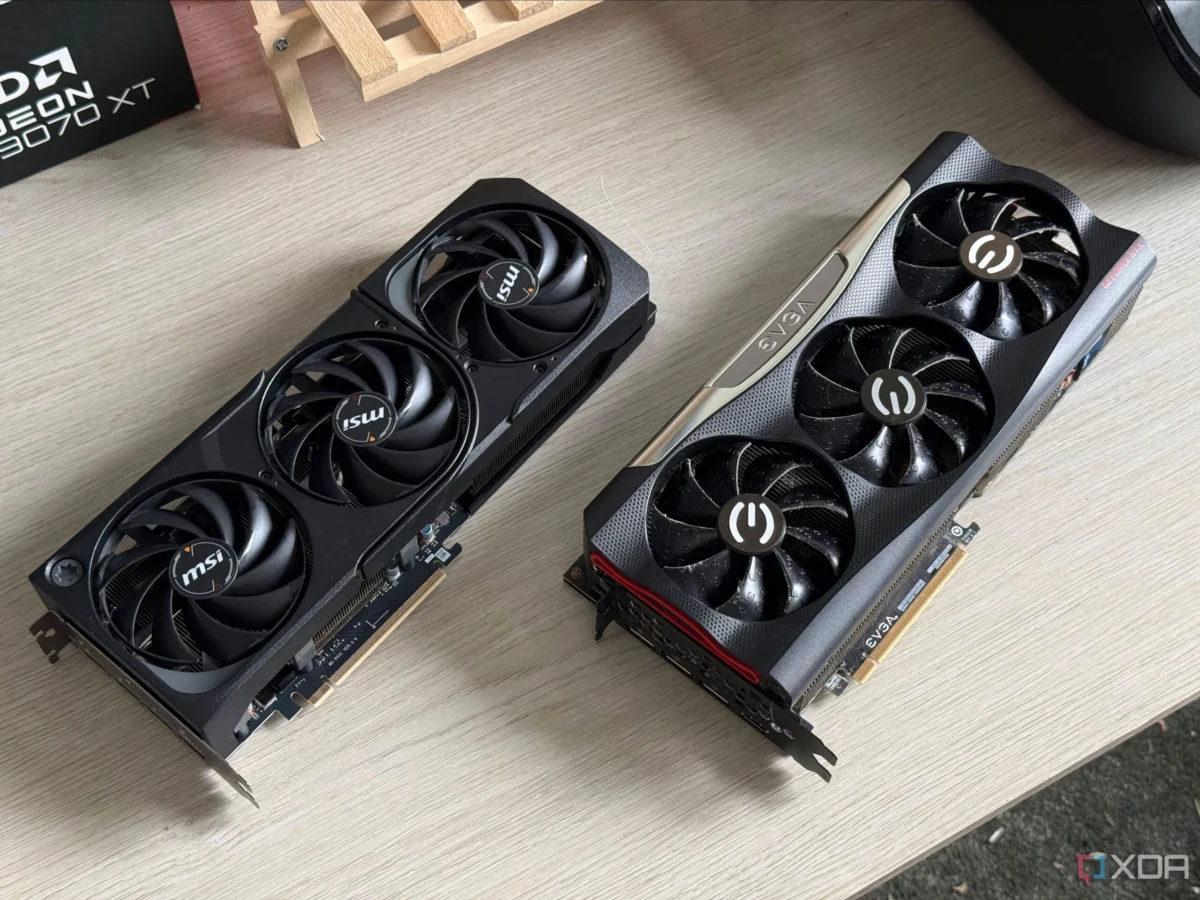
When the Nvidia GeForce RTX 3080 burst onto the scene in September 2020, it arrived amidst a perfect storm of unparalleled hype and catastrophic supply chain constraints. For many, it was the "white whale" of the PC gaming world—a high-performance card that promised to make 4K gaming a standard reality, only to be snatched up by bots and scalpers within milliseconds of going live.
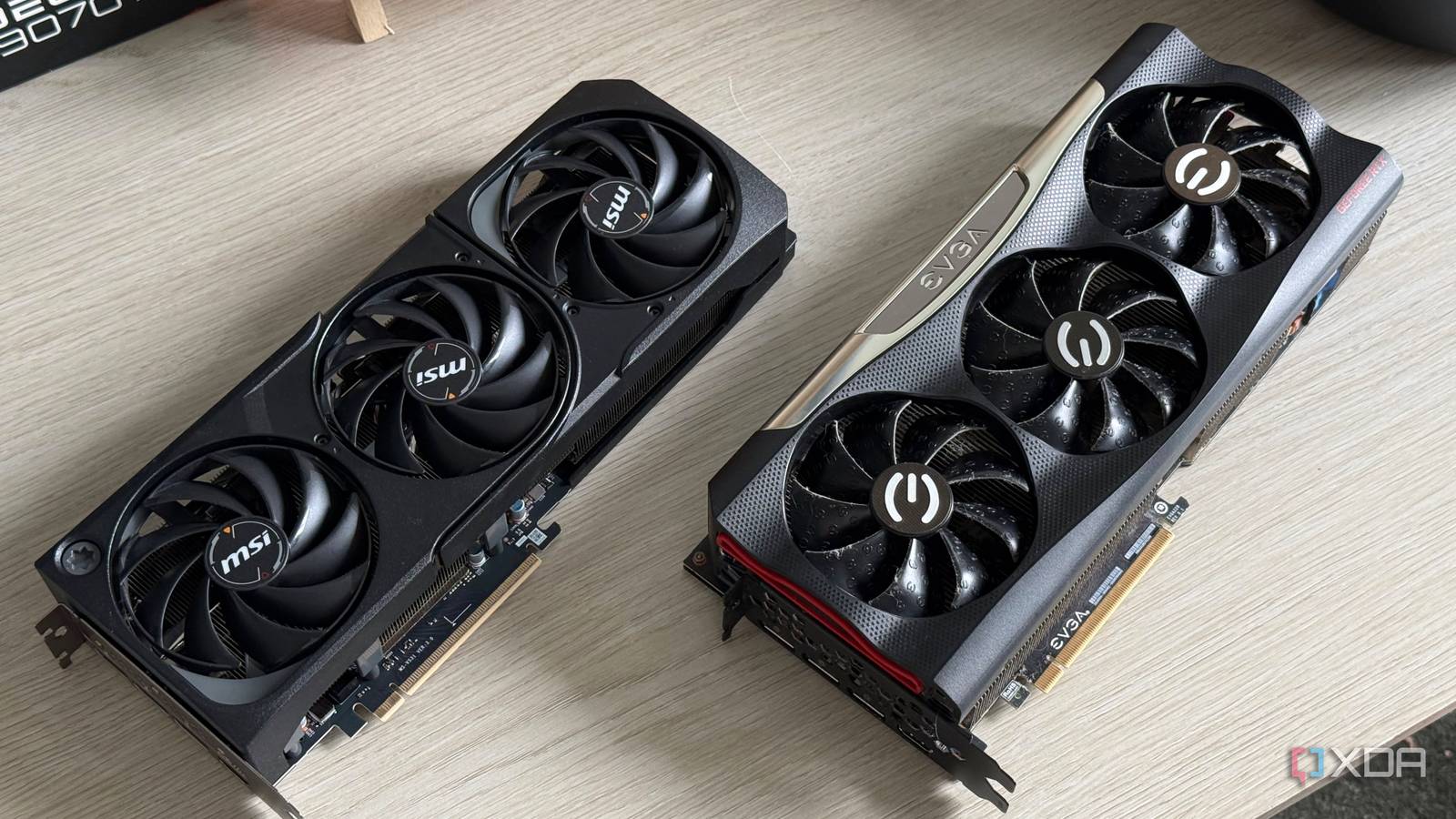
More than five years have passed since that volatile launch. The GPU landscape has shifted dramatically, with newer architectures pushing the boundaries of frame generation, AI upscaling, and raw rasterization. Yet, a curious trend persists: the Ampere architecture remains a staple in gaming rigs across the globe. To determine if this veteran hardware still holds its own against modern flagships like the RTX 5080, I reinstalled my trusty EVGA FTW3 RTX 3080 into my primary test bench. The results provide a fascinating look at the diminishing returns of modern hardware and the longevity of high-end engineering.
A Tale of Two Architectures: The Testing Methodology
To conduct this comparison, I utilized Forza Horizon 6—a title known for its sophisticated engine and effective utilization of modern GPU resources. It serves as an ideal "GPU-bound" benchmark to illustrate exactly how much raw horsepower has been gained over the last two hardware generations.
The test setup was simple: swap the RTX 5080 for the RTX 3080 in a system otherwise unchanged to ensure the GPU remained the sole variable. The results were stark, yet perhaps not in the way many would expect. Across every configuration, the RTX 5080 outperformed the 3080 by a margin of 60% to 70%. In the vacuum of a spec sheet, this is a massive generational leap. However, in the context of real-world gaming, the story becomes significantly more nuanced.

Chronology of a Workhorse: How the 3080 Stood the Test of Time
The RTX 3080’s lifecycle began in a period defined by scarcity, which ironically extended its relevance. Because gamers were forced to hold onto their hardware longer due to exorbitant secondary market prices, the 3080 was often the last major upgrade many users made before the current era of "AI-first" graphics cards.
By 2024, the 3080 had firmly settled into its role as a premier 1440p solution. As we reach mid-2026, we are witnessing the "sunset" phase of its prime. While it lacks the dedicated Tensor core advancements found in the 50-series and falls short on total VRAM compared to modern standards, its core architectural design—built on Samsung’s 8nm process—was remarkably robust. It didn’t just survive; it thrived, providing a baseline of performance that developers continued to target for years.
At 1440p: The Sweet Spot of Longevity
The most compelling data point from my testing involves 1440p performance. At this resolution, the RTX 3080 is not just "playable"—it is genuinely impressive.
In Forza Horizon 6 at the "High" preset, the 3080 managed an average of 96 frames per second (FPS). Crucially, the 1% and 0.1% lows remained at 79 and 64 FPS, respectively. These figures are well above the threshold of "smooth" gaming. When shifting to the "Ultra" preset, the average dipped to 75 FPS, with 0.1% lows of 52 FPS. While there is a noticeable drop, the card avoids the dreaded "stutter-fest" that usually signals the end of a GPU’s life.
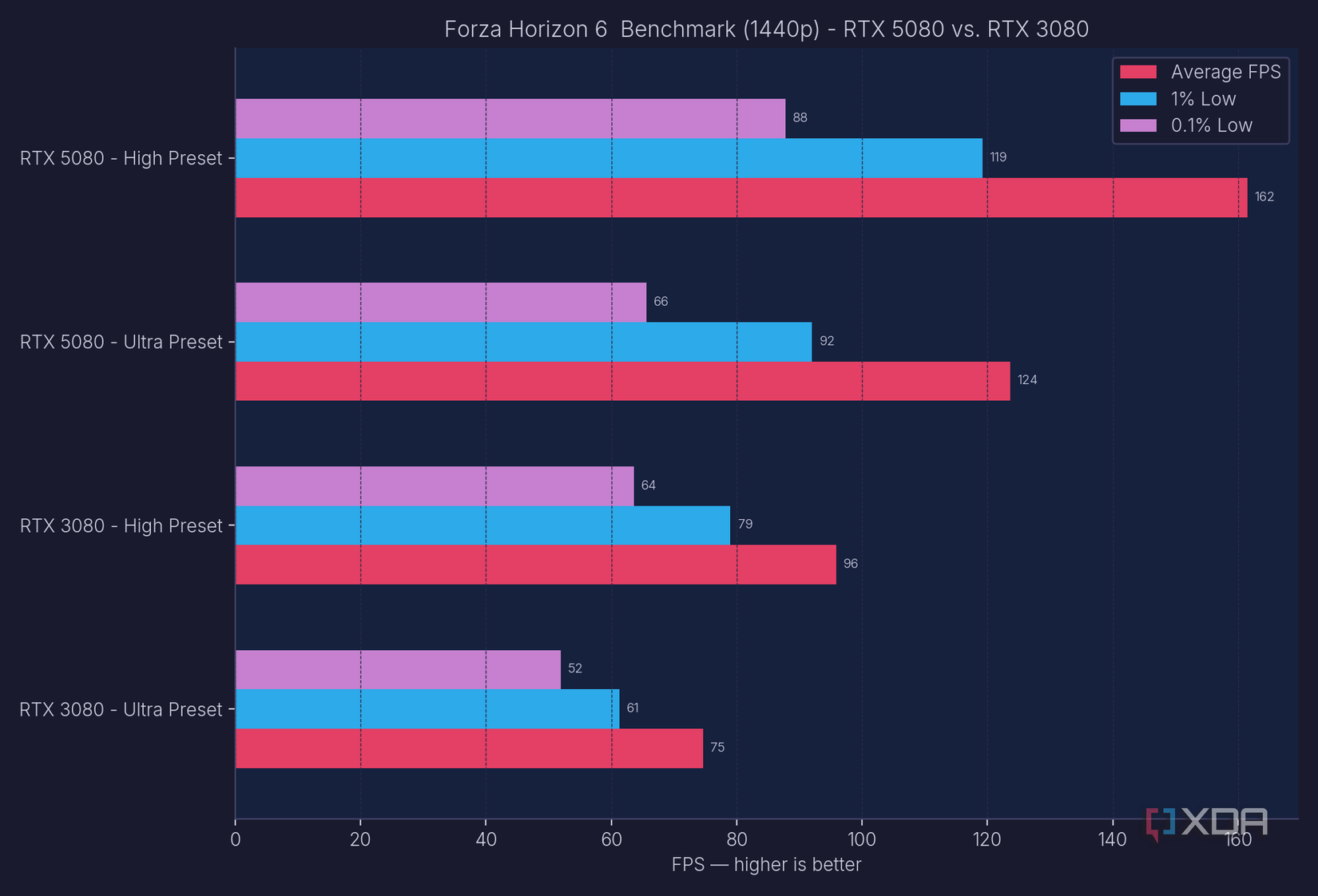
Perhaps the most interesting observation is the frame-time consistency. The 5080, despite its raw power, showed a wider gap between its average and its lowest frames. The 3080, by contrast, maintained 67% of its average framerate at the 0.1% low, compared to the 5080’s 54%. This suggests that while the 5080 can push higher peaks, the 3080 offers a more "predictable" frame delivery in this specific title. For many users, capping the 3080 at 70 FPS results in a locked-in, buttery-smooth experience that makes the need for a $700+ upgrade feel entirely unnecessary.
The 4K Reality Check: Where the 3080 Runs Out of Road
If 1440p is the RTX 3080’s sanctuary, 4K is where it finally begins to show its age. The 10GB VRAM buffer, once thought to be sufficient, is now a limiting factor in modern, unoptimized releases.
At 4K "High" settings, the 3080 managed a 69 FPS average, but the 0.1% lows plummeted to 43 FPS. At "Ultra," the average fell to 57 FPS with 0.1% lows of 42 FPS. For a competitive racer, this is borderline; for a cinematic, slow-paced RPG, it might still pass. However, when compared to the 5080—which consistently doubled the 3080’s performance at 4K—the writing is on the wall.
It is important to note that Forza Horizon 6 is well-optimized. In more demanding, "bloated" titles of 2026 that lack optimization, the 3080’s memory capacity will be pushed to the brink. If you are a 4K enthusiast, the 3080 has officially reached the end of its viability as a primary card.
Official Perspectives and Industry Trends
Nvidia’s stance on hardware cycles has remained consistent: they encourage migration to newer architectures to leverage features like DLSS 4.0 and advanced Ray Reconstruction, which the 30-series cannot support. Industry analysts have pointed out that while the "raw power" of older cards remains, the software ecosystem is moving toward a model where hardware is increasingly assisted by AI.
Developers are now building games with the expectation that hardware will utilize frame generation and AI-upscaling to reach target resolutions. Owners of the 3080 are effectively being "pushed out" of this ecosystem not by a lack of rasterization power, but by the absence of support for these critical modern rendering techniques.
Implications for the Used Market and Future Upgrades
What does this mean for the average consumer in 2026?
- For the 3080 Owner: If you are gaming at 1440p, stay the course. There is very little reason to spend significant capital on a new GPU unless you are desperate for high-refresh-rate 4K or specific Ray Tracing features. The 3080 remains a high-tier performer for the vast majority of gaming scenarios.
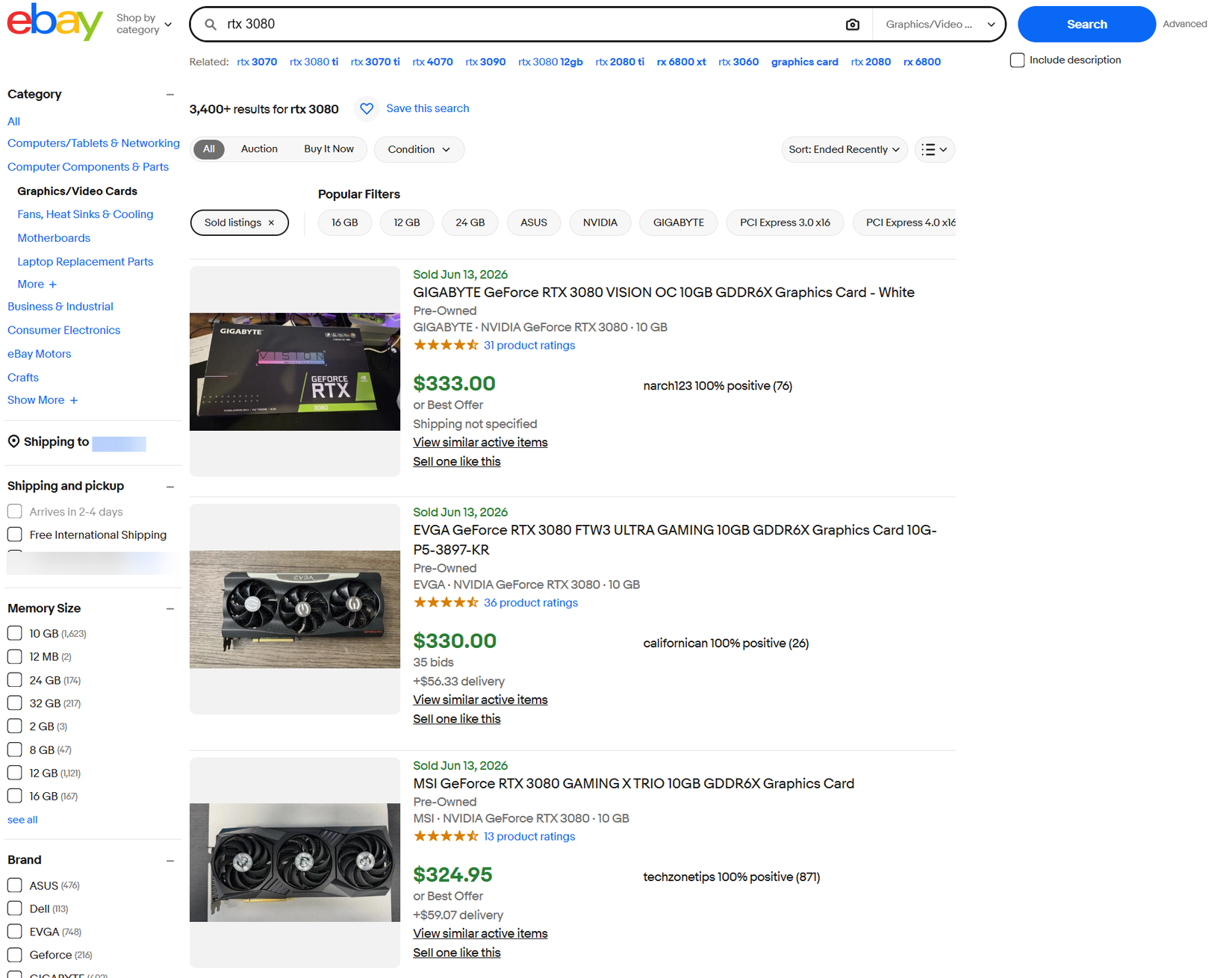
- For the Budget Buyer: Buying a used RTX 3080 for around $300 remains one of the best value propositions in PC gaming. While it won’t give you the "latest and greatest" features, its ability to run modern titles at 1440p with high settings is unmatched by new budget cards in the same price range.
- The Diminishing Returns: The performance gap between the 3080 and 5080 is undeniable, but it highlights a broader truth about the current state of gaming. We have reached a point of diminishing returns where, at lower resolutions, the visual impact of the latest hardware is marginal. Unless you are chasing extreme frame rates or working in professional 3D rendering, the "necessity" of an upgrade is largely manufactured by marketing.
Conclusion: A Graceful Aging Process
The RTX 3080 was a product of a chaotic time, but it proved to be a triumph of silicon. While it is certainly no longer the king of the hill, it has transitioned into the role of the reliable veteran. It serves as a reminder that we don’t always need the latest flagship to enjoy the best of what gaming has to offer. By tweaking settings and managing expectations, the RTX 3080 will likely remain a viable companion for another two years, proving that while hardware eventually reaches the end of the road, its legacy—and its performance—can last much longer than the marketing cycles suggest.

 Rifan Muazin
 Nila Kartika Wati