

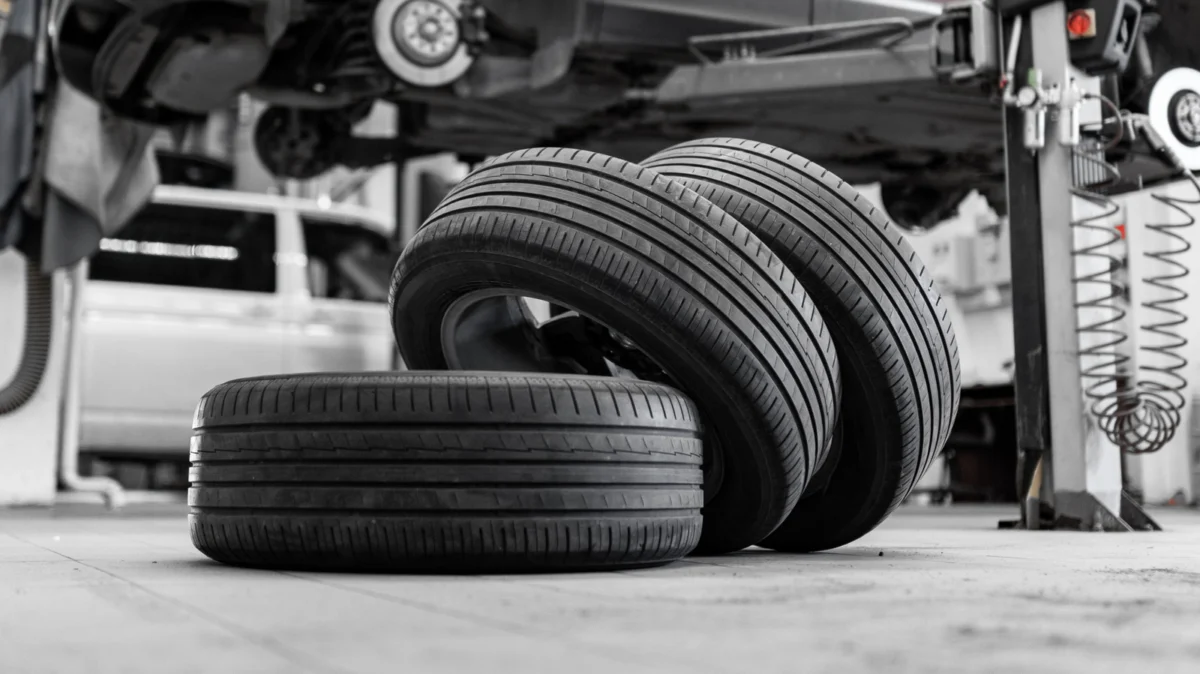
For the average motorist, a tire is a utilitarian object—a black, circular component that is only noticed when it requires inflation, replacement, or is punctured by a rogue nail. Yet, behind the familiar silhouette of a tire lies a sophisticated intersection of chemistry, physics, and mechanical engineering. For decades, the industry has relied on empirical data to understand tire performance, but the fundamental "why" behind the immense structural integrity of rubber remained, in many ways, an open question.
A breakthrough study published in the Proceedings of the National Academy of Sciences has finally provided a definitive explanation for what makes tire rubber so resilient, shedding light on the molecular architecture that allows these components to endure the relentless friction, heat, and physical stress of modern travel.
The Molecular Mystery: Understanding Poisson’s Ratio
At the heart of the new research is a property known as Poisson’s Ratio. In the physical sciences, Poisson’s Ratio describes how a material deforms when it is subjected to force. Typically, when an object is stretched along its longitudinal axis (the X-axis), it naturally thins out along its lateral axis (the Y-axis). This is the behavior observed in a standard rubber band, which becomes narrower as it is pulled.
If tire rubber followed this standard mechanical behavior, it would be catastrophically prone to tearing and structural failure under the heavy loads of a vehicle. Researchers have discovered that the inclusion of carbon black—the powdered carbon byproduct that gives tires their iconic black hue—fundamentally alters this ratio at a microscopic level.
When carbon black is introduced to the rubber compound, its microparticles do not simply sit in suspension; they bond with the rubber molecules to create complex, interlocking aggregates. These aggregates form a reinforced structural network throughout the material. This internal "scaffolding" effectively prevents the rubber from thinning when stretched. By forcing the material to resist its natural tendency to deform, the carbon black creates a state of structural hardening. This modification of Poisson’s Ratio is the secret ingredient that enables a tire to remain rigid under extreme pressure while still maintaining the elasticity required for road contact.
A Chronology of Tire Evolution
The journey toward the modern, ultra-durable tire has been a multi-century endeavor characterized by incremental but vital improvements in material science.
- The Pre-Industrial Era: Early tires were rudimentary, often consisting of iron hoops attached to wooden wheels. These were effective for wagons but offered no shock absorption and were prone to shattering.
- 1839 – The Vulcanization Breakthrough: Charles Goodyear’s discovery of vulcanization—heating natural rubber with sulfur—was the first step in stabilizing rubber. It prevented the material from becoming sticky in the heat or brittle in the cold.
- The Early 20th Century: The automotive boom necessitated better traction and longevity. This period saw the integration of synthetic materials to supplement natural rubber, which was often scarce.
- The Carbon Black Revolution: It was discovered that carbon black significantly improved the abrasion resistance of rubber. By the mid-20th century, it became the industry standard additive, essentially turning a soft, pliable material into the high-performance composite we recognize today.
- 2026 – The Molecular Understanding: The recent publication in the Proceedings of the National Academy of Sciences represents the modern frontier. We have moved beyond simply knowing that carbon black "works" to understanding the precise molecular physics of how it prevents deformation.
Supporting Data: The Vital Role of Carbon Black
The importance of carbon black cannot be overstated. Without this additive, the performance of a vehicle would be severely compromised, and the economic burden on drivers would be immense.
Comparative studies have demonstrated that a tire manufactured without carbon black would likely succumb to wear and tear in as little as 5,000 miles. By contrast, modern radial tires reinforced with carbon black regularly achieve life spans of 50,000 to 80,000 miles. The additive performs three critical roles beyond its structural reinforcement:
- Thermal Management: Carbon black acts as a heat conductor, dissipating the intense frictional heat generated at the tread-road interface. By drawing heat away from the tire’s belts, it prevents the rubber from softening and degrading during high-speed driving.
- UV Protection: Exposure to sunlight triggers photochemical degradation in many polymers. Carbon black acts as an effective UV stabilizer, shielding the rubber from the damaging rays that cause sidewall cracking and material fatigue.
- Electrical Conductivity: Safety engineers emphasize that tires must be conductive to prevent the buildup of static electricity on a vehicle’s body. Carbon black provides the necessary path for this charge to dissipate into the road, preventing the unpleasant—and occasionally dangerous—shocks that can occur upon exiting a vehicle.
Industry Perspectives and Engineering Implications
The automotive industry has long viewed tire construction as a proprietary "black box" of trade secrets. However, the academic validation of how carbon black creates structural networks has profound implications for future tire design.
"Understanding the physics of Poisson’s Ratio in composite elastomers allows us to move from trial-and-error testing to predictive engineering," notes an independent materials consultant familiar with the study. "We can now simulate how different particle geometries might further improve wear resistance, potentially leading to tires that are not only longer-lasting but also more environmentally friendly, requiring less frequent manufacturing cycles."
While major tire manufacturers have not released official statements regarding their proprietary mixing formulas, the industry consensus is clear: the integration of nano-scale reinforcement is the primary focus of R&D departments worldwide. By mastering the molecular bond between rubber and carbon, engineers are looking to reduce the "rolling resistance" of tires, which directly impacts the fuel economy of gas-powered vehicles and the range of electric vehicles (EVs).
Beyond the Compound: The Assembly Process
While the chemical composition provided by carbon black is foundational, the durability of a tire is also a triumph of physical assembly. Modern tires are intricate, layered composite structures that involve much more than just a rubber-carbon mixture.
The construction process typically follows a highly regimented sequence:
- Bead Formation: The process begins with the tire beads—rubber-encased steel cables that ensure the tire remains firmly seated on the wheel rim under high-torque conditions.
- Innerliner and Sidewalls: An airtight rubber innerliner is applied to maintain pressure, followed by the sidewalls, which provide lateral stability.
- Plies and Belts: To prevent the tire from ballooning or losing its shape at speed, layers of polyester, cotton cord, and steel cables are wrapped around the core. These act as the "bones" of the tire.
- Curing: The final "green" tire (an unvulcanized assembly) is placed in a mold and subjected to high heat and steam pressure. This process, known as curing, not only vulcanizes the rubber but also imprints the final tread pattern, which is essential for water displacement and traction.
Future Outlook: The Path Toward Sustainability
The scientific confirmation of how carbon black strengthens rubber is timely, as the tire industry faces pressure to become more sustainable. Researchers are now exploring ways to produce carbon black from renewable sources or recycled tires, rather than fossil-fuel-derived oils.
As we look toward 2026 and beyond, the goal is to replicate the structural benefits of traditional carbon black while minimizing the carbon footprint of production. The recent PNAS study serves as a critical roadmap for these efforts. By understanding exactly how these particles chain together to harden the material, scientists can potentially engineer "green" alternatives that mimic this behavior, ensuring that future tires are as durable as they are sustainable.
In summary, the next time you inspect your tires, remember that you are looking at a masterclass in material science. The stability of your vehicle at highway speeds is the result of a microscopic, invisible network of carbon particles working in concert to defy the natural tendency of rubber to yield. It is a testament to human ingenuity that we have finally decoded the secret of the road, paving the way for the next generation of tire technology.











No comments yet. Be the first to join the conversation!