


In the neon-soaked corridors of Tokyo’s Kabukicho district, a transformation is underway. While the world often fixates on Japan’s storied, sometimes controversial sex industry, a far more pervasive, profitable, and complex phenomenon has quietly taken center stage: the "attention economy."
It is a sector that doesn’t sell physical intimacy, but rather the curated illusion of it. From "concept cafes" where staff dress as succubi or police officers to host clubs where men are paid handsomely to provide validation, this industry is built on a simple, high-demand commodity: conversation. It is a multibillion-yen engine fueled by the modern malaise of isolation, turning the basic human need for connection into a transactional, gamified experience.
The Architecture of Pseudo-Romance
At its core, the attention economy is a masterclass in boundary-setting. Unlike the traditional sex trade, which is legally restricted under Japan’s fūzoku (Entertainment) laws, these businesses operate in a gray area of hospitality.
The model is standardized across the industry: an hourly cover charge, the purchase of overpriced drinks, and the "shimei" (designation) fee, which allows a customer to request a specific staff member to remain at their table. For this, the customer receives undivided attention, feigned romantic interest, and the social lubrication of a night out.
This is not merely about service; it is about "Oshikatsu"—the practice of supporting one’s "oshi," or favorite entertainer. Whether it is an underground idol performing in a basement club or a host in a multi-story tower, the dynamic is the same: the fan provides financial support to elevate their favorite’s status, and in return, the fan receives emotional validation. It is a feedback loop that has transformed companionship into a trillion-yen industry.

A Chronology of Companionship
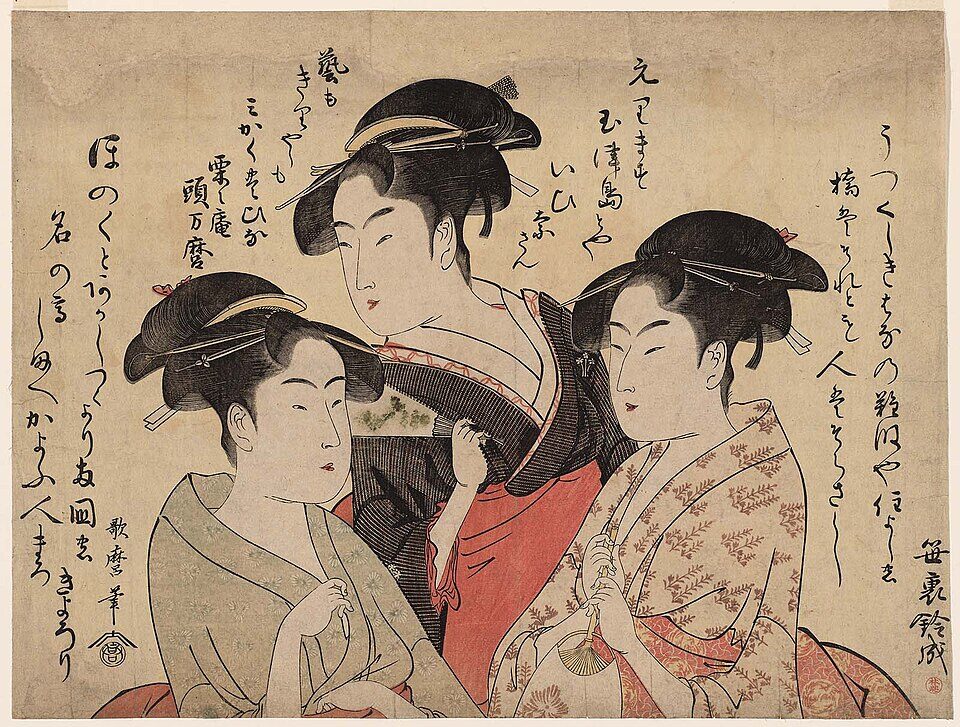
To understand the current boom, one must look back to the Edo period (1603–1867). When the government strictly confined the sex trade to the walled Yoshiwara district, a secondary economy flourished outside those walls. Odoriko (dancing girls) and teahouse "poster girls" became the first celebrities of the urban landscape. Ukiyo-e masters like Utamaro famously immortalized these women, cementing their status as cultural icons.
The Tatsumi Geisha of Fukagawa refined this further, emphasizing art, conversation, and wit over physical services. As the Meiji and Taishō eras brought coffee houses to Japan, the jokyū (waitress) emerged as the spiritual successor to the teahouse girl, blending service with casual interaction.
By the 1980s, the "kyabakura" (hostess club) had solidified its place in the corporate landscape, becoming the primary site for business negotiation and male social relief. Host clubs, meanwhile, emerged from the dance scenes of the 1960s and 70s, eventually evolving into the high-pressure, high-reward industry seen today. The common thread across three centuries is the art of "selling the dream"—a non-sexual, yet deeply personal, engagement.
Supporting Data: The Scale of the Market
While official statistics are notoriously difficult to pin down due to the opaque nature of the mizu shōbai (nightlife-hospitality) sector, industry estimates suggest a massive footprint. It is widely cited that nearly one million people are employed in Japan’s nightlife industry.
Host clubs alone are estimated to generate upwards of ¥170 billion (approx. $1 billion USD) annually, with over 1,000 venues operating nationwide. These figures, however, do not account for the explosion of concept cafes (concafes), rental girlfriend agencies, and the massive online "rental family" and "rental ossan" (middle-aged man) markets.

Sociological data adds a layer of urgency to these economic figures. A 2024 report by the Japanese Cabinet Office revealed that nearly 40% of the population reports feeling lonely. In a country that has appointed a "Minister of Loneliness" to address the crisis, it is unsurprising that the private sector has stepped in to fill the void.
The Regulatory Tightrope
The Japanese government maintains a rigid, if somewhat antiquated, distinction between businesses. Under the Entertainment Law, sekkyaku (customer service) businesses, such as girls’ bars, require staff to remain behind a counter, physically separated from the client. Settai (entertainment) businesses, such as traditional host clubs, allow for closer physical proximity, which in turn triggers stricter curfews—usually a mandatory midnight or 1:00 AM closing time.
This legal distinction is not merely academic; it is a point of constant friction. The case of "SOD Land," a bar staffed by adult film actresses, provides a cautionary tale. When authorities determined the venue was providing settai (sitting with guests) under the guise of sekkyaku (standing behind a bar), the CEO was arrested, and the club was forced to undergo an expensive physical renovation to comply with the law.
Despite these regulations, the industry remains resilient. When the government cracks down on one niche, such as the 1980s "no-panties" restaurants, the market simply rebrands.
Implications: The High Cost of Validation
The most pressing concern regarding the attention economy is its predatory potential. The business model is engineered to foster "fake" relationships that feel dangerously real. Staff are often encouraged to maintain constant contact with clients via messaging apps, blurring the lines between professional service and romantic intimacy.
For many, this is a harmless diversion. However, for a subset of the population, it becomes a debt-fueled trap. Recent years have seen a surge in reports of young women turning to sex work to pay off "host club debt"—a phenomenon that triggered a high-level legislative crackdown in 2023.
The psychological toll is equally significant. Research by experts like Yamada Masahiro suggests that these businesses act as a "diversification of love" for the lonely or the unhappily married. With approximately one in five Japanese marriages described as a "masquerade marriage"—a union maintained for societal appearances rather than genuine affection—the host club serves as a therapeutic, albeit expensive, outlet.
However, the danger isn’t one-sided. As the tragic murder of an 18-year-old girl’s bar worker in 2024 demonstrated, the intimacy fostered by these businesses can invite obsessive, dangerous behavior from clients. The blurring of professional boundaries leaves workers vulnerable to stalking and violence, often with limited legal recourse.
Conclusion: A Yearning That Defies Logic
Why do consumers continue to pour vast sums of money into these services? The answer lies in the fundamental shift of modern society. In an age of digital isolation and the exhaustion of dating apps, the attention economy offers something rare: validation on demand.
It provides a safe space—at least in theory—where individuals can feel seen, heard, and valued without the complexities of a traditional romantic partnership. Whether this represents a sustainable social evolution or an unsustainable reliance on commercialized intimacy remains to be seen. What is certain, however, is that as long as the Japanese public continues to grapple with the profound weight of loneliness, the attention economy will continue to thrive, selling a dream of connection that, for many, is the only one they can afford.











