

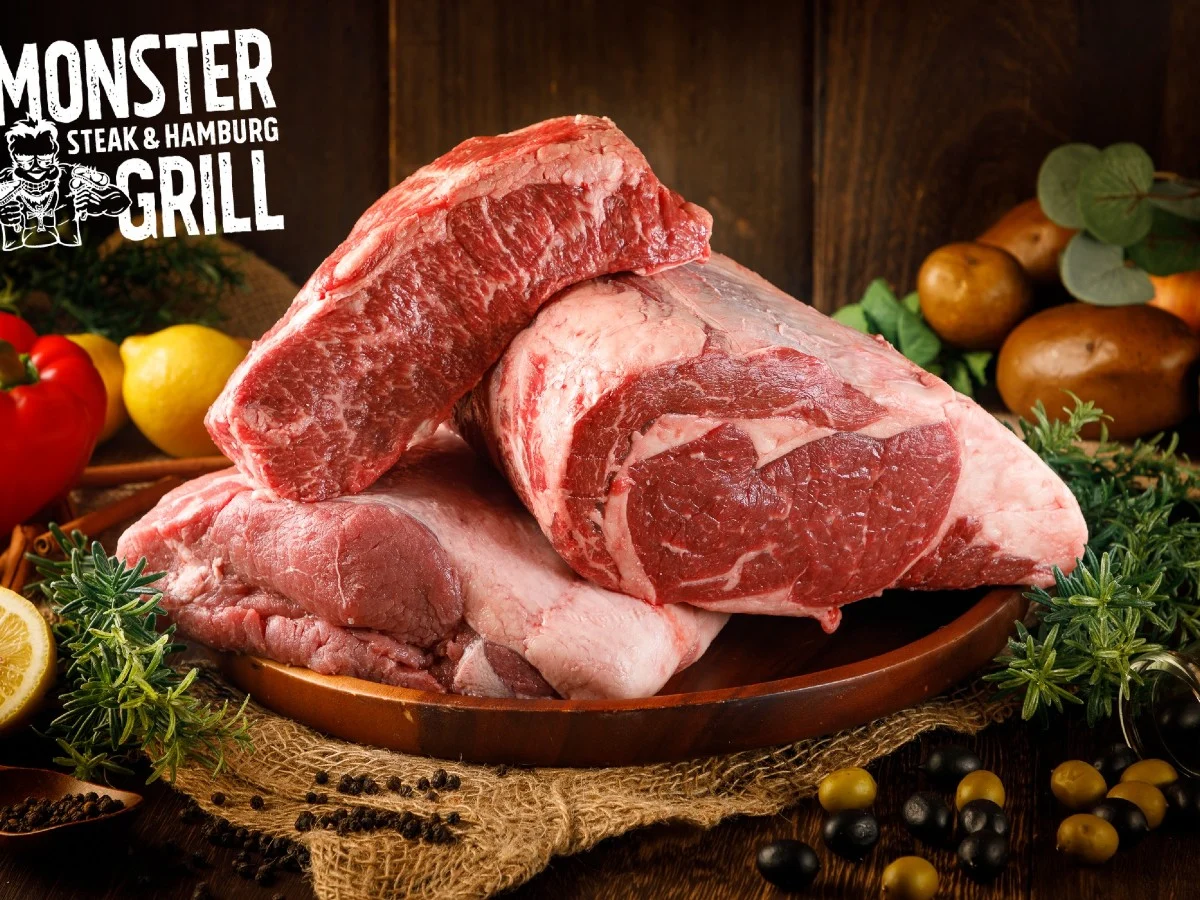
In the competitive landscape of Japanese gastronomy, where meticulous craftsmanship and portion control are often held as the gold standard, a defiant subculture has emerged. It is a world of scale, stamina, and sizzling iron plates. Standing at the forefront of this movement is Monster Grill, a culinary institution that has effectively rewritten the rules of engagement for Tokyo’s most ambitious foodies. By introducing a trio of gargantuan steak challenges, the restaurant has transformed the simple act of dining into a test of physical endurance.
Main Facts: The Anatomy of the Monster Challenge
Monster Grill, renowned for its no-nonsense approach to high-quality beef, has officially unveiled a new gauntlet for those brave enough to test the limits of their appetite. The establishment is currently promoting three distinct "Gluttony" challenges, each designed to push the boundaries of what a single human can consume in one sitting.
The lineup features three centerpiece options:
- The 1.3kg Monster Steak: A monolithic slab of beef that serves as the flagship for the brand’s excess.
- The 1.3kg Rib Roast Steak: A challenge focused on the marbled richness of rib-eye, demanding both palate fatigue management and raw caloric intake.
- The 1.3kg Tomahawk Steak: A 1kg behemoth (often plated with sides pushing it toward the larger threshold) that offers a primal dining experience.
Unlike many competitive eating challenges in Japan that utilize strict "time-attack" rules—often forcing patrons to scarf down food in under 20 minutes—Monster Grill has adopted a more humane, albeit no less daunting, approach. There is no time limit on these challenges. This choice fundamentally alters the dynamic of the meal; it shifts the pressure from speed to sheer physical capacity.
To ensure the experience remains palatable, the restaurant provides a sophisticated condiment program. Diners can select two from five signature sauces: the classic OZ sauce, a refreshing Japanese-style soy reduction, a pungent garlic blend, a rich demi-glace, and a zesty green onion salt. These pairings are essential, as they provide the flavor diversity necessary to stave off the dreaded "meat wall"—the point at which the palate becomes overwhelmed by the singular taste of fat and protein.
A Chronology of Carnage: How the "Gluttony" Program Evolved
The emergence of these challenges did not happen in a vacuum. To understand the current climate at Monster Grill, one must look at the evolution of the "Megadong" culture in Japan. Over the last decade, Japan has seen a surge in "De-mori" (huge portion) dining, fueled by social media influencers and the growth of video content focused on competitive eating.
Initially, Monster Grill focused on providing high-quality, reasonably priced steaks to the busy salarymen of Tokyo. However, as customer requests for larger, "all-in" portions grew, the management team began experimenting with scaled-up versions of their standard menu items.
- Phase 1 (The Pilot Phase): Early testing involved 500g and 800g steaks, which were popular but lacked the "legendary" status required for a true social media spectacle.
- Phase 2 (Standardization): The kitchen team standardized the cooking process for thicker cuts to ensure that a 1.3kg steak remained medium-rare throughout, preventing the center from being raw or the edges from being overcooked.
- Phase 3 (The Official Launch): The current trio of challenges was formalized this year, supported by a marketing push that emphasizes community. By explicitly inviting groups to tackle these platters, Monster Grill pivoted from being a purely competitive venue to a social one, turning a "gluttony" challenge into a shared bonding experience.
Supporting Data: The Science of the Steak
When dealing with a 1.3kg portion of beef, the physiological impact is significant. A standard steak serving is typically between 150g and 250g. By consuming 1.3kg, a diner is ingesting roughly five to seven times the recommended portion of protein.
From a nutritional standpoint, these meals are highly dense. Even without the accompanying rice, a 1.3kg rib roast contains an estimated 3,000 to 4,000 calories depending on the fat content. This represents nearly double the daily caloric requirement for an average adult male.
The restaurant’s strategy of offering varied sauces serves a biological purpose known as "Sensory-Specific Satiety." This is the phenomenon where the pleasure derived from a specific food diminishes as one consumes more of it. By rotating between the salt-heavy green onion sauce and the sweetness of the demi-glace, a diner can "reset" their palate, allowing them to bypass the natural satiety signals that would otherwise stop them after the first 500g.
Official Responses and Hospitality Philosophy
In an interview regarding the new initiative, a spokesperson for Monster Grill emphasized that the "Gluttony" program is not intended to be exclusionary. "While we call it a challenge, we treat it as a celebration of beef," the representative noted. "Our staff is trained to support the diner. Whether you are a solo competitive eater looking to set a personal best or a group of friends sharing a massive feast, our goal is the same: to provide the highest quality meat experience in a welcoming environment."
The restaurant’s decision to allow groups to share these platters is a strategic masterstroke in hospitality. It mitigates the risk of food waste—a major concern in modern Japanese society—and aligns the brand with a more festive, communal dining culture. By explicitly welcoming solo eaters, they also cater to the "lonely gourmet" demographic, a significant portion of the Tokyo dining market that values the solitude of an intense, focused meal.
Implications: The Future of "Mega-Dining"
The rise of the Monster Grill challenges signals a shift in the Japanese dining market. As the country grapples with an aging population and a decrease in total caloric intake per capita, the "extreme dining" sector remains a resilient niche. It serves as an entertainment product, providing value beyond mere sustenance.
However, there are implications for the restaurant industry at large. Managing inventory for 1.3kg cuts requires a robust supply chain. Sourcing consistently high-quality beef that can withstand being cut into such massive portions is no small feat. Monster Grill’s ability to maintain these challenges across multiple locations—from the high-density streets of Gotanda and Ebisu to the suburban sprawl of Saitama—suggests a highly efficient logistics operation.
For the consumer, the implications are clear: the bar has been raised. Dining is no longer just about the quality of the chef or the atmosphere of the room; it is about the "experience value." By framing a meal as a challenge, Monster Grill ensures that their patrons leave not just full, but with a story to tell.
Where to Face the Monster
For those looking to test their mettle, Monster Grill has expanded the availability of these challenges across several key locations. Whether you find yourself in the heart of the city or the outer prefectures, the "Gluttony" program is accessible.
Tokyo Metropolitan Area:
- Gotanda Store: 1-25-2 Nishi-Gotanda, Shinagawa-ku. A staple for the local business district.
- Ebisu Branch: B1F Daikoku Building, 1-8-14 Ebisu, Shibuya-ku. Located in one of Tokyo’s most vibrant food scenes.
- Ueno Branch: Kiho Building 1F, 6-2-13 Ueno, Taito-ku. Serving the busy transit hub of Ueno.
- AEON MALL Hinode: 3-1-1, Hinode, Nishitama-gun. Catering to the suburban family and group demographic.
Saitama Prefecture:
- Fujimino Store: 3-1-3 Tsurugamai, Fujimino-shi.
- Soka Store: 1-6-10 Chuo, Soka City.
As the popularity of these challenges continues to grow, it is recommended that prospective diners visit the official Monster Grill website to confirm availability and, in the case of larger groups, consider making a reservation. In a city of millions of meals, Monster Grill has successfully carved out a space where the meal is not just eaten—it is conquered. Whether you finish the 1.3kg beast or simply enjoy the attempt, the experience of standing face-to-face with a mountain of prime beef is, quite literally, a heavy undertaking.












No comments yet. Be the first to join the conversation!