

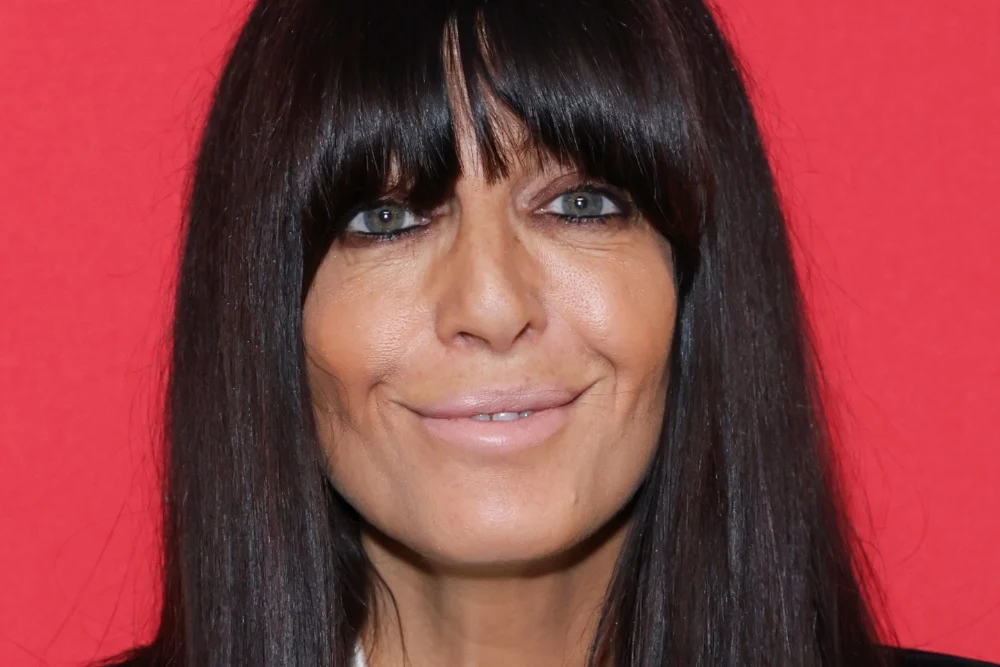
In a move that has sparked widespread discussion across the British broadcasting landscape, BBC television personality Claudia Winkleman has officially announced that she will not be returning to host a second season of her eponymous talk show, The Claudia Winkleman Show. The program, which debuted with much fanfare earlier this year, has been canceled after a solitary seven-episode run. While rumors had circulated for weeks regarding the show’s future, it was ultimately Winkleman’s personal choice to step away from the project that brought the experiment to a close.
The decision, while surprising to some industry observers who had speculated that a second season was in development, highlights the immense pressure inherent in the UK’s competitive Friday night television slot. Winkleman, a titan of British entertainment, has cited personal comfort and the desire to focus on her existing, highly successful commitments as the primary drivers behind her departure.
The Genesis and Goal of the Project
Launched in February of this year, The Claudia Winkleman Show was envisioned as a significant addition to the BBC’s entertainment slate. Positioned to occupy the lucrative Friday night slot typically commanded by the veteran host Graham Norton, the show was designed to serve as a bridge during Norton’s seasonal hiatus.
The production was bolstered by heavy industry pedigree; notably, it was co-produced by So Television, the very same production house responsible for the enduring success of The Graham Norton Show. This partnership was intended to mirror the successful formula of celebrity-laden, sofa-style chat segments that have become a staple of British weekend television. By pairing Winkleman—already a beloved face of the BBC—with a proven production format, the network clearly aimed to maintain its dominance in the late-evening ratings race.
A Chronology of the Series: From High Expectations to Quiet Conclusion
The journey of the show was brief but eventful. It opened with a high-profile premiere featuring a lineup that underscored the BBC’s confidence in the project: Jeff Goldblum, Jennifer Saunders, Vanessa Williams, and Tom Allen. For a moment, it appeared that the show might successfully capture the specific, high-energy alchemy required for a hit talk show.
However, as the seven-episode series progressed, the momentum began to shift. While the debut was star-studded, subsequent episodes struggled to maintain that same level of "star-wattage." By the penultimate episode, which featured the surreal inclusion of the mascot Mr. Blobby, and a final episode that served as a compilation of highlights, it became evident that the show was struggling to find its definitive voice.
Throughout the spring, ratings remained inconsistent. Despite the weight of the BBC’s promotional machine, the show struggled to reach the consistent 1.1 million-viewer threshold that has become the benchmark for its predecessor in the same time slot. Critics were lukewarm, noting that while Winkleman’s inherent charm remained intact, the format of a traditional chat show felt, at times, restrictive for her specific brand of spontaneity.
The Host’s Perspective: "Too Nervous to Enjoy It"
Perhaps the most telling aspect of the show’s cancellation is the candor with which Winkleman addressed her departure. In a formal statement, the host expressed deep appreciation for the network and her colleagues, while simultaneously offering a rare glimpse into the internal experience of high-stakes broadcasting.
"I’m incredibly grateful to the BBC for giving me the opportunity, to the guests who agreed to come and chat to me, and the production team who were simply excellent," Winkleman stated. She went on to explain, "Sometimes you have to try something to see how it fits, and I realised I was just too nervous to enjoy it. Maybe one day I will give it another try, but for now, I already have the best jobs in the world and absolutely love the shows I’m doing."
This admission serves as a reminder that even the most seasoned television professionals are not immune to the pressures of a new, high-visibility format. Winkleman’s decision to prioritize her mental well-being and her satisfaction in her work—rather than forcing a project that did not feel like a natural fit—has been met with widespread understanding from both industry peers and the public.
Official Responses and Network Strategy
The BBC, for its part, has handled the cancellation with a clear emphasis on its continued, long-term relationship with Winkleman. Ed Havard, the BBC’s Director of Entertainment, released a statement that served to both praise the show and pivot immediately toward the future.
"Claudia’s warmth and quick wit made The Claudia Winkleman Show an absolute joy," Havard noted. "Whilst we loved the show, we fully respect her decision and would like to thank Claudia and the brilliant team at So Television for bringing the series to screen on the BBC."
The network is clearly eager to move past the disappointment of the show’s performance, pivoting the narrative toward the projects where Winkleman’s influence is undeniably potent. Havard added, "As the host of the country’s most-watched show, Claudia will be back on the BBC very soon when The Celebrity Traitors returns later this year, and we can’t wait to see what she has in store for the new band of celebs."
The Implications: Why the "Talk Show" Format Remains a Challenge
The failure of The Claudia Winkleman Show to gain long-term traction offers a broader lesson about the current state of traditional television. The "chat show" genre is increasingly difficult to execute in an era where celebrity interactions are instantaneous, social media-driven, and often highly curated.
When a show is measured against the towering legacy of Graham Norton, the margin for error is razor-thin. Norton’s show has mastered the art of the "group chat," where celebrities interact with one another rather than just the host. Winkleman’s show, while similar in structure, struggled to replicate that specific social dynamic.
Furthermore, the industry is seeing a shift in how audiences consume "talk." Short-form clips of interviews often perform better on platforms like TikTok or YouTube than the hour-long, broadcasted interview format. For a personality as kinetic and fast-paced as Winkleman, a static sofa set may have simply been the wrong medium to showcase her unique talents.
Looking Ahead: Winkleman’s Enduring Dominance
Despite the conclusion of this specific chapter, it is impossible to view this as anything other than a minor blip in a stellar career. Winkleman remains one of the most recognizable and bankable faces in British media. Her work on Strictly Come Dancing and the cultural phenomenon that is The Traitors U.K. ensures that her influence on the BBC’s ratings remains absolute.
The decision to walk away from a project that didn’t feel "right" is, in many ways, a testament to her professional maturity. By choosing to step away, she preserves the integrity of her brand and clears her schedule for the projects where she is most effective.
As the industry reflects on the brief tenure of The Claudia Winkleman Show, the conversation has already shifted toward the future. With The Celebrity Traitors on the horizon and her ongoing duties on Strictly, Winkleman is set to remain a central figure in the BBC’s portfolio. The experiment may not have yielded the result the network originally hoped for, but it has served to highlight the importance of brand alignment, the high stakes of prime-time scheduling, and, perhaps most importantly, the power of a host knowing exactly when to step off the stage.
In the final analysis, the cancellation is not a failure of talent, but a recognition of the reality that not every format is a perfect match for every performer. As Winkleman herself indicated, the door to future projects remains open, but for now, the audience is more than content to see her doing what she does best: leading the biggest shows on television with her trademark wit and incomparable style.










