Dwi Wanna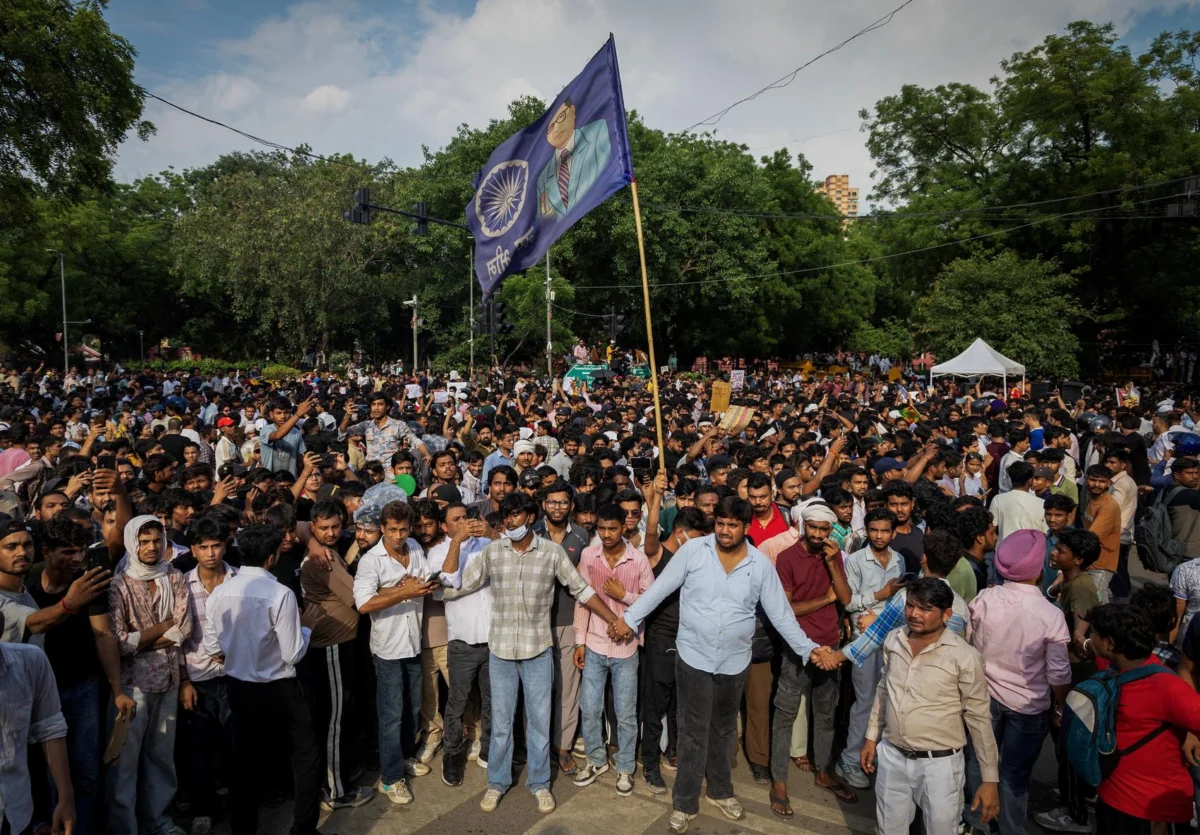
NEW DELHI – The streets of the Indian capital have become a theater of intense political confrontation as the "Cockroach Janta Party" (CJP)—a youth-led movement that began as an online satirical critique—has transformed into the most significant grassroots challenge to Prime Minister Narendra Modi’s administration since his ascent to power in 2014.
What began as a localized outcry over systemic failures in the national examination process has metastasized into a nationwide fervor. On Wednesday night, the friction between the state and the youth reached a boiling point at the historic Jantar Mantar protest site, where police deployed tear gas and lathi-charges (cane charges) to disperse a swelling crowd of over 10,000 demonstrators.
The Catalyst: A Crisis of Credibility
The unrest is rooted in a massive exam paper leak that crippled the prospects of some two million students in May. For India’s youth, who are already grappling with chronic unemployment and a stagnant job market, the leak was not merely an administrative error; it was a breach of the social contract.
The protesters, operating under the banner of the "Cockroach Janta Party" (CJP), argue that the recurrence of such leaks points to a rot within the Ministry of Education. Their primary demand is stark and non-negotiable: the immediate resignation of Education Minister Dharmendra Pradhan.
"It has been 25 days so far," said CJP founder Abhijeet Dipke, addressing the sea of protesters late Wednesday night. "Even if it takes 25 months, that is acceptable, but we will not move from here until the accountability we demand is met."
A Chronology of Escalation
The volatility of the past week has forced the Indian government into a defensive posture, marking a sharp departure from the political dominance the Bharatiya Janata Party (BJP) enjoyed for a decade.
- Mid-May: Initial reports of exam paper leaks emerge, triggering isolated student protests.
- Late June: The CJP is formed as an online movement, initially dismissed by political pundits as a transient social media trend.
- Monday (July): Tens of thousands of protesters defy a government ban to march on Parliament. Security forces, including paramilitary units, respond with heavy-handed tactics, including tear gas and baton charges.
- Wednesday: Protest numbers swell to over 10,000. As the crowd spills into the arterial roads of central New Delhi, clashes break out. Protesters, pushed to the brink, throw stones and plastic bottles at police lines. Several officers are hospitalized, according to Delhi Police statements issued via ANI.
- Thursday: The Delhi Metro Rail Corp. announces the closure of 16 metro stations in and around Central Delhi—the second such security-mandated shutdown in a single week—effectively paralyzing the city’s heartbeat to contain the movement.
Supporting Data and the "Cockroach" Phenomenon
The rise of the CJP is a sociopolitical anomaly. Unlike traditional student unions affiliated with established political parties, the CJP originated from digital satire. The name itself—a defiant reclaiming of the term often used by elites to describe persistent, "annoying" protesters—has become a badge of honor for the Indian youth.
Data from the ground suggests the movement is tapping into a deeper vein of frustration. According to recent labor surveys, youth unemployment in India remains a persistent hurdle to the nation’s economic ambitions. When coupled with the frequent disruption of competitive exams—which serve as the primary gateway for millions to enter government service—the sense of betrayal is palpable.
"This is not just about one exam," says political analyst Anjali Mehra. "It is about the feeling that the ‘demographic dividend’ is being squandered. When students see their future sold to the highest bidder in the form of leaked papers, the state loses its moral authority."
Official Responses and Political Maneuvering
The Modi administration has shifted from initial dismissal to cautious engagement. Following the mass mobilization on Monday, government representatives held a preliminary round of talks with CJP leaders. The government’s offer includes:
- A formal debate on the floor of Parliament regarding the examination system.
- A promise to launch comprehensive reforms to the National Testing Agency (NTA).
- Assurances that the grievances of the students are being "actively considered."
However, the opposition, led by the Indian National Congress, has seized the momentum. Rahul Gandhi, a prominent face of the opposition, has been visible on the front lines, joining students outside the Prime Minister’s residence and the Parliament building.
"The resignation of Minister Pradhan is not negotiable," Gandhi stated during a press briefing on Thursday. "The government is trying to treat a systemic cancer with a bandage. We will not allow the monsoon session of Parliament to proceed normally until the youth of this country receive justice."
The BJP, meanwhile, finds itself in a precarious position. Having failed to secure an outright parliamentary majority in the 2024 elections, the party is acutely aware that its core support base—the youth—is drifting. The CJP’s success in organizing large, decentralized crowds without a traditional party hierarchy makes them difficult to negotiate with and even harder to suppress.
Implications: A Shift in the Indian Political Landscape
The current unrest carries profound implications for the remainder of Prime Minister Modi’s term.
1. The Erosion of the "Strongman" Narrative
For years, the BJP’s electoral strategy rested on the perception of a strong, decisive government. The visual of paramilitary personnel clashing with students in the heart of the capital undermines this narrative, projecting an image of instability and disconnect between the state and the aspirational class.
2. Opposition Resurgence
The CJP protests have provided the fractured opposition with a rare, unified platform. By echoing the demands of the students, the Congress and its allies have successfully disrupted the legislative agenda, turning the monsoon session into a forum for national accountability rather than government policy-making.
3. Institutional Reform Pressure
Regardless of whether Minister Pradhan resigns, the movement has succeeded in forcing a national conversation on the integrity of India’s testing ecosystem. The pressure to professionalize and insulate these institutions from political interference will now be a permanent fixture of public discourse.
4. The Digital Generation’s Political Awakening
The CJP’s reliance on social media to organize and disseminate its message highlights a permanent shift in how Indian protests are conducted. The movement’s ability to "swarm" the capital, move across multiple locations, and document police actions in real-time has rendered traditional containment strategies ineffective.
Conclusion
As of Thursday evening, the stand-off continues. The shuttered metro stations remain a stark reminder of the government’s anxiety, while the defiant chants at Jantar Mantar continue to resonate through the streets of New Delhi.
Whether the CJP evolves into a long-term political force or serves as a singular, explosive protest remains to be seen. However, one thing is certain: the "Cockroach" movement has exposed a profound vulnerability in the current government. By demanding transparency and accountability, the youth of India have served notice that their patience with empty promises has reached its limit. As the monsoon session of Parliament continues, all eyes are on the government’s next move—and whether it will choose to concede to the demands of its youth or risk further alienation of the very demographic that was once its strongest pillar of support.
© Copyright Thomson Reuters 2026.


 Rifan Muazin
 Nana Muazin