

In the modern digital landscape, the traditional marketing funnel—once a predictable journey of awareness, consideration, and conversion—has been fundamentally disrupted. For decades, brands relied on search engines, social media advertising, and owned websites to serve as the primary gateways for consumers. Today, those gateways are being replaced by an intermediary that does more than just aggregate links: it synthesizes information and makes definitive judgment calls.
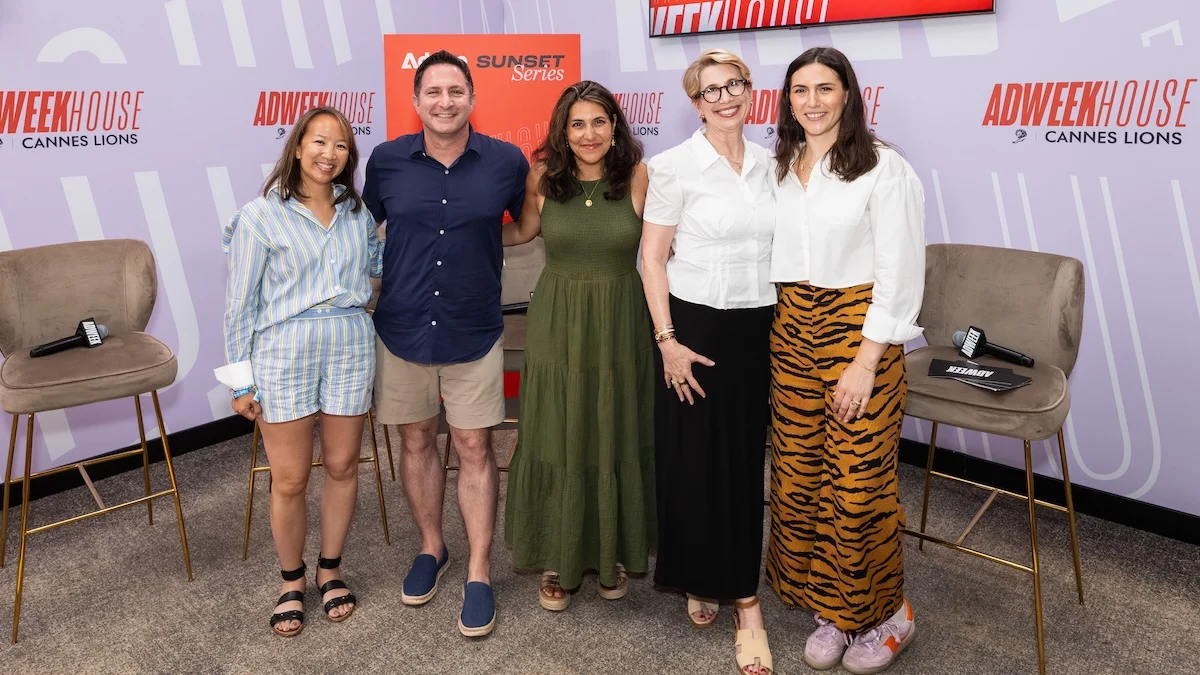
As generative AI models like ChatGPT, Claude, and specialized search assistants become the primary interface for consumer discovery, the rules of brand building are being rewritten. At a recent panel hosted at ADWEEK House during Cannes Lions, in partnership with Adobe, industry leaders gathered to address a pressing question: How do brands maintain relevance, credibility, and trust when their first point of contact with a consumer is an AI-generated summary rather than a proprietary marketing asset?
The Shift from Search to Synthesis: Main Facts
The core transformation identified by industry experts is the migration from "searching" to "conversing." Historically, a consumer would enter a query into a search engine, receive a list of links, and perform their own due diligence. Today, the consumer asks an AI to solve a problem or make a recommendation. The AI, in turn, scans the web, synthesizes the findings, and presents a curated narrative.
This shift presents a massive strategic hurdle. Brands no longer control the entirety of the consumer journey; they are now subject to the "opinion" of an algorithm. As Rachel Thornton, CMO of enterprise at Adobe, noted during the panel, "Your brand matters now more than ever. You want to think through your brand visibility strategy and how you show up in places like ChatGPT, Claude, etc."
The consequence is that brand voice—once confined to meticulously crafted creative campaigns—must now permeate the underlying data that AI models ingest. If a brand is not optimized to be "understood" by an AI, it risks being omitted from the conversation entirely.
Chronology of a Disruption: How We Got Here
To understand the current state of brand discovery, it is necessary to look at the evolution of the digital ecosystem:
- The Era of Portals (1995–2005): Discovery was managed by directories and search engines. Brands focused on keyword stuffing and basic SEO to ensure their websites appeared at the top of results.
- The Social Era (2006–2018): Discovery moved to social platforms. Brands pivoted to building communities, utilizing influencers, and perfecting social media advertising. Trust was built through engagement and peer validation.
- The Generative AI Era (2019–Present): Discovery has shifted to conversational interfaces. The intermediary no longer directs traffic to a brand’s landing page; it summarizes the brand’s value proposition in real-time.
This timeline reflects a shrinking window of consumer autonomy. As Linda Ha, deputy CMO at IKEA Retail, observed, fewer consumers are clicking through to third-party results. They are increasingly satisfied with the AI’s synthesis, meaning that if a brand’s presence isn’t represented accurately in the machine’s "training" or "context" window, the brand effectively does not exist for that user.
Supporting Data and Industry Perspectives
The transition to "conversational branding" is not merely theoretical; it is a tactical shift currently being implemented by global organizations.
The Marriott International Approach: Intent-Led Planning
Andy Kauffman, chief commercial officer for the U.S. and Canada at Marriott International, emphasized that while the interface has changed, the underlying goal of hospitality remains constant. Marriott’s Ask Bonvoy beta serves as a prime example of this evolution.
"I think about AI as just another channel with its set of tactics," Kauffman stated. By moving away from "forms, filters, and fields" and toward intent-led, conversational planning, Marriott is mirroring how modern travelers prefer to interact with brands. The success of this model relies on the brand’s ability to predict a traveler’s intent—delivering the right recommendation before the user has even finished their request.
The Unilever Strategy: Consistency as the Currency of Trust
Selina Sykes, VP of marketing transformation and social-first at Unilever, highlighted the technical challenges of this new era. For AI to recommend a product, it must find a consistent "truth" across disparate digital touchpoints.
"If the algorithm goes out there and you say something different on Walmart than a creator says on Reddit, the AI is going to go, ‘We don’t know if we believe this product benefit. We’re not going to recommend it,’" Sykes explained. This creates an urgent need for "brand plumbing"—the technical infrastructure that ensures product information, brand values, and customer feedback are aligned across the entire web.
Implications for the CMO’s Agenda
The shift toward AI-mediated discovery forces a radical restructuring of the marketing department. The "poetry and the plumbing"—as Sykes eloquently put it—is the new mandate.
1. The Rise of "Conversational Brand Identity"
Brands must now define their voice not just in visual terms, but in conversational ones. How does your brand sound when it is summarized by a machine? How does it describe its own utility? Companies that fail to codify their brand identity in a machine-readable format will find their narratives distorted by AI-generated hallucinations or, worse, overlooked in favor of competitors with more robust digital footprints.
2. The Credibility Trap
Trust is no longer a relationship between a consumer and a brand; it is a relationship between a consumer, an AI, and the brand. Because consumers inherently trust the AI’s "judgment," the brand must ensure that its presence on third-party sites—from review platforms to social media threads—is consistently positive. A discrepancy in consumer sentiment between different channels can cause an AI to flag the brand as unreliable.
3. Continuous Learning and Human-in-the-Loop
The panel speakers were unanimous on one point: AI does not replace the need for human creativity; it demands more of it. IKEA’s Linda Ha emphasized the need for continuous learning within teams. "AI has opened up so much opportunity for us," she said. "We need to double down on our creativity and craft." The human element remains essential for defining the purpose behind the brand, while AI handles the distribution and personalization of that message.
The Path Forward: Defining the Future of Brand Interaction
As we look toward the future, the brands that survive the AI transition will be those that master the art of being "findable." This requires a three-pronged approach:
- Technical Rigor: Ensuring that structured data and brand information are optimized for AI crawlers.
- Narrative Consistency: Ensuring that the brand’s story is the same across all touchpoints, from e-commerce listings to user-generated social commentary.
- Human-Centricity: Using AI to remove friction, but relying on human insight to ensure the output remains meaningful, empathetic, and culturally relevant.
The Vaseline campaign, which leveraged decades of consumer-discovered hacks, serves as the gold standard for this approach. By listening to how people actually use products rather than simply dictating how they should be used, Unilever proved that relevance is a product of listening.
Conclusion
Brand discovery is no longer a static experience managed by search algorithms that point to websites; it is a dynamic, fluid conversation managed by AI models that synthesize reality. For CMOs and marketing teams, the mission is clear: you must be clear and consistent enough for machines to surface you, trustworthy enough for people to believe you, and meaningful enough for customers to choose you.
In the AI era, the brand that wins is the one that successfully navigates the gap between the machine’s logic and the human’s intent. The future of your brand is being decided in the black box of the algorithm—it is time to ensure your voice is heard clearly within it.
To stay ahead of these trends, industry leaders are encouraged to attend upcoming forums like Brandweek, where the intersection of technology, marketing, and strategy continues to be the central point of discourse for the world’s top brands.










