Introduction: A Paradigm Shift on the Croisette
For years, the Cannes Lions International Festival of Creativity was the exclusive domain of glossy film spots, emotive brand manifestos, and the high-art of advertising. When retail media networks (RMNs) first appeared on the scene, they were viewed as the utilitarian "bottom-funnel" cousins of the industry—unshowy, data-heavy, and focused strictly on the final click. They were the engine room of commerce, not the creative studio of brand building.
However, as the festival’s 2024 edition underscored, that hierarchy has been permanently dismantled. Retail media has graduated from sponsored search and static display banners to becoming a primary driver of full-funnel marketing strategies. From branded entertainment to sophisticated, AI-driven consumer journeys, the retail media sector is no longer just "where you buy"; it is increasingly "where you discover."
The Strategic Expansion: Moving Beyond the Transaction
The narrative at this year’s festival was clear: retail media is shedding its reputation as a purely performance-based channel. By integrating deep, first-party consumer data with high-production creative, companies like Instacart are bridging the historic divide between retail conversion and brand awareness.
Ali Miller, general manager of advertising at Instacart, framed this evolution as a "merger of commerce and creative." Speaking from the festival, Miller highlighted that the platform is actively courting brands not just for ad placement, but for partnership in the creative ideation phase. This represents a seismic shift for CPG (Consumer Packaged Goods) brands that have traditionally treated retail platforms as an afterthought in their media mix.
Chronology of Instacart’s Creative Pivot
To understand the significance of the announcements made at Cannes, one must look at the trajectory of Instacart’s recent evolution:
- 2023 (The Catalyst): Instacart proved its creative viability with a high-profile Super Bowl campaign. By featuring a wide array of CPG mascots in a singular, cohesive narrative, the company demonstrated that a grocery delivery platform could serve as a stage for major brand storytelling.
- Early 2024 (The Infrastructure): The company reported a robust 16% year-over-year growth in ad revenue, reaching $286 million in the first quarter. This financial stability provided the runway for the expansion of its in-house creative agency, Local Produce.
- Cannes Lions 2024 (The Formalization): Instacart officially unveiled its "Ads Studio," a dedicated unit designed to embed the company’s first-party data into the creative brainstorming process. This move effectively brought the platform’s retail media arm into direct, daily collaboration with their in-house agency, creating a unified ecosystem for brands.
- The Future Horizon: The company is currently laying the groundwork for the second half of 2024, focusing on AI-assisted shopping experiences and vertical video integration.
Supporting Data: The Retail Media Boom
The urgency for this pivot is backed by cold, hard numbers. Retail media advertising is currently the fastest-growing segment of the digital advertising market. According to recent industry benchmarks, brands are shifting significant percentages of their budget away from traditional social and search platforms to retail environments where they can track a direct line from a video impression to an "add-to-cart" event.
Instacart’s Q1 financial results—a healthy $286 million in ad revenue—demonstrate that the "performance" side of the business is not flagging, but rather serving as the foundation for more complex ad products. The company’s ability to leverage data from over 2,200 retail partners gives it a unique vantage point: it knows what consumers are buying, when they buy it, and, increasingly, what they are curious about before they even add an item to their cart.
Official Responses and Vision
During her interviews at the festival, Ali Miller articulated a vision that moves away from "interruptive" advertising and toward "integrated" solutions.
"We’re really hoping to get in conversations with brands before they even have fully arrived at a concept," Miller noted. "Let us ideate and come up with great concepts together that can be activated throughout the year."
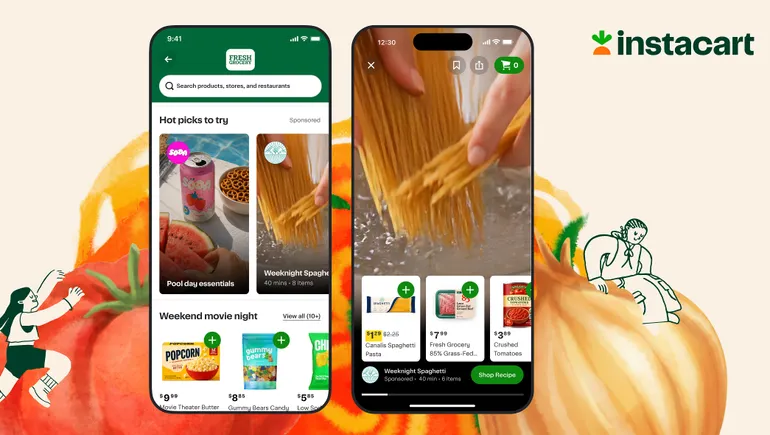
This sentiment is echoed in the launch of the "Immersive Feed," a short-form, vertical video experience embedded within the Instacart app. By adopting a user experience reminiscent of TikTok—but strictly focused on the grocery path-to-purchase—Instacart is addressing the "discovery" gap. Brands like Hellmann’s, Kettle & Fire, Rachael Ray Nutrish, and Siete Foods are currently piloting this, using video to demonstrate recipes and product benefits that lead directly to a transaction.
Miller emphasized the versatility of this format: "When you think about recipe content, product demonstrations, personal care content, beauty content—vertical video is the perfect format for this. The sky’s the limit."
The AI Frontier: A Deliberate Approach
Perhaps the most discussed aspect of Instacart’s strategy at Cannes was the integration of Artificial Intelligence. While many tech companies are rushing to monetize AI through aggressive ad placements, Instacart is choosing a more cautious, "user-first" path.
The proposed AI shopping assistant is intended to solve real-world problems—such as generating a gluten-free meal plan for a family of four. However, the monetization of this tool remains a "TBD" (To Be Determined) status. Miller is adamant that the integration of ads into the AI experience must be a "two-way street," providing value to the consumer rather than just another ad block.
"We’re going to see what ends up being the dominant behavior that consumers turn to AI for," Miller said. "My hypothesis is that we are going to be able to see more of this upper funnel, kind of mid-funnel-y behavior. I think it can help to move a little more up-funnel and drive a little bit more of that discovery behavior."
Implications for the Industry
The transformation of Instacart and its peers at Cannes carries profound implications for the broader marketing landscape:
1. The Death of the Funnel?
The traditional marketing funnel—where awareness, consideration, and conversion are handled in silos—is effectively collapsing within retail media networks. When a consumer watches a recipe video on Instacart and clicks "add to cart," the awareness and purchase phases happen simultaneously. This requires agencies and brand managers to rethink how they staff their creative and performance teams, as the two disciplines are no longer distinct.
2. The Rise of "Retail-Native" Creative
Brands can no longer simply recycle their television spots for retail media. The "Immersive Feed" and AI-driven recommendations require creative that is mobile-first, vertical, and, most importantly, actionable. The success of the Ads Studio suggests that future brand campaigns will be designed with the retail platform’s data as a starting point, rather than an afterthought.
3. Data Privacy and First-Party Strength
As third-party cookies continue to vanish, retail media networks become the primary repositories of high-intent, first-party data. By positioning themselves as creative partners, platforms like Instacart are insulating themselves from privacy regulations by offering a "walled garden" where data is used to enhance the user experience, rather than just track users across the open web.
4. The Competition for Attention
Retail media is no longer just competing with other retailers; it is competing with entertainment platforms. By incorporating creator integrations and influencer-style content into their video feeds, retail platforms are moving into the territory of social media giants. The ultimate test will be whether consumers view these apps as destinations for discovery or merely as digital utility tools for purchasing.
Conclusion: The New Standard of Cannes
The presence of retail media at Cannes Lions has matured from an experimental nuisance to a centerpiece of the industry’s future. By prioritizing long-term brand building through creative collaboration and AI innovation, platforms like Instacart are signaling that they intend to own the entire consumer journey.
For brands, the message is clear: the future of advertising is not just about reach—it is about relevance. In the new retail media ecosystem, the most successful campaigns will be those that can transform a digital shopping list into an experience, and a transaction into a lasting brand connection. As Miller aptly put it, the goal is to be there when the consumer is just starting to think, and to be there when they are ready to buy. In the shifting sands of modern marketing, that is the ultimate advantage.