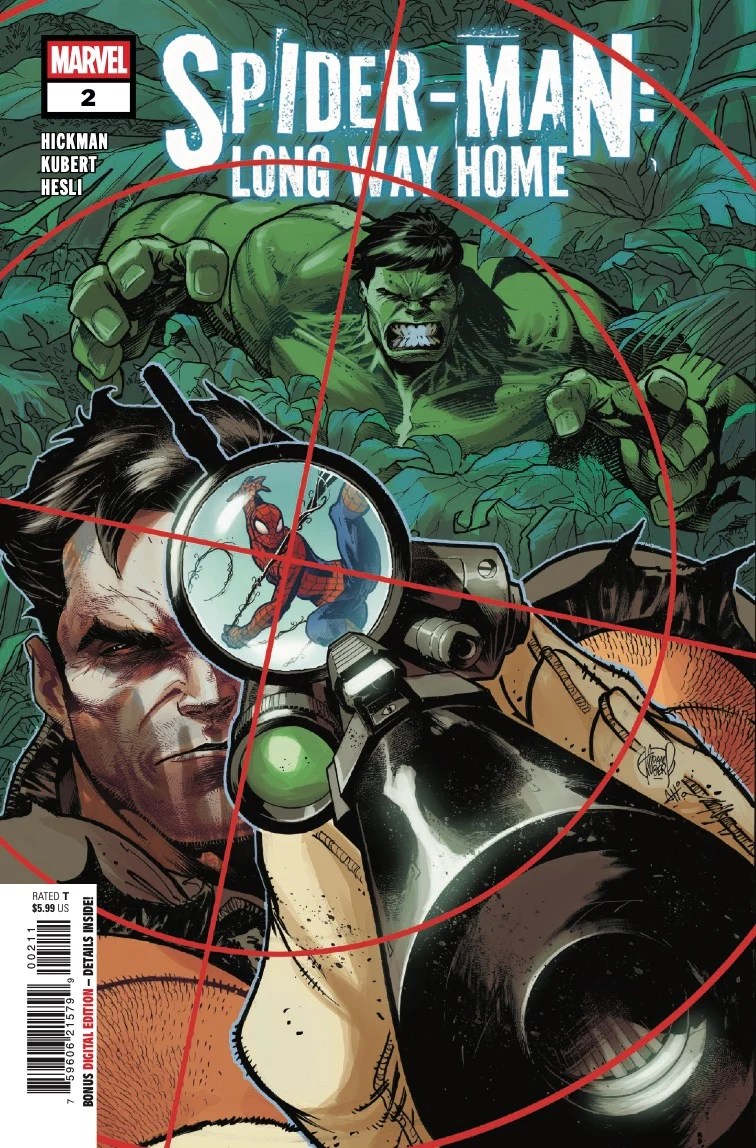
As the Marvel Universe barrels toward the late summer of 2026, one creative team is set to redefine the stakes of the wall-crawler’s journey. Spider-Man: Long Way Home #2, the highly anticipated sophomore issue from the powerhouse creative team of writer Jonathan Hickman and artists Adam Kubert and Arthur Hesli, promises a high-octane collision between some of the publisher’s most iconic characters. With the Cosmic Cube—a reality-warping artifact of immense power—in the hands of Frank Castle, the stage is set for a narrative that blends espionage thriller tropes with the chaotic scale of a superhero blockbuster.
Main Facts: The Hunt for the Cosmic Cube
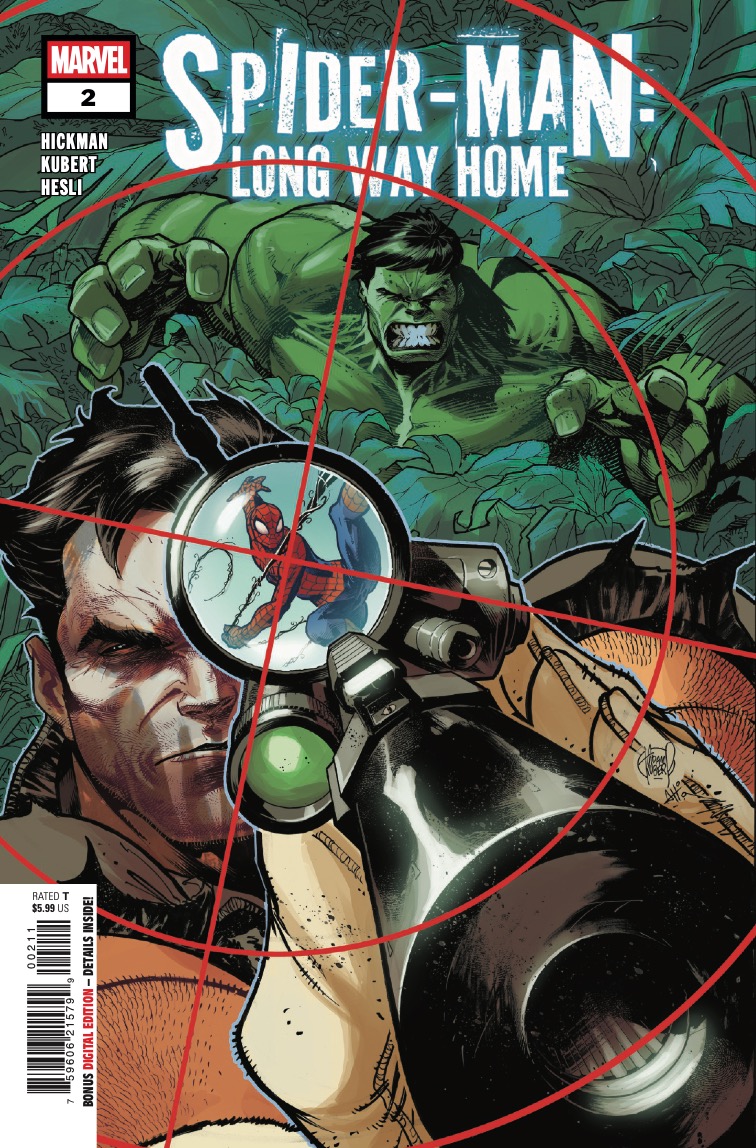
The central conflict of the second issue revolves around the high-stakes pursuit of the Cosmic Cube, a relic capable of rewriting the laws of physics and existence itself. Currently, the artifact is in the possession of Frank Castle, the Punisher. Unlike his typical urban warfare, Castle finds himself deep within the impenetrable, treacherous jungles of South America, tasked with a mission that requires more than just munitions: he must ensure this reality-altering weapon never falls into the wrong hands.

However, Castle is not alone in the wilderness. He is being hunted by a "hulking green monster"—a reference to the Incredible Hulk—who has already systematically dismantled Castle’s tactical squad. The situation becomes even more complex with the arrival of Spider-Man. Acting on orders from S.H.I.E.L.D., the web-slinger has been deployed to neutralize the situation and recover the Cube.
The narrative hook provided by Marvel suggests that while both the Hulk and Spider-Man view themselves as the hunters in this scenario, they are operating under a grave miscalculation. As the issue progresses, the dynamic between the trio shifts, revealing that in the dangerous environment of the South American canopy, the "prey" is significantly more lethal than the predators pursuing him.
Chronology: A Trajectory of Escalation
The release of Spider-Man: Long Way Home #2, scheduled for July 22, 2026, marks the second installment of what is shaping up to be a critical arc in the current Marvel publishing slate.
- The Prelude: Following the events of the debut issue, the mission parameters were established: S.H.I.E.L.D. identified the Cosmic Cube’s location and determined that Frank Castle’s possession of it represented a global security threat.
- The Incursion: The hunt began in earnest as the Hulk—often a wild card in such geopolitical disputes—intervened, resulting in the total annihilation of Castle’s support team.
- The Current Development: The arrival of Spider-Man serves as the turning point of the second issue. S.H.I.E.L.D. expects a straightforward retrieval mission, but the reality on the ground is anything but simple.
- The Impending Climax: With 32 pages dedicated to this encounter, readers can expect a sustained sequence of tension that forces Peter Parker to confront the brutality of Frank Castle while dealing with the raw, uncontrollable power of the Hulk.
Supporting Data: The Creative Powerhouse
The success of a high-concept book often rests on its creative execution, and Long Way Home benefits from a veteran team.

- Jonathan Hickman (Writer): Renowned for his meticulous world-building and high-concept science fiction, Hickman’s involvement guarantees that the Cosmic Cube will be handled with a deep understanding of its lore. His ability to weave long-term consequences into single issues has made him one of the most respected architects in modern comics.
- Adam Kubert and Arthur Hesli (Art/Cover): The visual language of this series is defined by the grit and kinetic energy of Kubert and Hesli. The provided preview imagery highlights a dark, atmospheric tone, emphasizing the contrast between the lush, dangerous jungle and the stark, technological power of the Cube.
- Technical Specifications: The issue is a standard 32-page format, allowing for a dense, action-packed narrative that avoids the "decompressed" storytelling common in modern series.
Official Responses and Editorial Stance
While official editorial comments remain tight-lipped regarding the specific resolution of the arc, Marvel’s marketing push has leaned heavily into the "unpredictability" of the conflict. In promotional materials released alongside the previews, the publisher has framed this story as a "character study disguised as an action epic."
The choice to place Spider-Man—a hero who typically operates with a strict moral code—against the ruthless pragmatism of the Punisher and the unchecked rage of the Hulk creates a moral friction that the editorial team is eager to explore. By involving S.H.I.E.L.D., the series also touches upon the overarching political structure of the Marvel Universe in 2026, suggesting that the fallout from this issue will have repercussions for the intelligence agency’s standing with its superhero assets.

Implications: The Fragility of Reality
The presence of the Cosmic Cube is the most significant element of the story. In the history of the Marvel Universe, the Cube has been the catalyst for everything from the rise of the Red Skull to the godhood of beings like Thanos. For it to be circulating in a remote jungle, in the hands of a man who views justice through the lens of absolute finality, is a recipe for disaster.
The Moral Dichotomy of the Protagonists
The primary implication of this story lies in the character interactions. Spider-Man represents the "ideal" of the hero, attempting to solve the problem with minimal loss of life. The Hulk represents nature’s rage, a force of destruction that cannot be reasoned with. Frank Castle represents the ultimate cynical view of the world—the belief that the ends justify the means. By forcing these three distinct archetypes to converge, Hickman is essentially testing the durability of their respective ideologies.

The Geopolitical Ripple Effect
Furthermore, the involvement of S.H.I.E.L.D. implies that the Cosmic Cube is no longer an "avenger-level" threat but a target for global espionage. If the Cube is successfully retrieved by S.H.I.E.L.D., it could lead to an arms race within the Marvel Universe. If it is lost or destroyed, the power vacuum created in the region—and the potential damage to reality itself—could trigger a new, darker era for the world’s defenders.
Artistic Direction
The visual tone, as seen in the preview pages, suggests a pivot toward a more grounded, visceral aesthetic. The decision to feature the characters in a remote, claustrophobic setting limits their ability to rely on their usual support systems, forcing them to adapt or perish. The art team’s focus on the scale of the Hulk versus the agility of Spider-Man, all while the cold, tactical shadow of the Punisher looms, creates a visual rhythm that heightens the narrative stakes.

Conclusion
As we look toward the July 22, 2026, release date, Spider-Man: Long Way Home #2 stands as a pivotal moment for these characters. It is not merely a story about a missing artifact; it is a confrontation between the philosophies that drive the Marvel Universe. With Jonathan Hickman at the helm and a team of artists capable of translating his complex scripts into visceral imagery, the stage is set for a memorable chapter in the Spider-Man canon. Whether the wall-crawler can navigate the jungle, the Hulk, and the Punisher without compromising his own principles remains to be seen—but one thing is certain: the journey home is going to be anything but simple.