Layla Zulfa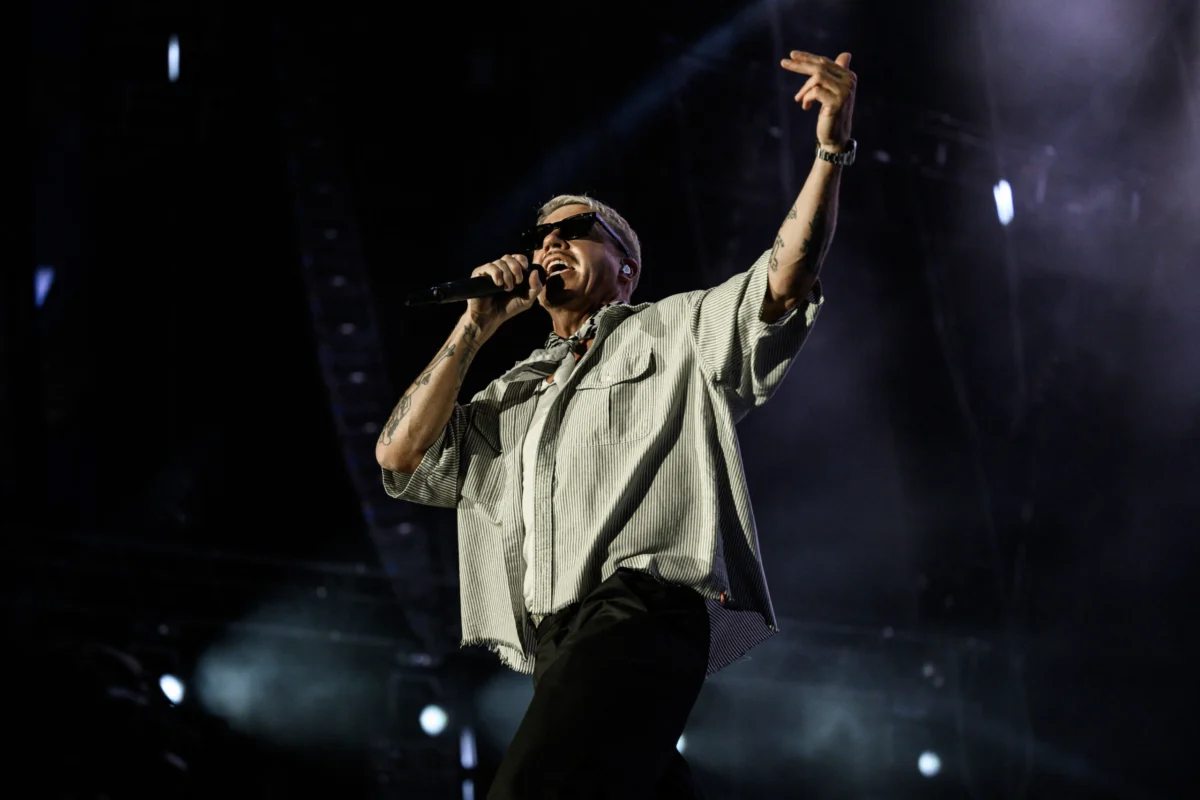
In a dramatic convergence of music, politics, and corporate power, rapper Macklemore has made a definitive statement regarding his recent removal from Ed Sheeran’s "Loop" tour. Following his dismissal—which the artist attributes to pressure exerted by New England Patriots owner Robert Kraft—Macklemore announced he is donating his entire $1 million in net earnings from the tour to humanitarian organizations providing aid to the Palestinian people. The move, which has sent shockwaves through the music industry, has turned a standard tour scheduling dispute into a high-stakes conversation about the intersection of celebrity advocacy, institutional influence, and the ongoing humanitarian crisis in Gaza.
A Chronology of Conflict: From Stadium Stages to Industry Blacklisting
The tensions that led to this impasse were rooted in an incident that occurred in early September at MetLife Stadium in New Jersey. While performing as a supporting act for Ed Sheeran, Macklemore used his platform to speak openly about the war in Gaza, declaring "Free Palestine" to the packed stadium. This act of protest, while not uncommon for the artist—who has long been vocal about his political views—appears to have triggered a chain reaction of administrative and corporate pushback.
According to the rapper, the fallout was swift. Shortly after the MetLife performance, Macklemore alleges that he was effectively blacklisted from further venues. He has pointedly identified Robert Kraft, the billionaire owner of the New England Patriots and a significant figure in the world of professional sports and entertainment management, as a primary driver behind his removal. Macklemore claims that Kraft leveraged his influence with other stadium owners to ensure the rapper would no longer be permitted to perform at their venues, effectively rendering his continued participation in the "Loop" tour untenable.
The situation reached a boiling point earlier this week when it was confirmed that Macklemore would no longer be part of the tour. In the wake of his departure, the narrative shifted from a simple tour cancellation to a debate over whether political speech should be a barrier to entry for performing artists in major stadiums.
The Financial Commitment: A Million-Dollar Pledge
On Wednesday, Macklemore took to social media to announce that his final act regarding the tour would be to redirect the entirety of his $1 million in net earnings toward six organizations focused on the ground-level humanitarian crisis in Gaza. The organizations named include:
- Palestine Children’s Relief Fund (PCRF)
- Heal Palestine
- Gaza Soup Kitchen
- Medical Aid for Palestinians
- UNRWA USA National Committee
- Anera
In his statement, Macklemore sought to shift the spotlight away from his own career setbacks and toward the human cost of the conflict. "With everything that has happened over the last 48 hours, I want to bring the conversation back to where it belongs: to the Palestinian people who are still being killed, still living under military occupation, and still fighting for their freedom," he wrote.
By formalizing the donation, Macklemore has effectively transformed his "lost" tour earnings into a significant source of funding for groups that are struggling to operate under the current blockade and military environment. He also issued a direct challenge to Robert Kraft, inviting the billionaire to match the $1 million donation. "Whatever we disagree about, perhaps we can agree on this: Palestinian lives are worth protecting. A Palestinian life is no less valuable than any other life on this earth," the rapper asserted. As of the time of writing, a representative for Kraft has declined to comment on the request.
The Industry Perspective: Ed Sheeran’s Neutrality and the Wave of Solidarity
The dismissal of Macklemore placed headliner Ed Sheeran in an uncomfortable position. On Tuesday morning, Sheeran issued a statement distancing himself from the decision-making process that led to the rapper’s removal. Sheeran clarified that he had no involvement in the dismissal and noted that he prefers to remain neutral regarding political causes.
However, the "neutral" stance held by the tour’s headliner was not mirrored by the other supporting acts. Shortly after the news of Macklemore’s removal—and the subsequent discourse surrounding the Palestinian cause—the other artists on the "Loop" tour, including Finneas, Aaron Rowe, Lukas Graham, and Beoga, announced they were dropping out of the tour. Their collective departure is widely viewed as an act of solidarity with both Macklemore and the broader movement advocating for Palestinian liberation.
This mass exit represents a rare moment of unified political action within the touring industry. While artists often maintain political independence to avoid contractual complications or alienating segments of their fanbase, the "Loop" tour exodus suggests that, for this cohort of musicians, the threshold for silence has been crossed.
The Humanitarian Reality: Why These Organizations?
Macklemore’s choice of beneficiaries highlights a strategic focus on basic survival needs. The organizations selected represent a cross-section of aid, from medical support and direct surgical intervention to the provision of food and clean water.
The Palestine Children’s Relief Fund has been a critical provider of medical care, often facilitating the transfer of injured children to hospitals outside of the conflict zone. Medical Aid for Palestinians and Anera have been on the front lines of logistics, attempting to navigate the incredibly difficult task of getting supplies through borders that are often restricted by military oversight.
By centering these groups, Macklemore is emphasizing the "parents carrying their children into hospitals without the basic resources to treat them, and the physicians, paramedics, journalists and aid workers who keep going back in." His statement reflects a desire to acknowledge the individuals who are paying the ultimate price for the conflict, framing his own professional sacrifice as secondary to the risks faced by these humanitarian workers.
Broader Implications: The Future of Political Advocacy in Music
The controversy surrounding the "Loop" tour raises difficult questions regarding the governance of major entertainment venues. When stadiums are owned or heavily influenced by figures with strong political or financial ties to international conflicts, the ability for artists to exercise freedom of speech becomes increasingly precarious.
Historically, the music industry has acted as a space for protest—from the Vietnam-era folk songs to the anti-apartheid movements of the 1980s. However, the consolidation of stadium ownership under private equity firms and billionaire owners has introduced a new layer of corporate censorship. If an artist’s political stance can lead to a coordinated effort to shut down their tour, the implication is that mainstream, stadium-level performances may become "politics-free zones" by mandate rather than by choice.
Macklemore’s closing remarks, "When the news cycle moves on, which it will, don’t move with it," serve as a call to action for his audience. By leveraging his platform to make a $1 million donation, he has demonstrated that even when an artist is silenced by the corporate machinery of the touring industry, they can still utilize the capital generated by their art to impact the very issues that led to their censorship.
As the music industry watches the aftermath of the "Loop" tour, the focus remains on whether this act of protest will lead to a broader conversation about artistic freedom. For now, the donation stands as a tangible outcome of a fractured partnership, proving that while corporate gates may close on an artist, the power of their influence—and the resonance of their message—remains a potent force in the cultural landscape. The question that remains is whether other artists, promoters, and stadium owners will be forced to take a side in an increasingly polarized world, or if the "neutrality" claimed by some will become an increasingly difficult position to maintain in the face of global humanitarian crises.

 Dwi Wanna
 Ali Ikhwan